Architecture across Latin America this month reflects an ongoing negotiation between environmental challenges, cultural heritage, and changing approaches to public and professional life. From Colombia's earthquake and its impact on historic architecture to new cultural projects in Argentina and environmentally responsive design in Ecuador and Medellín, recent developments highlight how architecture continues to respond to both regional conditions and broader global challenges. Questions of heritage and infrastructure also remained prominent, as UNESCO raised concerns over the impacts of the Tren Maya on Mexico's Calakmul World Heritage site, while new initiatives in Chile and Costa Rica explored ecological design and sustainable practice. The month's stories point to a regional architectural landscape shaped by resilience, adaptation, and the relationship between built environments and their wider social and natural contexts.
Colombia's Earthquake Raises New Questions About Seismic Resilience and Heritage
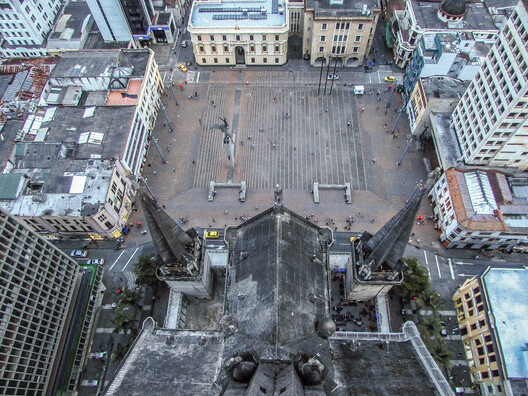
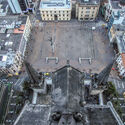
The magnitude 7.4 earthquake that struck Colombia on August 10 brought renewed attention to seismic resilience and the vulnerability of the country's architectural heritage. Centered near San José del Palmar in Chocó, the earthquake affected cities including Cali, Pereira, Manizales, and Armenia, damaging housing, healthcare and educational facilities, roads, and airports. Among the most significant reported losses was the partial collapse of a side tower at the Catedral Basílica de Nuestra Señora del Rosario de Manizales, a Neo-Gothic landmark designed by Julien Polti. Damage was also reported at healthcare and educational buildings across the region. Beyond the immediate impact, the earthquake highlights the challenge of protecting Colombia's diverse architectural landscape, where historic, modern, and vernacular construction systems coexist.
Related Article
Latin America in Focus: This Month in Architecture, Cultural Institutions, Heritage, and ResilienceLola Mora Cultural Center Connects Cultural Heritage With Landscape and Environmental Performance
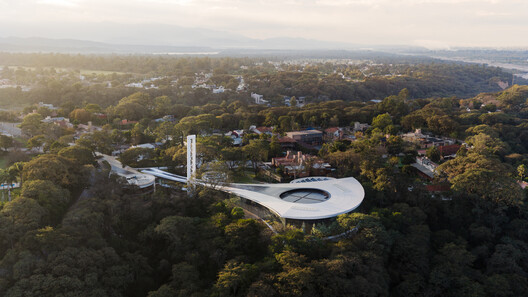
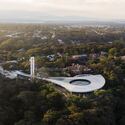
Pelli Clarke & Partners has completed the Lola Mora Cultural Center in San Salvador de Jujuy, Argentina, providing a permanent home for six monumental marble sculptures by Argentine artist Lola Mora. Located on a hillside at the edge of the Andes and within the Yungas forest, the building follows the site's topography while preserving existing native vegetation. Its program includes exhibition galleries, an interpretation center, a library, restaurant, and spaces for temporary exhibitions and visiting artists. Environmental performance is integrated through photovoltaic panels, solar thermal collectors, five wind turbines, rainwater harvesting, and a high-performance building envelope. The project is the firm's first cultural building in South America and the final project led by its founder, the late César Pelli, connecting cultural preservation with landscape and environmental strategies.
Hispanic and Latino Candidates Face Longer Paths to Licensure, NCARB Report Finds
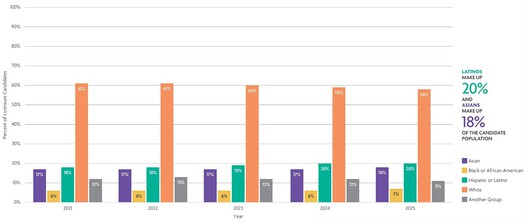
The latest NCARB By the Numbers report points to a gradually changing architectural profession in the United States, while revealing differences between those entering the licensure process and those who ultimately become architects. In 2025, people of color represented 49 percent of licensure candidates and women accounted for 47 percent, while women made up 53 percent of new NCARB Record holders. By comparison, people of color represented 21 percent of the overall architect population and women 28 percent. The report also identifies differences in the time required to complete licensure, with Hispanic or Latino candidates taking an average of approximately 13.5 years compared with 11.3 years for Asian candidates. While focused on the U.S., the figures offer a broader perspective on representation and access within the architectural profession.
Featured Projects
Medellín Children's Playground Network: Tejiendo Hogares / Juguemos en el Parque / Alcaldía de Medellín
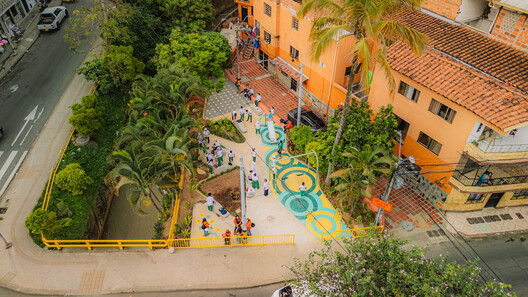
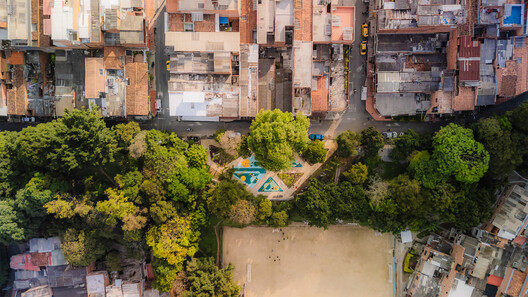
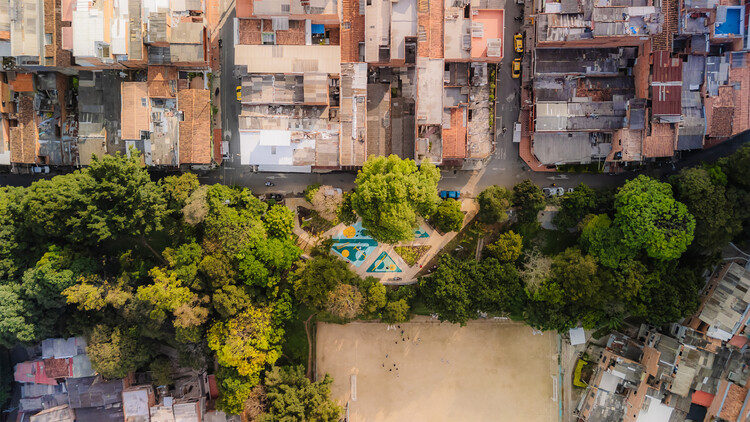
In Medellín, the Children's Playground Network by the Alcaldía de Medellín transforms small and underused neighborhood plots into public spaces for play, gathering, and environmental education. Located particularly in peripheral areas with limited recreational infrastructure, the parks respond to steep topographies, heat-island effects, and stormwater runoff through terraced landscapes, permeable surfaces, vegetation, and sustainable drainage systems. Playgrounds, gardens, ramps, and urban furniture are integrated into a system designed to support universal mobility while turning changes in elevation into opportunities for views and collective activity. Native vegetation contributes to rainwater absorption, biodiversity, and microclimate regulation, while local materials and labor reduce transportation impacts and support community employment. Conceived as a replicable model, the network positions neighborhood-scale public space as both social and environmental infrastructure.
Audiovisual Experimentation Center / Dirección General de Arquitectura + Secretaría de Planificación + Municipalidad de Avellaneda
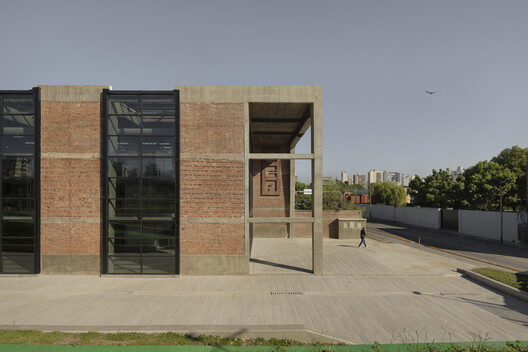
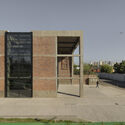
In Avellaneda, Argentina, the Audiovisual Experimentation Center transforms a former oil mill into a municipal archive and cultural facility dedicated to the preservation, restoration, and dissemination of audiovisual heritage. Rather than restoring the industrial structure as a static artifact, the project by the Dirección General de Arquitectura, Secretaría de Planificación, and Municipalidad de Avellaneda introduces a new program while retaining key elements of the existing building, including its brick walls, reinforced concrete frame, and Archimedes' screw. A lightweight steel structure organizes three levels containing a cinema, exhibition spaces, collaborative work areas, conservation laboratories, and archive storage. New interventions in glass, wood, and polycarbonate contrast with the rough existing materials, while skylights and new openings bring natural light into the former industrial nave. The project demonstrates how adaptive reuse can connect industrial heritage with contemporary cultural infrastructure.
Chocó Pambil Refuge / Minqa Atelier
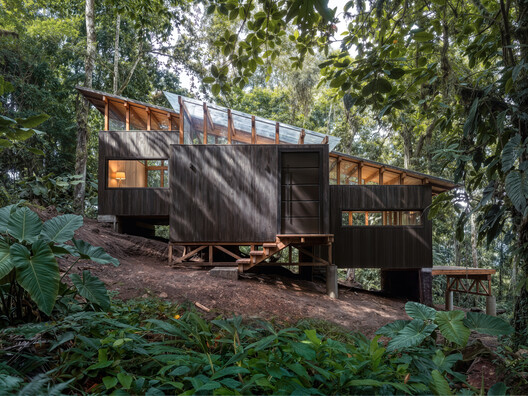
In Ecuador's Chocó region, Minqa Atelier designed the Chocó Pambil Refuge as a compact house that responds directly to a steep, humid, and heavily rain-exposed forest site. Rather than reshaping the terrain, the 53-square-meter refuge is organized as a sequence of wooden platforms that follow the natural slope, allowing the ground to remain visible beneath the structure. River-stone gabions provide a minimally excavated foundation, while a local teak structure was developed as a system of transportable components that could be assembled on site despite difficult access. Charred wood protects exposed surfaces from humidity and insects, while large openings, overhead lighting, and natural ventilation strengthen the relationship between the interior and surrounding forest. The project presents a restrained approach to construction in a sensitive landscape, making its structural and environmental responses part of the architecture itself.
On the Radar
Costa Rican Architect Michael Smith Masís Named PLEA Honorary Fellow
Costa Rican architect and University of Costa Rica professor Michael Smith Masís has been named an Honorary Fellow of PLEA, an international network dedicated to passive and low-energy architecture, environmental design, and sustainable urbanism. The recognition was announced during the 2026 Passive and Low Energy Architecture Conference, held in Costa Rica for the first time in July and August. Smith Masís joins a small group of international figures recognized for contributions to sustainable architectural research and practice, alongside architects including Ashok B. Lall, Giancarlo Mazzanti, and Belinda Tato. His work has focused on socially engaged and environmentally responsive architecture, including projects developed with underserved communities in Costa Rica. The distinction places a Latin American perspective on sustainability within a broader international architectural conversation.
Antonio Yemail Explores Interspecies Coexistence Through Coastal Architectures in Chile
Colombian architect and industrial designer Antonio Yemail is leading an AULAS Translocales project in Las Cruces, Chile, focused on small-scale architectures for nesting, observation, and interspecies care. Developed in collaboration with Barco Galería and the Coastal Marine Research Station of the Pontificia Universidad Católica de Chile, the initiative explores how design can support forms of coexistence between humans and other species along the coast. The educational program combines observation, drawing, mapping, and construction, using the local ecosystem and ongoing scientific research as its context. Rather than treating architecture as an object separated from its surroundings, the project approaches small structures as tools for observing and engaging with coastal environments, extending architectural practice toward ecological relationships and shared habitats.
UNESCO Maintains Calakmul World Heritage Status Amid Tren Maya Impact Assessment Concerns
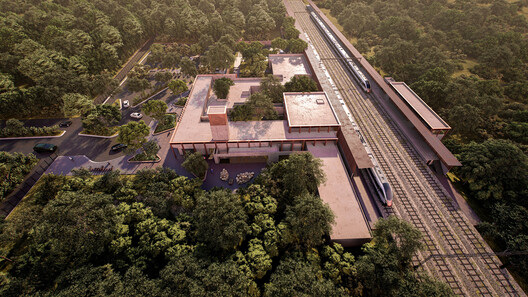
UNESCO has maintained the World Heritage status of the Ancient Maya City and Protected Tropical Forests of Calakmul in Campeche, Mexico, while raising concerns over the impacts of the Tren Maya railway and associated infrastructure on the mixed cultural and natural site. The World Heritage Committee noted that works including Section 7 of the railway and related visitor infrastructure were completed without the corresponding assessments being submitted for review by its advisory bodies, and called for a broader evaluation of their potential effects on the site's Outstanding Universal Value. The decision comes amid wider concerns over archaeological conservation along the railway, including a criminal complaint filed by researchers from Mexico's National Institute of Anthropology and History alleging the alteration or dismantling of at least 47 Maya archaeological structures.
This article is part of our Regional Focus series, bringing together recent architecture news, projects, and emerging developments from across Latin America. Explore more architecture news and projects from the region on ArchDaily.