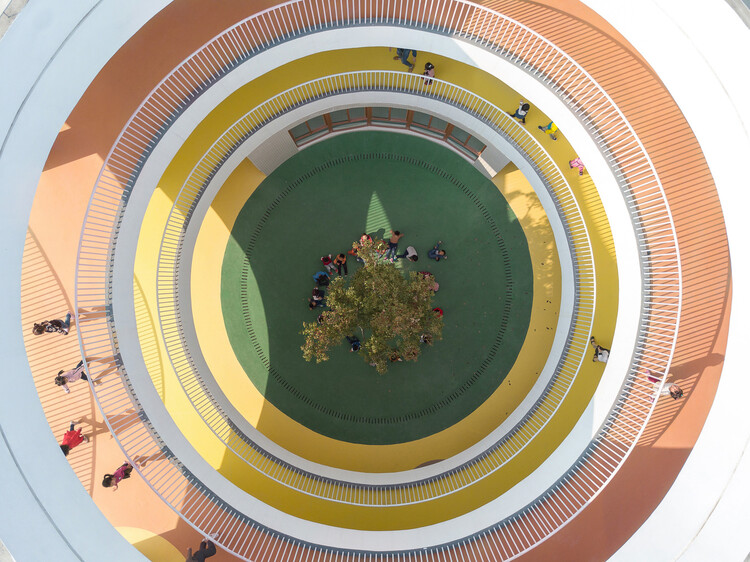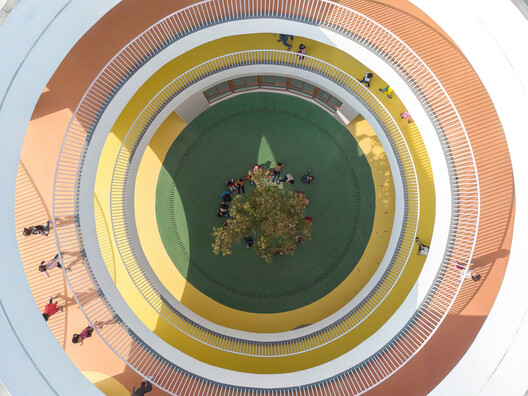
The center of a plan is never simply empty space. Once rooms and routes begin to organize around it, the center starts to structure the entire plan. It may contain a courtyard, a stair, a garden, or a shared room. It can also preserve something already present on the site or support a process that architecture does not fully control. What occupies this position determines how the surrounding spaces are arranged, connected, and used.
In A Pattern Language, Christopher Alexander, Sara Ishikawa, and Murray Silverstein describe shared spaces as most effective when they sit at the center of gravity of everyday life and remain connected to the routes people use most. Their argument suggests that a center matters not because it occupies the geometric middle, but because the surrounding rooms, paths, and activities give it spatial weight. The projects included here extend that idea beyond communal space, showing how the center can organize circulation, collective use, environmental systems, and the relationship between architecture and what already exists on the site.