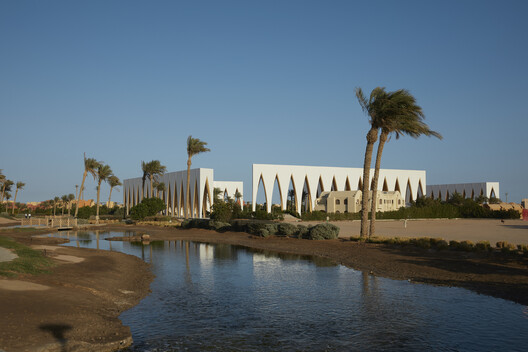
Architecture has long been defined by permanence. Buildings are celebrated because they endure, cities because they establish permanence against uncertainty, and monuments because they resist the passage of time. Some of humanity's oldest urban traditions emerged in landscapes where permanence alone could never guarantee survival. Across the deserts of North Africa and the Arabian Peninsula, oasis settlements developed not as isolated refuges from an empty wilderness, but as carefully maintained pauses within landscapes already shaped by movement. Long before highways and airports connected continents, caravans, pilgrims, pastoralists, and merchants traversed these territories through networks of wells, irrigation systems, cultivated groves, and market towns. The oasis was never the end of a journey. Wells, shaded palm groves, irrigated fields, and caravan markets allowed the next stage of the journey to begin.
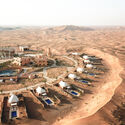
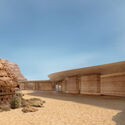
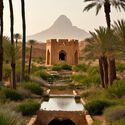
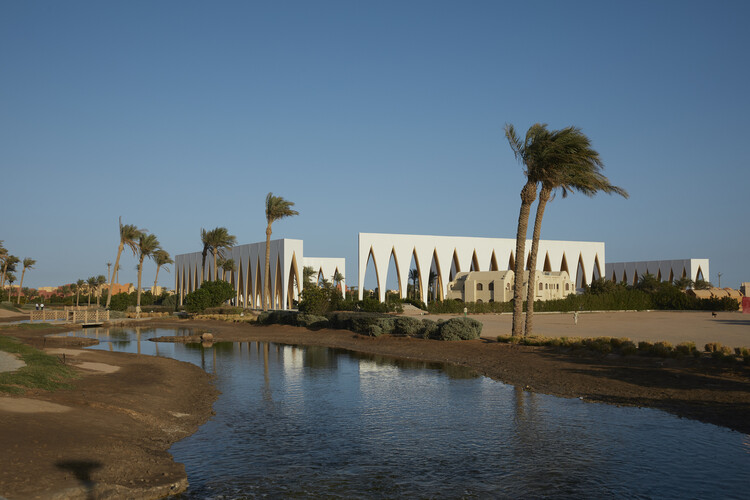
Deserts have long been imagined as voids separating civilizations. Archaeology increasingly suggests the opposite. Oasis settlements occupied strategic intersections within expansive regional networks of exchange, linking Mesopotamia, the Arabian Peninsula, the Mediterranean, and North Africa. UNESCO describes Al Ain as occupying the crossroads of ancient land routes connecting Oman, the Gulf, and Mesopotamia, while the recently inscribed Ancient Walled Oases of Northern Arabia are understood as interconnected caravan stations that sustained movement across vast distances. Fertile land mattered, but so did access to caravan routes, watering points, and trading networks that crossed the desert. The desert was already inhabited by routes before it was marked by cities.
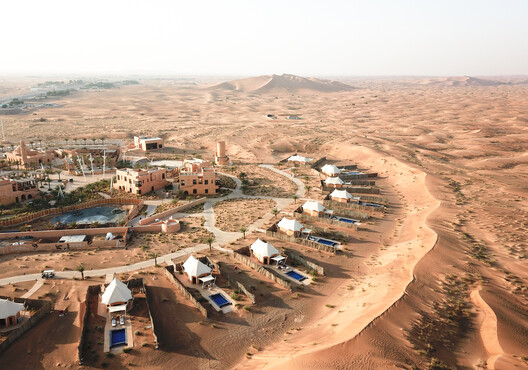
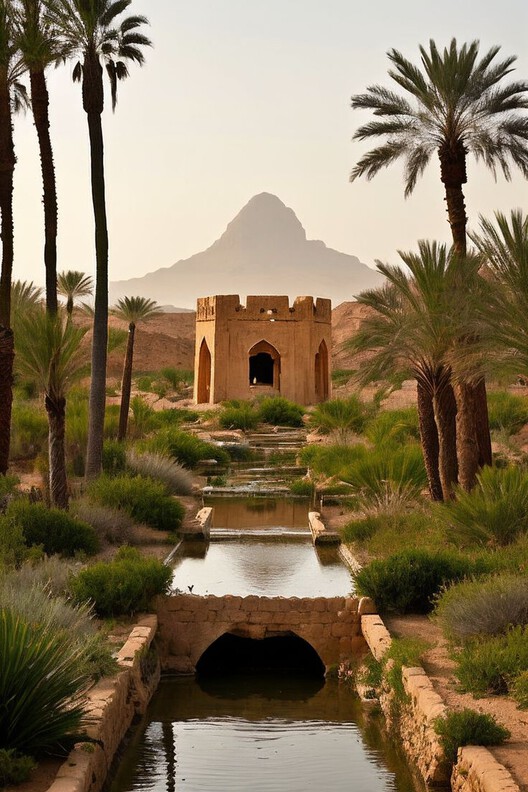
If movement established the need for the oasis, water transformed it into architecture. The defining structures of oasis urbanism were irrigation systems, wells, springs, and cultivated landscapes that organized settlement from the ground up. Gravity-fed aflaj in Al Ain and qanat systems found across the wider region distributed scarce water through carefully governed networks that determined where agriculture could flourish, where homes could be built, and how communities expanded over generations. Palm groves shaded productive landscapes, irrigation channels became circulation routes, and agricultural plots formed the spatial framework around which urban life developed. Buildings emerged from the water systems that already organized the landscape.
Related Article
Land of Wells: Designing for Saharan Nomads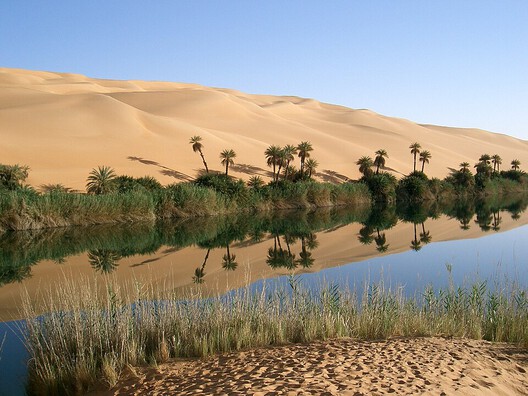
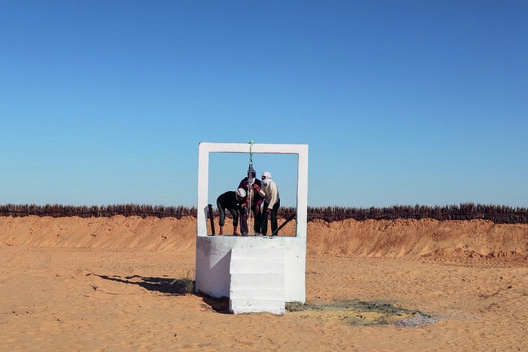
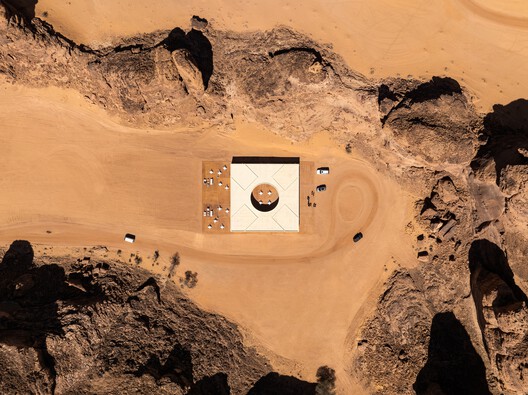
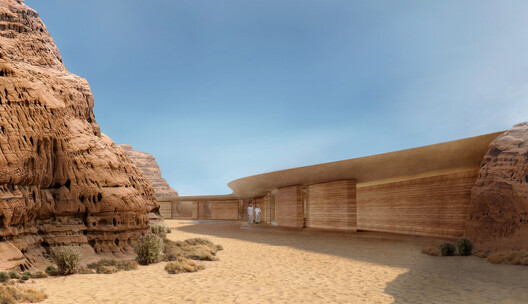
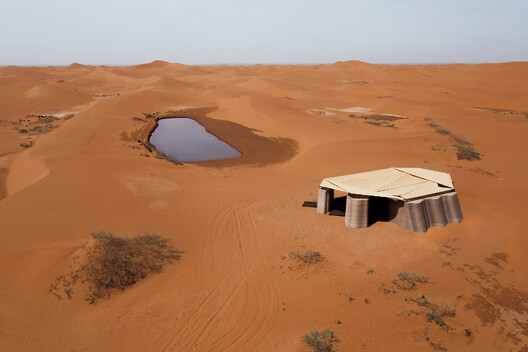
Contemporary restoration increasingly reflects this logic. At AlUla, conservation extends well beyond preserving historic walls or monuments. Ongoing work by the Royal Commission for AlUla has focused on reviving ancient irrigation networks, restoring agricultural landscapes, and reconnecting ecological systems that sustained the oasis for centuries. The project treats the oasis itself as heritage rather than isolating individual buildings for preservation. A similar logic appears in the work of the Bled el Abar collective in southern Tunisia. Their restoration of Bir Ettin was, on its surface, a modest repair of a neglected desert well. In practice, it reinstated a critical node within pastoral migration routes, reducing the distance between functioning water sources and allowing nomadic communities to maintain long-established patterns of movement. Repairing a well restored relationships between people, territory, and livelihood that had weakened over time.
Only after these environmental systems were established did architecture assume its more recognizable urban form. Streets, markets, caravanserais, courtyard houses, and mosques emerged to support the continuous arrival and departure of travellers rather than exclusively serving permanent residents. AlUla Old Town illustrates this condition particularly well. Its compact streets, shaded passages, and closely knit urban fabric were organized around commerce, pilgrimage, and hospitality, allowing goods, ideas, and cultures to circulate through the settlement with remarkable efficiency. Likewise, Siwa Oasis in Egypt developed as a tightly clustered settlement where climate-responsive construction, shared public spaces, and interconnected routes supported both everyday life and regional exchange. These settlements functioned as interfaces between movement and settlement, enabling exchange without sacrificing environmental resilience.
Oasis settlements also challenge conventional notions of belonging. Modern urbanism often associates belonging with permanence: ownership, fixed addresses, and stable occupation. Desert societies reveal another possibility. Communities repeatedly returned to the same water sources, cultivated shared landscapes, traded within common marketplaces, and collectively maintained irrigation infrastructure without requiring permanent occupation by every participant. Belonging was produced through repeated use, stewardship, and mutual dependence rather than uninterrupted residence. Water governance demanded cooperation, while trade depended on trust between travellers and settled communities. Much of the architecture of the oasis also existed in systems of collective management rather than in buildings alone.
The restoration of Bir Ettin makes this relationship particularly tangible. The repair mattered because it reactivated an entire cultural landscape. Repairing one neglected well shortened pastoral routes, restored access to water, and reconnected grazing grounds that had gradually fallen out of use. Heritage, in this context, is preserved not because a historic structure survives unchanged, but because the practices and networks that gave it meaning remain active. The project suggests that architecture can conserve movement as effectively as it conserves material fabric.
International conservation practice increasingly reflects this shift. UNESCO now recognizes many oasis environments as living cultural landscapes where water management, agriculture, ecology, and settlement are inseparable. Conservation is shifting away from preserving isolated monuments toward maintaining functioning environmental systems that continue to support communities today. Restoring irrigation channels, cultivating palm groves, rehabilitating springs, and strengthening traditional water governance have become architectural acts in their own right. The work recognizes that these settlements have always depended less on individual buildings than on the relationships connecting landscape, infrastructure, and society.
At a time when migration, climate uncertainty, and resource scarcity are reshaping the way architects think about territory, the oasis offers more than a historical precedent. It presents an alternative model of urbanism in which permanence is achieved not by resisting movement but by accommodating it. Oasis urbanism suggests that architecture can sustain the networks that keep people, landscapes, and cultures connected across distance. In that sense, the oasis is not simply one of history's oldest settlement types. The oasis survives because it continues to support relationships that extend beyond its own boundaries. That may be its most enduring architectural legacy.
This article is part of the ArchDaily Topic: Architectures of Movement: Land, Borders, and the Politics of Belonging. Every month we explore a topic in-depth through articles, interviews, news, and architecture projects. We invite you to learn more about our ArchDaily Topics. And, as always, at ArchDaily we welcome the contributions of our readers; if you want to submit an article or project, contact us.