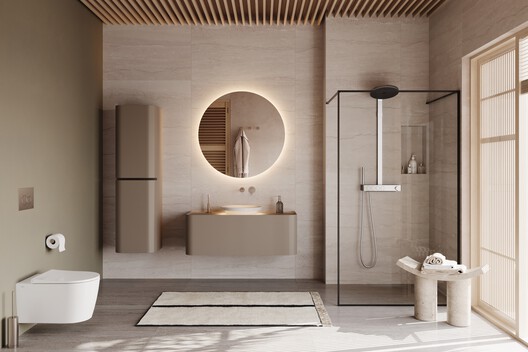
What defines the quality of a bathroom beyond its basic functions? As one of the most private spaces within the home, the bathroom is closely connected to everyday rituals and moments of pause. While fixtures, circulation, and technical requirements establish the practical foundation, the atmosphere emerges through a combination of spatial decisions: how furniture meets the floor or deliberately avoids it, how materials interact with light, how storage is integrated, and how form and proportion shape perception.
1. Creating Visual Lightness
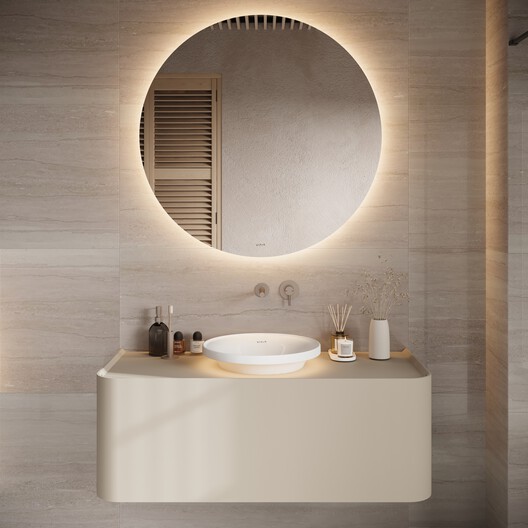
The relationship between furniture and the floor can shape the overall perception of a bathroom. Wall-hung vanities leave the floor surface visible beneath them, creating a sense of continuity and allowing the room to feel more open. This approach is particularly effective in compact spaces, where uninterrupted surfaces can strengthen the feeling of spaciousness.
Floating bathroom furniture collections, such as VitrA's Glora and Sareta, demonstrate how wall-mounted vanities can become integrated elements within the interior. Combined with seamless, handleless cabinetry, they allow materials, proportions, and architectural details to remain visually connected. Rather than appearing as separate objects set against a wall, the vanities create a lighter presence in the bathroom while still providing practical storage.
2. Adding Warmth
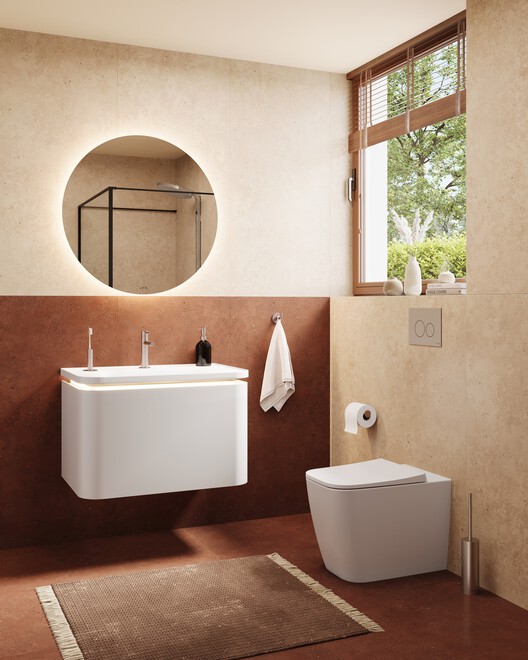
Color and material selection play a harmonious role in shaping the atmosphere of a bathroom. They affect how the space feels through texture, light reflection, and warmth. While white remains a common reference point, tones inspired by stone, clay, and wood introduce warmth while maintaining a restrained visual language. Matt finishes, in particular, absorb light and emphasize subtle variations in texture, creating surfaces that feel softer and more tactile.
Collections such as VitrA's Glora and Sareta reflect this approach through a palette that moves between soft neutrals and earthy tones. Glora's Matt White, Matt Taupe, and Matt Stone Grey finishes emphasize subtle variations in surface and tone, while Sareta expands the range with options including Matt Graphite, Matt Green, Matt Terracotta, Maple Oak, and both Matt and High Gloss White. Together, these choices demonstrate how small differences in color and texture can influence the atmosphere of a space without disrupting its simplicity, suiting a range of contemporary bathroom styles.
3. Softening Geometry
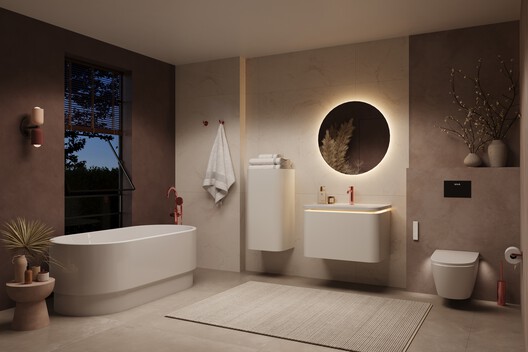
Clean lines and simple geometric forms remain central to minimalist design, as seen in the Glora collection, but they can be balanced by gentle curves. Rounded edges, sculpted profiles, and circular basins introduce subtle variations that soften the strictness often associated with minimalism without compromising clarity. Collections such as Sareta, available in both round and square configurations, are adaptable to different spaces, including smaller, more compact spaces.
4. Integrating Lighting
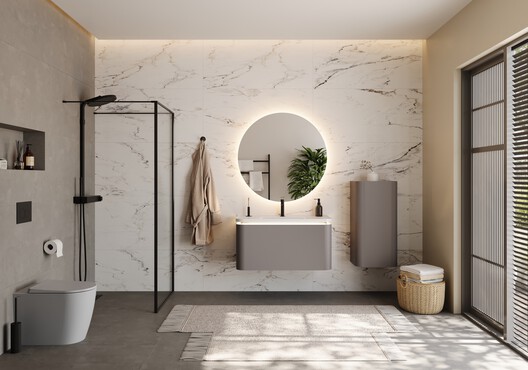
Lighting integrated into bathroom furniture can shape the bathroom's atmosphere and influence how materials, colors, and surfaces are perceived. Beyond providing illumination, it can highlight textures, define focal points, and create layers within the space. A warm-lit countertop bowl, as featured in VitrA's Glora collection, introduces ambient illumination directly into the vanity, combining everyday functionality with a softer visual experience.
5. Reducing Visual Clutter
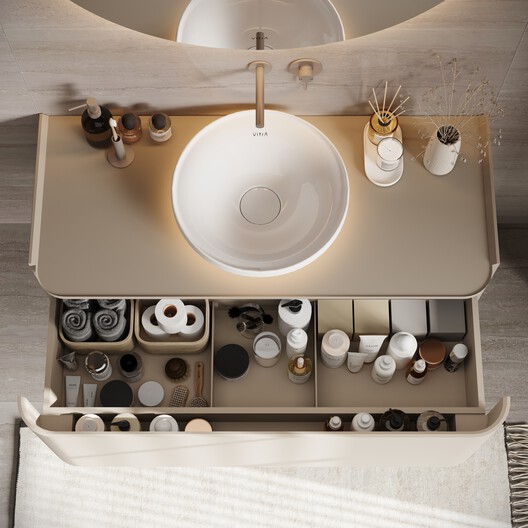
The clarity of minimalist interiors often depends on how much can be integrated and concealed within the design. Handleless fronts, flush surfaces, and concealed storage reduce unnecessary lines and details, allowing materials, proportions, and light to define the space instead of hardware.
Organized storage also plays an important role in maintaining clear surfaces and supporting daily routines. Generously sized drawers with integrated organization, such as those found in both the Glora and Sareta collections, keep everyday objects accessible while maintaining the space's visual order.
Designing a bathroom beyond its basic functions is ultimately about creating a balance between practicality and experience. Through careful consideration of space, materiality, light, and detail, effortless functions can contribute to an interior that feels cohesive and intentional. Rather than being defined only by its fixtures, the contemporary bathroom becomes a space where design decisions influence how the room is perceived, used, and experienced within the home.