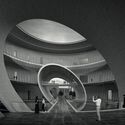
First Prize Winner: Helical. Image Courtesy of Buildner
Buildner is pleased to announce the results of its Architect's Chair Competition Edition 5, the fifth edition of the annual international competition inviting architects and designers worldwide to create a signature chair that reflects their individual design philosophy and vision.
Chair design exemplifies the interdisciplinary nature of architecture, bringing questions of proportion, structure, material, ergonomics, and craftsmanship together at the scale of a single object. This year's submissions explored a broad range of approaches, from highly minimal, structurally efficient solutions to designs rooted in cultural references, material experimentation, and new fabrication methods.
What defines the quality of a bathroom beyond its basic functions? As one of the most private spaces within the home, the bathroom is closely connected to everyday rituals and moments of pause. While fixtures, circulation, and technical requirements establish the practical foundation, the atmosphere emerges through a combination of spatial decisions: how furniture meets the floor or deliberately avoids it, how materials interact with light, how storage is integrated, and how form and proportion shape perception.
Architectural space has long been framed by permanence: rooms for fixed functions, facades that clearly define where exterior ends and interior begins. Yet contemporary life is defined by overlap and transition: between work and living, interior and exterior, privacy and community. Spatial needs evolve continually, demanding architecture that can respond, adapt, and remain relevant over time.
In this context, adaptability has emerged not only as a design ambition but as a sustainable necessity. Buildings that adjust to shifting uses, evolving climates, or new forms of living extend their lifespan and reduce the need for demolition or extensive retrofits. Flexibility becomes a measure of resilience, allowing structures to remain vital across decades. But how can architecture respond to the evolving ways we inhabit and experience space?
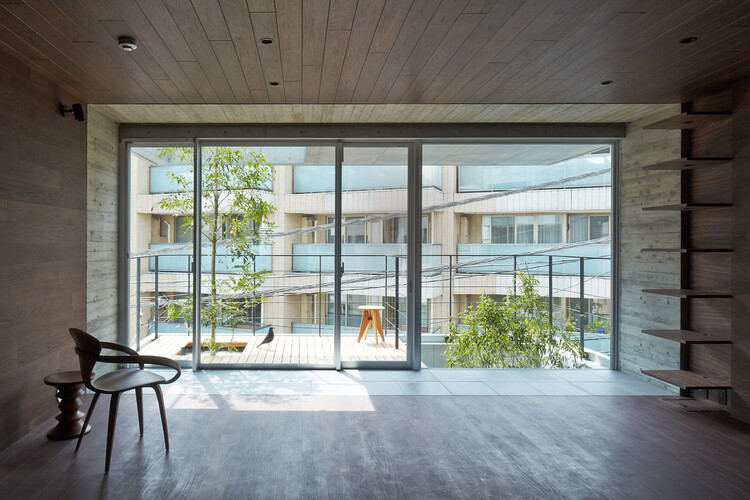
Balcony House / Ryo Matsui Architects. Image Courtesy of Ryo Matsui Architects Inc
We walk on "flat" ground every day and rarely think twice—but how flat is it, really? In the city, curbs are chamfered, sidewalks pitch toward grates, and roadways are crowned to shed water into shallow gutters. In suburbs and on unpaved paths, irregular terrain is the norm. Inside buildings, by contrast, we pursue near-perfect horizontality—structural frames, slabs, and finishes are all disciplined to create level walking surfaces in the name of safety and accessibility. Yet flatness is inherently at odds with water. A closer look reveals a quiet repertoire of accommodations: slight falls at entries, thresholds raised a few millimeters, wet areas with barely perceptible pitches. The floor is read as flat, but it is in fact carefully tuned—micro-topographies masquerading as plane—to manage water without calling attention to themselves.
What are the common ways architects "keep things flat" while actually managing water—the perennial enemy of buildings? A useful way to look at it is by zooming into three recurring conditions: exterior or roof decking, bathrooms and other wet rooms, and exterior ground planes. Each relies on a slightly different toolkit—pedestal systems over sloped waterproofing, micro-gradients to floor traps, hidden perimeter drains, split slopes—to maintain the illusion of a seamless, level surface. Studying these situations side by side reveals just how much design effort goes into reconciling perceptual flatness with the messy reality.
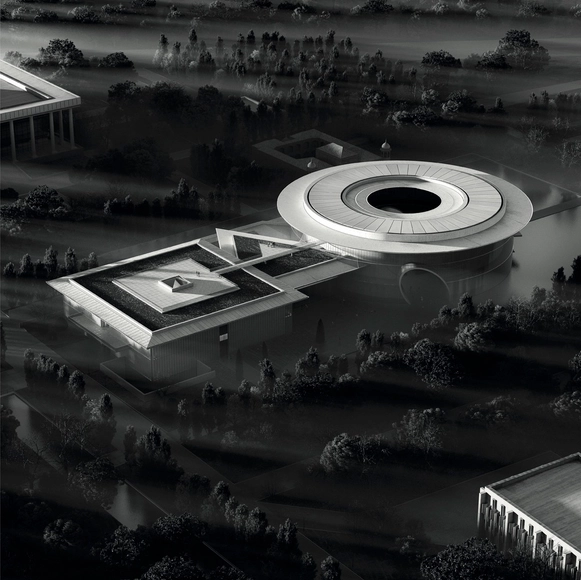
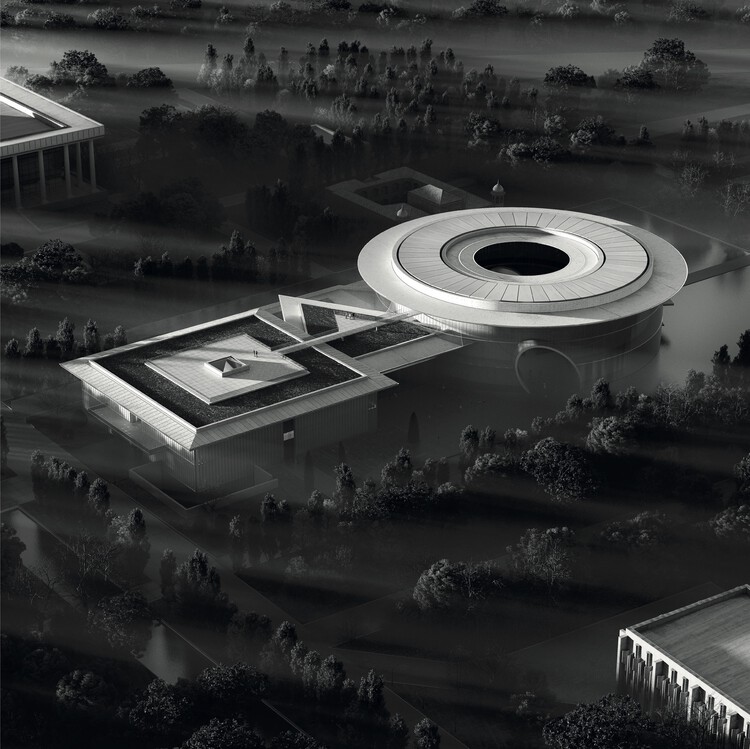
National Museum of Uzbekistan, Render by Tadao Ando Architect & Associates. Image Courtesy of The Uzbekistan Art and Culture Development Foundation
The Uzbekistan Art and Culture Development Foundation (ACDF) has announced the groundbreaking of the National Museum of Uzbekistan, designed by Japanese architect Tadao Ando. Marking Ando's first major project in Central Asia, the museum is envisioned as both an architectural and culturallandmark in Tashkent. Planned to open in March 2028, the building reflects Ando's minimalist architectural language, integrating references to Uzbekistan's heritage with his characteristic use of geometry, natural light, and spatial clarity.
Between silence and chaos, we shape our world. Every space we inhabit tells a story, evokes emotions, and influences our thoughts. Minimalism, with its lightness and purpose, invites serenity. Maximalism, exuberant and vibrant, celebrates personality in every detail. But how do these philosophies affect our minds? Understanding their psychological impact can be key to creating environments that enhance well-being and bring harmony to life.
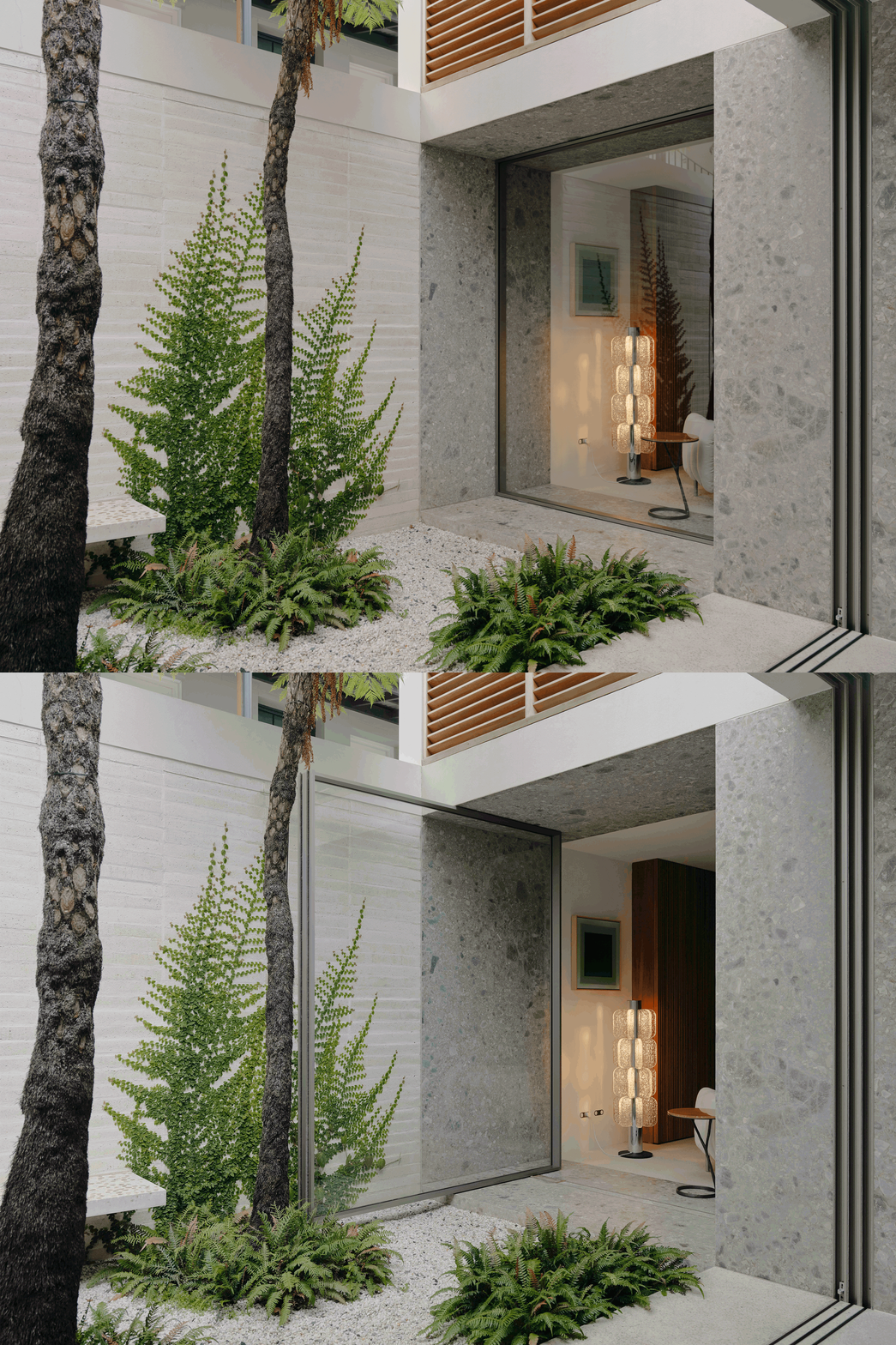
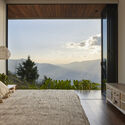
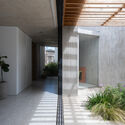
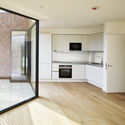
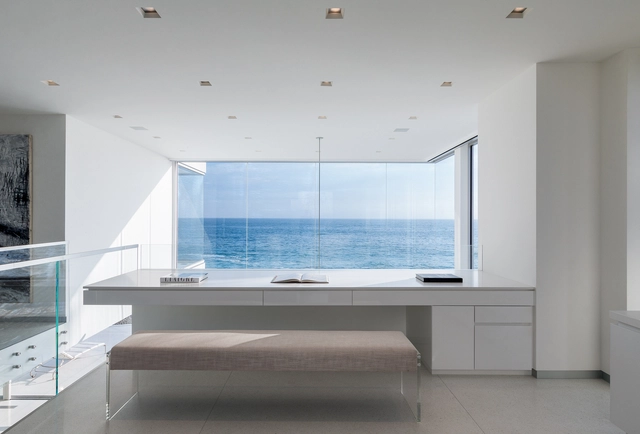
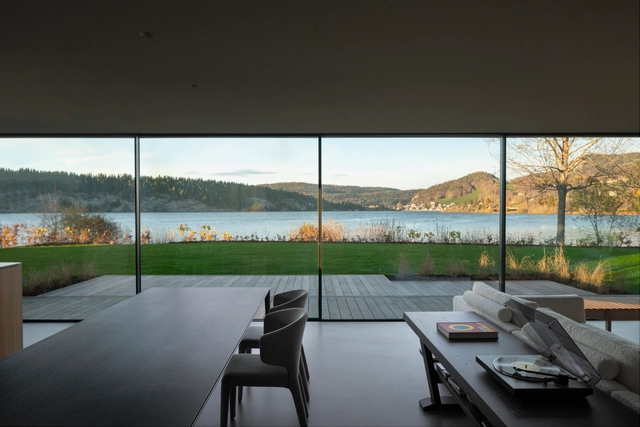
Challenging conventions has been a constant in artistic production throughout history, always seeking to reframe established limits. In the 20th century, societal, historical, and technological changes created the perfect context for profound architectural reconfiguring. In this process, modernism introduced new ideas around functionality, breaking with the ornamentation of the past. However, building on that foundation, minimalism further refined the reduction of form to its essence. Focusing on the relationship between space, restraint, and light, the Minimalist movement transformed contemporary architecture and interior design, turning windows into a fundamental resource for sensory perception and interaction with the atmosphere and space, opening up a realm of introspective, sensitive, and refined exploration.
https://www.archdaily.com/1027602/frameless-is-more-how-minimalist-windows-shape-architectural-atmospheresEnrique Tovar
Each region possesses a distinct architectural identity, serving as a cultural "fingerprint" that makes it uniquely recognizable. Italian design, for instance, draws from the Roman legacy using stone and light hues. Turkey is distinguished by intricate glazed tilework that adorns walls and ceilings, whereas Mexico embraces vibrant colors and textures through local materials and artisanry. Many of these elements are rooted in heritage-based practices, yet over time, they have been reimagined and transformed through new processes, giving rise to contemporary architectural expressions. In Switzerland, the concept of "Swissness" frames this core identity—a fusion of watchmaking precision and functionality. Rooted in micromechanics, Swiss engineering, and craftsmanship converge in the design of modern minimalist windows, where clean lines and transparency redefine boundaries and shape the architectural language.
https://www.archdaily.com/1024621/swissness-framed-micromechanics-and-minimalist-windows-in-modern-architectureEnrique Tovar
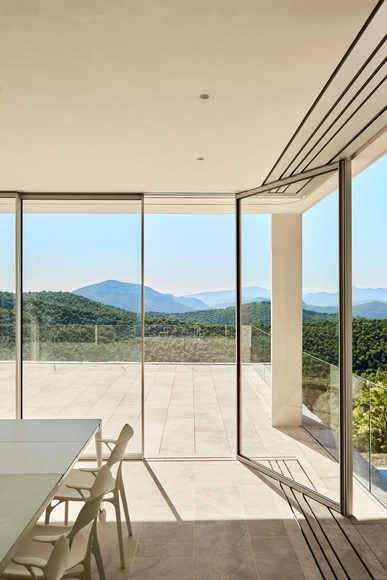
Windows are an essential architectural element whose basic function, though simple, remains vital. Primarily designed to let in natural light and facilitate air circulation, they play a constant role in everyday life, presenting an interesting duality. From an artistic perspective, painters such as Johannes Vermeer and Henri Matisse have used them as expressive tools, exploring their ability to frame views and tell stories. In contrast, windows have transcended traditional scales and designs within their contemporary and minimalist architectural dimension, creating fluid spatial connections between inside and outside. Beyond formal and stylistic innovation, this evolution finds resonance in the foundational concepts and treatises that have guided architecture since the past.
https://www.archdaily.com/1024391/how-to-frame-a-view-worth-framing-vitruvian-principles-and-the-ideal-windowEnrique Tovar
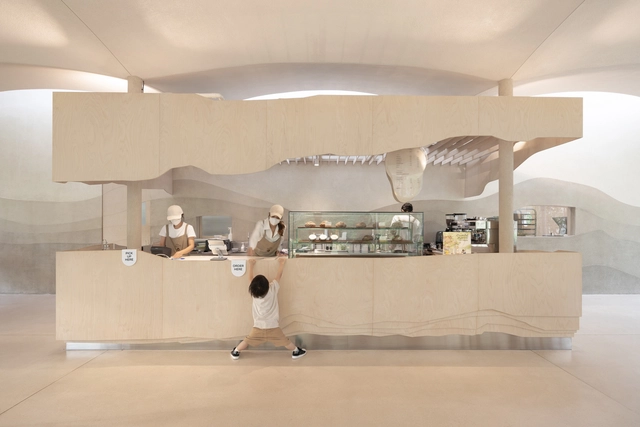
Coffee culture continues to thrive in the contemporary world, with a noticeable shift from the dominance of chains & franchise stores to a growing market for prosumer coffee. As more and more coffee consumers become prosumers, individuals who both produce and consume, they are turning coffee-making into a hobby, even a ritual, and are expecting coffee shops to keep up. Consumers are becoming more knowledgeable, paying close attention to the source and type of beans, brewing methods, and equipment. They also appreciate the design of coffee machinery, not just for its functionality but for its aesthetics, efficiency, and space management. This surge in interest, especially in Asia, has led to changes in coffee shops' operations. Many individual coffee shops, responding to the rise in consumer spending power and interests, are motivated to focus on creating unique, immersive experiences for an ever-growing marketable audience.
In recent years, continuous material finishes enveloping interior spaces have become increasingly prominent, particularly in branding-focused retail environments. A continuous interior refers to using what are typically liquid-applied materials that are cured to create seamless, uninterrupted surfaces, eliminating the appearance of joints and seams—at least during the initial application. A growing range of products now offer various color options, textures, and practical properties, making these finishes more versatile. Interestingly, the aesthetic effect of such interiors is uncanny to the rise of 3D rendering software, where the seamless, fluid look mirrors the smooth, idealized spaces typical of digital renderings. This effect also contributes to a sense of scalelessness, as the absence of visible seams or joints makes it harder to discern the actual size of a space, often giving the illusion that the interior is larger than it is.
Robert Wilson embodies the roles of director, set designer, scenographer, lighting designer, and architect in a single figure. Internationally celebrated as a pioneer of stage lighting and honored with numerous prestigious awards, including the Golden Lion of the Venice Biennale and the Praemium Imperiale, Wilson, now in his eighties, continues to travel the world, staging remarkable productions. His use of light and color is marked by precision and minimalism, creating scenes that skillfully oscillate between stillness and drama. During rehearsals at the Düsseldorf Schauspielhaus, he elaborates on the interplay between stage and architecture, his creative process, and the profound impact of light on darkness.
New York City’s skyline tells the tale of the region’s dated relationship with architectural innovation and style. Among the many materials that cloak the city’s built environment, terracotta has a distinct significance. The clay-based material was a prominent feature in buildings from the late 1800s to the 1920s and, after a brief pause, is experiencing a resurgence with contemporary design. The revival pays homage to The Big Apple’s architectural heritage while leading a movement for sustainable materials in the city.
Snøhetta has unveiled a vacation home design nestled within the landscape of Hokkaido Island for the Japanese hospitality group NOT A HOTEL. Situated atop the renowned Rusutsu Resort, the project centers itself around Mount Yotei and provides framed views. The 1200 sqm building’s design aims to be minimal, influenced by the surrounding terrain and defined site boundaries.
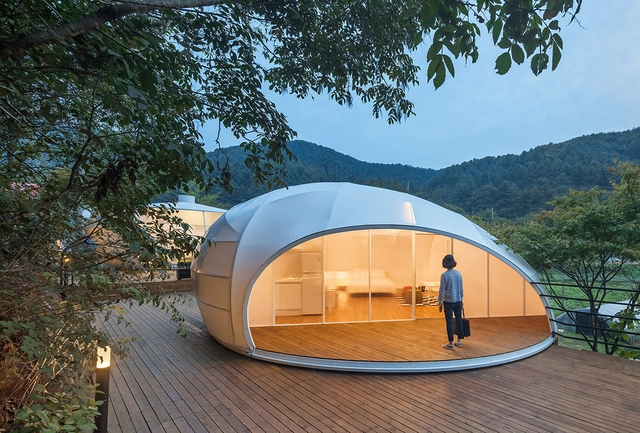
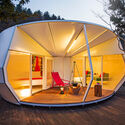
Camping, as defined in dictionaries, involves temporarily staying outdoors, setting up makeshift accommodations, and settling in natural surroundings. In architecture, tents symbolize these aspects, representing a typology that has endured across centuries and cultures, often linked with notions of impermanence and vulnerability.
In light of this common understanding, the term 'glamping' emerged in the early 2000s, blending 'camping' with 'glamour,' suggesting a fusion of camping with luxurious amenities. However, despite its recent popularization, the concept is far from original. Camping has not always been seen as the antithesis of luxury.
When we talk about the building envelope, we often make the analogy of a skin that protects and wraps the structure, creating a transition in the physical environment. This concept is interesting as it identifies that, similar to its function in humans, the skin plays a role in protecting and regulating the interior setting, besides contributing to the aesthetics of the building. In this way, both the human skin and the building envelope act as elements that respond to the stimuli of the surroundings and the life that develops within them. More than just protective barriers, they are experienced as means of active interaction with the context.
While envelopes evolve within diverse contexts, materials, and systems, minimalist windows distinguish themselves through their aesthetic qualities by being transparent and fluid skins. These windows excel with their functionality and visual lightness, standing out in the architectural landscape. In addition, they are noteworthy thanks to their versatility across different systems that connect life within the interior and exterior. Considering Swiss and Pritzker Prize-winning architect Peter Zumthor's statement that "architecture is exposed to life,” windows play a vital role in expressing that connection, becoming a significant part of the building's identity and essence.
https://www.archdaily.com/1013905/reframing-the-concept-of-building-envelope-through-minimalist-windowsEnrique Tovar
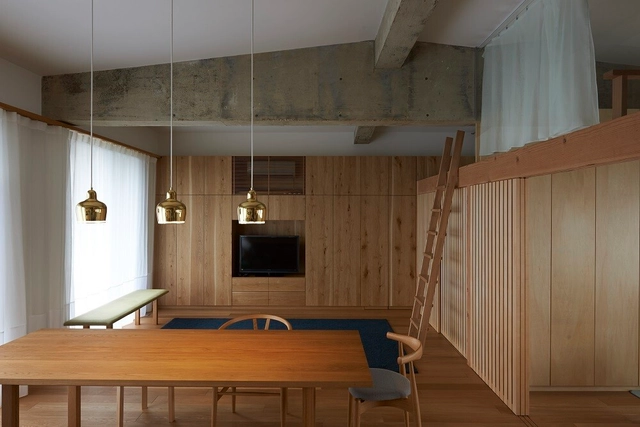
Contemporary Japanese interiors incorporate elements both of tradition and modernity to embody the country's innovative spirit while maintaining a profound respect for its history and cultural heritage. Though traditional materials like wood, paper, and bamboo continue to hold significance, modern Japanese interiors also often feature a fusion of glass, steel, concrete, and metals. The juxtaposition of smoother, sleeker textures and finishes with warmer and more organic ones reflects a dynamic synthesis of old and new, and results in visually striking and functional spaces that honor the essence of the country's design principles.
Essential Induction Cooktop. Image Courtesy of Gaggenau
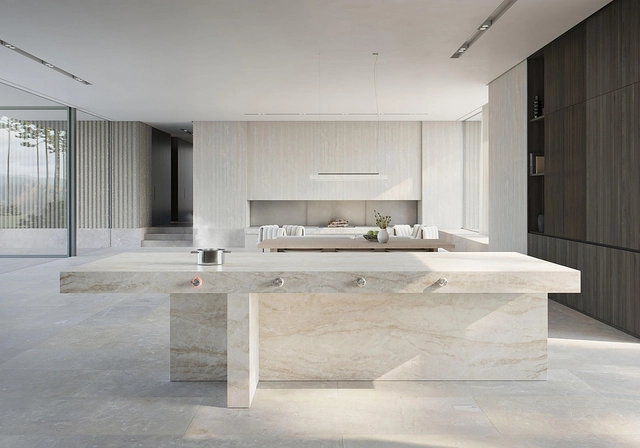
Following evolving lifestyle trends and technological innovations, contemporary architecture often enhances the design of kitchens to fulfill multifaceted and dynamic roles. By incorporating smart and automated systems and creating flexible, adaptable spaces with minimalist and clean lines, kitchens embody the essence of contemporary life.
Based on technological advances, a clear design language and functionality, Gaggenau’s innovative home appliances evolve in harmony with changing lifestyles. Among their solutions, the Essential Induction cooktop seamlessly integrates into the kitchen’s worktop, providing flexibility and cutting-edge design for culinary enthusiasts.