Buildner is pleased to announce the results of its Architect's Chair Competition Edition 5, the fifth edition of the annual international competition inviting architects and designers worldwide to create a signature chair that reflects their individual design philosophy and vision.
Chair design exemplifies the interdisciplinary nature of architecture, bringing questions of proportion, structure, material, ergonomics, and craftsmanship together at the scale of a single object. This year's submissions explored a broad range of approaches, from highly minimal, structurally efficient solutions to designs rooted in cultural references, material experimentation, and new fabrication methods.
The competition was evaluated by an international jury of architects, industrial and product designers, including Inma Bermúdez of Studio Inma Bermúdez, Torbjørn Anderssen and Espen Voll of Anderssen & Voll, Boris Berlin of Boris Berlin Design, Hee Welling and Gudmundur Ludvik of Welling / Ludvik, Thomas Lykke of OEO Studio, as well as Sebastian Alberdi, Sarah Hossli, Lorenz Noelle, and Sofie Østerby. Together, the jury assessed the proposals across conceptual clarity, ergonomics, material use, craftsmanship, structural logic, manufacturability, and long-term usability, with particular attention to projects that successfully translated architectural thinking into furniture at the scale of the chair.
Sixth Edition Launched in Partnership with Stockholm Furniture Fair
Following the conclusion of the fifth edition, Buildner has also announced Architect's Chair Edition 6, organized in partnership with Stockholm Furniture Fair. The next edition continues the competition's exploration of furniture at the intersection of architecture, craft, and design, with selected winning projects exhibited at Stockholm Furniture Fair.
Architects and designers are invited to register here by the advance registration deadline of 24 September 2026.
Projects:
First Prize Winner
Project title: Helical
Author: Oscar John Xavier Lahiff, Hong Kong
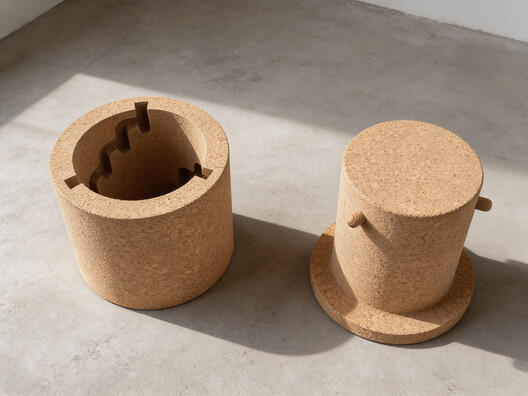
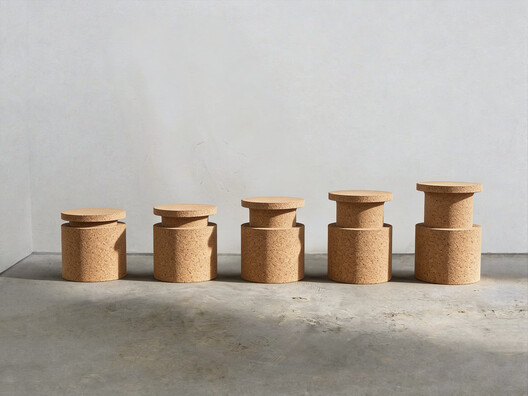
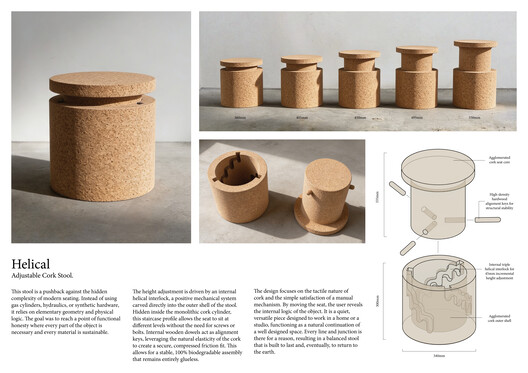
Helical proposes an adjustable cork stool that reduces seating to its essential components of form, material, and mechanism. Built around a cylindrical geometry, the design uses an internal helical interlocking system to provide incremental height adjustment through a simple rotational movement, eliminating conventional gas cylinders, hydraulics, screws, and complex hardware. Wooden dowels act as alignment keys, using the natural elasticity of cork to create a stable friction fit while maintaining an entirely glue-free assembly. The use of agglomerated cork gives the object a warm tactile quality while supporting recyclability and material efficiency. Through its combination of mechanical simplicity, restrained geometry, and material honesty, the project presents an intuitive and adaptable seating object designed for long-term use.
Second Prize Winner
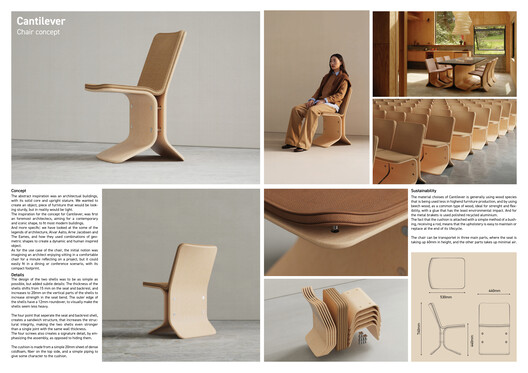
Project title: Cantilever Chair
Author: Marcus Hannibal Sigvardt, United States
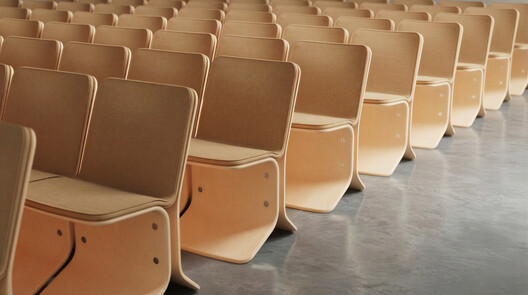
Cantilever Chair reinterprets the classic cantilever typology through a reduced structural system composed of two primary bent-veneer shells forming the seat, backrest, and supporting base. The design uses a minimal number of connections and carefully controlled curves to create a continuous relationship between structure, ergonomics, and form. Subtle cushioning provides comfort without obscuring the clarity of the timber construction, while the separation between the shells reinforces the chair's visual lightness. Designed as a limited number of components, the chair can be disassembled into three main parts for efficient transport and maintenance, with replaceable upholstery extending its usable life. Through its emphasis on structural economy, manufacturability, and material efficiency, the project offers a contemporary interpretation of the Cantilever Chair suited to domestic, commercial, and institutional settings.
Third Prize Winner
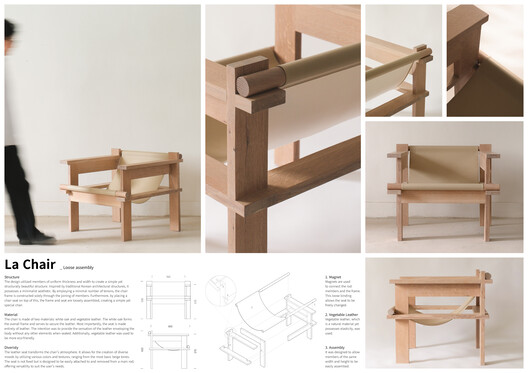
Project title: La Chair
Author: Sunmin Kim, South Korea
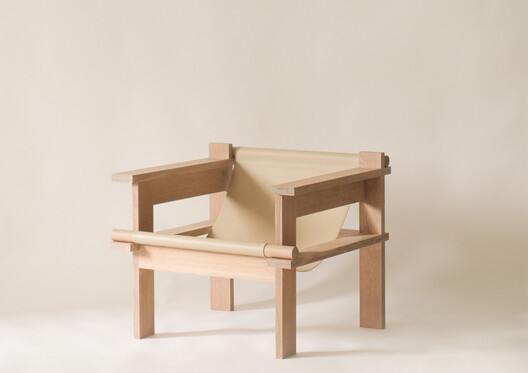
La Chair explores the relationship between rigid structure and flexible support through a restrained assembly of white oak and vegetable leather. Drawing from the clarity and material logic of traditional Korean architecture, the design uses a simple timber frame constructed from a limited number of members, with a suspended leather surface forming the seat and backrest. Rather than concealing its assembly, the chair emphasizes visible connections and a loose-fit construction system that allows components to be assembled, removed, or replaced. The contrast between the orthogonal timber structure and softer suspended leather creates a clear dialogue between solidity and flexibility while allowing the seat to adapt naturally to the body. Through its emphasis on material simplicity, repairability, and legible construction, the project develops a distinctive seating object rooted in craftsmanship and structural clarity.
Buildner Student Award
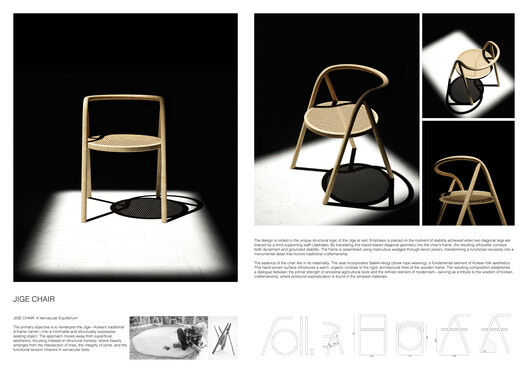
Project title: Jige Chair
Authors: Cho Hyuna, Hyunwoo Ha, Korea University, South Korea
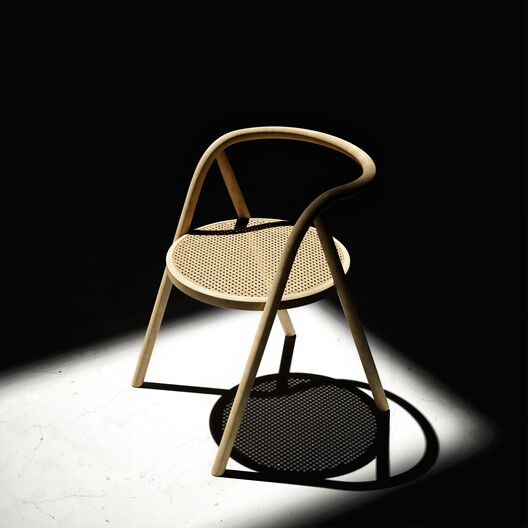
Jige Chair reinterprets the structural logic of the traditional Korean jige, a vernacular A-frame carrying tool, as a contemporary seating object. The design translates its tripod-based stability and diagonal bracing into a minimal wooden frame defined by curved and linear elements. A woven seat using Saekki-kkogi, a traditional Korean straw-rope weaving technique, introduces a tactile counterpoint to the refined timber structure while reinforcing the project's cultural grounding. The reduced construction creates an open and visually lightweight silhouette, with the curved back element acting simultaneously as support and a defining formal gesture. Through its combination of vernacular references, structural efficiency, and traditional craftsmanship, the project transforms a familiar utilitarian object into a contemporary chair with a distinct cultural and material identity.
Buildner Sustainability Award
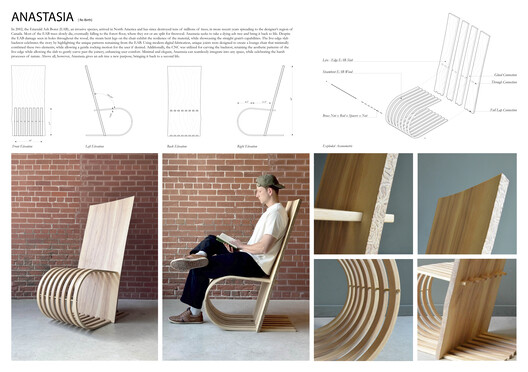
Project title: Anastasia
Author: Clay Anthony Te Bokkel, University of Waterloo, Canada
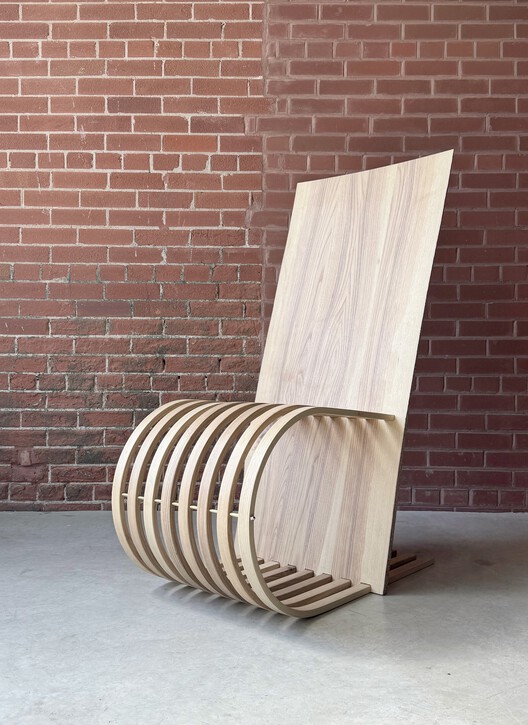
Anastasia proposes a lounge chair constructed from ash trees affected by the Emerald Ash Borer, transforming damaged timber into a material resource while retaining visible traces of its history. The design combines a series of repeated steam-bent ash members to form a continuous seat and base with a singular live-edge slab forming the backrest. The curved elements provide structural support and a gentle rocking motion, while the planar back establishes a deliberate contrast between repetition and solidity. CNC fabrication and traditional joinery are used to integrate the components while preserving the natural grain and markings of the affected wood. Through its emphasis on material reuse, visible construction, and expressive geometry, the project gives new purpose to timber otherwise threatened by loss while creating a sculptural and functional seating object.
Highlighted Submissions
Project title: Weavy Weavy Weavy
Author: Didier Alejandro Iriarte Fattel, Australia
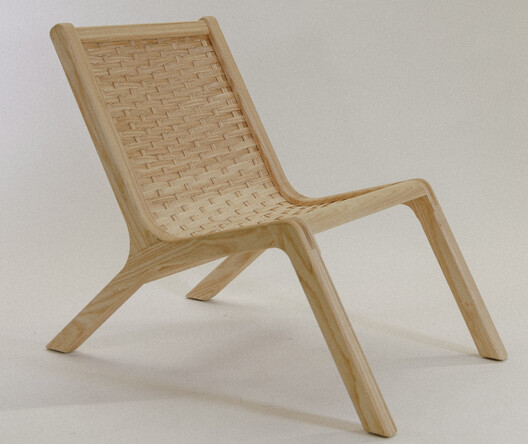
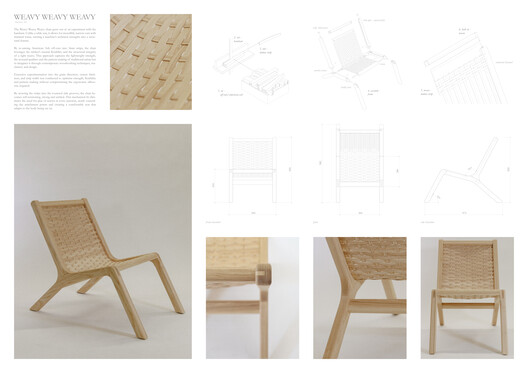
Weavy Weavy Weavy explores timber as a flexible, tensile material through a chair developed from bandsaw experiments with American ash off-cuts. Thin veneer strips are woven into routed grooves within a rigid timber frame, creating a self-tensioning seat and backrest that draws on the lightweight and tactile qualities of traditional rattan construction. The woven surface works as a flexible diaphragm, adapting subtly to the body while eliminating the need for glue or screws at individual junctions. Bridle joints and mortise-and-tenon connections provide rigidity to the surrounding frame, while the woven elements make efficient use of material that might otherwise become workshop waste. Through material experimentation and contemporary woodworking techniques, the project proposes a new application for woven timber construction that combines structural efficiency, flexibility, and craft.
Project title: Dou
Author: Ying Wong, Hong Kong
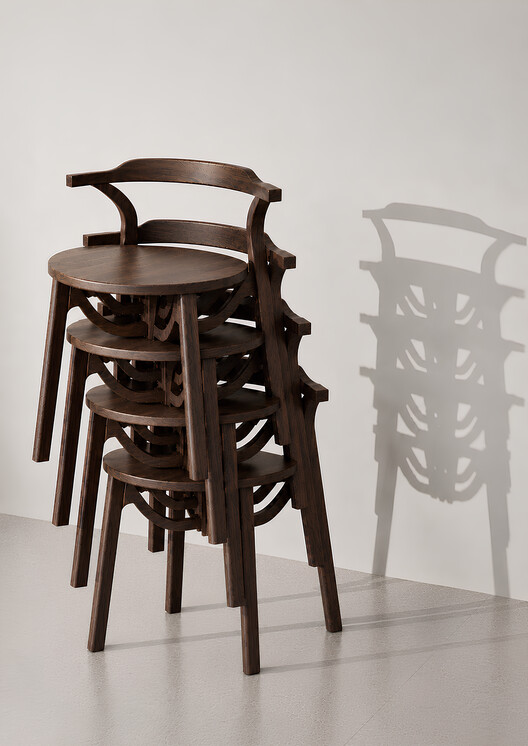
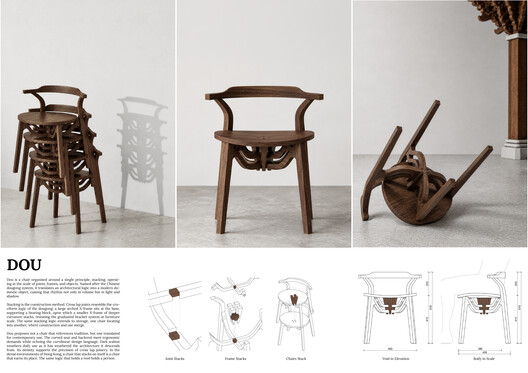
Dou translates the structural logic of traditional Chinese dougong bracket systems into a contemporary stackable chair. The design is organized around repetition and stacking at multiple scales, from individual cross-lap joints to the larger frame and the way multiple chairs nest together. A large arched X-frame forms the base, supporting a bearing block and a second frame of deeper curvature, recalling the graduated bracket assemblies used in traditional Chinese architecture. Constructed in dark walnut, the chair combines the precision required for its interlocking joinery with curved surfaces designed for ergonomic comfort. The same principle extends to storage, allowing one chair to locate within another. Through this translation from architecture to furniture, Dou uses a historic construction principle to address contemporary questions of assembly, space, and compact living.
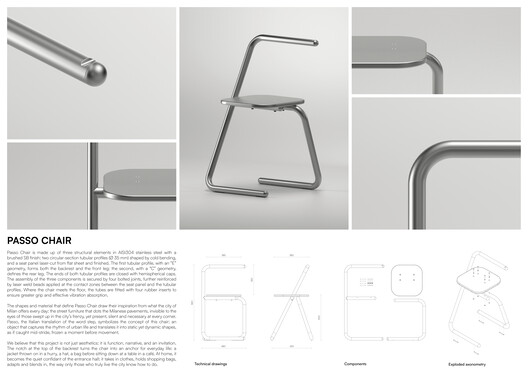
Project title: Passo Chair
Authors: Tommaso Ugolini, Alberto Luzardi, Italy
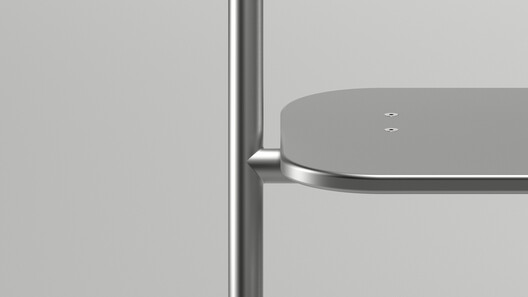
Passo Chair draws on the forms and rhythms of Milan's street furniture to create a compact stainless-steel chair defined by three primary structural elements. Two cold-bent tubular profiles form the legs and backrest, while a laser-cut sheet creates the seat, with the components joined through a combination of bolts and welded connections. Its asymmetric geometry gives the chair a sense of arrested movement, reflected in its name, Passo, the Italian word for "step." A notch incorporated into the upper backrest extends the chair's everyday function, providing a place to hang a jacket, bag, or other personal objects. Through its reduced construction and urban references, the project translates familiar elements of Milan's public realm into a functional domestic object that balances structural clarity with a dynamic silhouette.
Project title: Arch Chair
Author: Rachel Lapidot, Israel
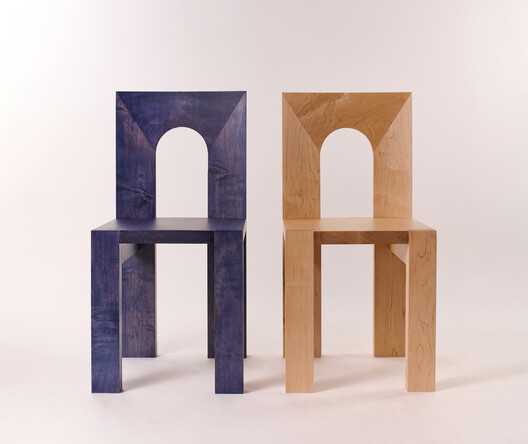
Arch Chair draws on Mediterranean architectural traditions, translating the Roman arch and its keystone into the defining elements of a contemporary wooden chair. The design uses a restrained geometric composition in which the arched opening becomes both a structural and visual motif, connecting the scale of furniture to a broader architectural history. Constructed in maple, the chair combines straight lines with subtle shifts in proportion and gentle curvature at the backrest, allowing its form to change according to the viewer's perspective. The project has been developed in both natural timber and stained versions, including a deep Mediterranean blue derived from the colors of the regional landscape. Through its emphasis on geometry, material, and cultural reference, the chair transforms a recognizable architectural element into a simple and functional piece of furniture.
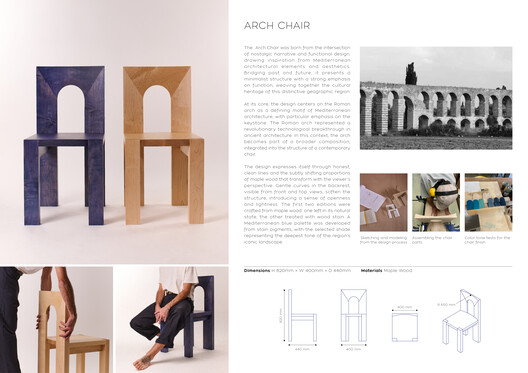
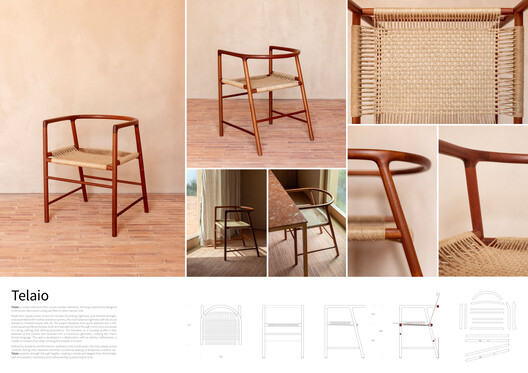
Project title: Telaio
Author: Fabio Baldo, Portugal
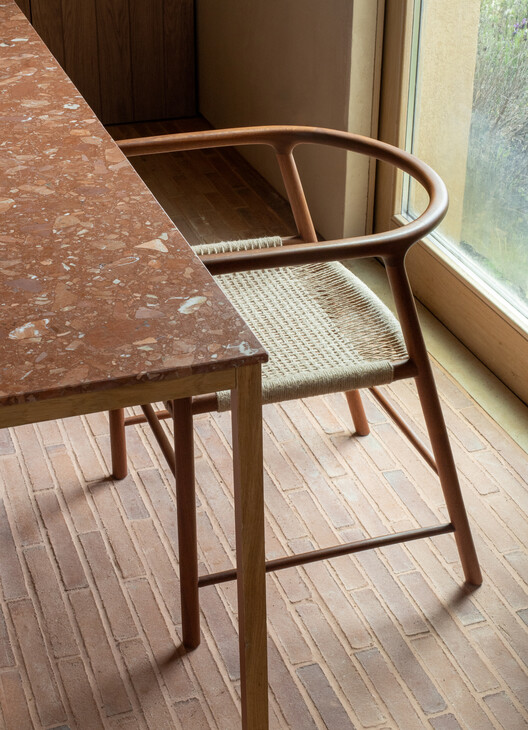
Telaio explores the relationship between furniture making and weaving through a lightweight timber chair conceived as both structure and loom. Constructed from thin, rounded elements of Sapele wood, the frame uses mortise-and-tenon joinery to create a restrained structural system designed to receive a woven seat of jute or other natural cord. The project developed through full-scale prototyping and iterative hand adjustments, gradually refining a square-section frame into a continuous rounded geometry. The woven seat was developed in collaboration with an experienced craftswoman specializing in traditional corded chairs, bringing manual knowledge directly into the design process. Through its emphasis on simplicity, visible construction, and natural materials, Telaio establishes a dialogue between contemporary fabrication and traditional craftsmanship while creating a versatile chair suited to a range of domestic settings.
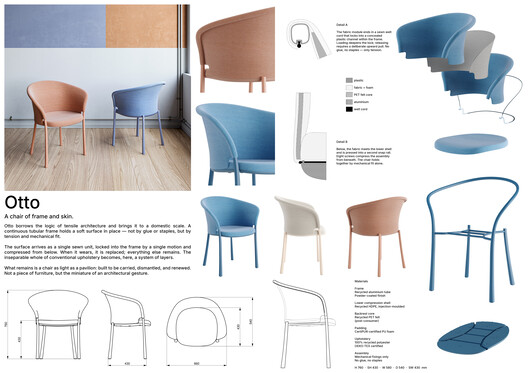
Project title: Otto
Author: Muhammet Sami Yeni, Turkey
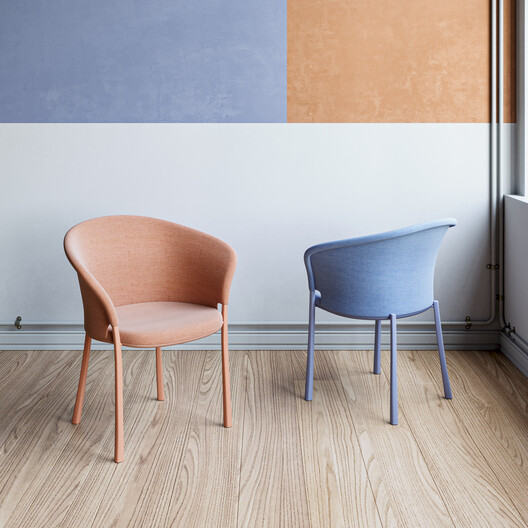
Otto reconsiders conventional upholstery by treating a chair's soft surface as a removable, replaceable component rather than a permanent skin. A continuous recycled-aluminum tubular frame supports a sewn module of fabric, foam, and recycled PET felt through tension and mechanical fit, eliminating glue and staples from the assembly. A concealed snap rail secures the backrest while a recycled HDPE shell compresses the seat from below, allowing the upholstery to be removed and replaced without specialist tools. This separation between permanent frame and renewable soft components extends the chair's usable life while allowing its materials to be disassembled for recycling. Drawing on the logic of tensile architecture, Otto combines structural legibility, reversibility, and material efficiency within a visually continuous domestic object designed to be dismantled and renewed over time.
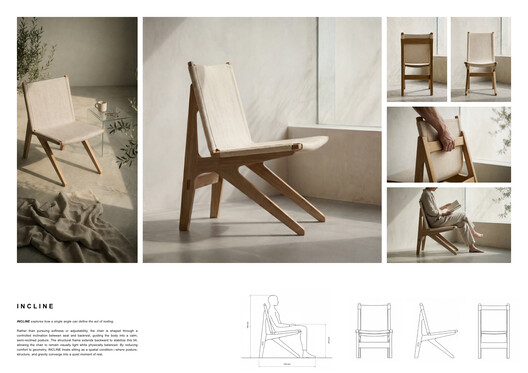
Project title: Incline
Authors: Kaiwen Liu, Yuhe Wang, Pratt Institute, United States

Incline explores how a single controlled angle can define both the structure and experience of a low lounge chair. Rather than relying on extensive padding or mechanical adjustment, the design uses the relationship between seat and backrest to guide the body into a relaxed, semi-reclined posture. Two light oak side frames extend backward to stabilize the inclined geometry, while horizontal crossbars provide lateral strength and support fabric sling panels forming the seat and backrest. The combination allows the timber structure to work primarily in compression while the fabric supports the body through tension. Through its restrained material palette and reduced construction, Incline approaches comfort as a relationship between posture, structure, and gravity, creating a lightweight chair in which the act of resting becomes the central design gesture.
Architects and designers interested in taking part in the next edition are invited to register for The Architect's Chair Edition #6, developed in partnership with Stockholm Furniture Fair. Selected winning designs will be exhibited at the fair, alongside a total prize fund of €8,000. Register by the advance registration deadline of 24 September 2026, with final registration closing on 3 December 2026 and project submissions due by 5 January 2027: Register for The Architect's Chair Edition #6


