1. ArchDaily
  2. Storage

Storage: The Latest Architecture and News

Why Smart Lockers Are Architecture’s New Micro-Infrastructure

 | In Collaboration

How can the most structured elements in architecture give rise to unplanned forms of everyday life? "Spontaneous order" describes how structured systems can generate unplanned but coherent patterns of behavior. In urban discourse, it is often used to describe cities: frameworks of streets, plots, and buildings that are designed, while everyday life is not. Movement, encounters, routines, and informal uses emerge from simple spatial rules rather than explicit programming. In cities, this is visible in how sidewalks, stations, and thresholds operate. The structure is fixed, but the social order is fluid, setting conditions for behavior rather than defining it.

A similar logic can be observed in architectural micro-infrastructures such as locker systems. Like cities, lockers rely on structured frameworks that do not prescribe how life unfolds within them. A locker system is highly controlled in architectural terms: repetitive modules, strict grids, standardized dimensions, controlled access. Yet once in use, it produces spontaneous behaviors. People pause in corridors, return at irregular times, linger near locker zones, or briefly interact with others doing the same. What appears to be a strictly infrastructural storage system begins to generate informal social and spatial behavior.

Beyond Circulation: Stair Solutions for Small-Footprint Living in Asia

Subscriber Access | 

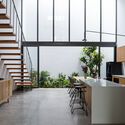
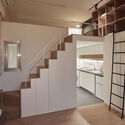
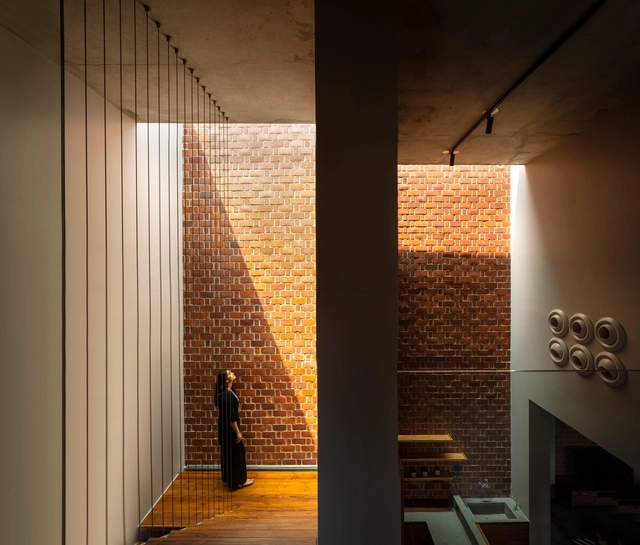
In many high-density cities across Asia, the staircase is often treated as a necessary evil. Whether in apartment buildings, private homes, or retail interiors, it is frequently hidden, tucked away, or pushed to the margins—an element to be minimized so more area can be given to "usable" space. Yet as density intensifies and square footage becomes increasingly scarce, architects and designers are forced to rethink this vertical puzzle.

The question shifts from how to conceal the staircase to how to make it work harder: can it become a productive addition to the interior—an architectural device that does more than connect levels, performing dual (or multiple) duties rather than simply consuming floor area?

Beyond Circulation: Stair Solutions for Small-Footprint Living in Asia - Image 1 of 4Beyond Circulation: Stair Solutions for Small-Footprint Living in Asia - Image 2 of 4Beyond Circulation: Stair Solutions for Small-Footprint Living in Asia - Image 3 of 4Beyond Circulation: Stair Solutions for Small-Footprint Living in Asia - Image 4 of 4Beyond Circulation: Stair Solutions for Small-Footprint Living in Asia - More Images+ 11

How Can Hidden Niches Transform Walls into Functional Architecture?

 | Sponsored Content

The niche has been a space of visible intention throughout the history of architecture. In ancient Roman architecture, it served as a formal device carved into masonry to display statues, vases, or other objects. These recesses animated the walls of temples, bath complexes, and civic buildings, adding rhythm, depth, and focal points to otherwise massive structures. The interior spaces of the Pantheon framed statues of gods, and the Baths of Caracalla used similar voids to structure expansive halls. By the Renaissance, the niche evolved into a refined architectural frame. In Florence, the external cavities of Orsanmichele held guild-commissioned statues, while the Uffizi Palace's recesses displayed sculptural works. Whether filled or intentionally left empty, these openings articulated internal and external walls and facades, introduced hierarchy, and provided visual interest, serving as deliberate gestures meant to be seen.

Behind the Scenes, On Display: Self-Curated Journeys through the Museum Archive

The museum and gallery visit has long been a highly curated experience. Visitors are guided through a carefully orchestrated sequence of rooms, with hand-picked works arranged to tell a specific narrative, supported by signage, graphics, scenography, and calibrated lighting. Even the rarely changed exhibitions - the permanent collections, also typically rely on a strong curatorial voice— led by noted artists or curators—to set institutional stance and shape interpretation.

At the same time, storage areas for museums and galleries are typically kept separately—often within the same building but under tightly controlled access, and not infrequently off-site in dedicated facilities, such as the Louvre Conservation Centre. These zones have long been understood as highly controlled spaces not only in terms of access, but also in relation to climate, humidity, archival order, handling protocols, maintenance, and repair. For fear of thefts and that the spatial, environmental, and sequencing requirements of the archive could be disturbed, storage has traditionally been somewhat secretive and primarily serves academic researchers and art practitioners by request. Rarely does the general public gain a comprehensive picture of the works safeguarded by any given institution.

Behind the Scenes, On Display: Self-Curated Journeys through the Museum Archive - Image 1 of 4Behind the Scenes, On Display: Self-Curated Journeys through the Museum Archive - Image 2 of 4Behind the Scenes, On Display: Self-Curated Journeys through the Museum Archive - Image 3 of 4Behind the Scenes, On Display: Self-Curated Journeys through the Museum Archive - Image 4 of 4Behind the Scenes, On Display: Self-Curated Journeys through the Museum Archive - More Images+ 27

Overprovision: Exploring Purposefully Wasteful Spaces in Residential Design

Overprovision can be seen as an architecture strategy through the lens of resilience—making spaces adaptable to changes, reinterpretations, and future needs. However, could overprovision also offer a productive lens for rethinking spatial design? Are there parallels in architectural theory or practice that align with this concept, as explored by notable figures in the discourse on space?

This question becomes particularly relevant in residential design, especially in regions like Hong Kong or Tokyo, where the demand to maximize space is a cultural and practical norm. Designers are frequently tasked with "making use of every inch" for storage or function, reflecting a tendency among residents to accumulate belongings disproportionate to their living spaces. 

Overprovision: Exploring Purposefully Wasteful Spaces in Residential Design - Image 1 of 4Overprovision: Exploring Purposefully Wasteful Spaces in Residential Design - Image 2 of 4Overprovision: Exploring Purposefully Wasteful Spaces in Residential Design - Image 3 of 4Overprovision: Exploring Purposefully Wasteful Spaces in Residential Design - Image 4 of 4Overprovision: Exploring Purposefully Wasteful Spaces in Residential Design - More Images+ 12

The Future of Energy: Can Buildings Become Reservoirs of Power?

Subscriber Access | 

Environmental degradation has shed light on the need for new sources of energy. A shift in energy sources calls for innovative means of storing energy. For centuries, buildings have proven able to store people, objects, and systems, inviting a conversation about their untapped potential to efficiently store large amounts of energy. In this new era, can buildings go beyond being structures of function to potential reservoirs of power?

The Future of Energy: Can Buildings Become Reservoirs of Power?  - Image 1 of 4The Future of Energy: Can Buildings Become Reservoirs of Power?  - Image 2 of 4The Future of Energy: Can Buildings Become Reservoirs of Power?  - Image 3 of 4The Future of Energy: Can Buildings Become Reservoirs of Power?  - Image 4 of 4The Future of Energy: Can Buildings Become Reservoirs of Power?  - More Images

Utilizing Low-Height Interior Spaces: 19 Creative Solutions for Extra Storage in Attics and Under Stairs

Subscriber Access | 

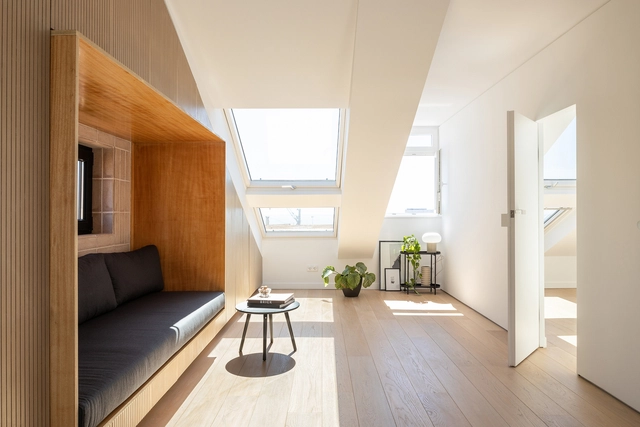
By converting the unused areas hidden in the roofspace, homeowners are able to add extra bedrooms, games rooms, or simply give themselves easier-to-access storage space, without having to move house or apply for planning approval. And with more of our lives now occurring under our own roofs, the additional space provided by an attic conversion is more popular than ever.

Without the ability to alter the roof’s pitch, however, the low-height areas of an attic room often remain unusable, and the resulting usable space is restricted by how low its functions can go. By positioning low-height features and activities in these nooks and crannies, attic rooms can make the best of the space they’re given.

Utilizing Low-Height Interior Spaces: 19 Creative Solutions for Extra Storage in Attics and Under Stairs - Image 1 of 4Utilizing Low-Height Interior Spaces: 19 Creative Solutions for Extra Storage in Attics and Under Stairs - Image 2 of 4Utilizing Low-Height Interior Spaces: 19 Creative Solutions for Extra Storage in Attics and Under Stairs - Image 3 of 4Utilizing Low-Height Interior Spaces: 19 Creative Solutions for Extra Storage in Attics and Under Stairs - Image 4 of 4Utilizing Low-Height Interior Spaces: 19 Creative Solutions for Extra Storage in Attics and Under Stairs - More Images+ 15

Design Depot: 30 Projects that Explore Diverse Storage Solutions

Subscriber Access | 

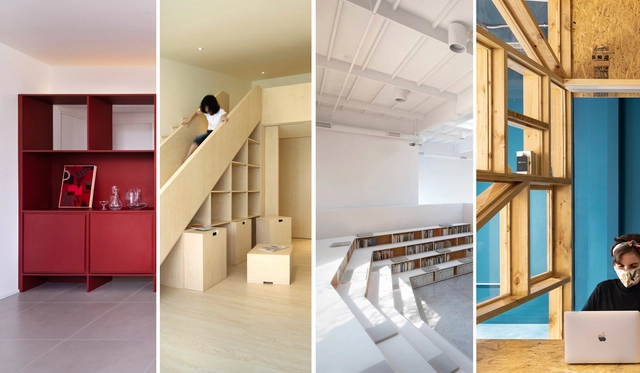
With the rise of small houses and dense cities, we were forced to sacrifice a good amount of storage space. Ironically, we did not compromise our purchasing habits, so with a few square meters to work with, architects and designers had to come up with efficient storage solutions and make the best of the limited space they have. However, if you were lucky enough to be occupying a large, unobscured space with a generous budget, your storage design possibilities are endless. In this article, we look at how architects and designers found creative ways to store their belongings in spaces with different functions, scales, and spatial constraints, ranging from completely invisible units to sculptural centerpieces.

Design Depot: 30 Projects that Explore Diverse Storage Solutions  - Image 1 of 4Design Depot: 30 Projects that Explore Diverse Storage Solutions  - Image 2 of 4Design Depot: 30 Projects that Explore Diverse Storage Solutions  - Image 3 of 4Design Depot: 30 Projects that Explore Diverse Storage Solutions  - Image 4 of 4Design Depot: 30 Projects that Explore Diverse Storage Solutions  - More Images+ 34

28 Houses With Utility Rooms and Other Specialized Spaces

Subscriber Access | 

The traditional architecture of the past can sometimes seem a long way from the modern, open-plan environments we enjoy today. But while some seemingly bygone upper-class room typologies like parlors, drawing rooms, and smoking rooms still exist by other names – dens, snugs, and man caves, to name a few – other architectural intricacies are more rarely replicated.

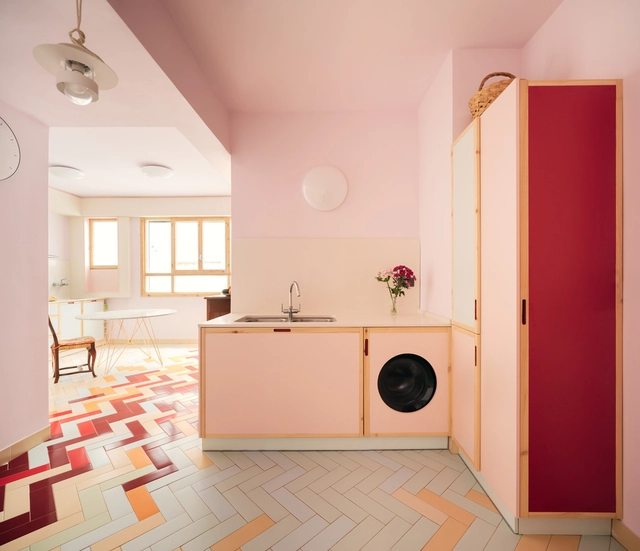
Back staircases, sculleries, and drying rooms, for example, were at one stage imperative for properties of a certain size and status to function. But just like a woolen jumper accidentally washed on the wrong setting, technology has reduced the size of laundry workspaces over the past century. Small homes like Under the Barao’s Sky Apartment in Sao Paolo, Brazil, for example, are now able to replace separate laundry rooms and pantries with all-in-one kitchen-diners that integrated small washing/drying appliances into an open kitchen layout, leaving more room for living.

28 Houses With Utility Rooms and Other Specialized Spaces - Image 1 of 428 Houses With Utility Rooms and Other Specialized Spaces - Image 2 of 428 Houses With Utility Rooms and Other Specialized Spaces - Image 3 of 428 Houses With Utility Rooms and Other Specialized Spaces - Image 4 of 428 Houses With Utility Rooms and Other Specialized Spaces - More Images+ 57

How To Take Advantage of the Space Under The Bed

Over the last few years, we have explored different ways of taking advantage of small spaces in residential architecture. From efficient furniture to kitchens with transformable systems to adapting essential household appliances, architects have begun looking for effective ways of optimizing scarce floor space or making spaces more flexible in multifunctional and mixed-use typologies.

The bed, as an indispensable element, is an essential consideration in these experiments. Its functions can be fulfilled without completely losing the valuable space it occupies, and the bedroom experience can be enriched with careful thought. How can we reinvent and take advantage of the opportunities of the traditional bed?

18 Interior Projects that Use Open Storage to Hide Clutter in Plain Sight

Subscriber Access | 

Home spaces filled with clutter and mess can be mentally exhausting, making it impossible to relax with the weight of life visually bearing down on an interior. ‘Tidy space, tidy mind’ as the idiom instructs, and home environments that focus on clean lines – either with a minimalist lifestyle, decluttering, or expansive and well-organized storage systems – cultivate a more meditative mindset. Perhaps, however, the demonization of clutter and these are, characterless spaces it creates, can get a little, well, boring.

So-called ‘clutter’ can still spark joy when given an opportunity, however. So whether they hold treasured memories in photo frames, bookcases of stories not just in print, proud achievements, inspiring equipment, or functional items kept close to hand, open storage elements like shelving, doorless cabinetry, or hanging hooks and pegs can create decorative, textured and, most importantly, personalized surfaces.

18 Interior Projects that Use Open Storage to Hide Clutter in Plain Sight - Image 7 of 418 Interior Projects that Use Open Storage to Hide Clutter in Plain Sight - Image 2 of 418 Interior Projects that Use Open Storage to Hide Clutter in Plain Sight - Image 15 of 418 Interior Projects that Use Open Storage to Hide Clutter in Plain Sight - Image 3 of 418 Interior Projects that Use Open Storage to Hide Clutter in Plain Sight - More Images+ 14

Beyond Storage: Shelving Systems as Design Elements

Subscriber Access | 

Shelves have a clear function: to organize, store and display. This simple, yet vital role has made them a must in every household, keeping the place neat and tidy by holding books, clothes, toys or any other items that would otherwise be scattered on the floor. Although usually found in closets, bedrooms, bathrooms and kitchens, shelves are useful wherever the extra storage is necessary. They are especially ideal for making the most out of small rooms, which will always benefit from having cleaner, clutter-free floor space. Responding to this crucial storage need and following a strict 'form follows function' approach, traditional shelves are often comprised of minimal, flat horizontal planes attached to a wall –a simple layout that is not particularly meant to draw attention. Hence, people don’t tend to think about shelving ideas beyond storage, and in that sense, the countless design possibilities they offer are often overlooked.

Beyond Storage: Shelving Systems as Design Elements   - Image 1 of 4Beyond Storage: Shelving Systems as Design Elements   - Image 2 of 4Beyond Storage: Shelving Systems as Design Elements   - Image 3 of 4Beyond Storage: Shelving Systems as Design Elements   - Image 4 of 4Beyond Storage: Shelving Systems as Design Elements   - More Images+ 19

The Laundry Room as an Unnecessary Luxury (or Where to Place the Washer in the Modern Home?)

In residential architecture, there have always been central, indispensable spaces and peripheral spaces more easy to ignore. When designing a home, the task of the architect is essentially to configure, connect, and integrate different functions in the most efficient way possible, necessarily prioritizing some spaces over others. And although today many are designing in ways that are increasingly fluid and indeterminate, we could say that the bedroom, bathroom, and kitchen are the fundamental nucleus of every house, facilitating rest, food preparation, and personal hygiene. Then meeting spaces and other service areas appear, and with them lobbies, corridors, and stairs to connect them. Each space guides new functions, allowing its inhabitants to perform them in an easier and more comfortable way.

However, fewer square meters in the bathroom could mean more space for the living room. Or, eliminating some seemingly expendable spaces could give more room for more important needs. In an overpopulated world with increasingly dense cities, what functions have we been discarding to give more space to the essentials? Here, we analyze the case of the laundry room, which is often reduced and integrated into other areas of the house to give space for other functions.

Storage Solution for Small Houses: Useful Examples

Dense cities mean small homes. With more and more frequency we are forced to adapt to spaces within which some elements simply do not fit. As architects, these restrictions actually provide us with opportunities and remind us that our goal is to give precise solutions to specific problems. Designing with infinite number square meters and/or an unlimited budget is practically unheard of.

What's the key to accommodating everything? Let's review some effective storage solutions for minimum, tight spaces.

Storage Solution for Small Houses: Useful Examples - Image 1 of 4Storage Solution for Small Houses: Useful Examples - Image 2 of 4Storage Solution for Small Houses: Useful Examples - Image 3 of 4Storage Solution for Small Houses: Useful Examples - Image 4 of 4Storage Solution for Small Houses: Useful Examples - More Images+ 28