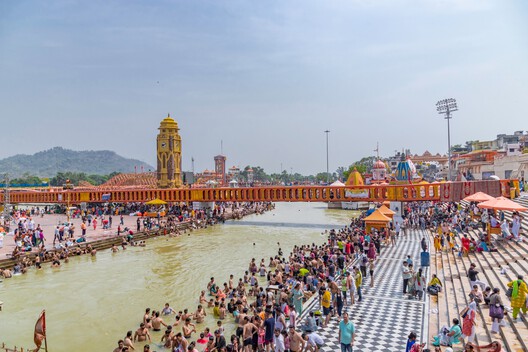
At the helm of architectural discourse on sacred architecture, attention almost always settles on the monument. Temples, mosques, monasteries, and churches dominate architectural histories, design criticism, and photography alike, becoming the physical symbols through which faith is understood. For millions of pilgrims across India, the most consequential architectural experience begins long before the shrine comes into view. It unfolds across mountain roads, river ghats, shaded streets, temporary camps, queue systems, bridges, water kiosks, medical stations, and countless ordinary pieces of infrastructure through which pilgrimage actually takes place. The architectural work of pilgrimage may lie less in the shrine itself than in the environments that allow millions of people to reach it.
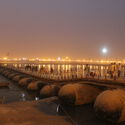
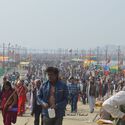
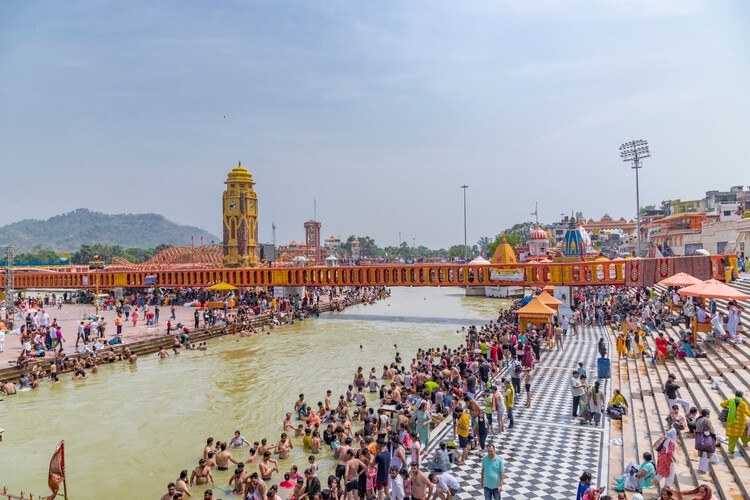
Seen this way, sacred architecture begins to extend well beyond the monument. Pilgrimage routes operate as distributed architectural systems extending across entire landscapes. Every bridge that maintains a procession across a river, every resting platform that breaks a long ascent, every shaded corridor that protects walkers from the afternoon sun, and every drinking-water station that allows another few kilometres to be covered contributes to the experience of pilgrimage. Sacredness in India is produced not only through just individual places, but through the relationships between them. Pilgrimage binds distant places into a connected spatial network where movement itself becomes devotional practice.
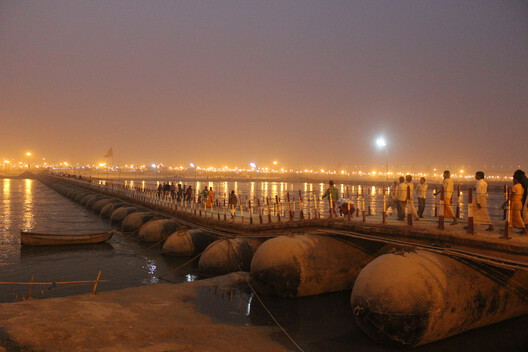
Once movement becomes the primary programme, architecture begins to address a very different set of questions. Instead of designing rooms or façades, pilgrimage infrastructure designs sequences. How far apart should places of rest be located? Where should drinking water appear? How can thousands of people wait with dignity rather than discomfort? How should elderly pilgrims negotiate steep terrain? These questions rarely appear in discussions of sacred architecture, even though they shape the experience of pilgrimage more profoundly than ornamental details or monumental forms. Crowd management, sanitation, emergency access, pedestrian flow, and public health become architectural decisions because they determine how bodies move collectively through space. Infrastructure becomes inseparable from the ritual itself.
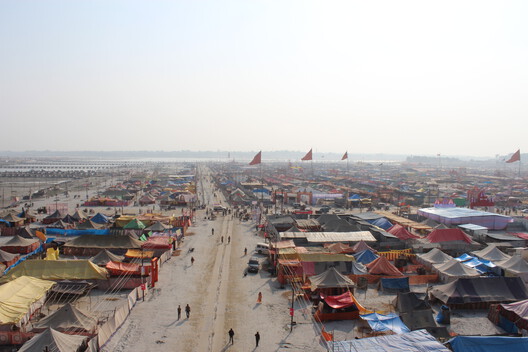
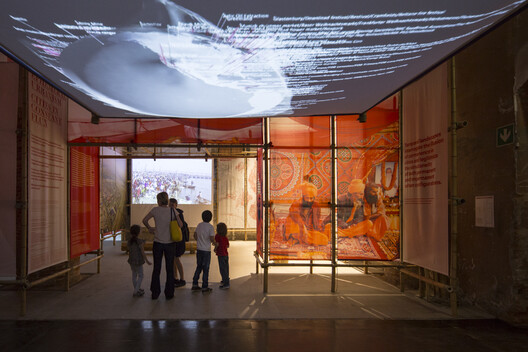
The Kumbh Mela makes this relationship unusually visible, where pilgrimage produces one of the world's largest recurring planned cities. Every gathering assembles an extensive urban system of temporary roads, pontoon bridges, sanitation networks, electrical grids, water supply, healthcare facilities, security infrastructure, and public services before disappearing once the festival concludes. Research by the Harvard Graduate School of Design's Kumbh Mela Mapping Project and the work of Rahul Mehrotra have described this phenomenon as a form of ephemeral urbanism, demonstrating that cities need not be permanent to function as sophisticated urban environments. Here, coordination becomes as important as permanence. The city appears, functions, and disappears with remarkable precision before being assembled again according to the next ritual calendar.
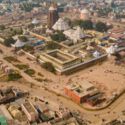
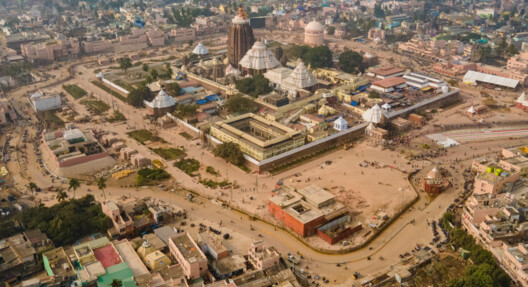
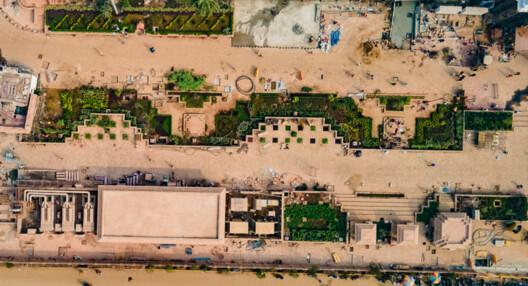
Beyond temporary settlements, India is increasingly investing in the permanent infrastructures that support pilgrimage. Recent projects suggest that investment is increasingly directed toward the landscapes surrounding temples rather than the monuments alone. The Kashi Vishwanath Corridor reorganises public space, expands circulation, and improves access between the city and the temple, transforming the experience of arrival as much as the monument itself. Similarly, the Jagannath Heritage Corridor restructures streets, public plazas, security systems, and pedestrian movement around one of India's most significant pilgrimage destinations. These projects remain subjects of debate regarding heritage, displacement, and conservation. They also reveal an important architectural reality that contemporary pilgrimage is increasingly shaped through infrastructure as much as through monumental architecture.
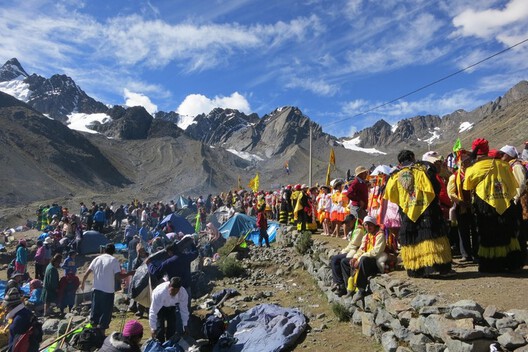
Policy has begun to reflect the same priorities. The PRASHAD (Pilgrimage Rejuvenation and Spiritual, Heritage Augmentation Drive) programme has directed investment toward drinking-water facilities, sanitation, accessibility, lighting, signage, public amenities, and visitor infrastructure across major pilgrimage destinations. These interventions rarely receive architectural attention because they lack the visual drama of monuments. They fundamentally determine whether pilgrimage remains safe, inclusive, and accessible for millions of visitors. In this context, public toilets, shaded waiting areas, and wayfinding systems become no less essential to the sacred experience than gateways or temple courtyards. Their importance comes from the forms of care they make possible.
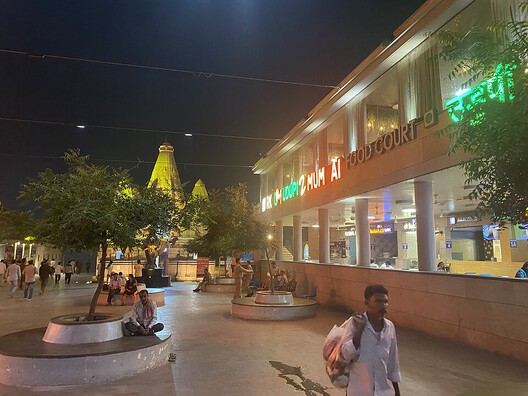
Expanding pilgrimage infrastructure also brings new environmental responsibilities into architectural practice. The Char Dham All Weather Road demonstrates how improving accessibility simultaneously raises ecological questions about slope stability, carrying capacity, biodiversity, and disaster resilience. Roads carved into Himalayan terrain make pilgrimage safer for many while introducing new environmental risks into already vulnerable mountain ecosystems. Recent carrying-capacity studies around Kedarnath reflect a broader shift in planning priorities, suggesting that the future of pilgrimage depends as much on environmental stewardship as on expanding access. In these landscapes, roads, retaining structures, drainage systems, and ecological management become architectural questions.
Pilgrimage asks architects to think differently about infrastructure. Too often, architecture celebrates destinations while overlooking the systems that make them inhabitable. Pilgrimage suggests another way of thinking. It asks architects to design for waiting as carefully as arrival, for recovery as much as procession, and for collective movement rather than individual occupation. Shade, orientation, rest, sanitation, emergency care, and circulation are not secondary concerns to architecture; they are architecture when movement becomes the central spatial condition. Pilgrimage shows that infrastructure can operate as a language of care.
Pilgrimage remains one of India's most remarkable architectural systems precisely because so much of it unfolds beyond the monument. Its most enduring spaces are not always those that appear on postcards or architectural tours, but those that quietly sustain millions of people in motion every year. They reveal an architecture measured through repetition, maintenance, collective movement, and care. Read through pilgrimage instead of the monument, sacred architecture begins to look far more distributed. It is assembled through roads, shade, water, queues, bridges, rest, and care long before the temple comes into view.
This article is part of the ArchDaily Topic: Architectures of Movement: Land, Borders, and the Politics of Belonging. Every month we explore a topic in-depth through articles, interviews, news, and architecture projects. We invite you to learn more about our ArchDaily Topics. And, as always, at ArchDaily we welcome the contributions of our readers; if you want to submit an article or project, contact us.