1. ArchDaily
  2. Urban Movement Design

Urban Movement Design: The Latest Architecture and News

Rivers Before Roads: How Southeast Asia's Waterways Produced an Alternative Urbanism

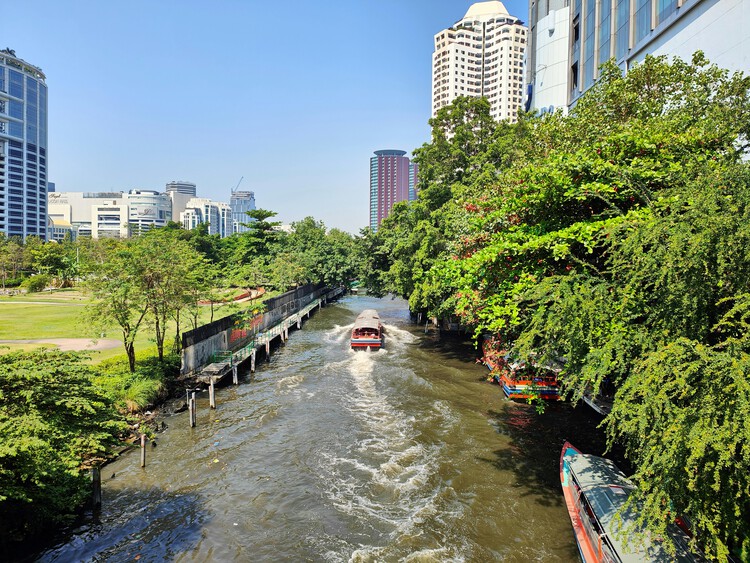
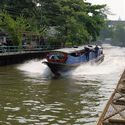
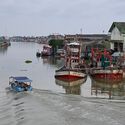
For most of the twentieth century, architecture has learned to read cities through roads. Street hierarchies define urban plans, intersections organize movement, and buildings are understood by the façades they present to sidewalks. Roads appear so fundamental to urban life that they are often mistaken for a universal condition. Across much of Southeast Asia, cities developed according to an entirely different spatial logic. Long before automobiles reordered urban landscapes, rivers served as streets, marketplaces, civic spaces, and public infrastructure. Movement occurred primarily by boat, commerce unfolded along waterfronts, and architecture addressed water rather than asphalt. Reading these cities through their waterways changes how architecture itself is understood. Infrastructure, in this case, is not the road but the river.
Rivers Before Roads: How Southeast Asia's Waterways Produced an Alternative Urbanism - Imagem 1 de 4Rivers Before Roads: How Southeast Asia's Waterways Produced an Alternative Urbanism - Imagem 2 de 4Rivers Before Roads: How Southeast Asia's Waterways Produced an Alternative Urbanism - Imagem 3 de 4Rivers Before Roads: How Southeast Asia's Waterways Produced an Alternative Urbanism - Imagem 4 de 4Rivers Before Roads: How Southeast Asia's Waterways Produced an Alternative Urbanism - More Images+ 6

When Movement Becomes Sacred Space: The Architecture of India’s Pilgrimage Landscapes

Audio available

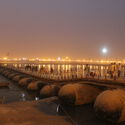
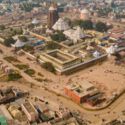
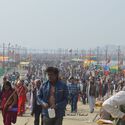
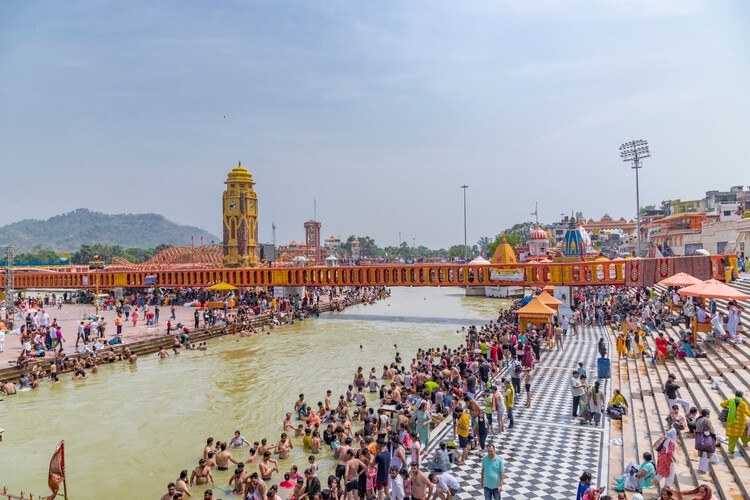
At the helm of architectural discourse on sacred architecture, attention almost always settles on the monument. Temples, mosques, monasteries, and churches dominate architectural histories, design criticism, and photography alike, becoming the physical symbols through which faith is understood. For millions of pilgrims across India, the most consequential architectural experience begins long before the shrine comes into view. It unfolds across mountain roads, river ghats, shaded streets, temporary camps, queue systems, bridges, water kiosks, medical stations, and countless ordinary pieces of infrastructure through which pilgrimage actually takes place. The architectural work of pilgrimage may lie less in the shrine itself than in the environments that allow millions of people to reach it.

When Movement Becomes Sacred Space: The Architecture of India’s Pilgrimage Landscapes - Image 1 of 4When Movement Becomes Sacred Space: The Architecture of India’s Pilgrimage Landscapes - Image 2 of 4When Movement Becomes Sacred Space: The Architecture of India’s Pilgrimage Landscapes - Image 3 of 4When Movement Becomes Sacred Space: The Architecture of India’s Pilgrimage Landscapes - Image 4 of 4When Movement Becomes Sacred Space: The Architecture of India’s Pilgrimage Landscapes - More Images+ 8

The World's First Solar Biennale and Energy Show Exhibition Opens in Rotterdam on September 9

The Het Nieuwe Instituut in Rotterdam, The Netherlands, opens The Energy Show and the Solar Biennale on Friday, September 9, 2022. In collaboration with The Solar Biennale designer and curator Matylda Krzykowski and solar designers Marjan van Aubel and Pauline van Dongen, the exhibition presents a series of projects that explores the sun's meaning and possibilities in society, the environment, and design. With Europe in the midst of an energy crisis, The Energy Show and the Solar Biennale is an opportunity for designers and the general public to examine the transition to solar energy and technology as we move towards a post-carbon future.

The World's First Solar Biennale and Energy Show Exhibition Opens in Rotterdam on September 9 - Image 1 of 4The World's First Solar Biennale and Energy Show Exhibition Opens in Rotterdam on September 9 - Image 2 of 4The World's First Solar Biennale and Energy Show Exhibition Opens in Rotterdam on September 9 - Image 3 of 4The World's First Solar Biennale and Energy Show Exhibition Opens in Rotterdam on September 9 - Image 4 of 4The World's First Solar Biennale and Energy Show Exhibition Opens in Rotterdam on September 9 - More Images+ 14

Urban Movement Design debuts UNIRE/UNITE at MAXXI (Young Architects Program)

Subscriber Access | 
Urban Movement Design debuts UNIRE/UNITE at MAXXI (Young Architects Program) - Image 17 of 4
Courtesy of Fondazione MAXXI © Cecilia Fiorenza

Urban Movement Design, winner of the 2012 Young Architects Program (YAP) MAXXI in Rome, has reinvented the MAXXI experience by engaging the mind and body with their interactive, summer installation. UNIRE/UNITE responds to the current public health crisis by offering an alternative solution to traditional urban furniture that choreographs exercise and play back into our daily lives. As our world struggles in crisis, Urban Movement Design believes it is imperative that we rethink the way we live and change the disabling, sedentary lifestyles that are currently promoted by our built environment.

The New York and Rome-based practice has merged the two disciplines of architecture and movement therapies in an effort to integrate health back into design and promote a greater sense of community. This project is a reflection of their philosophy. Continue after the break to learn more.

Urban Movement Design: “All of nature acts according to the law of interconnectedness, but humankind has moved away from this natural law and into an unnatural state of self-interest and isolation.”

YAP MAXXI 2012 Winner is UNIRE/UNITE by Urban Movement Design

Subscriber Access | 
YAP MAXXI 2012 Winner is UNIRE/UNITE by Urban Movement Design - Image 1 of 4
Courtesy of MoMA

The program promoting and supporting young architecture organized by MAXXI Architettura together with MoMA/MoMA PS1 in New York and CONSTRUCTO of Santiago in Chile has announced UNIRE/UNITE by Urban Movement Design as winner of the 2012 Young Architects Program (YAP) MAXXI in Rome. Following MAXXI’s first successful summer installation named WHATAMI by stARTT, Urban Movement Design now has the opportunity to reinvent the MAXXI piazza with an interactive installation featuring a long and sinuous band of wood and grass that encourages a playful bond between the building and its users. This proposal was selected over four other shortlisted contestants who where chosen by an Italian jury.

Both UNIRE/UNITE by Urban Movement Design and WENDY by HWKN (HollwichKushner) will be inaugurated in the MAXXI piazza and the courtyard at MoMA PSI in June 2012, along with an exhibit showcasing the fifteen design proposals from the finalists.

Continue reading for more information on this years MAXXI winner, UNIRE/UNITE.