
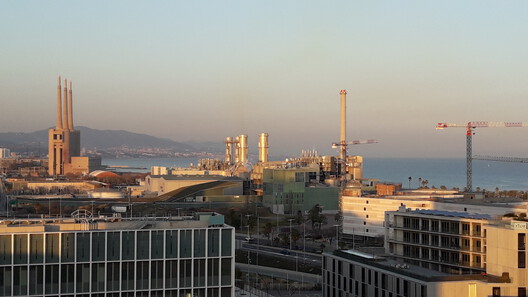
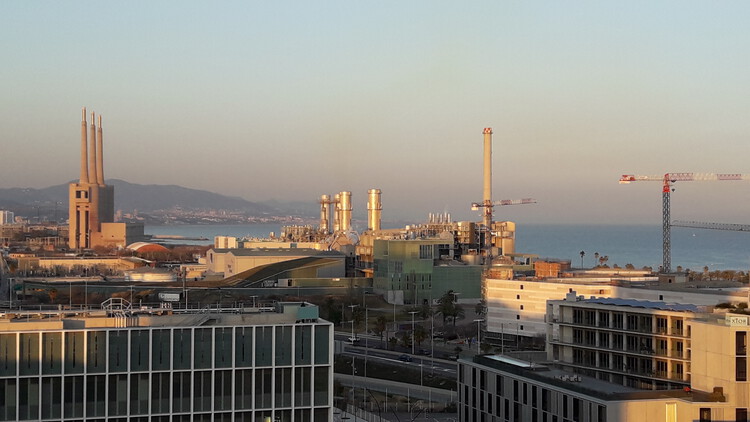
Every three years, the International Union of Architects' (UIA) World Congress lands in a different city, under a different theme set years in advance. A quick mapping of these host cities reveals a deliberate pattern: throughout the decades, the UIA has purposefully chosen a wide range of venues across all continents, rendering each edition a snapshot of what mattered in that specific place, at that exact moment. The result of this geographic rotation has been a diverse kaleidoscope of conversations, analyzing the profession from countless angles and adapting it to changing times. But 2026 is different; this time the UIA is repeating a host city for the first time: Barcelona, under the theme "Becoming. Architectures for a planet in transition".



To understand how deeply these themes are anchored to their specific contexts, one only has to look at the recent trajectory of the congress. In 2005, Istanbul's "Grand Bazaar of Architectures" looked into plurality in a city between Europe and Asia during the European Union accession talks. Then, in 2008, the congress in Turin examined the means of communication and its aspects for the profession. Three years later, in 2011, Tokyo's "Design 2050", was planned with a long-horizon technology theme. However, it was later updated to be focused on natural disaster resilience, as it happened six months after the Tōhoku earthquake and tsunami. In 2014, Durban's "Architecture Otherwhere" was the first congress held on the African continent, and was also the first to make decentering the profession an explicit subject.