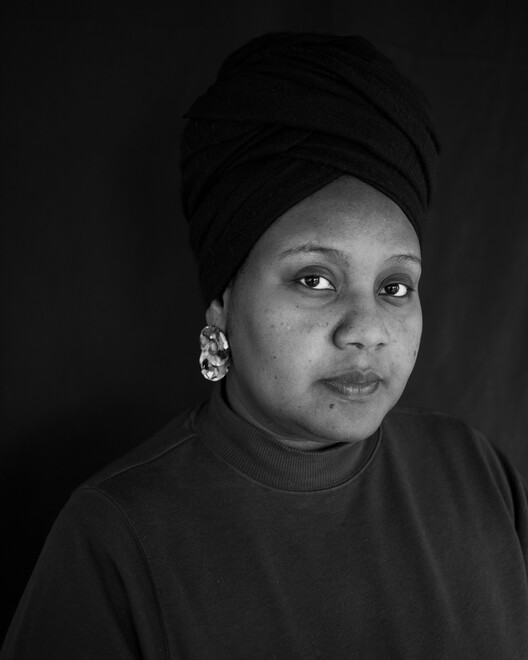
Ola Hassanain is a Sudanese architect and artist operating in the Netherlands, and will be exhibiting at the Pan-African Architecture Biennale in Nairobi, Kenya, later in 2026. All three locations tell stories of the built environment's relationship with water. These illustrate the continuous battles between the amorphous forces of nature that are the rivers and seas, and human attempts to shape and control them. In most cases, they are attempts at extraction. Catastrophes happen as a result of the overreach of these attempts or of their mismanagement, or both.

The Netherlands is famous for its systems of dikes, dams, and floodgates that have enabled significant portions of the country's land area to exist below sea level. The region's susceptibility to flooding was recorded even in Roman times, being at the mouths of several European rivers meeting the North Sea. The fertile peat marshes were gradually drained over the centuries, but flooding remained an occasional and recurring hazard. In 1953, devastating storm surges in the North Sea caused extensive flooding that breached the protective infrastructure. It was the worst flooding since the Middle Ages, causing widespread destruction and the loss of 1,836 lives. Extensive flood defenses have since been built, but as sea levels are expected to rise with the climate crisis, the conflict with water continues.
Thousands of kilometers from there, in early 2026, the city of Nairobi suffered extensive flooding. In several districts, the streets turned to rivers overnight, causing damage to buildings and roads, and dozens of lives were lost. Rivers and streams in the city had burst their banks after heavy rainfall. Many of the flooded neighborhoods were the same ones that suffered the same fate in the 2024 and 1997 floods, indicating that planning may have played a part. Some sources point to the decision-making on where housing is planned, how drainage infrastructure is designed and maintained, and where flood defenses are constructed.
Related Article
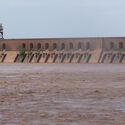
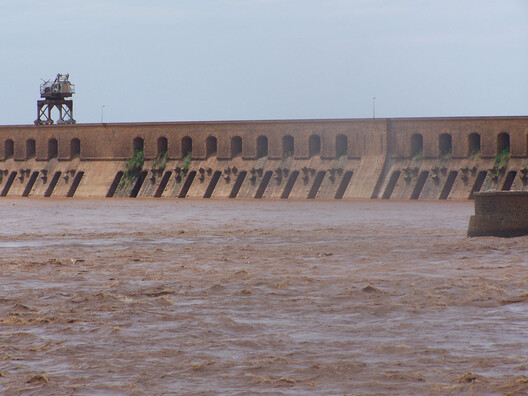
The First Pan-African Biennale Establishes a Platform for a Decolonized, African-Led Architectural FutureIn Sudan, flooding occurs periodically along the banks of the Nile and its tributaries. In Gezira State, specifically, colonialism and extraction add a layer to the condition. The state sits in the fertile land between the Blue Nile and White Nile rivers, and was seen by the British as an ideal location for constructing one of Africa's largest agricultural schemes. The Gezira Scheme, as it came to be known, was established in the early years of the twentieth century. It benefited from the natural slope of the land, which made irrigation by gravity possible. The Sennar Dam was constructed in 1925 to create a reservoir to feed an extensive network of canals that provided water for the fields that grew cotton.
Ola Hassanain can be described as a spatial practitioner. An artist and a trained architect, she deals with ecologies of repair; how power structures become manifest in the built environment; and how catastrophe leads to uninhabitability. When a practicing architect in Khartoum, she found herself drifting away from developers and large projects and, instead, building up a clientele of women requesting alterations to their homes. This intimate practice, in tune with habitation, contrasted with the heavy hand of large-scale development, and informed her future direction in the arts. Her work is critical of modernism, where the architect is the main creator. Part of her work is also a critique of the exploitative relationship with water and between colonial power and indigenous knowledge.
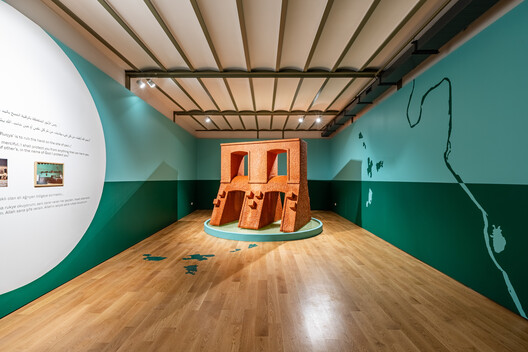
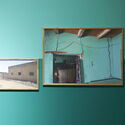
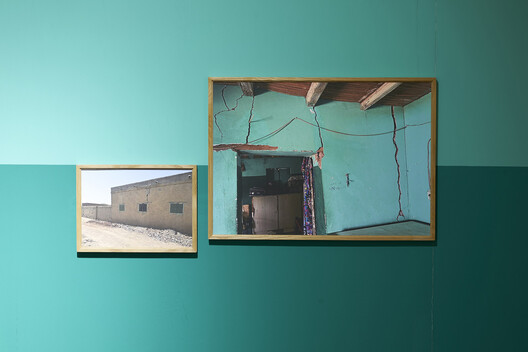
In the artwork Tell the Water What the Clay Kept Secret, Ola Hassanain references her grandmother's house in Gezira State. The single-story clay brick house, which stood for many decades, slowly developed cracks that grew and multiplied, such that the house is no more. The construction of the Gezira Scheme was imposed on the area with no due regard to existing methods of farming or land stewardship. The introduction of irrigation canals and their subsequent mismanagement disrupted the clay soils, shifting the ground beneath the house.
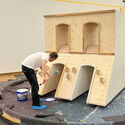
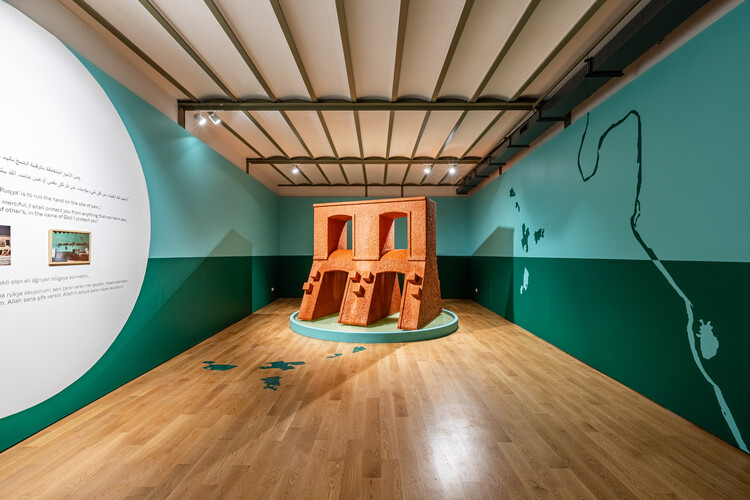
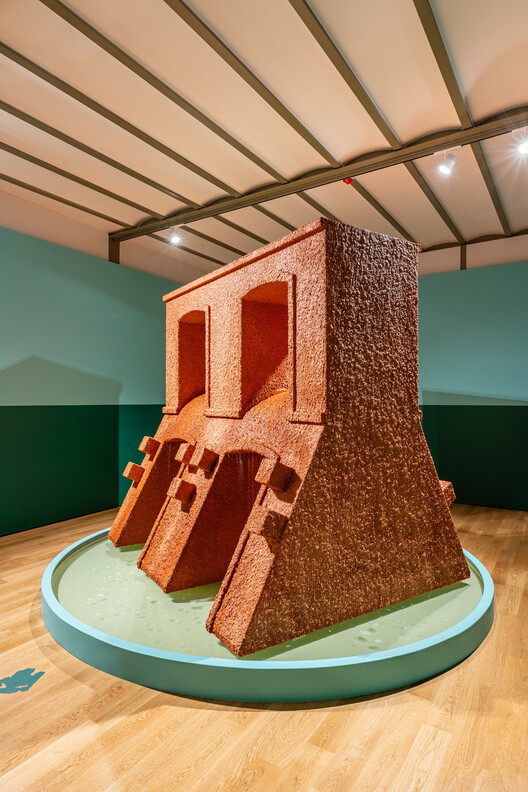
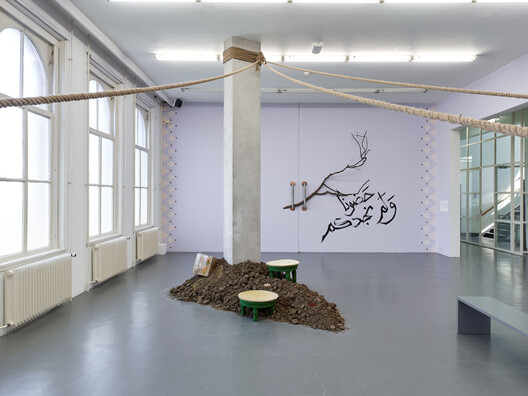
The first part of the artwork is the installation A Whispering Dam. At the center is a 2.2m high sculpture in the form of a section of the Sennar Dam, complete with water trickling down its face. Embedded within the structure is a sound installation of whispered ruqya, protective utterances as resistance against the forces of nature. On the walls are photographs of the artist's grandmother's house, complete with the giant cracks in its walls. The installation is an attempt at resistance against the slow violence that took decades to erode the house.
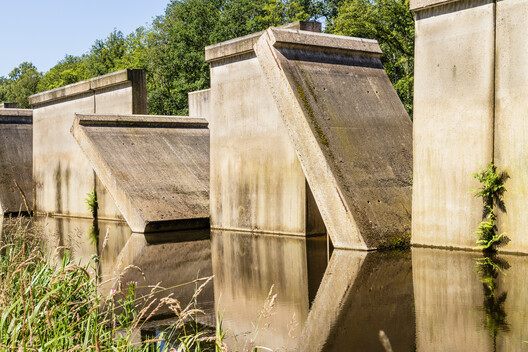
The Watcher forms another part of the narrative. It presents a sentinel being, a community caretaker who monitors the water levels to warn of potential flooding. The Sentinel appears both in the agricultural landscape of Sudan and in the Waterloopbos of the Netherlands, a former hydrological testing site. There are two characters played by the same performer. In the agricultural landscape, the Watcher looks out for signs of ecological crisis. In the Waterloopbos, the being observes the water control technology that would be exported and imposed on the colonies, like in the Gezira Scheme.
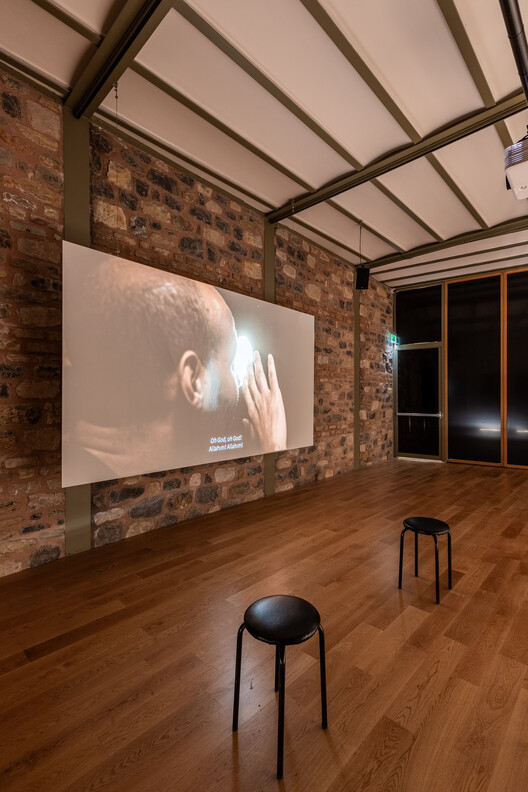
Ola Hassanain's body of work brings together different geographies united by questions of the environment and inhabitation. The art pieces tell personalized stories that symbolize resistance against the elements, against extraction, and against coloniality. Humankind, whether in the Netherlands, Sudan, or Kenya, or elsewhere, has had a complex relationship with water bodies. From the polders of the Netherlands to the cracking clay of Gezira, these landscapes share a common thread: the imposition of control, and the cost of that imposition on communities that had their own ways of knowing the land. The watcher, standing in both worlds, embodies this tension.
This article is part of the ArchDaily Topic: Transspecies Architecture: The Life of Materials, Ecological Alliances, and Nature's Agency. Every month we explore a topic in-depth through articles, interviews, news, and architecture projects. We invite you to learn more about our ArchDaily Topics. And, as always, at ArchDaily we welcome the contributions of our readers; if you want to submit an article or project, contact us.


