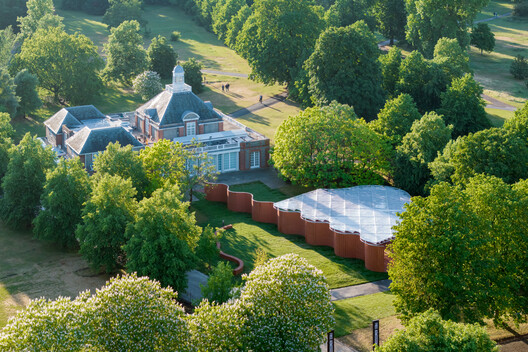
The 2026 Serpentine Pavilion, titled "a serpentine," designed by Mexico City-based architecture studio LANZA atelier, will open to the public on 6 June 2026 at Serpentine South in London. Newly released preview-days images show the completed structure ahead of its seasonal activation, which will run through 25 October 2026 and include Serpentine's annual programme of public events. Now in its 25th edition, the Serpentine Pavilion marks a milestone for the annual commission first launched in 2000 with Zaha Hadid's inaugural project. To commemorate the anniversary, Serpentine Galleries will also collaborate with the Zaha Hadid Foundation and the Architectural Association on a parallel programme reflecting on the Pavilion's legacy and its role in contemporary architectural discourse.
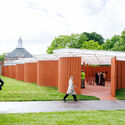
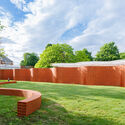
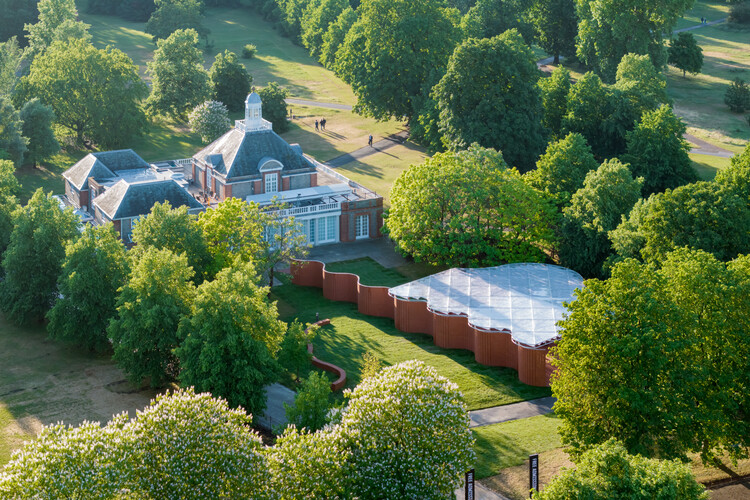
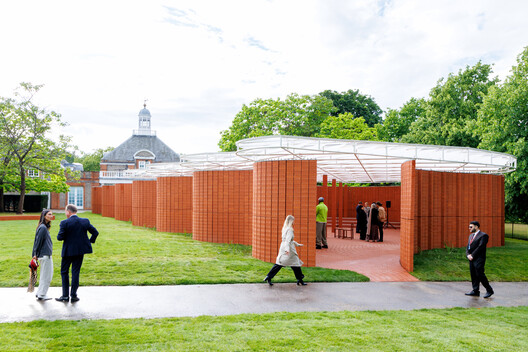
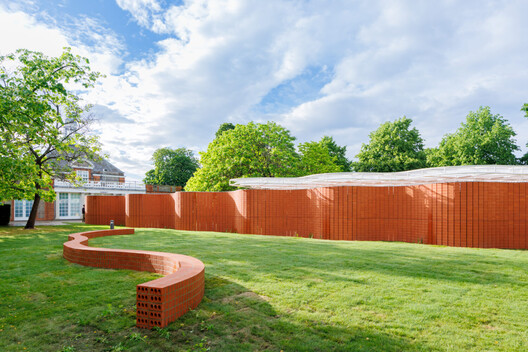
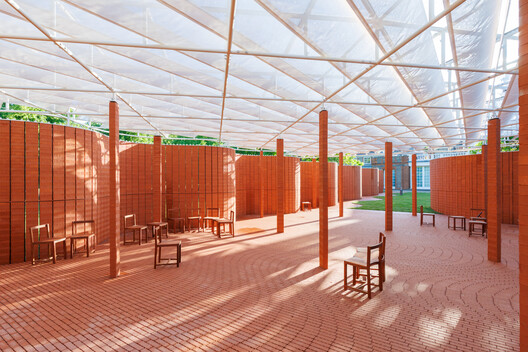
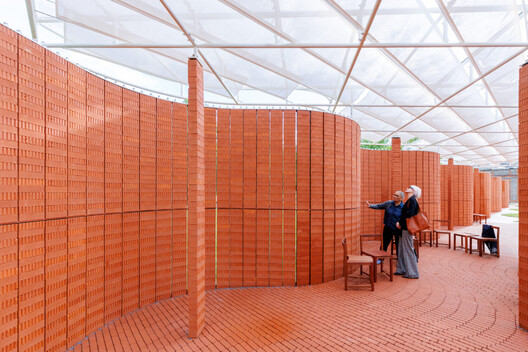
LANZA atelier, founded by Isabel Abascal and Alessandro Arienzo, developed the Pavilion around the architectural typology of the "serpentine" or crinkle-crankle wall. Traditionally found in Suffolk and originating from ancient construction techniques later adapted in Europe, the wall form is composed of alternating curves that provide structural stability while reducing material use. In the 2026 Pavilion, this principle is reinterpreted as a spatial device that organizes circulation, frames views, and mediates between enclosure and openness. A second curving wall is positioned in relation to the surrounding tree canopy, allowing the structure to integrate with the park landscape rather than define a fixed boundary.
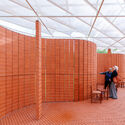
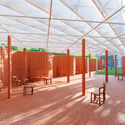
A translucent roof spans the composition, resting on brick columns arranged to evoke the density and rhythm of a grove of trees. The configuration allows light and air to permeate the interior, softening the transition between interior and exterior space. Brick is used as the primary material, establishing a reference to both English garden traditions and the adjacent Serpentine South Gallery facade. The repetitive column system gradually shifts from solid to porous, producing a continuous variation in spatial transparency.
Related Article
A Look at the Last 8 Editions of the Serpentine PavilionThe Pavilion continues LANZA atelier's research into craft, material systems, and scaled design processes. Brick is employed not only for its structural properties but also for its ability to articulate incremental changes in openness across the structure. The studio also designed the Pavilion's furniture, including chairs and stools produced in sapele hardwood. The pieces extend the architectural logic of the Pavilion into the scale of objects, reflecting the studio's approach to architecture and furniture as part of a unified design process.
From June through October, "a serpentine" will operate as a venue for Serpentine's public programme, hosting talks, performances, screenings, workshops, and interdisciplinary events. The space will also serve as the setting for Park Nights, Serpentine's annual series of live artistic commissions. The 2026 programme will include a series of public events beginning with a conversation between LANZA atelier and Serpentine Artistic Director Hans Ulrich Obrist on 5 June. Additional activities will include guided tours, family workshops, and seasonal events scheduled throughout the summer.
The 2026 edition follows the 2025 Serpentine Pavilion by Bangladeshi architect Marina Tabassum, which continued the commission's focus on climate-responsive and spatially adaptive design. Recent commissions also include "Archipelagic Void" by Minsuk Cho, "À table" by Lina Ghotmeh, "Black Chapel" by Theaster Gates, "Counterspace" by Sumayya Vally, 2019's pavilion by Junya Ishigami, 2018's pavilion by Frida Escobedo, 2017's pavilion by Francis Kéré, and 2016's pavilion by Bjarke Ingels Group.