1. ArchDaily
  2. Temporary Installation

Temporary Installation: The Latest Architecture and News

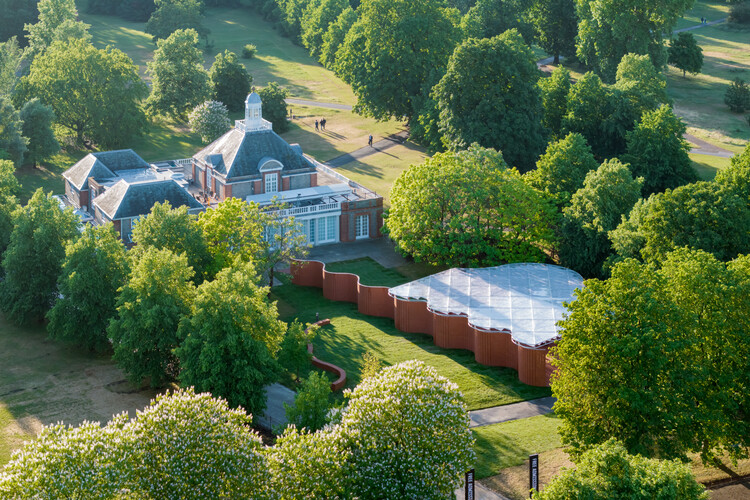
The 25th Serpentine Pavilion Designed by LANZA atelier Opens to the Public on June 6th, 2026

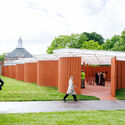
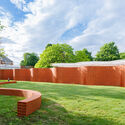
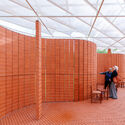
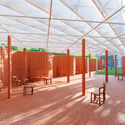
The 2026 Serpentine Pavilion, titled "a serpentine," designed by Mexico City-based architecture studio LANZA atelier, will open to the public on 6 June 2026 at Serpentine South in London. Newly released preview-days images show the completed structure ahead of its seasonal activation, which will run through 25 October 2026 and include Serpentine's annual programme of public events. Now in its 25th edition, the Serpentine Pavilion marks a milestone for the annual commission first launched in 2000 with Zaha Hadid's inaugural project. To commemorate the anniversary, Serpentine Galleries will also collaborate with the Zaha Hadid Foundation and the Architectural Association on a parallel programme reflecting on the Pavilion's legacy and its role in contemporary architectural discourse.
The 25th Serpentine Pavilion Designed by LANZA atelier Opens to the Public on June 6th, 2026 - Image 1 of 4The 25th Serpentine Pavilion Designed by LANZA atelier Opens to the Public on June 6th, 2026 - Image 2 of 4The 25th Serpentine Pavilion Designed by LANZA atelier Opens to the Public on June 6th, 2026 - Image 3 of 4The 25th Serpentine Pavilion Designed by LANZA atelier Opens to the Public on June 6th, 2026 - Image 4 of 4The 25th Serpentine Pavilion Designed by LANZA atelier Opens to the Public on June 6th, 2026 - More Images+ 2

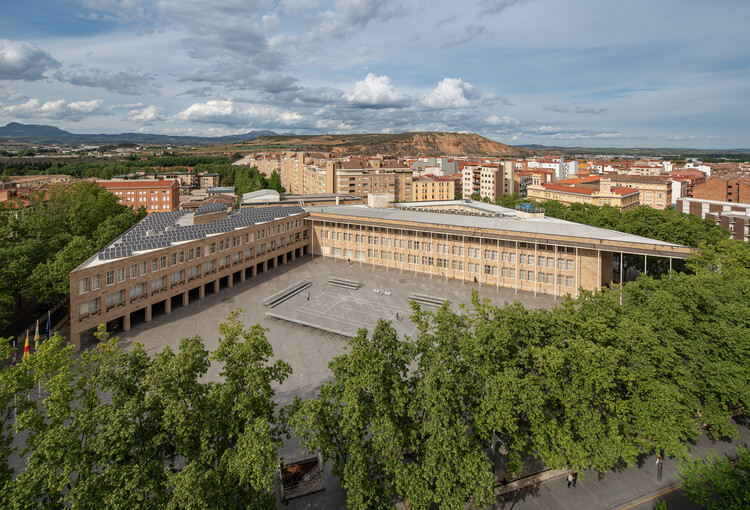
Concéntrico Festival 2026 Unveils 24 Urban Installations Across Logroño, Spain

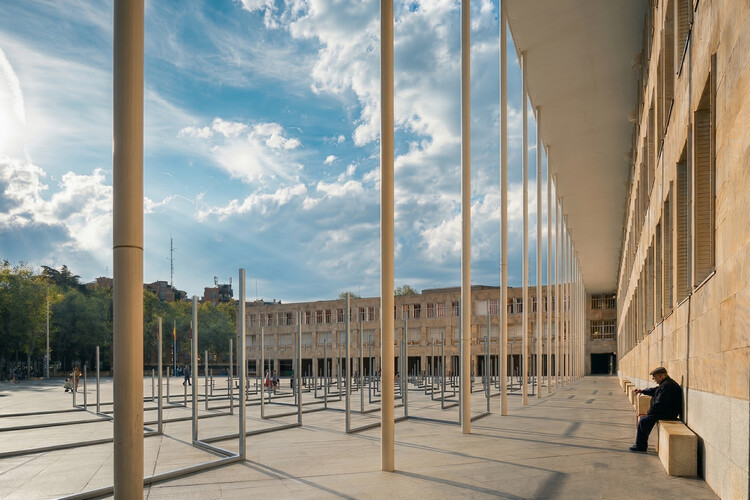
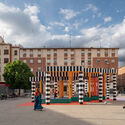
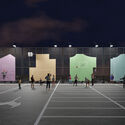
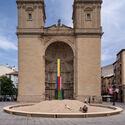
Concéntrico Festival 2026 will take place in Logroño, Spain, from June 18 to 23, transforming the city into a large-scale laboratory for architecture, design, and urban experimentation. Over six days, more than twenty interventions will be distributed across squares, vacant plots, streets, bridges, and emblematic spaces throughout the city, bringing together leading studios, researchers, and creators from the international scene, including Chilean architect Smiljan Radić, the raumlabor collective, Matilde Cassani, AAU Anastas, and Sahra Hersi, among others. This edition introduces a shift towards more collective, festive, and performative practices in public space, with a strong emphasis on sonic experiences and projects linked to accessibility, inclusion, and urban transformation. The programme is structured around three thematic axes: Identity and Fiction, Urban Ecologies, and Ephemeral Agents, ranging from architectures that understand public space as ritual or celebration to experimental approaches exploring materials, sound, and processes of reuse.
Concéntrico Festival 2026 Unveils 24 Urban Installations Across Logroño, Spain - Image 1 of 4Concéntrico Festival 2026 Unveils 24 Urban Installations Across Logroño, Spain - Image 2 of 4Concéntrico Festival 2026 Unveils 24 Urban Installations Across Logroño, Spain - Image 3 of 4Concéntrico Festival 2026 Unveils 24 Urban Installations Across Logroño, Spain - Image 4 of 4Concéntrico Festival 2026 Unveils 24 Urban Installations Across Logroño, Spain - More Images+ 36

Street Artist JR Installs an Inflatable Cave on Paris' Pont Neuf in Tribute to Christo and Jeanne-Claude

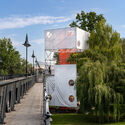
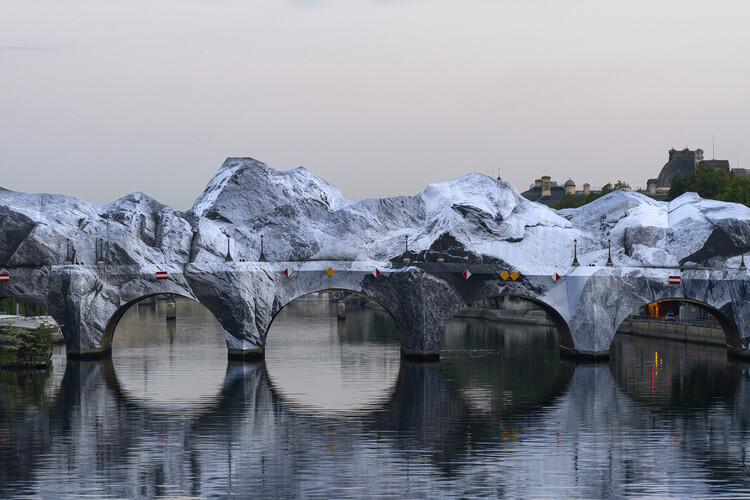
On May 21st, a realistic cave took shape on Paris' Pont Neuf, the oldest standing bridge across the Seine. The inflatable artwork was designed and built by French photographer and street artist JR, along with an extensive multidisciplinary team. La Caverne du Pont Neuf was conceived in honor of Christo and Jeanne-Claude's 1985 work The Pont Neuf Wrapped, an environmental artwork in which the artists wrapped the historic bridge in sandstone-colored fabric for two weeks. The structure creates a trompe-l'œil effect that mimics a textured rock formation through photographic printing in tones of white, black, and gray. The shape of the exterior already gives the public the optical illusion of the artwork, while paving the way for the final stage of the interior design.

Street Artist JR Installs an Inflatable Cave on Paris' Pont Neuf in Tribute to Christo and Jeanne-Claude - Image 1 of 4Street Artist JR Installs an Inflatable Cave on Paris' Pont Neuf in Tribute to Christo and Jeanne-Claude - Image 2 of 4Street Artist JR Installs an Inflatable Cave on Paris' Pont Neuf in Tribute to Christo and Jeanne-Claude - Image 3 of 4Street Artist JR Installs an Inflatable Cave on Paris' Pont Neuf in Tribute to Christo and Jeanne-Claude - Image 4 of 4Street Artist JR Installs an Inflatable Cave on Paris' Pont Neuf in Tribute to Christo and Jeanne-Claude - More Images+ 17

LANZA atelier Reveals New Details for the 2026 Serpentine Pavilion

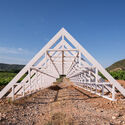
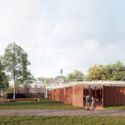
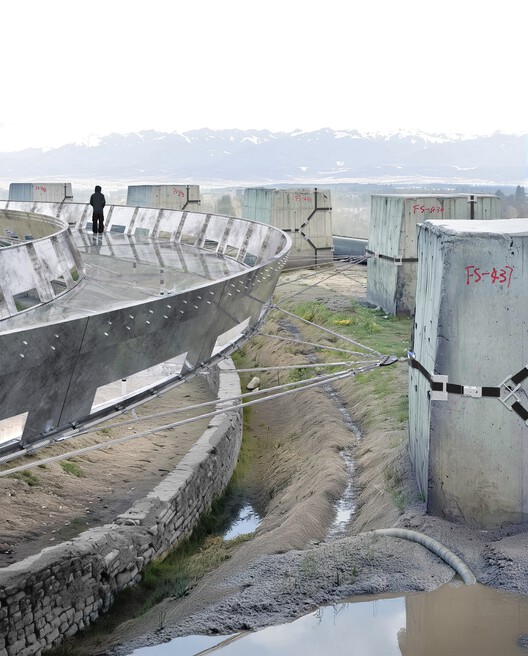
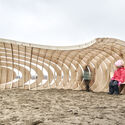
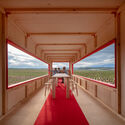
Mexican architecture practice LANZA atelier has unveiled new details for the 2026 Serpentine Pavilion, titled "a serpentine," which will open to the public on 6 June 2026 at Serpentine South. Designed by studio founders Isabel Abascal and Alessandro Arienzo, the project reinterprets the historic serpentine or crinkle-crankle wall through a lightweight brick structure integrated into the landscape of Hyde Park. Marking the 25th edition of the annual commission, the pavilion will remain on view through October 2026 and serve as a venue for Serpentine's public programme of performances, talks, screenings, and community events.
LANZA atelier Reveals New Details for the 2026 Serpentine Pavilion - Image 1 of 4LANZA atelier Reveals New Details for the 2026 Serpentine Pavilion - Image 2 of 4LANZA atelier Reveals New Details for the 2026 Serpentine Pavilion - Image 6 of 4LANZA atelier Reveals New Details for the 2026 Serpentine Pavilion - Image 4 of 4LANZA atelier Reveals New Details for the 2026 Serpentine Pavilion - More Images+ 3

"Calibrated Instability": Daryan Knoblauch on Building With Tension, Time, and Light

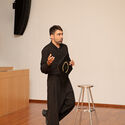
Daryan Knoblauch's work sits at the intersection of architecture and live cultural production, with a focus on how space is made legible through tension and atmosphere. Rather than treating temporary work as a lesser category of architecture, Knoblauch approaches installations, stages, and event architectures as full disciplinary problems—where enclosure, stability, light, and movement must be resolved with the same seriousness as any building, often under tighter constraints and faster timelines.
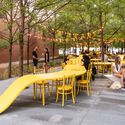
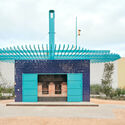
Across projects, a consistent thread is the productive tension between high-modern precision and an intentionally raw clarity of assembly. Membranes and lightweight systems are not deployed as surface effects, but as structural and spatial instruments—tuned to wind, load, and occupation, and calibrated to produce a sublimity that is felt as much as it is seen. Here, ephemerality is not simply a duration, but a design condition: temporality makes forces—weather, wear, performance—more visible, and demands an ethic of making that is both exacting and adaptable.
"Calibrated Instability": Daryan Knoblauch on Building With Tension, Time, and Light - Image 1 of 4"Calibrated Instability": Daryan Knoblauch on Building With Tension, Time, and Light - Image 2 of 4"Calibrated Instability": Daryan Knoblauch on Building With Tension, Time, and Light - Image 3 of 4"Calibrated Instability": Daryan Knoblauch on Building With Tension, Time, and Light - Image 4 of 4Calibrated Instability: Daryan Knoblauch on Building With Tension, Time, and Light - More Images+ 4

Coachella 2026 Immersive Installations Explore Monumentality and Light Transparency in the California Desert

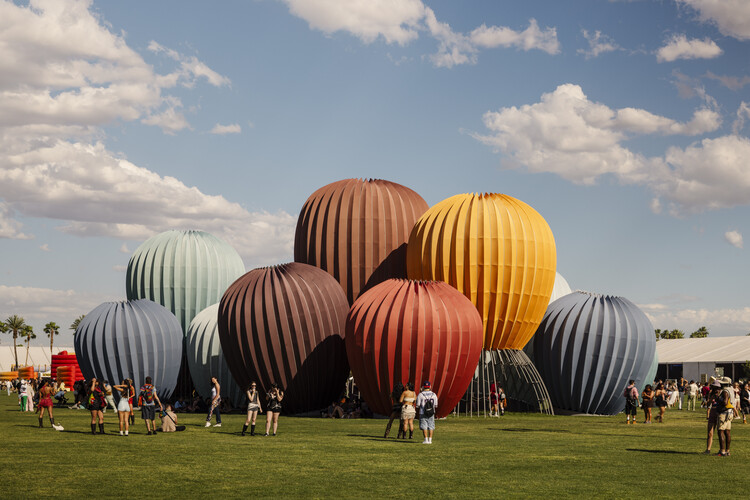
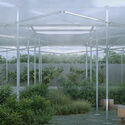
The 25th edition of the Coachella Valley Music and Arts Festival returns to the Empire Polo Club in Indio, California, from April 10 to 12 and April 17 to 19, 2026, bringing together more than 130 acts alongside an ambitious program of large-scale art installations. Presented by Public Art Company (PAC) and curated by founder Raffi Lehrer in collaboration with Goldenvoice Art Director Paul Clemente, this year's selection explores monumentality through luminance, transparency, and lightness of form. Set within Coachella's desert oasis, the installations invite visitors to engage physically and sensorially, responding to shifting daylight and the evolving atmosphere from sunrise to nightfall.

Coachella 2026 Immersive Installations Explore Monumentality and Light Transparency in the California Desert - Image 1 of 4Coachella 2026 Immersive Installations Explore Monumentality and Light Transparency in the California Desert - Image 2 of 4Coachella 2026 Immersive Installations Explore Monumentality and Light Transparency in the California Desert - Image 3 of 4Coachella 2026 Immersive Installations Explore Monumentality and Light Transparency in the California Desert - Image 4 of 4Coachella 2026 Immersive Installations Explore Monumentality and Light Transparency in the California Desert - More Images+ 77

Concéntrico 2026 Features Smiljan Radić Installation and 26 Urban Interventions in Logroño, Spain

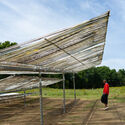
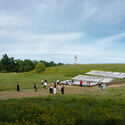
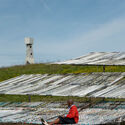
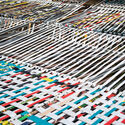
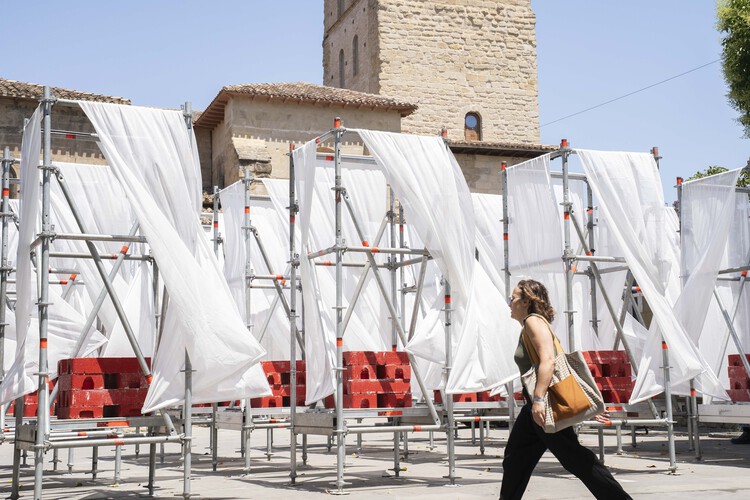
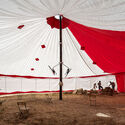
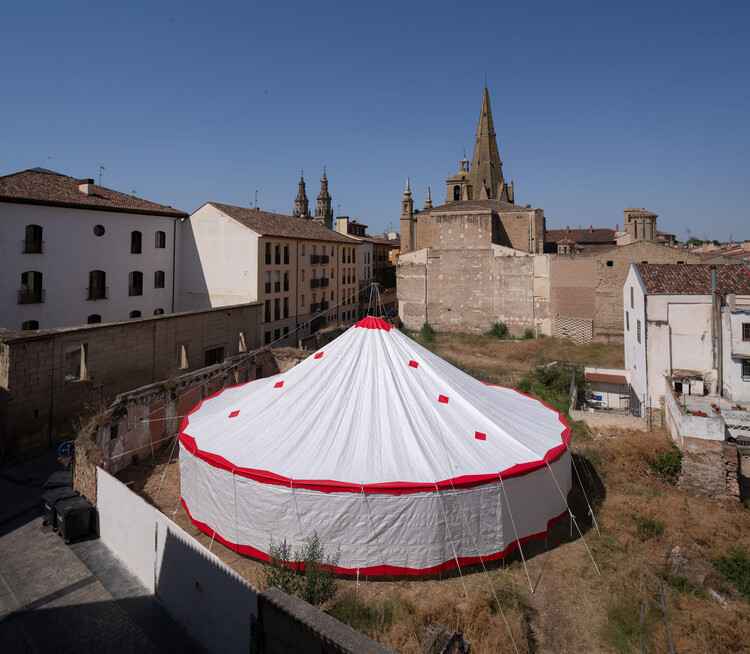
Concéntrico, the Spanish laboratory for urban innovation exploring new ways of inhabiting public space through temporary urban installations, presented the program for its upcoming edition on March 17th, along with its main lines of work for the 2025–2026 season. The festival invites architects, designers, artists, and researchers from different geographies to propose interventions that activate squares, streets, riverbanks, and vacant spaces in the city. This year's edition includes the participation of Smiljan Radić, the recently awarded Pritzker Architecture Prize laureate, who will develop a light, foldable, and temporary structure built from industrial plastic fabrics following the concept of a "poor circus." Another 26 teams, including three practices selected through the festival's international open calls, will intervene in Logroño's public space from June 18 to 23, 2026, with projects ranging from climate-responsive structures to ephemeral public space activations.

Concéntrico 2026 Features Smiljan Radić Installation and 26 Urban Interventions in Logroño, Spain - Image 1 of 4Concéntrico 2026 Features Smiljan Radić Installation and 26 Urban Interventions in Logroño, Spain - Image 2 of 4Concéntrico 2026 Features Smiljan Radić Installation and 26 Urban Interventions in Logroño, Spain - Image 3 of 4Concéntrico 2026 Features Smiljan Radić Installation and 26 Urban Interventions in Logroño, Spain - Image 4 of 4Concéntrico 2026 Features Smiljan Radić Installation and 26 Urban Interventions in Logroño, Spain - More Images+ 3

Modular Installation Reimagines Unfinished Structures at Limbo Museum in Accra, Ghana

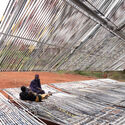
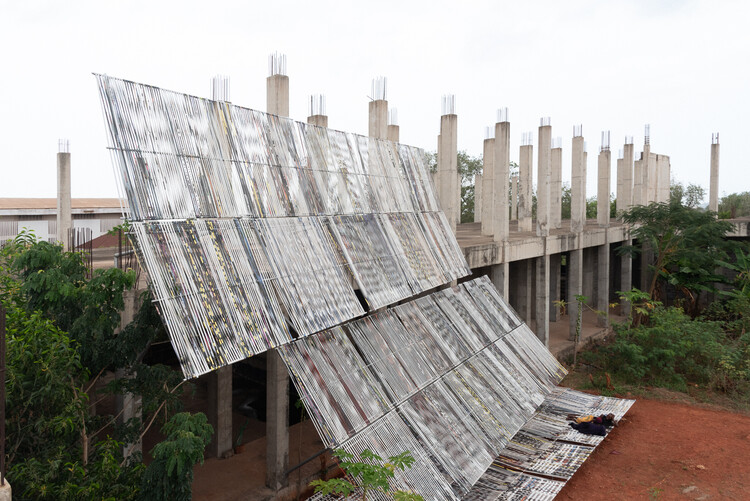
The recently opened Limbo Museum in Accra, Ghana, inaugurated a two-part architectural installation by TAELON7 on March 12th, led by architect Juergen Benson-Strohmayer. The installation was commissioned by the museum in partnership with Art Omi, a not-for-profit arts center in New York's Hudson Valley. The project is the first commission of a collaboration between the two institutions and will be installed in both locations, Accra and New York. Titled Limbo Engawa, the modular, lightweight structure dialogues with the formerly abandoned Brutalist building housing the museum, transforming its skeletal concrete structure and its surrounding land into spaces for use, care, and encounter. The project reflects on the boundaries between unfinished urban architecture and the landscape, foregrounding the labor and stewardship often invisible in both urban and institutional contexts, and asserting that even incomplete or overlooked sites are vessels of civic possibility.

Modular Installation Reimagines Unfinished Structures at Limbo Museum in Accra, Ghana - Image 1 of 4Modular Installation Reimagines Unfinished Structures at Limbo Museum in Accra, Ghana - Image 4 of 4Modular Installation Reimagines Unfinished Structures at Limbo Museum in Accra, Ghana - Image 5 of 4Modular Installation Reimagines Unfinished Structures at Limbo Museum in Accra, Ghana - Image 23 of 4Modular Installation Reimagines Unfinished Structures at Limbo Museum in Accra, Ghana - More Images+ 27

The 12th Edition of Toronto’s Winter Stations Reveals Images of Five Winning Projects

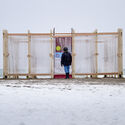
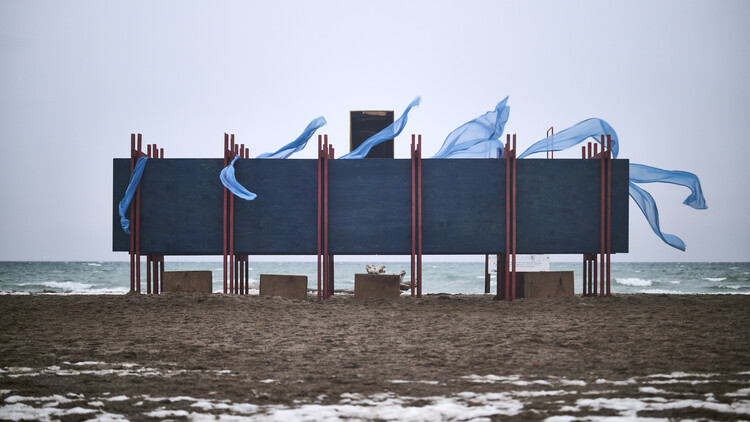
The annual Winter Stations design competition returns to Toronto for its twelfth edition, once again transforming the lifeguard stations of Woodbine Beach into temporary works of public art. On view from February 16 to March 30, 2026, this year's exhibition is organized under the theme Mirage, inviting participants to examine perception, illusion, and the shifting boundaries between what is seen and what is constructed. Selected from more than 300 international submissions, three winning proposals from Canada, the United States, and a GermanyUkraine collaboration are presented alongside two installations developed by university teams. Installed along the frozen shoreline of Lake Ontario, the projects reinterpret seasonal infrastructure as platforms for spatial experimentation during the winter months.

The 12th Edition of Toronto’s Winter Stations Reveals Images of Five Winning Projects - Image 1 of 4The 12th Edition of Toronto’s Winter Stations Reveals Images of Five Winning Projects - Image 2 of 4The 12th Edition of Toronto’s Winter Stations Reveals Images of Five Winning Projects - Image 3 of 4The 12th Edition of Toronto’s Winter Stations Reveals Images of Five Winning Projects - Image 4 of 4The 12th Edition of Toronto’s Winter Stations Reveals Images of Five Winning Projects - More Images+ 16

Festival Concéntrico 2026 Announces Three Selected Urban Installations From Its International Open Calls

Concéntrico is an urban innovation laboratory that invites reflection on the city through architecture and design. Since 2015, it has carried out more than 180 interventions in Logroño, Spain. The new 2025/2026 season of the festival expands on this experimental spirit with three international calls for proposals that bring the ideas in the book Concéntrico: Laboratorio de Innovación Urbana (Park Books, 2025) into action. Through these calls, the organization seeks to explore further three lines of research, the ephemeral, the ecological, and the symbolic, to imagine different ways of inhabiting the city. The winning projects from this edition's calls for entries will be developed, built as urban installations, and presented in the exhibition during the festival, taking place in Logroño from June 18–23, 2026.

Festival Concéntrico 2026 Announces Three Selected Urban Installations From Its International Open Calls - Image 1 of 4Festival Concéntrico 2026 Announces Three Selected Urban Installations From Its International Open Calls - Image 2 of 4Festival Concéntrico 2026 Announces Three Selected Urban Installations From Its International Open Calls - Image 3 of 4Festival Concéntrico 2026 Announces Three Selected Urban Installations From Its International Open Calls - Image 4 of 4Festival Concéntrico 2026 Announces Three Selected Urban Installations From Its International Open Calls - More Images+ 14

Designing for Presence: When Architecture Invites Us to Stay

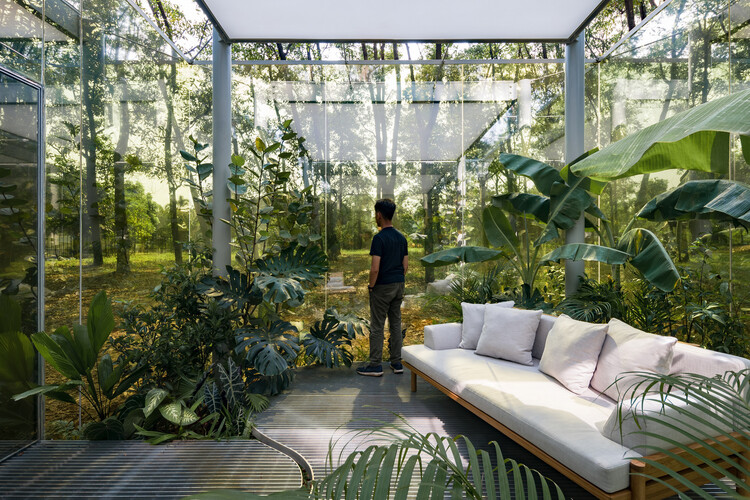
Architecture is increasingly asked to do less, not more. In environments shaped by constant movement, noise, and expectation, spaces that allow people to stay, pause, and be present have become both rarer and more necessary. Many public and semi-public places are designed to keep people moving, consuming, or reacting, leaving little room for lingering, observation, or simply being without a reason.

In response, a growing body of work is shifting attention away from activation and toward presence. Rather than asking users to interact or participate, these spaces create conditions that support staying. Comfort, continuity, and openness allow people to remain without pressure or obligation, making presence a spatial quality rather than an activity.

Designing for Presence: When Architecture Invites Us to Stay - Image 1 of 4Designing for Presence: When Architecture Invites Us to Stay - Image 2 of 4Designing for Presence: When Architecture Invites Us to Stay - Image 3 of 4Designing for Presence: When Architecture Invites Us to Stay - Image 4 of 4Designing for Presence: When Architecture Invites Us to Stay - More Images+ 25

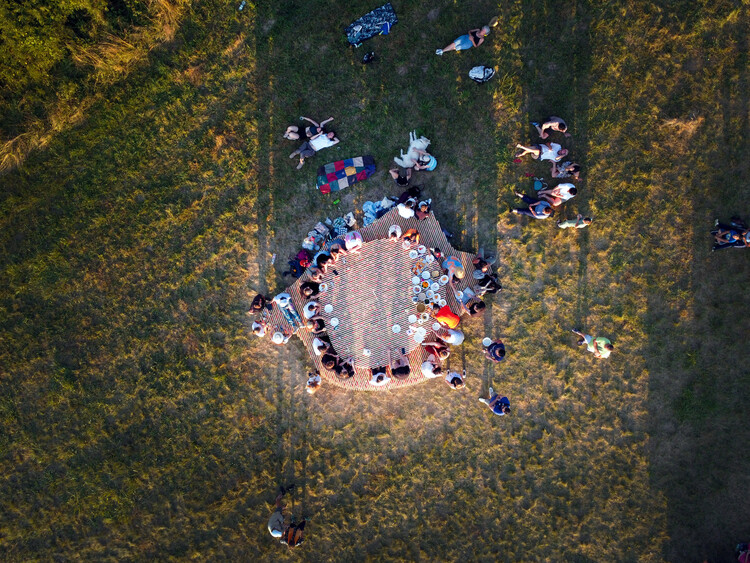
When Eating Becomes Spatial: 14 Projects Built Around Shared Meals

In recent years, food has taken on a renewed role within architecture, not simply as a program or typology, but as a shared spatial practice. Beyond restaurants or dining design, communal eating spaces are increasingly understood as environments where presence, ritual, and time intersect, allowing people to gather, stay, and coexist. In these settings, eating does not just happen within space; it actively shapes it, temporarily transforming ordinary, borrowed, or improvised environments into places of exchange.

This shift is visible across a wide range of built projects, installations, and community spaces that use shared meals as a way of bringing people together. Initiatives such as Fondo Supper Club frame dining as a social platform, using food to connect artists, designers, and local communities through conversation and collaboration. Similarly, sit.feast, presented during Milan Design Week 2024, approached the table as a spatial installation, one where sitting and eating together became the primary means of collectively producing space.

When Eating Becomes Spatial: 14 Projects Built Around Shared Meals - Image 1 of 4When Eating Becomes Spatial: 14 Projects Built Around Shared Meals - Image 2 of 4When Eating Becomes Spatial: 14 Projects Built Around Shared Meals - Image 3 of 4When Eating Becomes Spatial: 14 Projects Built Around Shared Meals - Image 4 of 4When Eating Becomes Spatial: 14 Projects Built Around Shared Meals - More Images+ 16

Beyond Universal Models: The Turn Toward Situated Architecture

Subscriber Access | 

Specificity has re-emerged as a central language in architectural discourse. In an increasingly globalized field, where projects often follow familiar models regardless of context, architects are now turning toward approaches rooted in the particularities of each site. This renewed attention to context reflects broader social, climatic, and political pressures: cities are facing extreme heat, ecological challenges, shifting demographics, and new forms of collective life that demand responses grounded in their immediate conditions.

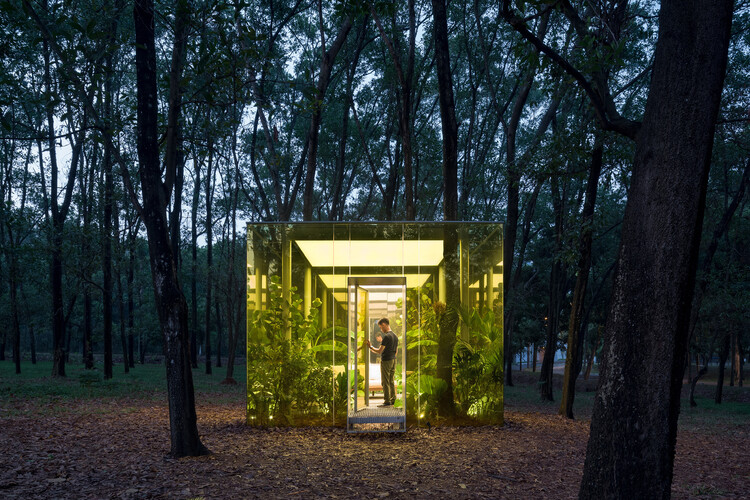
Situated architecture describes this shift. It refers to design approaches in which form, program, and materiality emerge from the specific environment that produces them: its microclimates, cultural structures, and everyday rituals. Rather than beginning with universal templates, these practices start with observation, prototyping, and direct engagement with local dynamics. This logic is visible in the climatic and material experiments of TAKK in Spain, such as Portable Garden and 10k House, which operate as lightweight prototypes tuned to thermal and ecological gradients; in Studio Ossidiana's Art Pavilion M, shaped by layered soils and ecological cycles in the Netherlands; in Izaskun Chinchilla's reinterpretations of vernacular objects and her later experiments with 100 Sillas and 3 Salones Urbanos; in the narrative-driven domestic spaces explored by Common Accounts; and in Raumlabor's urban interventions that respond directly to the specificities of post-industrial Berlin.

Beyond Universal Models: The Turn Toward Situated Architecture - Image 1 of 4Beyond Universal Models: The Turn Toward Situated Architecture - Image 2 of 4Beyond Universal Models: The Turn Toward Situated Architecture - Image 3 of 4Beyond Universal Models: The Turn Toward Situated Architecture - Image 4 of 4Beyond Universal Models: The Turn Toward Situated Architecture - More Images+ 56

Beyond Private Dining: Exploring the Communal Table as Public Space Infrastructure

The habit of sitting at the table and sharing a specific moment with other people has been present for centuries in the most diverse cultures. The Greek Symposium, Roman Convivium, Medieval Feasts and Banquets, and Parisian Salons are just a few examples of how this custom was historically built and has been relevant in social and political negotiations, intellectual discussions, and philosophical debates.

Commensality often serves as a ritual for bonding, negotiation, and celebrating important events. In many Spanish-speaking cultures, the stretch of time after the meal when the entire family stays seated and talks is so present that there is a word for it: sobremesa — literally translated as "upon the table" (though in Spanish it more accurately means "dessert" or "after-meal conversation"). But, despite often being associated with sharing a meal, the table can be considered a flexible platform open to many possibilities for appropriation and interaction.

Beyond Private Dining: Exploring the Communal Table as Public Space Infrastructure - Image 1 of 4Beyond Private Dining: Exploring the Communal Table as Public Space Infrastructure - Image 2 of 4Beyond Private Dining: Exploring the Communal Table as Public Space Infrastructure - Image 3 of 4Beyond Private Dining: Exploring the Communal Table as Public Space Infrastructure - Image 4 of 4Beyond Private Dining: Exploring the Communal Table as Public Space Infrastructure - More Images+ 9

Burning Man 2025: 15 Temporary Installations in the Black Rock Desert

Each year, Burning Man transforms Nevada's Black Rock Desert into a temporary city where large-scale installations define both the landscape and the collective experience. Serving as a platform for experimental design, the event brings together artists, architects, and interdisciplinary teams to create works that blur the boundaries between sculpture and architecture. These temporary structures often function as gathering spaces, landmarks, or immersive environments, embodying the festival's guiding principle of impermanence.

The 2025 edition introduced projects that examined themes of ecology, memory, and connectivity while responding to the challenges of building in the desert. Ranging from intimate interactive pieces to monumental landmarks, the installations encouraged reflection, participation, and community engagement before disappearing at the close of the event.

Burning Man 2025: 15 Temporary Installations in the Black Rock Desert - Image 1 of 4Burning Man 2025: 15 Temporary Installations in the Black Rock Desert - Image 2 of 4Burning Man 2025: 15 Temporary Installations in the Black Rock Desert - Image 3 of 4Burning Man 2025: 15 Temporary Installations in the Black Rock Desert - Image 4 of 4Burning Man 2025: 15 Temporary Installations in the Black Rock Desert - More Images+ 21

The City as a Laboratory of Processes: A Decade of Urban Experimentation with Concéntrico

Subscriber Access | 

As cities continue to develop, we are seeing ever more well-planned, thoroughly executed, and tightly regulated approaches to shaping urban centres and their surrounding spaces—for better and for worse. As codes, restrictions, and guidelines improve and tighten, urban environments become safer, more balanced, and less prone to surprise. Yet the flip side is that highly managed districts can drift toward over-order and sanitisation, shedding the messy, accretive character that once produced alleyways, residual spaces, and unexpected sequences of movement—conditions often born from ongoing community improvisation in the grey zones of regulation.

In response, a growing number of initiatives around the world are proposing short-term urban installations that test alternate futures for the city. These works aim to provoke dialogue between what the city is and what it could offer its communities through thoughtful, context-specific spatial practices. One notable example is Concéntrico, the international festival in Logroño, Spain, conceived as an urban innovation laboratory. Marking its tenth edition, the festival is about to publish Concéntrico: Urban Innovation Laboratory, a book that surveys a decade of urban design and collective transformation shaped through successive editions of the festival. Its launch is paired with an international tour designed to share a decade of insights on collective transformation and design.

The City as a Laboratory of Processes: A Decade of Urban Experimentation with Concéntrico - Image 1 of 4The City as a Laboratory of Processes: A Decade of Urban Experimentation with Concéntrico - Image 2 of 4The City as a Laboratory of Processes: A Decade of Urban Experimentation with Concéntrico - Image 3 of 4The City as a Laboratory of Processes: A Decade of Urban Experimentation with Concéntrico - Image 4 of 4The City as a Laboratory of Processes: A Decade of Urban Experimentation with Concéntrico - More Images+ 32

10 Highlighted Installations and Exhibitions from Maison&Objet and Paris Design Week 2025

This year, the Maison&Objet interior design trade fair and the city-wide celebration Paris Design Week joined forces to highlight emerging designers, bring renewed value to French métiers d'art, and temporarily transform heritage landmarks with contemporary design visions. Both events began on September 4, turning Paris into a city-wide design festival. Galleries, showrooms, and concept stores opened their doors, while renowned landmarks became venues for designers from more than 30 countries. The abundance and diversity of the program have drawn comparisons to Milan Design Week, while giving Paris a distinct platform on the global design calendar. This article presents a selection of installations and exhibitions of architectural interest that emerge from the synergy between the two initiatives.

10 Highlighted Installations and Exhibitions from Maison&Objet and Paris Design Week 2025 - Image 1 of 410 Highlighted Installations and Exhibitions from Maison&Objet and Paris Design Week 2025 - Image 2 of 410 Highlighted Installations and Exhibitions from Maison&Objet and Paris Design Week 2025 - Image 3 of 410 Highlighted Installations and Exhibitions from Maison&Objet and Paris Design Week 2025 - Image 4 of 410 Highlighted Installations and Exhibitions from Maison&Objet and Paris Design Week 2025 - More Images+ 8

Between Fantasy and Reality: Aldo Rossi's Floating Teatro del Mundo for the First Venice Architecture Biennale

The first edition of the Venice Architecture Biennale took place in 1980, immediately revealing its role as a platform for images and ideas that would become essential references in contemporary architectural theory and practice. This disruptive character was embodied from the very beginning by the strangely familiar floating structure designed by Aldo Rossi, titled Teatro del Mondo. At once temporary and archetypal, the project introduced central themes that would shape Italian architectural discourse in the years that followed. To this day, it continues to inspire reflections on timelessness, imagination, and the memory embedded in cities.

Between Fantasy and Reality: Aldo Rossi's Floating Teatro del Mundo for the First Venice Architecture Biennale - Image 1 of 4Between Fantasy and Reality: Aldo Rossi's Floating Teatro del Mundo for the First Venice Architecture Biennale - Image 2 of 4Between Fantasy and Reality: Aldo Rossi's Floating Teatro del Mundo for the First Venice Architecture Biennale - Image 3 of 4Between Fantasy and Reality: Aldo Rossi's Floating Teatro del Mundo for the First Venice Architecture Biennale - Image 4 of 4Between Fantasy and Reality: Aldo Rossi's Floating Teatro del Mundo for the First Venice Architecture Biennale - More Images