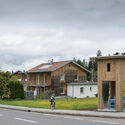
The Metrics We Use Decide the Cities We Build: Urban Indicators and Lived Experience

Subscriber Access

Modern cities are running on performance indicators. They move millions of people each day, concentrate capital, separate land uses, and sustain complex systems of logistics and consumption. In that sense, the city functions as a system to be continually adjusted and optimized.

Today's dominant metrics are familiar and widely witnessed: vehicles per hour, average commute times, floor area ratios, parking turnover, housing starts, and tax revenue per parcel of land. These figures describe a city that is legible through efficiency. They are inherited from an industrial logic, where urban space is treated more like a production mechanism than a lived-in environment. In this framing, cities begin to mimic the needs and metrics of a machine.


The Metrics We Use Decide the Cities We Build: Urban Indicators and Lived Experience - Image 2 of 7The Metrics We Use Decide the Cities We Build: Urban Indicators and Lived Experience - Image 3 of 7The Metrics We Use Decide the Cities We Build: Urban Indicators and Lived Experience - Image 4 of 7The Metrics We Use Decide the Cities We Build: Urban Indicators and Lived Experience - Image 5 of 7The Metrics We Use Decide the Cities We Build: Urban Indicators and Lived Experience - More Images+ 2

Content Loader

Image gallery

See allShow less
About this author
Cite: Ankitha Gattupalli. "The Metrics We Use Decide the Cities We Build: Urban Indicators and Lived Experience" 05 Jun 2026. ArchDaily. Accessed . <https://www.archdaily.com/1041719/the-metrics-we-use-decide-the-cities-we-build-urban-indicators-and-lived-experience> ISSN 0719-8884

You've started following your first account!

Did you know?

You'll now receive updates based on what you follow! Personalize your stream and start following your favorite authors, offices and users.