1. ArchDaily
  2. Jan Gehl

Jan Gehl: The Latest Architecture and News

The Metrics We Use Decide the Cities We Build: Urban Indicators and Lived Experience

Subscriber Access | 

Modern cities are running on performance indicators. They move millions of people each day, concentrate capital, separate land uses, and sustain complex systems of logistics and consumption. In that sense, the city functions as a system to be continually adjusted and optimized.

Today's dominant metrics are familiar and widely witnessed: vehicles per hour, average commute times, floor area ratios, parking turnover, housing starts, and tax revenue per parcel of land. These figures describe a city that is legible through efficiency. They are inherited from an industrial logic, where urban space is treated more like a production mechanism than a lived-in environment. In this framing, cities begin to mimic the needs and metrics of a machine.

The Metrics We Use Decide the Cities We Build: Urban Indicators and Lived Experience - Image 1 of 4The Metrics We Use Decide the Cities We Build: Urban Indicators and Lived Experience - Image 2 of 4The Metrics We Use Decide the Cities We Build: Urban Indicators and Lived Experience - Image 3 of 4The Metrics We Use Decide the Cities We Build: Urban Indicators and Lived Experience - Image 4 of 4The Metrics We Use Decide the Cities We Build: Urban Indicators and Lived Experience - More Images+ 2

WXCA Revitalizes Former FSO Factory, Aims to Design "Green District of the Future"

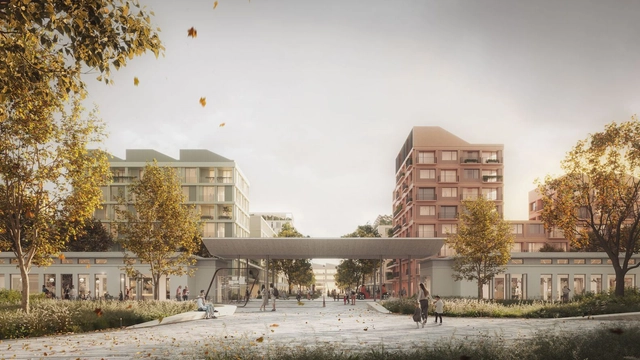
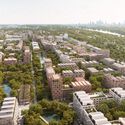
Last week, WXCA Architects unveiled the design for a new “green district of the future,” to be developed on a former FSO car factory site in Warsaw. Covering over 60 hectares, the project aims to accommodate more than 17,000 residents and provide employment for approximately 13,000 individuals by 2050. The Polish automotive FSO factory will be transformed, outlined in a master plan envisioning a multi-functional and environmentally conscious district.

WXCA Revitalizes Former FSO Factory, Aims to Design "Green District of the Future" - Image 1 of 4WXCA Revitalizes Former FSO Factory, Aims to Design "Green District of the Future" - Image 2 of 4WXCA Revitalizes Former FSO Factory, Aims to Design "Green District of the Future" - Image 3 of 4WXCA Revitalizes Former FSO Factory, Aims to Design "Green District of the Future" - Image 4 of 4WXCA Revitalizes Former FSO Factory, Aims to Design Green District of the Future - More Images+ 3

Cities For People: In Conversation with Jan Gehl at the UIA World Congress of Architects 2023

The UIA World Congress of Architecture 2023 is an international invitation for architects worldwide to explore the future of the built environment. The event this year that brought together 6,000 participants worldwide, focusing on “Sustainable Futures – Leave No One Behind”, was set on discovering how architecture influences the 17 UN Sustainable Development Goals (SDGs), ranging from Climate Adaptation, Rethinking Resources, Health, Inclusivity, and more. While visiting this year’s edition in Copenhagen, the ArchDaily team had the chance to sit down with Jan Gehl, the father of people-centered design. The discussion revolved around 50 years after the launch of his world-renowned book, Cities for People, the first publication to reflect on how to properly develop cities on the human scale. Moreover, the interview followed his keynote speech at the UIA 2023, “Cities for People – 50 Years Later."

Cities For People: In Conversation with Jan Gehl at the UIA World Congress of Architects 2023 - Image 1 of 4Cities For People: In Conversation with Jan Gehl at the UIA World Congress of Architects 2023 - Image 2 of 4Cities For People: In Conversation with Jan Gehl at the UIA World Congress of Architects 2023 - Image 3 of 4Cities For People: In Conversation with Jan Gehl at the UIA World Congress of Architects 2023 - Image 4 of 4Cities For People: In Conversation with Jan Gehl at the UIA World Congress of Architects 2023 - More Images+ 2

Ground Level: The Mixed-Use Typology

Subscriber Access | 

Buildings around the world are getting taller. Since the year 2000, global skyscraper construction has increased by 402%. Cities like Dubai are home to nearly 1000 high-rise buildings, and New York’s vibrant luxury real estate market has shown no signs of slowing down, with more high-rise additions slated to be added to its already towering skyline. There’s good in this – high-rises create much-needed space in already dense cities and can reduce urban sprawl in city centres, allowing for better preservation of natural areas.

Ground Level: The Mixed-Use Typology - Image 1 of 4Ground Level: The Mixed-Use Typology - Image 2 of 4Ground Level: The Mixed-Use Typology - Image 3 of 4Ground Level: The Mixed-Use Typology - Image 4 of 4Ground Level: The Mixed-Use Typology - More Images+ 5

Psychology of Scale: People, Buildings and Cities

In the introduction of Cities for People, Jan Gehl stated clearly that most cities have neglected the human aspect when planning the built space. While technologies have allowed us to build large, our focus shifted from creating architecture for humans to erecting structures that look like they are meant for a different kind of species. Top-down urban planning decisions have ignored scales adapted to the senses and organic growth, and new ideologies prioritized speed, functionality, and profitability.

Dictating our city experience, scale, this major spatial component related to the human dimension, stimulates our senses, and influences our well-being. In this article, we lay down historical changes and underline scientific facts to highlight how scale can impact our daily city life, guided by Eden of the Orient, a series of photos by Belgian photographer Kris Provoost, portraying a battle of scale in Hong Kong.

Psychology of Scale: People, Buildings and Cities - Image 1 of 4Psychology of Scale: People, Buildings and Cities - Image 2 of 4Psychology of Scale: People, Buildings and Cities - Image 3 of 4Psychology of Scale: People, Buildings and Cities - Image 4 of 4Psychology of Scale: People, Buildings and Cities - More Images+ 10

A Close Look at the Gehl Institute's Free Toolkit for City Planning

This article was originally published by Common Edge as "The Gehl Institute’s Toolkit for the Creation of Great Urban Spaces."

Jane Jacobs was arguably the most important “citizen” planner in the 20th century. If we were setting up a related category for credentialed planners, then the great Danish urbanist Jan Gehl might just top that list; inspired by the ideas of Jacobs, the architect and urban designer has spent nearly a half-century studying and writing about public space. He helped his home city of Copenhagen become a kind of model for walkable urbanism and has consulted for cities all over the world.

Two and a half years ago his firm, Gehl, launched a nonprofit arm, Gehl Institute, dedicated to public engagement, and the use and creation of public urban space as a tool of both economic development and political equity. Recently the institute published what it describes as “tools for measuring public space and public life, in the form of free, downloadable worksheets.” The toolkit is beautifully executed. Last week I talked to Shin-pei Tsay, executive director of the Gehl Institute, about the tools and what her group hopes to accomplish with them.

Jan Gehl: “In The Last 50 Years, Architects Have Forgotten What a Good Human Scale Is”

Subscriber Access | 

This interview was initially published in Spanish by City Manager as “Jan Gehl, ciudades para la gente.”

Jah Gehl is recognized as a follower of Jane Jacobs, the “grandmother” of urbanism and humanist planning. He has been a professor at the Danish Real Academy of Fine Arts in Copenhagen and visiting professor in Canada, the United States, New Zealand, Mexico, Australia, Belgium, Germany, Poland, and Norway. In 2000, he created his own consultancy along with Helle Søholt, Gehl Architects, in Denmark, where he completed diverse urban projects from around the world using data and strategic analysis.

The below text comes from an interview with the Danish architect, theorist and world leader in urban development, and promoter, following Jane Jacobs, of the human scale in the design of public spaces.

Why Are Architects Needed? 8 Speakers Give Their Answers During Rising Architecture Week 2017

Subscriber Access | 

With the objective of developing new solutions to the societal challenges of tomorrow, the RISING Architecture Week 2017 was held in Aarhus, Denmark, between the 11th and 15th of September. It consisted of a series of events, exhibitions, and the RISING Exchange Conference, focusing on how architecture and construction can help to rethink existing paradigms.

During our visit to the city, we had the opportunity to talk with Jan Gehl, Pauline Marchetti, Ruth Baumeister, Daan Roosegaarde, John Thackara, Jacques Ferrier, Stephan Petermann, and Shajay Bhooshan – some of the speakers who shared their visions on these issues. We posed the question, "Are architects really needed?" to prompt them to reflect on a future in which different actors will be relevant in addressing such challenges.

Every time you put any brick down anywhere, you manipulate the quality of life of people. (...) If you just make form, it's sculpture. But it becomes architecture if the interaction between form and life is successful. – Jan Gehl.

You can watch the video above to see their responses and find pictures of their lectures on the official Facebook of the event.

These Are Jan Gehl's Methods For Building Good Cities

Subscriber Access | 

We now know that first, we form the cities, but then the cities form us.

Meet 81-year-old Danish architect Jan Gehl who, for more than fifty years, has focused on improving the quality of urban life by helping people to “re-conquer the city.” Gehl has studied the relationship between life and form since the mid-1960s, when he started questioning the modernist approach of looking at the architectural model from above instead of from the inside. The architecture of that time was very often "an obsession with architecture for architecture’s sake," and took very little interest in the inhabitants.

Why Jan Gehl, the Champion of People-Oriented Cities, Doesn't Necessarily Dislike Skyscrapers

This article was originally published by Common Edge as "Jan Gehl on Why Tall Buildings Aren’t Necessarily Bad for Street Life."

Jan Gehl, the great Danish urbanist, has much in common with Jane Jacobs. For the better part of a half-century now, his focus has been on the development of people-oriented cities. The author of a number of books, including Life Between Buildings, Cities for People, Public Spaces—Public Life, and most recently, How to Study Public Life, Gehl and his colleagues have also served as consultants for the cities of Copenhagen, London, Melbourne, Sydney, New York and Moscow. Gehl Architects currently has offices in Copenhagen, New York and San Francisco. I spoke to Gehl about Jacobs, the folly of modernist city planning, and New York City’s durable urban form.

Jan Gehl: "The Modern Movement Put an End to the Human Scale"

Subscriber Access | 

On Thursday 29 of June, Jan Gehl the Danish architect and urban planner, spoke at the Conference “Thinking urban: cities for people” organised by UN-Habitat and the Official Architects College of Madrid (COAM as it is abbreviated in Spanish) about the urban transformations that have occurred in Copenhagen as a result of the errors of the modernist movement and the challenges facing the cities in the 21st century.

In a prior discussion with José María Ezquiaga (dean of COAM), and José Manuel Calvo (councilor of the Sustainable Development Area at the Madrid city council) at the Conference, Gehl highlighted the urban paradigm at the time of his student years, which is referred to as the Brasilia syndrome. 

UBM Future Cities’ Interview with Jan Gehl Streams Live Tomorrow

Renowned architect, urban design consultant, and founding partner of Gehl Architects, Jan Gehl will participate in a 30-minute audio interview on August 14 with UBM’s Future Cities. During the program, and in advance of his keynote at the upcoming Future of Cities Forum, Gehl will discuss building cities for people, the importance of public spaces that promote public life, and how to design cars out of our future cities. Listeners can stream the conversation live and directly ask Gehl questions via a live chat discussion here.
Trailer: The Human Scale

Subscriber Access | 

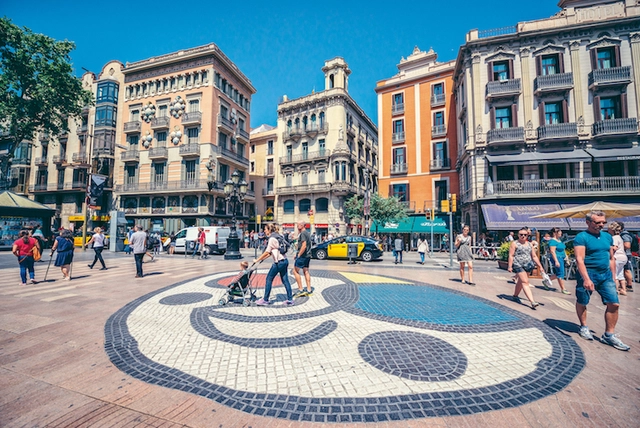
Derived from 40 years of research by architect, professor and author Jan Gehl, The Human Scale takes a critical look at the way we build and use our cities. Assumptions about modernity are questioned, as director Andreas M. Dalsgaard urges the viewer to imagine what would happen when we put “people into the center of our equations”.

Video: Jan Gehl

Subscriber Access | 

Video: Jan Gehl - Featured Image