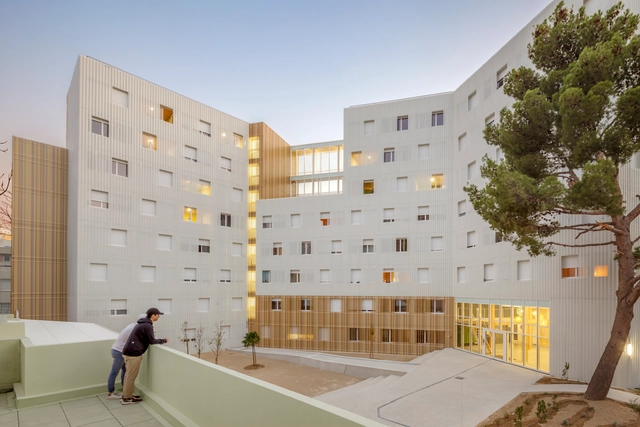
Student housing has undergone a remarkable transformation over the last century. Once seen as a utilitarian necessity, providing shelter and basic amenities for students, this architectural typology has evolved to address increasingly complex societal, cultural, and urban demands. Starting with Le Corbusier's modernist approach at the Cité Universitaire in Paris, student housing has reflected broader trends in architecture, urbanism, and social change.

Today, these buildings must cater to a highly diverse and transient population, navigating the pressures of affordability, density, and the evolving living standards of young adults. With rapid urbanization and increasing student mobility, universities now face the challenge of designing housing that is not only functional but also adaptable to different cultural and social contexts. This has led to more flexible, innovative solutions that promote both privacy and community living.
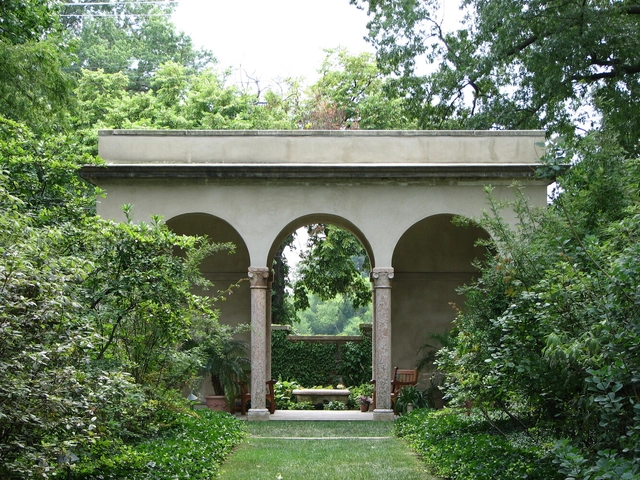
Women have played a pivotal role in the evolution of landscape architecture, overcoming the constraints of a male-dominated profession to introduce groundbreaking ideas and fresh perspectives. From early pioneers to contemporary leaders, their work has reshaped how we interact with public and private spaces, intertwining aesthetics, functionality, and sustainability in innovative ways.
In the late 19th and early 20th centuries, female landscape architects carved out their place in the profession, emphasizing harmony between built structures and natural landscapes. Their projects showcased a deep commitment to community and ecological balance, setting the stage for an inclusive and thoughtful approach to design that continues to inspire the field today.
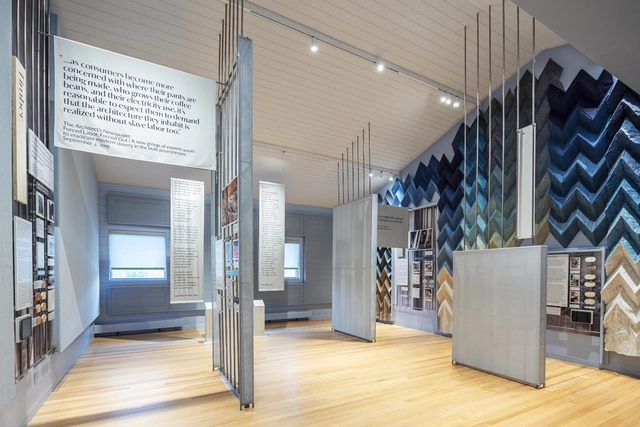
On May 4, 2024, cultural center Grace Farms opened a new long-term exhibition that aims to shed light on the inner workings of the building industry, offering insights into the methods of producing and distributing building materials, as well as the pervasive practices of forced labor happening in the materials supply chain worldwide. The exhibition also presents the work of “Design for Freedom,” a collaborative global movement launched in 2020 at Grace Farms. The initiative aims to change architecture by raising awareness of these issues and helping disrupt forced labor in the construction industry. Titled “With Every Fiber,” the exhibit is free to visit both at its physical location in New Canaan, Connecticut, and online as a virtual exhibition.
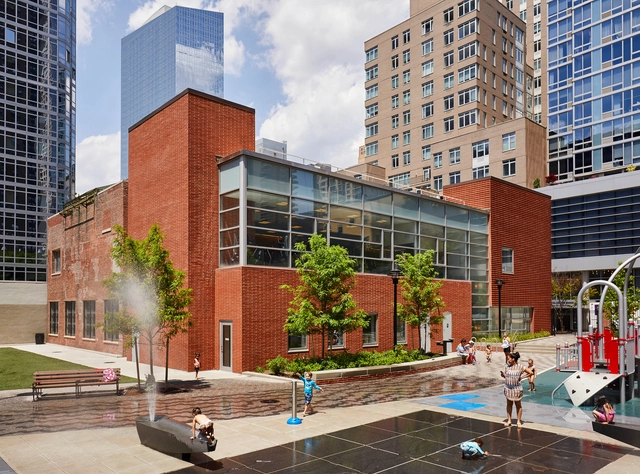
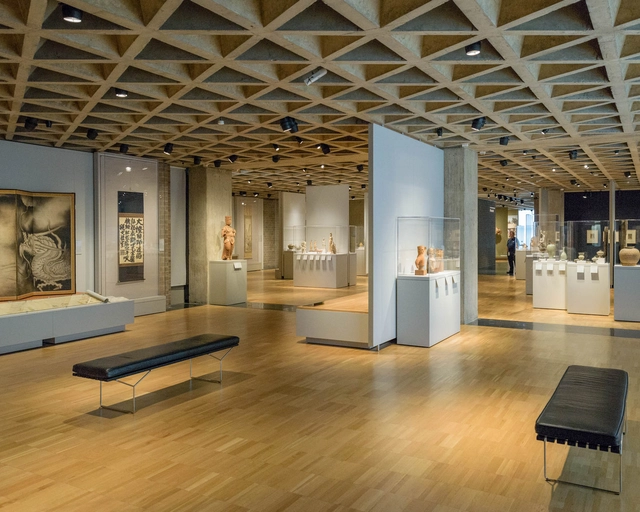
Belmont (Monty) Freeman (b. 1951) founded his New York-based, currently eight-person practice, Belmont Freeman Architects in 1986. Its active projects are half institutional and half residential, with a special focus on adaptive reuse, predominantly in New York and nearby states. Among the firm’s most exemplary projects are the LGBT Carriage House on the University of Pennsylvania campus, a series of restorations at the Four Seasons restaurant in the Seagram Building, renovations at the Yale Club in Manhattan, and the renovation of the Ezra and Cecile Zilkha Gallery at Wesleyan University in Connecticut, designed by Kevin Roche. Current projects include an expansive but minimalist residential compound on Martha’s Vineyard, branch library renovations in New York City, and redevelopment of a former meatpacking building into a new Innovation Hub for Columbia University’s Business School.
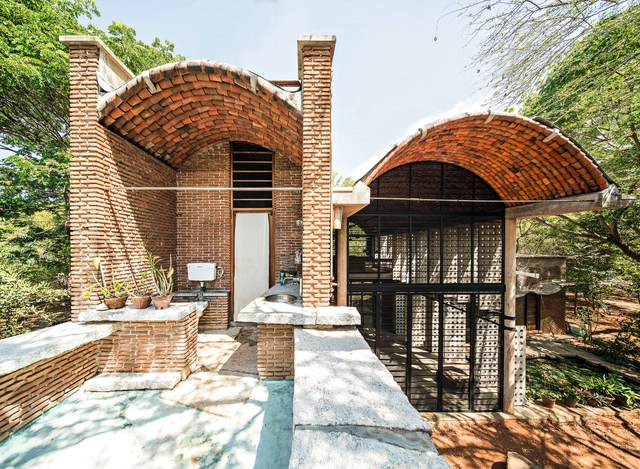
The Royal Institute of British Architects (RIBA) and the Jencks Foundation announced renowned Indian architect Anupama Kundoo as the winner of this year's RIBA Charles Jencks Award. The accolade given in recognition of significant contributions to the theory and practice of architecture acknowledges Kundoo's holistic practice that marries theoretical investigations, material research and sustainable building methods.
The annual DesignIntelligence architecture school ranking for 2020 classified the establishments according to the “most admired” rather than the “best”, for the second year in a row. The subjective classification is based on the responses of hiring professionals.
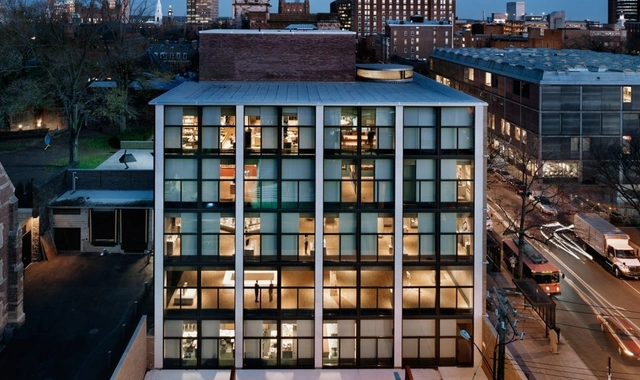
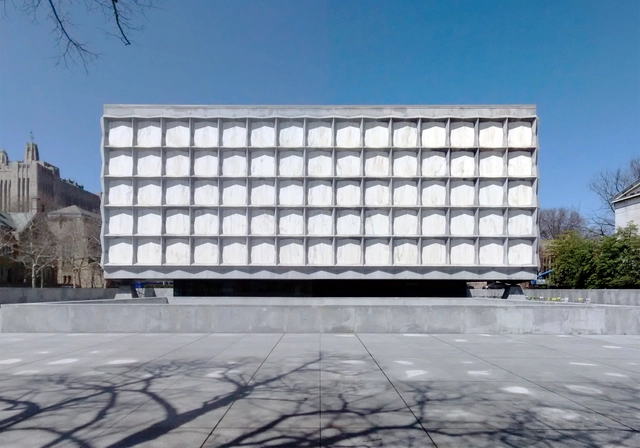
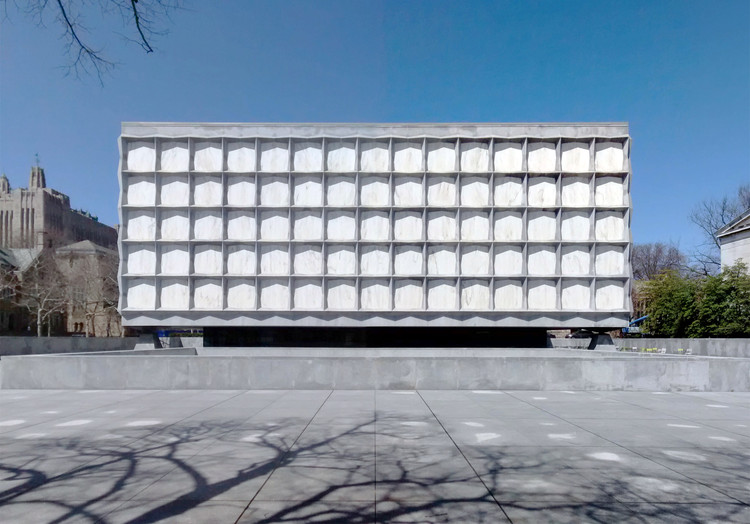
Cloistered by a protective shell of stone, the Beinecke Rare Book and Manuscript Library is one of the world’s foremost collections of rare manuscripts. Opened in 1963, the library is renowned for its translucent marble façade and the world-renowned glass book tower sheltered within – a dramatic arrangement resulting from the particular requirements of a repository for literary artifacts. This unique design, very much in the Modernist lineage but in contrast to the revivalist styles of the rest of Yale’s campus, has only become appreciated thanks to the passage of time; the same bold choices which are now celebrated were once seen as a cause for contempt and outrage.
After serving as dean at the Yale School of Architecture for nearly two decades, Robert A.M. Stern is reportedly stepping down. According to Yale Daily News, faculty and administrative staff members have indicated that Stern will be retiring when his term as dean concludes in Spring 2016. “[Stern] took [the school] from a place where people were not paying attention to it many years ago — he has brought incredible international attention to the school,” Professor Michelle Addington stated in regards to Stern's widespread influence as dean. “He has given me the opportunity to rethink my subject, and that doesn’t happen at too many places.” More information, here.
DesignIntelligence has released their 2015 rankings of the Best US Architecture Schools for both undergraduate and graduate programs. Over 1,400 professional practice organizations were surveyed and asked to respond to the question: “In your firm’s hiring experience in the past five years, which of the following schools are best preparing students for success in the profession?” In addition, more than 3,800 architecture, landscape architecture, interior design, and industrial design students were also surveyed about their education, in data presented separately from the rankings.
However, perhaps more enlightening than the ranking itself are the firms' responses to several additional issues raised in the report. For example, 54.6% of the firms surveyed selected sustainability and climate change as the professions’ biggest concern, while maintaining design quality was a close second. Firms also provided insights on the most important qualities of new graduates entering the workplace, with an overwhelming 70.1% selecting attitude/personality as the most important attribute.
Read on after the break for the Top 10 undergraduate and graduate programs.
In Design Intelligence's annual rankings of US Architecture Schools, released earlier this month, there is certainly a lot to talk about. Of course, plenty will be said about what is shown immediately by the statistics, and rightly so - but just as interesting is what is revealed between the lines of this report, about the schools themselves and the culture they exist within. By taking the opinions of professional architects, teachers and students, the Design Intelligence report exposes a complex network which, when examined closely enough, reveals what some might see as a worrying trend within architectural education.
Inspired by the 13th International Architecture Exhibition‘s theme Common Ground, Peter Eisenman has formed a team to revisit, examine and reimagine Giovanni Battista Piranesi’s 1762 folio collection of etchings, Campo Marzio dell’antica Roma. Derived from years of fieldwork spent measuring the remains of ancient Roman buildings, these six etchings depict Piranesi’s fantastical vision of what ancient Rome might have looked like and represent a landmark in the shift from a traditionalist, antiquarian view of history to the scientific, archaeological view.
Eisenman’s team consists of Eisenman Architects, students from Yale University, Jeffrey Kipnis with his colleagues and students of the Ohio State University, and Belgian architecture practice, Dogma. Each group has contributed a response to Piranesi’s work through models and drawings that stimulate discourse on contemporary architecture. In particular, they explore architecture’s relationship to the ground and the political, social, and philosophical consequences that develop from that relationship.
Described as “precise, specific, yet impossible”, Piranesi’s images have been a source of speculation, inspiration, research and contention for architects, urban designers and scholars since their publication 250 years ago. Continue after the break to learn more.
Architectural Digest has compiled a list of college campuses throughout the United States which have the most remarkable architectural traditions, which broadcast their innovative philosophy through design. A number of colleges have fully incorporated modern architecture into their campus schemes, for example MIT; while others have preserved their historical edifices through the course of the years, like the University of Virginia. The list involves some prestigious institutions, in addition to some surprises, all possessing their individual architectural languages.
See the 10 College Campuses with the Best Architecture after the break.