1. ArchDaily
  2. Yale School of Architecture

Yale School of Architecture: The Latest Architecture and News

Farewell to Masters: Remembering the Architects We Lost in 2025

Every year brings new ideas, projects, and shifts in architectural culture, but it also marks the loss of voices that have shaped the discipline across decades. Architecture moves forward, but it also advances through absence. When figures who helped articulate its language and its ambitions disappear, they leave behind more than completed works or influential texts. Their absence becomes a threshold, a moment in which the discipline pauses to understand what remains, what evolves, and what continues to guide us. These moments of loss remind us that architecture is a long, collective construction, carried not only by those shaping the present but also by those whose visions continue to orient how we think about cities and landscapes.

The architects and thinkers we lost in 2025 came from remarkably different worlds, yet the questions that shaped their work often intersected. Some approached the city through identity, symbolism, and historical continuity, seeking to ground the built environment in cultural memory. Others interpreted it through engineering precision, ecological systems, or radical experimentation, expanding what architecture could be and how it could be experienced. Their work spans contexts as diverse as postwar Britain, rapidly urbanizing China, Central European avant-gardes, and the evolving cultural institutions of Berlin and New York. Together, they form a spectrum of responses that defined, and continue to define, architectural culture over the last half-century, revealing the multiplicity of ways in which architecture can engage with society, technology, and the environment.

Farewell to Masters: Remembering the Architects We Lost in 2025 - Image 1 of 4Farewell to Masters: Remembering the Architects We Lost in 2025 - Image 2 of 4Farewell to Masters: Remembering the Architects We Lost in 2025 - Image 3 of 4Farewell to Masters: Remembering the Architects We Lost in 2025 - Image 4 of 4Farewell to Masters: Remembering the Architects We Lost in 2025 - More Images+ 33

Robert A.M. Stern, Influential American Architect and Educator, Passes Away at 86

Robert A.M. Stern, the American architect, educator, and historian whose work shaped both the physical and intellectual landscape of contemporary architecture, has died at the age of 86. His passing was confirmed by Robert A.M. Stern Architects (RAMSA), the New York-based practice he led for more than five decades. Known for advancing a contextual, historically informed approach during decades dominated by modernist and high-tech architecture, Stern remained a prominent voice advocating for continuity, urban civility, and an understanding of architecture as part of a longer cultural lineage.

Robert A.M. Stern, Influential American Architect and Educator, Passes Away at 86 - Image 1 of 4Robert A.M. Stern, Influential American Architect and Educator, Passes Away at 86 - Image 2 of 4Robert A.M. Stern, Influential American Architect and Educator, Passes Away at 86 - Image 3 of 4Robert A.M. Stern, Influential American Architect and Educator, Passes Away at 86 - Image 4 of 4Robert A.M. Stern, Influential American Architect and Educator, Passes Away at 86 - More Images

Breaking Ground: "Soil Sisters" and SOM Foundation Pioneer Green Architectural Innovation

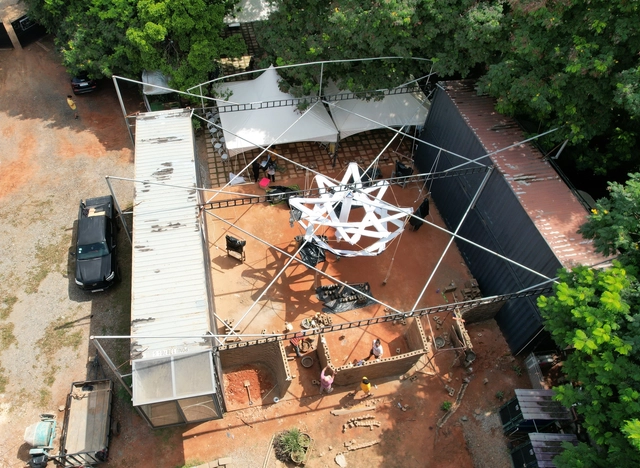
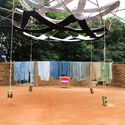
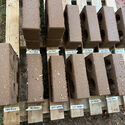
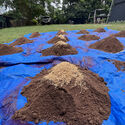
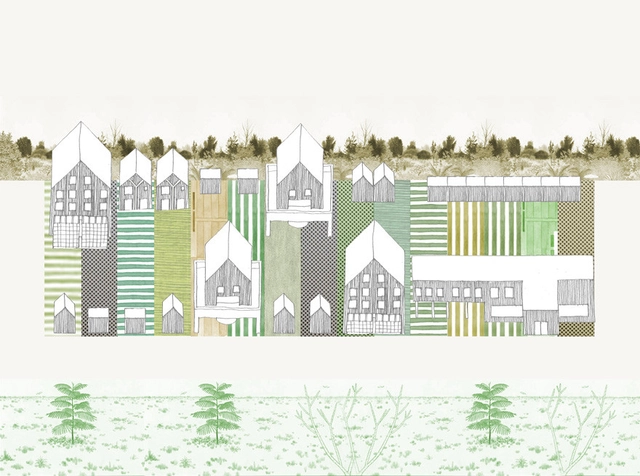
The “Soil Sisters” initiative explores how architectural design and sustainable material practices can contribute to soil nutrition and resilience. Partnering with SOM Foundation, their joint effort has resulted in an exhibition aiming to redefine our understanding of “environmentally conscious practices.” Titled “Soil Sisters: A Ceiling, A Chair and Table, A Wall and a Threshold,” the display showcases their dedication to redefining soil health as a cross-sectoral objective by emphasizing materiality and color in the built environment.

Breaking Ground: "Soil Sisters" and SOM Foundation Pioneer Green Architectural Innovation - Image 1 of 4Breaking Ground: "Soil Sisters" and SOM Foundation Pioneer Green Architectural Innovation - Image 2 of 4Breaking Ground: "Soil Sisters" and SOM Foundation Pioneer Green Architectural Innovation - Image 3 of 4Breaking Ground: "Soil Sisters" and SOM Foundation Pioneer Green Architectural Innovation - Image 4 of 4Breaking Ground: Soil Sisters and SOM Foundation Pioneer Green Architectural Innovation - More Images+ 6

Francis Kéré: Get to Know the 2022 Pritzker Winner's Built Work

Subscriber Access | 

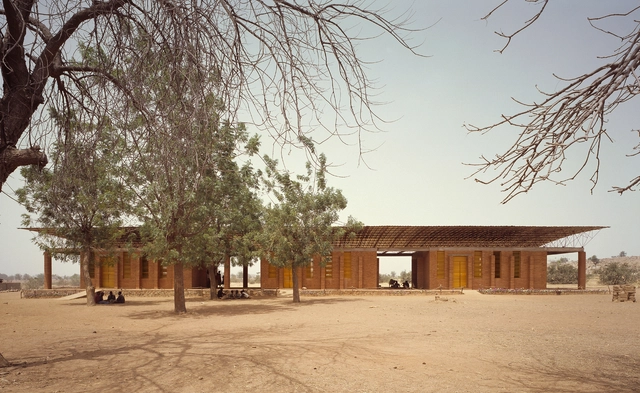
Diébédo Francis Kéré founded his architecture practice Kéré Architecture, in Berlin, Germany in 2005, after a journey in which he started advocating for the building of quality educational architecture in his home country of Burkina Faso. Deprived of proper classrooms and learning conditions as a child, and having faced the same reality as the majority of children in his country, his first works aimed at bringing tangible solutions to the issues faced by the community.

Francis Kéré: Get to Know the 2022 Pritzker Winner's Built Work - Image 1 of 4Francis Kéré: Get to Know the 2022 Pritzker Winner's Built Work - Image 2 of 4Francis Kéré: Get to Know the 2022 Pritzker Winner's Built Work - Image 3 of 4Francis Kéré: Get to Know the 2022 Pritzker Winner's Built Work - Image 4 of 4Francis Kéré: Get to Know the 2022 Pritzker Winner's Built Work - More Images+ 51

Ten Thoughts on the Future of Practice

Subscriber Access | 

This article was originally published on The Architect's Newspaper.

In February of this year, I gave a short talk to our Yale students about the economy and their employment prospects, suggesting that while all indicators remained strong and jobs were plentiful, it had been quite some time since our last downturn. Having seen several during my career I suggested that they would likely see a recession sometime in theirs, but cast doubt on whether we’d ever see anything as serious as 2008. If only…

It’s too early to be making nuanced arguments about the future, as we face down what is undoubtedly going to be a much more serious situation in the second half of 2020. So, here are ten first thoughts about how our profession may be impacted, and potentially transformed, as a result. Choose two or three as prompts to consider the future once the crisis has passed.

Call for Submissions: Paprika Vol. III, Issue 07

Edges, whether defining physical space or conceptual territories, provide a charged zone for interaction. The edge—solid or porous, fixed or fluctuating—formalizes difference and shapes relationships between different groups. The articulation of these zones becomes a political act, bringing conditions to public view, creating allegiances or separations, and generating dissonance through heterogeneity.

"False Binaries": Why the Battle Between Art and Business in Architecture Education Doesn't Make Sense

This article was originally published by The Architect's Newspaper as "Phil Bernstein pens inaugural column on technology, value, and architects’ evolving role."

This is the inaugural column “Practice Values,” a new bi-monthly series by architect and technologist Phil Bernstein. The column will focus on the evolving role of the architect at the intersection of design and construction, including subjects such as alternative delivery systems and value generation. Bernstein was formerly vice president at Autodesk and now teaches at the Yale School of Architecture.

This semester, I’m teaching a course called “Exploring New Value Propositions for Practice” that’s based on the premise that the changing role of architects in the building industry requires us to think critically about our value as designers in that system. After studying the structure and dynamics of practice business models, the supply chain, and other examples of innovative design enterprises, they’ll be asked to create a business plan for a “next generation” architectural practice. I’m agnostic as to what this practice does per se, as long as it operates somewhere in the constellation of things that architects can do, but there is one constraint—your proposed firm can’t be paid fixed or hourly rate fees. It has to create value (and profit) through some other strategy.

Symposium: "A Constrcuted World"

A CONSTRUCTED WORLD
J. Irwin Miller Symposium
Thursday October 1 – Saturday October 3, 2015
Yale School of Architecture
Paul Rudolph Hall, Hastings Hall, 180 York Street,
New Haven, CT, 06511

Symposium: "A Constructed World" at Yale School of Architecture

The J. Irwin Miller Symposium, “A Constructed World,” from October 1-3, 2015 is convened by Joyce Hsiang and Bimal Mendis in conjunction with the exhibition, “City of 7 Billion,” at the Yale School of Architecture. The symposium brings together leading voices across multiple disciplines, with the keynote by the philosopher Peter Sloterdijk and closing address by Hashim Sarkis, and includes: Lucia Allais, Pierre Bélanger, Phillip Bernstein, Benjamin Bratton, Nicholas de Monchaux, Keller Easterling, Ariane Lourie Harrison, Tim Ingold, Clara Irazábal, Adrian Lahoud, Adam Lowe, Aihwa Ong, John Palmesino, Neil Brenner, William Rankin, Todd Reisz, Elihu Rubin, Kathryn Sullivan, Dana Tomlin, Annabel Wharton, Mark Wigley, Mark Williams and Liam Young.

Deborah Berke Named Dean of Yale School of Architecture

Deborah Berke of Deborah Berke Partners has been appointed as the new dean of the Yale School of Architecture. Having served as an adjunct professor at Yale since 1987, Berke will be the first woman to lead the school. She will assume her position on July 1, 2016, during the architecture school's 100th anniversary, succeeding Robert A.M. Stern's 18-year term.

Michelle Tianhui Chen Wins Robert A.M. Stern's 2015 RAMSA Travel Fellowship

Michelle Tianhui Chen, a Master's candidate at the Yale School of Architecture, has won Robert A.M. Stern Architects' $10,000 RAMSA Travel Fellowship. With the award, Chen will travel to India where she will study the architectural shift from a diverse fabric of expressive design languages to a politically and ethnically neutral vocabulary.

"In our world of increasingly ubiquitous gleaming towers, clean in form but cleansed of details, looking to centuries-old traditions might be a means toward reestablishing human attachment to our everyday surroundings," says Ms. Chen. Her proposal promises to "culminate in a book of drawings and text that attempts to chart a path to a more balanced architecture—one which does not forsake cultural expression for a shallow conception of political order."

Sam Jacob On The "Post-Digital Phase"

In an interview with Core77 Sam Jacob, formerly of FAT and now principal at Sam Jacob Studio, has "always pursued an idea of design practice as a combination of criticism, research and speculation that all feed directly into the design studio." This approach has allowed his ideas to "cross-fertilize, find connections and directions that make the practice stronger, more agile and able to respond intelligently to the problem at hand." Jacob, who is also a Visiting Professor at Yale and the University of Illinois at Chicago whilst simultaneously director of the Night School at London's Architectural Association, recently saw the end of FAT's final project: the curation of the British Pavilion (alongside Dutch architect and academic Wouter Vanstiphout). In the UK, former partner Charles Holland is bringing a collaborative project with artist Grayson Perry to completion in Essex.

Read more and see some of Jacob's drawings after the break.

Sam Jacob On The "Post-Digital Phase" - Image 1 of 4Sam Jacob On The "Post-Digital Phase" - Image 2 of 4Sam Jacob On The "Post-Digital Phase" - Image 3 of 4Sam Jacob On The "Post-Digital Phase" - Image 4 of 4Sam Jacob On The Post-Digital Phase - More Images+ 1

Robert A.M. Stern Reportedly Set to Retire from Yale in 2016

After serving as dean at the Yale School of Architecture for nearly two decades, Robert A.M. Stern is reportedly stepping down. According to Yale Daily News, faculty and administrative staff members have indicated that Stern will be retiring when his term as dean concludes in Spring 2016. “[Stern] took [the school] from a place where people were not paying attention to it many years ago — he has brought incredible international attention to the school,” Professor Michelle Addington stated in regards to Stern's widespread influence as dean. “He has given me the opportunity to rethink my subject, and that doesn’t happen at too many places.” More information, here.

Classic Architecture with a Social Agenda (1960-Today)

“Ninety-five percent of the world’s designers focus all of their efforts on developing products and services for the richest 10% of the world’s customers.”  - Paul Polak, Design for the 90% [1]         

Classic Architecture with a Social Agenda (1960-Today) - Small Scale, Facade, ArchClassic Architecture with a Social Agenda (1960-Today) - Small Scale, Facade, CityscapeClassic Architecture with a Social Agenda (1960-Today) - Small Scale, Door, FacadeClassic Architecture with a Social Agenda (1960-Today) - Small Scale, Facade, Arch, ArcadeClassic Architecture with a Social Agenda (1960-Today) - More Images+ 20

The vast majority of contemporary architectural practice today is service industry based, where a fee-paying client commissions a firm for a defined scope of services. Master of self-effacing cynicism Philip Johnson wryly accepted this structure, calling architects “high-class whores.” The recent surge of interest in designing for traditionally underserved communities, from groups such as Architecture for Humanity, MASS Design, Project H and Public Architecture challenges the traditional firm model. The Prizker Prize jury’s recognition of Shigeru Ban’s humanitarian designs highlights that high design and a socially conscious practice are not mutually exclusive.

Believing that architecture can alleviate societal ills and improve the quality of life for all people is not a new concept. Two eras, the 1920s and 1960s-70s, brought a social agenda to the forefront of the discourse. Hindsight reveals flaws of each. Modernism’s utopian visions for public housing and urban renewal are blamed for the detrimental impact of Post-WWII urban housing projects; participatory design in the 1960s and 70s is criticized for ceding expertise in the name of consensus, ending with projects that were no better than the status quo. Despite this, there are lessons to be learned from those who emphasized the social and humanitarian role of architecture.

Robert A.M. Stern: Old-Fashioned yet Unfazed

In the mutable world of architecture it's easy to get distracted by the trendy new thing, be it the tallest tower or the "blobbiest" form. Robert A. M. Stern (Dean of the Yale School of Architecture and a practicing architect in his own right), on the other hand, remains purposefully old-fashioned (to the point of becoming obsolete). In an exquisitely written article for the New York Magazine, Justin Davidson reports that, despite the mockery of his colleagues, Stern seems unfazed. If his architecture has the power to inspire, he says, then he's done his job. Read the full must-see article here.

Yale First-Years' Latest New Haven House Complete

Most architects have to wait years to see their first project realized – but if you’re an architecture student at Yale University, you may just have to get on campus.

The Jim Vlock Project, established in 1967, gives first year graduate architecture students the opportunity to design and build a single family home in New Haven, Connecticut. The most recent iteration of the program, which investigated prefab design and construction, will be dedicated today at Yale University.

More info on this year's Jim Vlock house, after the break...

Yale Abandons, Re-locates Vlock Building Project

Every year, students at Yale design and build a single-family home in a low-income neighborhood. Called the Vlock Building Project, it’s one of the longest-standing and most admired public-interest design-build programs in the US. Unfortunately, it’s under threat. A/N reports professor Paul Brouard was assaulted and robbed on-site in Mid-May (he has since recovered). Despite the desires of dept. head Robert A.M. Stern, Yale University demanded the project be abandoned and re-located to an approved neighborhood. Did Yale make the right decision? Let us know what you think after the break.

AIA College of Fellows Awards 2013 Latrobe Prize for “The City of 7 Billion”

The American Institute of Architects (AIA) College of Fellows has awarded Bimal Mendis and Joyce Hsiang of the Yale School of Architecture and Plan B Architecture & Urbanism, LLC the 2013 Latrobe Prize of $100,000 for their proposal, “The City of 7 Billion.” The research will study the impact of population growth and resource consumption on the built and natural environment at the scale of the entire world as a single urban entity. An antidote to the fragmentary analyses of current practices, this project will remove arbitrary boundaries and reframe the entire world as a continuous topography of development: the city of 7 billion.

The grant, named for architect Benjamin Henry Latrobe, is awarded biennially by the AIA College of Fellows for research leading to significant advances in the architecture profession.

More on “The City of 7 Billion” after the break...