1. ArchDaily
  2. Columbia University

Columbia University: The Latest Architecture and News

Robert A.M. Stern, Influential American Architect and Educator, Passes Away at 86

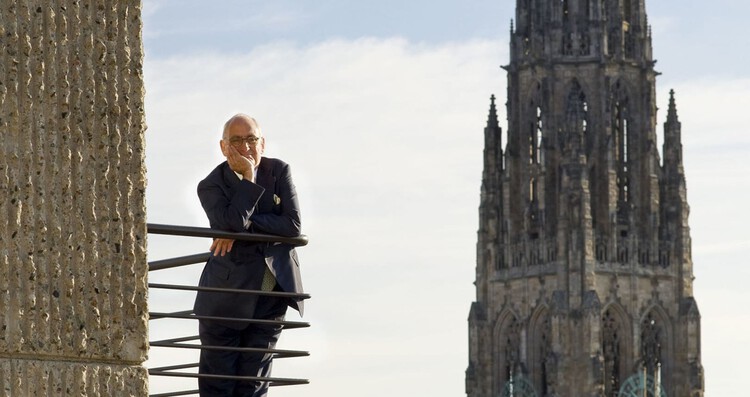
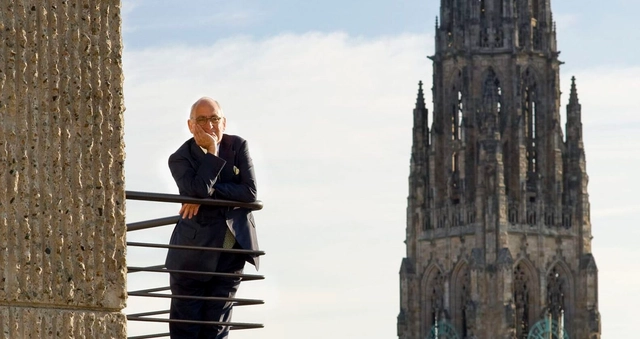
Robert A.M. Stern, the American architect, educator, and historian whose work shaped both the physical and intellectual landscape of contemporary architecture, has died at the age of 86. His passing was confirmed by Robert A.M. Stern Architects (RAMSA), the New York-based practice he led for more than five decades. Known for advancing a contextual, historically informed approach during decades dominated by modernist and high-tech architecture, Stern remained a prominent voice advocating for continuity, urban civility, and an understanding of architecture as part of a longer cultural lineage.
Robert A.M. Stern, Influential American Architect and Educator, Passes Away at 86 - Image 1 of 4Robert A.M. Stern, Influential American Architect and Educator, Passes Away at 86 - Image 2 of 4Robert A.M. Stern, Influential American Architect and Educator, Passes Away at 86 - Image 3 of 4Robert A.M. Stern, Influential American Architect and Educator, Passes Away at 86 - Image 4 of 4Robert A.M. Stern, Influential American Architect and Educator, Passes Away at 86 - More Images

Former MoMA Curator Barry Bergdoll Receives the 2025 Vincent Scully Prize

The Vincent Scully Prize, established in 1999 by the National Building Museum in Washington, D.C., recognizes exemplary practice, scholarship, or criticism in architecture, historic preservation, and urban design. Named after its first recipient, Vincent Scully, Sterling Professor Emeritus of the History of Art at Yale University and Visiting Professor at the University of Miami, the prize has been awarded to figures such as Theaster Gates, Jane Jacobs, Laurie Olin, Denise Scott Brown and Robert Venturi, and Mabel O. Wilson. The 2025 prize will go to Barry Bergdoll, art historian and former curator at the Museum of Modern Art in New York.

Former MoMA Curator Barry Bergdoll Receives the 2025 Vincent Scully Prize - Image 1 of 4Former MoMA Curator Barry Bergdoll Receives the 2025 Vincent Scully Prize - Image 2 of 4Former MoMA Curator Barry Bergdoll Receives the 2025 Vincent Scully Prize - Featured ImageFormer MoMA Curator Barry Bergdoll Receives the 2025 Vincent Scully Prize - Image 3 of 4Former MoMA Curator Barry Bergdoll Receives the 2025 Vincent Scully Prize - More Images

The European Cultural Centre Announces 21 Shortlisted Projects for the 2025 ECC Awards

The European Cultural Centre Italy has organized the ECC Awards since 2010 to recognize artists, architects, designers, and academics in their respective fields. The Awards highlight projects featured in the Time Space Existence exhibition, which runs in parallel with the Venice Architecture Biennale and showcases tangible approaches to building more sustainably, aiming to position architecture as a force for environmental and social repair. The seventh edition of Time Space Existence is a group exhibition spanning three Venetian venues: Palazzo Bembo, Palazzo Mora, and the Marinaressa Gardens. This year, the exhibition focuses on the themes of Repair, Regenerate, and Reuse, emphasizing the essential role of architects and designers as agents of positive change in shaping sustainable, inclusive, and regenerative ways of living.

The European Cultural Centre Announces 21 Shortlisted Projects for the 2025 ECC Awards - Image 1 of 4The European Cultural Centre Announces 21 Shortlisted Projects for the 2025 ECC Awards - Image 2 of 4The European Cultural Centre Announces 21 Shortlisted Projects for the 2025 ECC Awards - Image 3 of 4The European Cultural Centre Announces 21 Shortlisted Projects for the 2025 ECC Awards - Image 4 of 4The European Cultural Centre Announces 21 Shortlisted Projects for the 2025 ECC Awards - More Images+ 22

From Modernism to Multiculturalism: The Historical Evolution of Student Housing

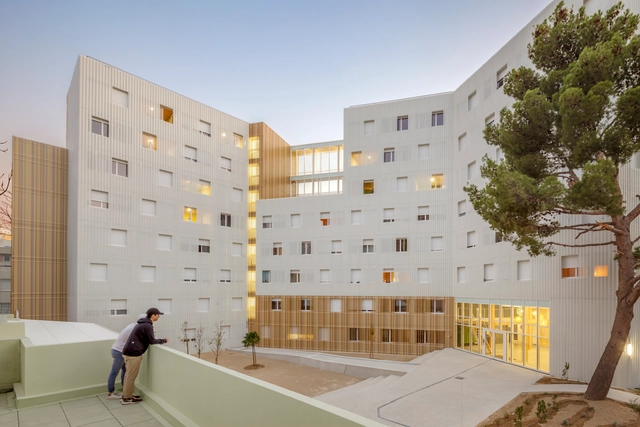
Student housing has undergone a remarkable transformation over the last century. Once seen as a utilitarian necessity, providing shelter and basic amenities for students, this architectural typology has evolved to address increasingly complex societal, cultural, and urban demands. Starting with Le Corbusier's modernist approach at the Cité Universitaire in Paris, student housing has reflected broader trends in architecture, urbanism, and social change.

Today, these buildings must cater to a highly diverse and transient population, navigating the pressures of affordability, density, and the evolving living standards of young adults. With rapid urbanization and increasing student mobility, universities now face the challenge of designing housing that is not only functional but also adaptable to different cultural and social contexts. This has led to more flexible, innovative solutions that promote both privacy and community living.

From Modernism to Multiculturalism: The Historical Evolution of Student Housing - Image 1 of 4From Modernism to Multiculturalism: The Historical Evolution of Student Housing - Image 2 of 4From Modernism to Multiculturalism: The Historical Evolution of Student Housing - Image 3 of 4From Modernism to Multiculturalism: The Historical Evolution of Student Housing - Image 4 of 4From Modernism to Multiculturalism: The Historical Evolution of Student Housing - More Images+ 55

‘Not Having to Worry about Proportion, Harmony, and Beauty Is a Cop-Out’: A Conversation with 2024 Driehaus Prize Winner Peter Pennoyer

This article was originally published on Common Edge.

Even within the world of design media, it was easy to miss the news: In late January, Notre Dame’s School of Architecture announced that Peter Pennoyer, a New York–based architect and author, had won the 2024 Richard H. Driehaus Prize. The Driehaus is architecture’s traditional/classical design version of the Pritzker Prize. Although it comes with a hefty $200,000 check—twice the size of the Pritzker’s honorarium—and previous winners include such luminaries as Robert A.M. Stern, Michael Graves, Leon Kier, and Andrés Duany and Elizabeth Plater-Zyberk, the award still exists in a sort of media vacuum.

‘Not Having to Worry about Proportion, Harmony, and Beauty Is a Cop-Out’: A Conversation with 2024 Driehaus Prize Winner Peter Pennoyer - Image 1 of 4‘Not Having to Worry about Proportion, Harmony, and Beauty Is a Cop-Out’: A Conversation with 2024 Driehaus Prize Winner Peter Pennoyer - Image 2 of 4‘Not Having to Worry about Proportion, Harmony, and Beauty Is a Cop-Out’: A Conversation with 2024 Driehaus Prize Winner Peter Pennoyer - Image 3 of 4‘Not Having to Worry about Proportion, Harmony, and Beauty Is a Cop-Out’: A Conversation with 2024 Driehaus Prize Winner Peter Pennoyer - Image 4 of 4‘Not Having to Worry about Proportion, Harmony, and Beauty Is a Cop-Out’: A Conversation with 2024 Driehaus Prize Winner Peter Pennoyer - More Images+ 2

AD Classics: Möbius House / UNStudio

  • Architects: UNStudio
  • Area Area of this architecture project Area:  520
  • Year Completion year of this architecture project Year:  1998

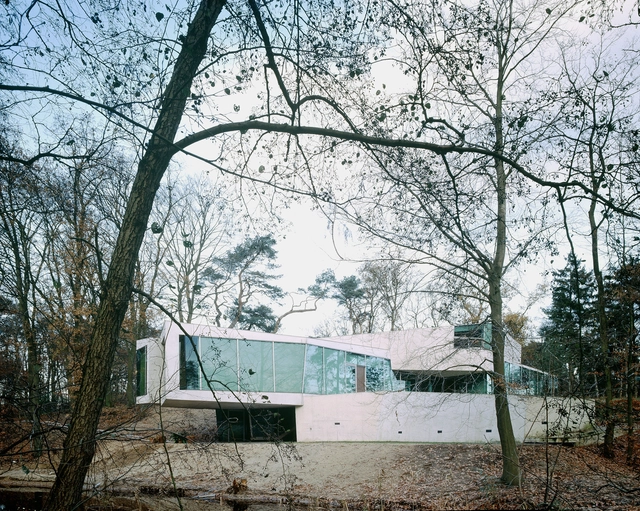
In 1993 a young professional couple from Amsterdam set out to build a private house unlike any other. They wanted to create something that “would be recognized as a reference in terms of renewal of the architectural language.” They reached out to several architects, including Rem Koolhaas, but finally decided to entrust the commission to Dutch architect Ben van Berkel after he studied the site and came up with a vision for the project, relating it to the couple’s lifestyle.

Located in Het Gooi, its design took over 5 years, going through several iterations, but always coming back to its core inspiration: the Möbius loop. The shape, defined as a single-sided surface with no boundaries, was the key to a new architectural language that aimed to weave together all the individual activities of each family member, allowing the functional program to be integrated within the dynamic structure. By 1998, when the house was completed, it became widely published and internationally recognized. It also became a sort of manifesto for its architect, as it uses an organizational principle to inform the final image.

AD Classics: Möbius House / UNStudio - Interior Photography, Houses, TableAD Classics: Möbius House / UNStudio - Interior Photography, Houses, Facade, HandrailAD Classics: Möbius House / UNStudio - Interior Photography, Houses, Facade, ColumnAD Classics: Möbius House / UNStudio - Interior Photography, Houses, Stairs, Facade, HandrailAD Classics: Möbius House / UNStudio - More Images+ 17

"I Would Rather Be Known as an Architect of Elegant Restraint": Interview with Belmont (Monty) Freeman

Belmont (Monty) Freeman (b. 1951) founded his New York-based, currently eight-person practice, Belmont Freeman Architects in 1986. Its active projects are half institutional and half residential, with a special focus on adaptive reuse, predominantly in New York and nearby states. Among the firm’s most exemplary projects are the LGBT Carriage House on the University of Pennsylvania campus, a series of restorations at the Four Seasons restaurant in the Seagram Building, renovations at the Yale Club in Manhattan, and the renovation of the Ezra and Cecile Zilkha Gallery at Wesleyan University in Connecticut, designed by Kevin Roche. Current projects include an expansive but minimalist residential compound on Martha’s Vineyard, branch library renovations in New York City, and redevelopment of a former meatpacking building into a new Innovation Hub for Columbia University’s Business School.

"I Would Rather Be Known as an Architect of Elegant Restraint": Interview with Belmont (Monty) Freeman - Image 1 of 4"I Would Rather Be Known as an Architect of Elegant Restraint": Interview with Belmont (Monty) Freeman - Image 2 of 4"I Would Rather Be Known as an Architect of Elegant Restraint": Interview with Belmont (Monty) Freeman - Image 3 of 4"I Would Rather Be Known as an Architect of Elegant Restraint": Interview with Belmont (Monty) Freeman - Image 4 of 4I Would Rather Be Known as an Architect of Elegant Restraint: Interview with Belmont (Monty) Freeman - More Images+ 15

Diller Scofidio + Renfro’s Columbia Business School Carves Out a Niche with Crystalline Curves

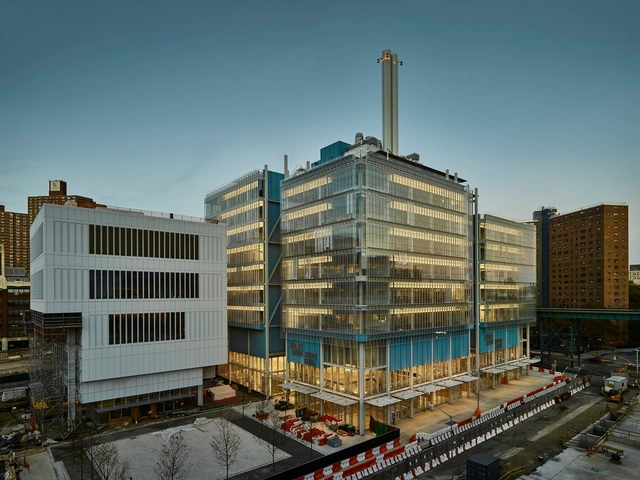
Columbia University’s Manhattanville Campus expansion has ushered in a crystalline district of glass-clad buildings amid the masonry vernacular architecture of Harlem. The latest additions to the 17-acre, $6.3 billion campus, which was master-planned by SOM, are two buildings designed by Diller Scofidio + Renfro (DS+R) in collaboration with FXCollaborative that provide a new home for the Columbia Business School. Set to open in early 2022, Henry R. Kravis Hall and the East Building rise 11 and 8 stories, respectively, and provide 492,000 square feet of classrooms, public space, and faculty offices.

Diller Scofidio + Renfro’s Columbia Business School Carves Out a Niche with Crystalline Curves - Image 1 of 4Diller Scofidio + Renfro’s Columbia Business School Carves Out a Niche with Crystalline Curves - Image 2 of 4Diller Scofidio + Renfro’s Columbia Business School Carves Out a Niche with Crystalline Curves - Image 3 of 4Diller Scofidio + Renfro’s Columbia Business School Carves Out a Niche with Crystalline Curves - Image 4 of 4Diller Scofidio + Renfro’s Columbia Business School Carves Out a Niche with Crystalline Curves - More Images+ 1

America's Most Admired Architectural Schools 2020 Ranked

The annual DesignIntelligence architecture school ranking for 2020 classified the establishments according to the “most admired” rather than the “best”, for the second year in a row. The subjective classification is based on the responses of hiring professionals.  

Columbia University Creates 3D-Printed Timber Lookalike with Internal Grain Pattern

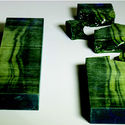
Columbia University Creates 3D-Printed Timber Lookalike with Internal Grain Pattern - Image 1 of 4
via Columbia University

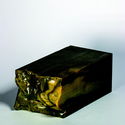
Researchers at New York’s Columbia University have unveiled a method of vibrantly replicating the external and internal structure of materials such as wood using a 3D printer and specialist scanning techniques. While conveying the external profile and patterns of natural objects is tried and tested, a major challenge in the 3D printing industry has been replicating an object’s internal texture.

In their recent study “Digital Wood: 3D Internal Color Texture Mapping” the research team describes how a system of “color and voxel mapping “led to the production of a 3D printed closely resembling the texture of olive wood, including a cut-through section.

Columbia University Creates 3D-Printed Timber Lookalike with Internal Grain Pattern - Image 2 of 4Columbia University Creates 3D-Printed Timber Lookalike with Internal Grain Pattern - Image 3 of 4Columbia University Creates 3D-Printed Timber Lookalike with Internal Grain Pattern - Image 1 of 4Columbia University Creates 3D-Printed Timber Lookalike with Internal Grain Pattern - Image 4 of 4Columbia University Creates 3D-Printed Timber Lookalike with Internal Grain Pattern - More Images+ 1

Decades After the Rise of CAD, Architecture Is Going “Paperless”—For Real This Time

Subscriber Access | 

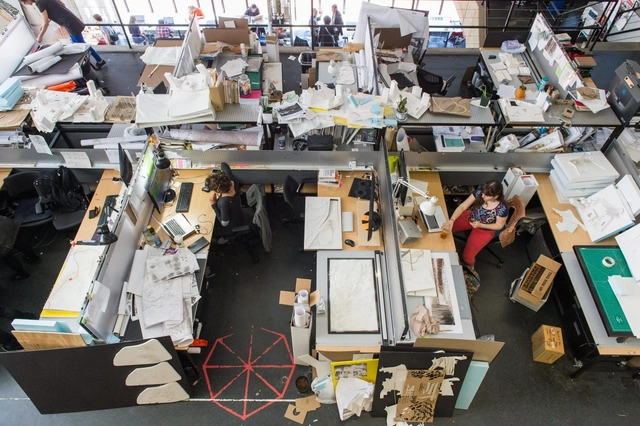
If you visit an architecture office today, you may sense a slight change. The days of bulky desktops, ergonomic mouse pads and tower-high stacks of drawing sets are slowly giving way to digital pencils, tablets, and tons of architects’ hand-drawings—both physical and digital. Architects across the globe are clearing their desks, literally, and utilizing emerging touchscreen tools and software for designing, sharing and collaborating. It seems possible that, for the first time in years, the architecture profession could revisit Bernard Tschumi’s “paperless” studio which formed a key part of his tenure as dean of Columbia University’s GSAPP in the mid-1990s. However, this time, “paperless” starts with a pencil, instead of a click.

Construction Underway on Renzo Piano's Columbia University Academic Center

Construction is now underway on Columbia University’s new University Forum and Academic Conference Center, designed by Renzo Piano Building Workshop and Dattner Architects. Located at the school’s new Manhattanville campus at the corner of West 125th Street and Broadway, the 55,980 square foot building will serve as a new home for academic conferences and a meeting place where scholars from many fields can gather to share ideas.

The Best US Architecture Schools for 2016 are...

DesignIntelligence has released their 2016 rankings of the Best Architecture Schools in the US for both undergraduate and graduate programs. Nearly 1500 professional practice organizations were surveyed this year, as part of the survey's 16th edition, and were asked the following question: “In your firm’s hiring experience in the past five years, which of the following schools are best preparing students for success in the profession?”

This information, along with detailed accounts on the best programs that teach skills in design, communication, sustainability and technology, resulted in the 2016 rankings. The two top schools, Cornell for undergraduates and Harvard for graduates, held their positions as the best programs to attend, according to the study.

Without further ado, the top 10 undergraduate and graduate programs in the US are...

Renzo Piano's Columbia University Science Center to Open Next Year

The first phase of Skidmore Owings & Merrill (SOM) and Renzo Piano Building Workshop's (RPBW) expansive Manhattanville Campus plan for Columbia University is making significant progress; completion is nearing on a highly-anticipated portion of the project - RPBW's LEED platinum Jerome L. Greene Science Center, which is scheduled to open in Fall of 2016 just six miles North of the practice's soon-to-open Whitney Museum.

More on the mixed-use structure after the break.

Renzo Piano's Columbia University Science Center to Open Next Year - Research Center, Facade, CityscapeRenzo Piano's Columbia University Science Center to Open Next Year - Research Center, FacadeRenzo Piano's Columbia University Science Center to Open Next Year - Research Center, Facade, CityscapeRenzo Piano's Columbia University Science Center to Open Next Year - Research Center, FacadeRenzo Piano's Columbia University Science Center to Open Next Year - More Images+ 2

The Interface of the Afterlife: Examining Cemeteries and Mausoleums in the 21st Century

The relationship between immortality and architecture is ancient one. Writing in The New Yorker, Alexandra Lange discusses the past and future of cemetery design in relation to a new exhibition on display in New York. Featuring a selection of 1300 individual mausoleum designs stored in Columbia University's archives, Lange notes how "patrons weren’t picky about originality. In the late nineteenth century, memorial companies might just bring back a shipment of angels from Carrara to be distributed among future clients." These "rural estates in miniature" eventually gave way to more contemporary designs which dabbled in Realism and Cubism. What will the people of today house their remains in? For Lange, "the design we take personal pleasure from everyday is now less likely to be architecture and more likely to be an interface." Read the article in full here.


And the Best US Architecture Schools for 2015 Are…

DesignIntelligence has released their 2015 rankings of the Best US Architecture Schools for both undergraduate and graduate programs. Over 1,400 professional practice organizations were surveyed and asked to respond to the question: “In your firm’s hiring experience in the past five years, which of the following schools are best preparing students for success in the profession?” In addition, more than 3,800 architecture, landscape architecture, interior design, and industrial design students were also surveyed about their education, in data presented separately from the rankings.

However, perhaps more enlightening than the ranking itself are the firms' responses to several additional issues raised in the report.  For example, 54.6% of the firms surveyed selected sustainability and climate change as the professions’ biggest concern, while maintaining design quality was a close second.  Firms also provided insights on the most important qualities of new graduates entering the workplace, with an overwhelming 70.1% selecting attitude/personality as the most important attribute. 

Read on after the break for the Top 10 undergraduate and graduate programs.

Event: "House Housing: An Untimely History of Architecture and Real Estate"

House Housing is the first public presentation of a multi-year research project conducted by the Temple Hoyne Buell Center for the Study of American Architecture at Columbia University. Situated in the Casa Muraro in Venice and staged as an open house, the exhibition responds unsolicited to the proposal by Rem Koolhaas, curator of the 14th International Architecture Exhibition, that architecture focus on its "fundamentals."

Plumber: Is This Not A Pipe? - Launch of Volume 37

Launch of Volume #37: "Is this not a pipe?".