1. ArchDaily
  2. World War II

World War II: The Latest Architecture and News

The European Prize for Public Urban Space Announces Warsaw Park and Porto do Son Beach Design as 2024 Winners

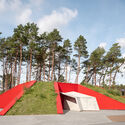
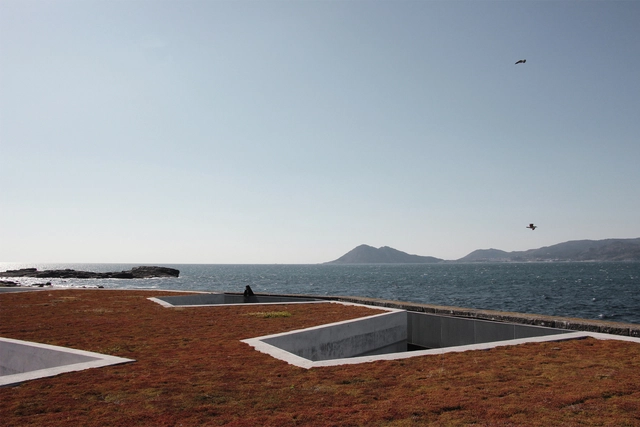
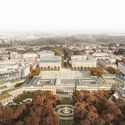
The 2024 European Prize for Urban Public Space has announced the overall winners for the 12th edition: For the General Category, the "Park at the Warsaw Uprising Mound" in Poland by studios topoScape and Archigrest received recognition its ability to honor the site's historical significance; while the Seafront Category prize was given to the "Beach Improvement and Redevelopment of the Harbour Edge" in Porto do Son, Spain, designed by CREUSeCARRASCO and RVR Arquitectos for its careful integration of natural and manmade elements. Selected from a list of 10 finalists, the projects were appreciated for their sensible response to local memory and an understanding of the interplay between various elements that interact with urban life.

The European Prize for Public Urban Space Announces Warsaw Park and Porto do Son Beach Design as 2024 Winners - Image 1 of 4The European Prize for Public Urban Space Announces Warsaw Park and Porto do Son Beach Design as 2024 Winners - Image 2 of 4The European Prize for Public Urban Space Announces Warsaw Park and Porto do Son Beach Design as 2024 Winners - Image 3 of 4The European Prize for Public Urban Space Announces Warsaw Park and Porto do Son Beach Design as 2024 Winners - Image 4 of 4The European Prize for Public Urban Space Announces Warsaw Park and Porto do Son Beach Design as 2024 Winners - More Images+ 12

The Lawn as Battleground: How Domestic Landscaping Became a Symbol of American Identity

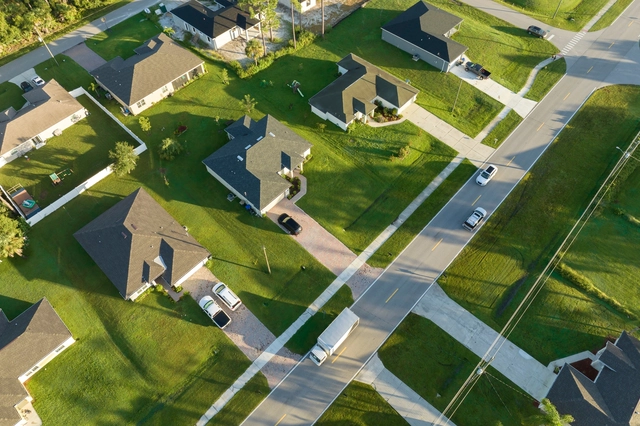
The almost cliché image of the white picket fence has become synonymous with the ideals of the American Dream. Behind the fence, there is invariably a perfectly manicured lawn, a green carpet upon which life can unfold. This image and its associations are not, however, accidental. In her book, "Domesticity at War", Beatriz Colomina notices that, since the Second World War, the lawn has taken a central space in the imagination of the country, becoming first a in order to make space for diversity, both social and ecological. symbol of the stability of the homes soldiers were hoping to return to, offering a space where those at home could still perform duties for the nation, and, after the war, propagating the image of an idealized lifestyle, one maintained with hard work and dedication. In recent years, the lawn has emerged once again as a site of conflict, this time between those hoping to preserve this idealized image, and those seeking to break the uniformity in order to make space for diversity, both social and ecological.

The Lawn as Battleground: How Domestic Landscaping Became a Symbol of American Identity - Image 1 of 4The Lawn as Battleground: How Domestic Landscaping Became a Symbol of American Identity - Image 2 of 4The Lawn as Battleground: How Domestic Landscaping Became a Symbol of American Identity - Image 3 of 4The Lawn as Battleground: How Domestic Landscaping Became a Symbol of American Identity - Image 4 of 4The Lawn as Battleground: How Domestic Landscaping Became a Symbol of American Identity - More Images+ 9

The St. Pauli Bunker Reopens as a Green Destination in Hamburg, Germany

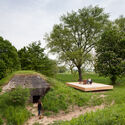
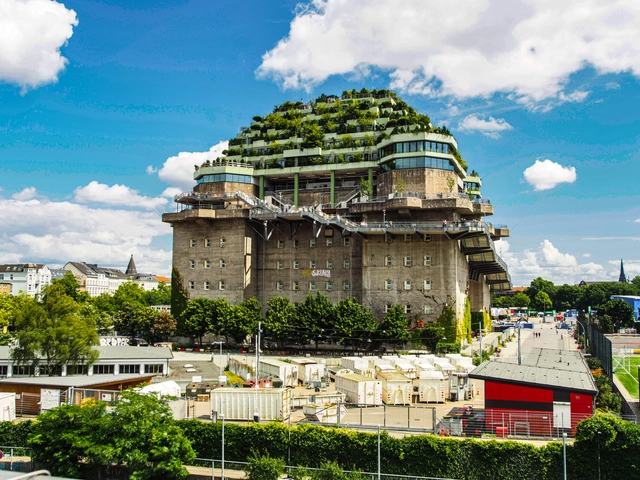
Dating from the1940s, the air raid shelter in Hamburg’s St. Pauli district has been reimagined as a „green mountain,” with expansive gardens covering the top of the wartime structure. Known as the Hochbunker, translated as ‘high bunker,’ the location has undergone a substantial restoration and refurbishment process introducing restaurants, event spaces, and a hotel, together with a rooftop urban park. The bunker has opened to the public on July 5, 2025, with the purpose of reconnecting the community with the iconic structure and its complex history.

The St. Pauli Bunker Reopens as a Green Destination in Hamburg, Germany - Image 1 of 4The St. Pauli Bunker Reopens as a Green Destination in Hamburg, Germany - Image 2 of 4The St. Pauli Bunker Reopens as a Green Destination in Hamburg, Germany - Image 3 of 4The St. Pauli Bunker Reopens as a Green Destination in Hamburg, Germany - Image 4 of 4The St. Pauli Bunker Reopens as a Green Destination in Hamburg, Germany - More Images+ 10

Heneghan Peng Architects Wins Competition for Transforming the Ruins of a Historical Berlin Church

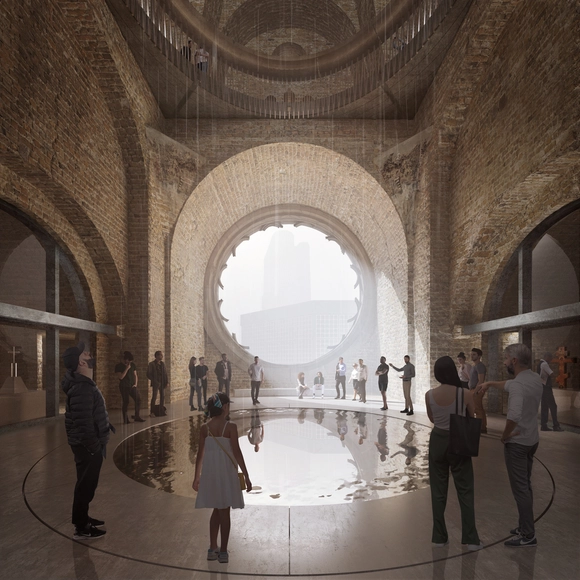
The design by heneghan peng architects, Dublin, with Ralph Appelbaum Associates, Berlin, was awarded 1st prize in the international competition for the replanning and expansion of the Old Tower of the Kaiser Wilhelm Memorial Church. The competition’s purpose was to redesign the original West Tower, which was partially destroyed during a bombing by the Allied Forces in 1943, and return it to the tourist circuit as a war memorial and exhibition space.

WXCA Wins Competition for the Reconstruction of Warsaw's Saxon Palace, a Pre-World War II Landmark

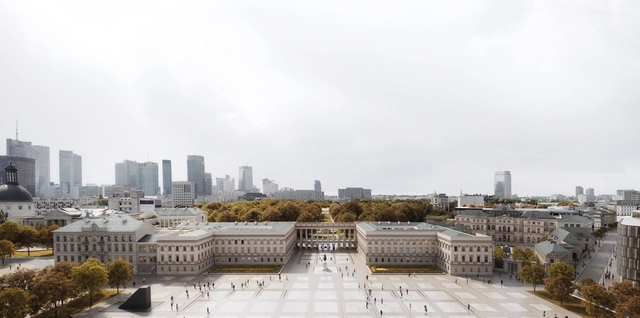
WXCA Architectural Design Studio has won the international competition for the reconstruction of the Saxon Palace, a heritage site located in the historical city center of Warsaw, Poland, that was significantly damaged during the Second World War. The competition, organized by the Polish Ministry of Culture and National Heritage in cooperation with the Association of Polish Architects, aimed to create a concept for the restoration of the monument, which is set to be rebuilt in its external Neoclassicist form of 1939.

WXCA Wins Competition for the Reconstruction of Warsaw's Saxon Palace, a Pre-World War II Landmark - Image 1 of 4WXCA Wins Competition for the Reconstruction of Warsaw's Saxon Palace, a Pre-World War II Landmark - Image 2 of 4WXCA Wins Competition for the Reconstruction of Warsaw's Saxon Palace, a Pre-World War II Landmark - Image 3 of 4WXCA Wins Competition for the Reconstruction of Warsaw's Saxon Palace, a Pre-World War II Landmark - Image 4 of 4WXCA Wins Competition for the Reconstruction of Warsaw's Saxon Palace, a Pre-World War II Landmark - More Images+ 12

Textures, Skyscrapers, and Urban Landscapes: When Anime Meets Architecture

Subscriber Access | 

World War II left a profound influence on the evolution of society, introducing significant changes in the fields of urban planning and architecture. During the 1930s, the Congrès Internationaux d'Architecture Moderne (CIAM) promoted modernism on an international scale. After the war, this architectural movement became firmly established as the dominant one, driven by the imperative of reconstruction and technological advancements. Influential figures like Le Corbusier and Alvar Aalto spearheaded this movement.
In 1959, the same year as the final CIAM meeting, Japanese architects like Kenzō Tange, Kishō Kurokawa —the designer of the Nakagin Capsule Tower—, and Kiyonori Kikutake began to explore new approaches to urban design and architecture, known as the Metabolist movement. This exploration was particularly significant in the context of Tokyo's rapid repopulation after the war and the scarcity of resources for reconstruction. Innovative concepts such as Marine City, The City in the Air, and the 1960 plan for Tokyo emerged, which proposed the city as a constantly evolving organism and emphasized the relationship between humans and their built environment. These ideas shaped the concept of "megacities" and reflected Japan's creative response to its challenging postwar situation.

From Rubble to Rebirth: Unveiling the Transformation of Warsaw's Urban Fabric

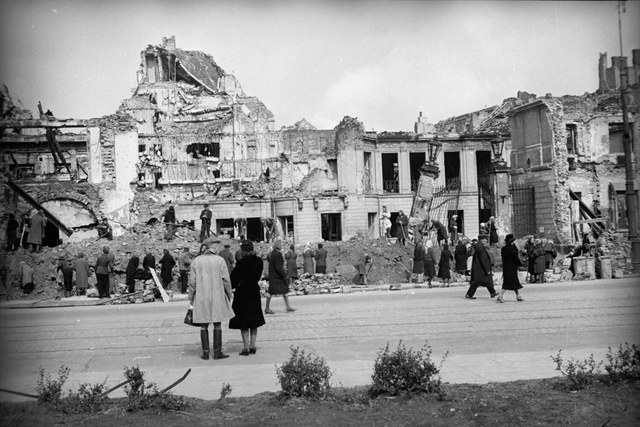
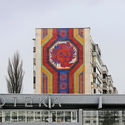
The exhibition “Warsaw 1945-1949: Rising from Rubble” took place this year at the Museum of Warsaw, exploring the postwar reconstruction and rebuilding process that took place after the war. After the Second World War, Warsaw’s entire urban fabric, architecture, and social and economic status had to be rebuilt from the ground up. Curated by Adam Przywara, the exhibition “offered a new perspective on the myth of the postwar reconstruction of the Polish capital city and one of the most interesting pages in its history.”

From Rubble to Rebirth: Unveiling the Transformation of Warsaw's Urban Fabric - Image 1 of 4From Rubble to Rebirth: Unveiling the Transformation of Warsaw's Urban Fabric - Image 2 of 4From Rubble to Rebirth: Unveiling the Transformation of Warsaw's Urban Fabric - Image 3 of 4From Rubble to Rebirth: Unveiling the Transformation of Warsaw's Urban Fabric - Image 4 of 4From Rubble to Rebirth: Unveiling the Transformation of Warsaw's Urban Fabric - More Images+ 21

The Iconic Gallaratese Complex in Milan Through the Lens of Kane Hulse

In the aftermath of the Second World War, a drastic housing shortage spread across Europe, and Milan was no exception. Various plans and solutions were conceived to address this crisis, outlining satellite communities for the city to accommodate between 50,000 and 130,000 residents each. The first of these communities began construction in 1946, just one year after the war's end: the Gallaratese project.
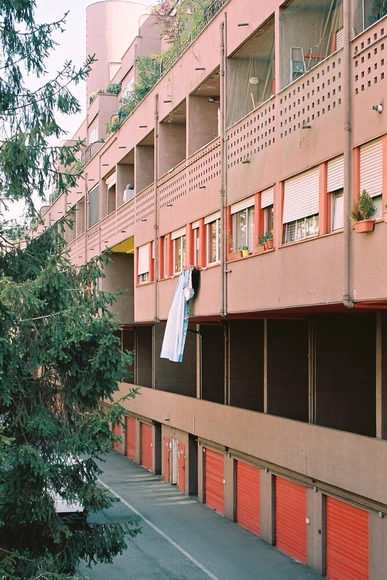
In late 1967, as the plan allowed for the private development of Gallaratese 2, the esteemed Studio Ayde, led by partner Carlo Aymonino, was assigned the project. Aymonino invited Aldo Rossi to contribute his architectural skill to the complex, leading to the realization of their distinct visions for an ideal microcosmic community. Together, these two Italian architects began a journey to shape a groundbreaking and historically significant housing icon for Milan. Captured through the lens of Kane Hulse, the building and it’s significance is revisited through this photo series.

The Iconic Gallaratese Complex in Milan Through the Lens of Kane Hulse - Image 1 of 4The Iconic Gallaratese Complex in Milan Through the Lens of Kane Hulse - Image 2 of 4The Iconic Gallaratese Complex in Milan Through the Lens of Kane Hulse - Image 3 of 4The Iconic Gallaratese Complex in Milan Through the Lens of Kane Hulse - Image 4 of 4The Iconic Gallaratese Complex in Milan Through the Lens of Kane Hulse - More Images+ 3

Unraveling the Urban Planning Mysteries behind the Manhattan Project

Subscriber Access | 

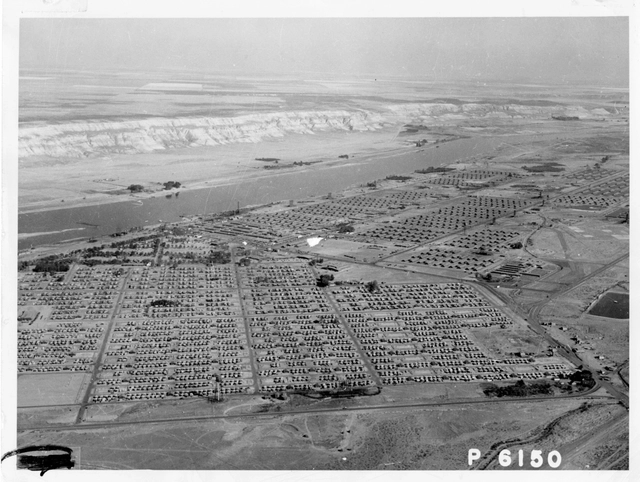
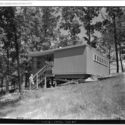
In 1942, less than a year after the United States was pulled into World War II, the U.S Army Corps of Engineers quickly and quietly began acquiring large parcels of land in remote areas in three states. Soon after, thousands of young designers, engineers, planners, scientists, and their families, began arriving at these sites that were heavily shielded from public view. Workers there constructed hundreds of buildings including houses, industrial structures, research labs, and testing facilities at unprecedented speed and scale.

Unraveling the Urban Planning Mysteries behind the Manhattan Project - Image 1 of 4Unraveling the Urban Planning Mysteries behind the Manhattan Project - Image 2 of 4Unraveling the Urban Planning Mysteries behind the Manhattan Project - Image 3 of 4Unraveling the Urban Planning Mysteries behind the Manhattan Project - Image 4 of 4Unraveling the Urban Planning Mysteries behind the Manhattan Project - More Images+ 1

Overlooked Concrete Suburbs of Central and Eastern Europe

Subscriber Access | 

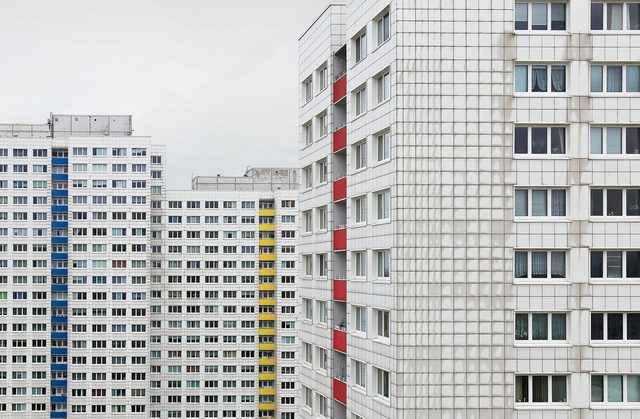
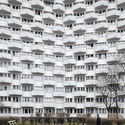
Post World War II, Brutalism found its way across Europe, redefining modernist architecture and establishing a new style for mass housing and communal buildings. Although most of the light was shed on concrete landmarks in major cities, European suburbs have also housed many exceptional brutalist buildings such as the 'Hammer-shaped Tower Blocks' or the 'Houses on Chicken Legs'.

To showcase Central and Eastern Europe's "unnoticed" brutalist architecture, Zupagrafika have shot and put together more than 100 photographs in a book titled 'Eastern Blocks', inviting readers to explore brutalist mass housing developments across Moscow, East Berlin, Warsaw, Budapest, Kyiv, and Saint Petersburg.

Overlooked Concrete Suburbs of Central and Eastern Europe - Image 1 of 4Overlooked Concrete Suburbs of Central and Eastern Europe - Image 2 of 4Overlooked Concrete Suburbs of Central and Eastern Europe - Image 3 of 4Overlooked Concrete Suburbs of Central and Eastern Europe - Image 4 of 4Overlooked Concrete Suburbs of Central and Eastern Europe - More Images+ 17

Berlin in Miniature: Tilt-Shift Video Transforms Perspective on the German Capital

Subscriber Access | 

MiniLook Berlin from Okapi on Vimeo.

When we get wrapped up in everyday life, it can be easy to take the place we live for granted. In the MiniLook Berlin video, Okapi Creative Studio takes a step back to show the beauty of daily life in the city of Berlin via a stop-motion, tilt-shift technique that makes the city appear as if in miniature. The video highlights everyday street scenes and picturesque shots of nature, while some famous buildings make appearances as well.

Dorte Mandrup Wins Competition to Construct Heritage Center Atop a WWII Bunker 

Dorte Mandrup Wins Competition to Construct Heritage Center Atop a WWII Bunker  - Image 1 of 4
© Mir

Danish firm Dorte Mandrup A/S has been announced as the winners of a competition to design the new Trilateral Wadden Sea World Heritage Partnership Center on a historic UNESCO naval site in Wilhelmshaven, Germany. Selected from 14 entries, the firm’s winning proposal will seemingly float atop an existing World War II bunker and house the offices of a joint Danish, German and Netherlandish corporation working to protect the Wadden Sea area.

Exhibition: "The Evidence Room" at the Royal Ontario Museum in Toronto

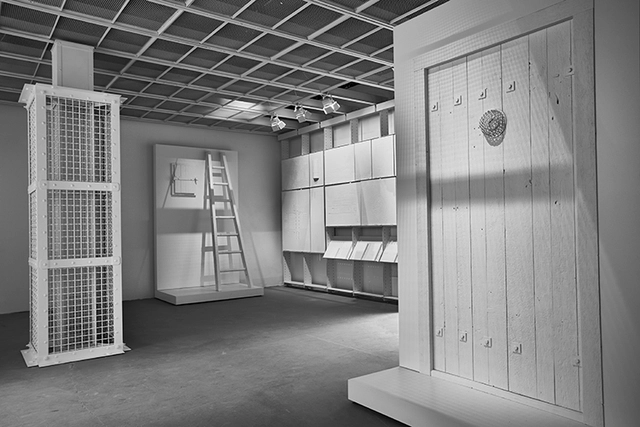
Widely acclaimed as a critically important work on its debut at the 15th International Architecture Exhibition of the 2016 Venice Biennale, The Evidence Room examines the chilling role architecture played in constructing the Auschwitz death camp.

Incredible Color Video Shows Life in Berlin at the End of WWII

Subscriber Access | 

May 8th marks the 70-year anniversary of the end of World War II in Europe, when Germany’s Third Reich surrendered to the Allied forces. To commemorate the anniversary, Konstantin von zur Muehlen has released “Spirit of Berlin,” a short color film with historic footage showing everyday life in the German capital in July 1945 -- just two months after the end of the war.

Learn more after the break. 

The Decaying Dutch Harbor Bunkers

Subscriber Access | 
The Decaying Dutch Harbor Bunkers  - Featured Image
© Tom Doyle

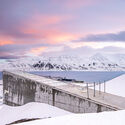
Set against a backdrop typically reserved for postcards, the decaying bunkers of the Aleutian Islands Campaign serve to memorialize a little-known chapter of WWII lore. Read more about these distinctive relics after the break.

The Decaying Dutch Harbor Bunkers  - Image 4 of 4The Decaying Dutch Harbor Bunkers  - Image 6 of 4The Decaying Dutch Harbor Bunkers  - Image 1 of 4The Decaying Dutch Harbor Bunkers  - Image 8 of 4The Decaying Dutch Harbor Bunkers  - More Images+ 5