1. ArchDaily
  2. Thom Mayne

Thom Mayne: The Latest Architecture and News

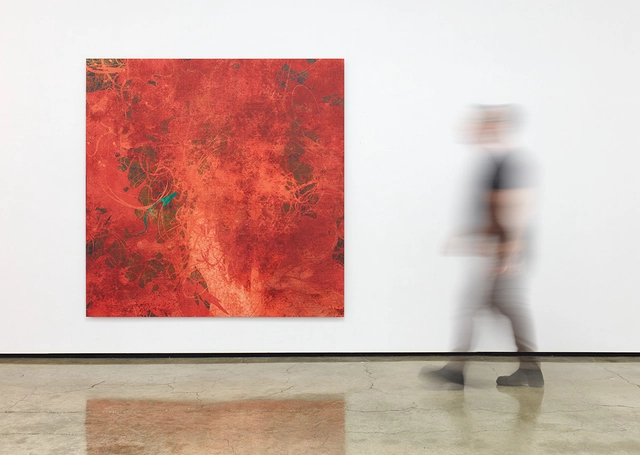
Thom Mayne Presents "Constructing the Spontaneous" in Vancouver, Canada

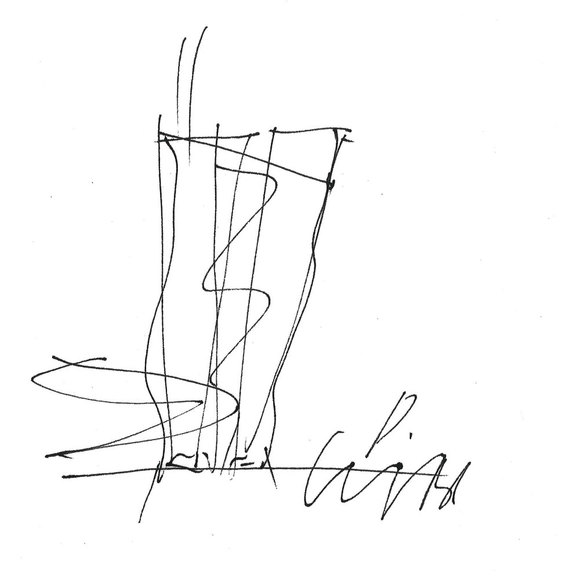
The Pritzker-winning architect Thom Mayne is presenting his display “Constructing the Spontaneous” in the Paul Kyle Gallery in Vancouver, Canada. Known for his contributions to architecture and design, the architect founded Morphosis in 1972, embodying his philosophy of architecture as an ever-evolving, dynamic process. Mayne’s latest display features his artworks, diving into the intricate relationship between cutting-edge technology and timeless human expression.

Thom Mayne Presents "Constructing the Spontaneous" in Vancouver, Canada - Image 1 of 4Thom Mayne Presents "Constructing the Spontaneous" in Vancouver, Canada - Image 2 of 4Thom Mayne Presents "Constructing the Spontaneous" in Vancouver, Canada - Image 3 of 4Thom Mayne Presents "Constructing the Spontaneous" in Vancouver, Canada - Image 4 of 4Thom Mayne Presents Constructing the Spontaneous in Vancouver, Canada - More Images

“I Think of My Work as Imploding Rather than Exploding:” in Conversation with Michael Rotondi of Roto Architects

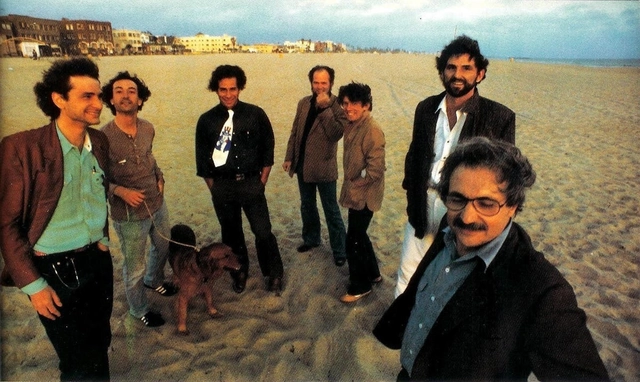
Michael Rotondi’s buildings—museums, civic centers, education facilities, monasteries, restaurants, and residences—evoke kinetic mechanisms that fold, hinge, twist, and split open. They express the architect’s feelings, thinking, and mood at the time they had been designed, and, on some occasions, during their assembly and construction. Rotondi was born in 1949 in Los Angeles.

He established his RoTo Architects, a research-based firm in his native city, in 1991 after co-heading Morphosis for 16 years with Thom Mayne. Parallel to his practicing career, the architect has been teaching and lecturing at SCI-Arc, Southern California Institute of Architecture, which he co-founded in 1972, led its graduate program from 1978-1987, and was the school’s second director for a decade from 1987 to 1997.

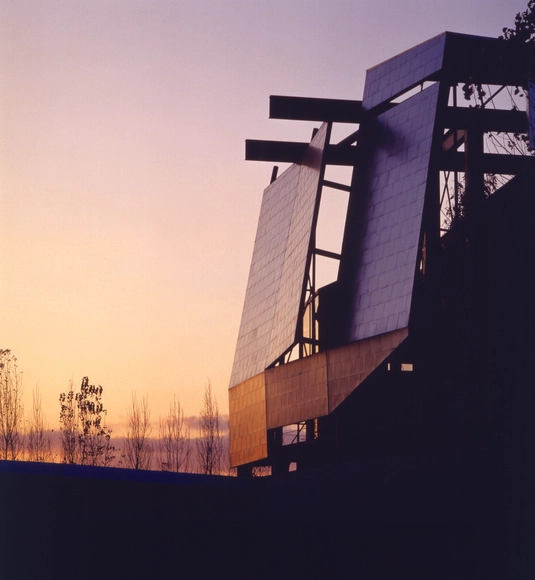
“I Think of My Work as Imploding Rather than Exploding:” in Conversation with Michael Rotondi of Roto Architects - Image 1 of 4“I Think of My Work as Imploding Rather than Exploding:” in Conversation with Michael Rotondi of Roto Architects - Image 2 of 4“I Think of My Work as Imploding Rather than Exploding:” in Conversation with Michael Rotondi of Roto Architects - Image 3 of 4“I Think of My Work as Imploding Rather than Exploding:” in Conversation with Michael Rotondi of Roto Architects - Image 4 of 4“I Think of My Work as Imploding Rather than Exploding:” in Conversation with Michael Rotondi of Roto Architects - More Images+ 21

Who Was Günther Domenig, the Unknown Deconstructivist?

Subscriber Access | 

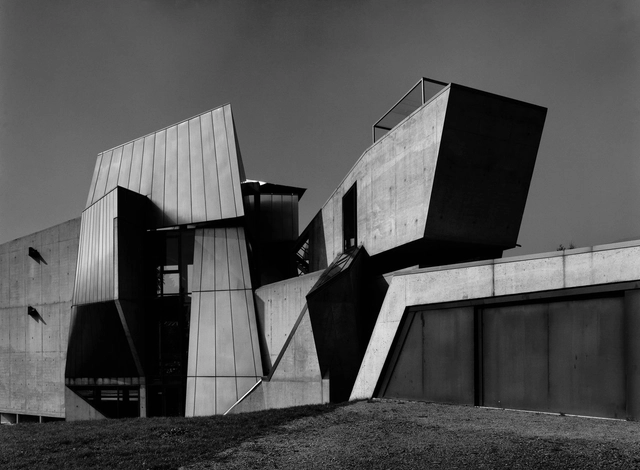
Domenig was one of Austria’s most radical architects and a major influence on many of architecture’s leading lights but remains widely unknown. A new exhibition aims to change that.

Who Was Günther Domenig, the Unknown Deconstructivist? - Image 1 of 4Who Was Günther Domenig, the Unknown Deconstructivist? - Image 2 of 4Who Was Günther Domenig, the Unknown Deconstructivist? - Image 3 of 4Who Was Günther Domenig, the Unknown Deconstructivist? - Image 4 of 4Who Was Günther Domenig, the Unknown Deconstructivist? - More Images+ 4

Morphosis-Designed New Arts Campus Breaks Ground in Texas

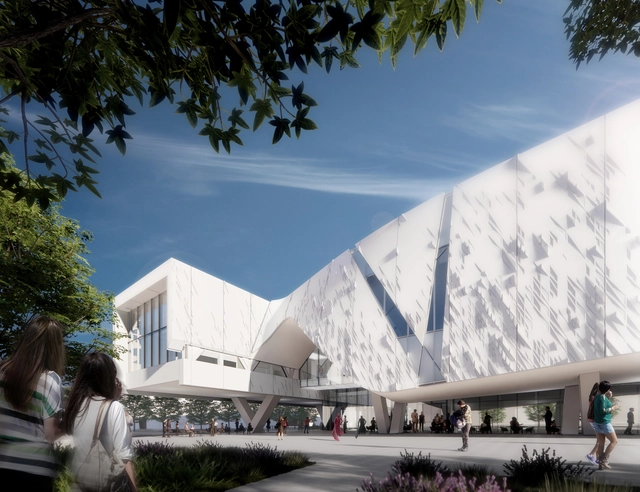
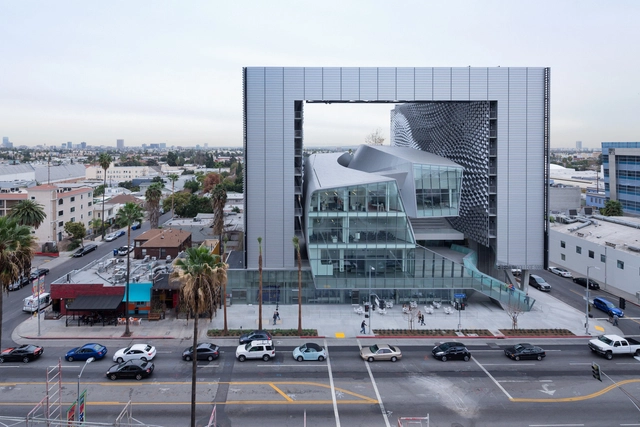
The new arts campus, designed by global architecture and design firm Morphosis, has broken ground in Dallas, Texas. This marks the beginning of the first phase of construction for Edith and Peter O’Donnell Jr. Athenæum, a twelve-acre expansion of the University of Texas at Dallas (UT Dallas). The Athenæum complex will feature three main buildings: the Crow Museum of Asian Art (Phase I), a performance hall (Phase II), and a museum for the traditional arts of the Americas (Phase III). Phase I of the plan, the Crow Museum of Asian Art, is expected to be completed in 2024. The whole project is catalyzed by a $32 million donation from the O’Donnell Foundation.
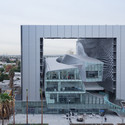
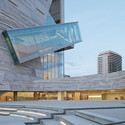
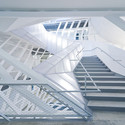
This new cultural district, located at the southeastern edge of the UT Dallas campus, aims to become an arts destination for students, faculty, and the community. It also represents the latest milestone in a period of significant growth of the arts at UT Dallas, a school that had historically focused on science, engineering, technology, and business.

Morphosis-Designed New Arts Campus Breaks Ground in Texas - Image 1 of 4Morphosis-Designed New Arts Campus Breaks Ground in Texas - Image 2 of 4Morphosis-Designed New Arts Campus Breaks Ground in Texas - Image 3 of 4Morphosis-Designed New Arts Campus Breaks Ground in Texas - Image 4 of 4Morphosis-Designed New Arts Campus Breaks Ground in Texas - More Images+ 1

Selected Projects of Pritzker Laureates’ in 2020

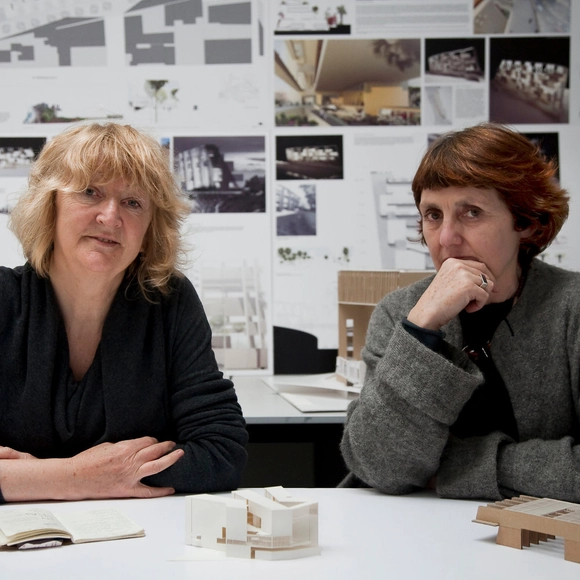
This year, architecture’s highest honor, the Pritzker Prize, has been granted to Grafton Architects, a Dublin-based architectural firm mainly ran by female partners Yvonne Farrell and Shelley McNamara. For the first time ever in its 42-year history, due to the constraints set by Covid-19 global pandemic, the organizers of the Pritzker Prize decided to use Livestream the award ceremony. Having reached the end of 2020, ArchDaily has summed up what current and previous Pritzker Prize winners have accomplished during this turbulent year.

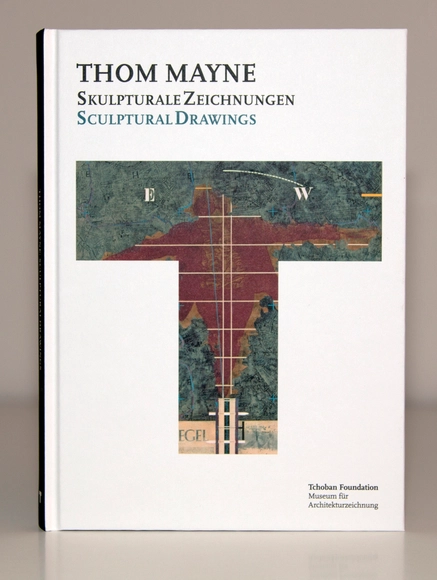
Thom Mayne: SculpturalDrawings

The name Morphosis already describes the philosophy of the architectural practice: different elements are morphed together to form something new. With this idea in mind, Thom Mayne, its founding partner, has since its establishment in 1972 realised projects like the “Caltrans District 7 Headquarters” in Los Angeles, new academic building of the “41 Cooper Square” for The Cooper Union in New York, “Bill and Melinda Gates Hall” for Cornell University in Ithaca, New York, and the “Hypo Alpe-Adria Center” in Klagenfurt, all of which are architectural icons.

"Thom Mayne: Sculptural Drawings" Opens at the Museum for Architectural Drawing in Berlin

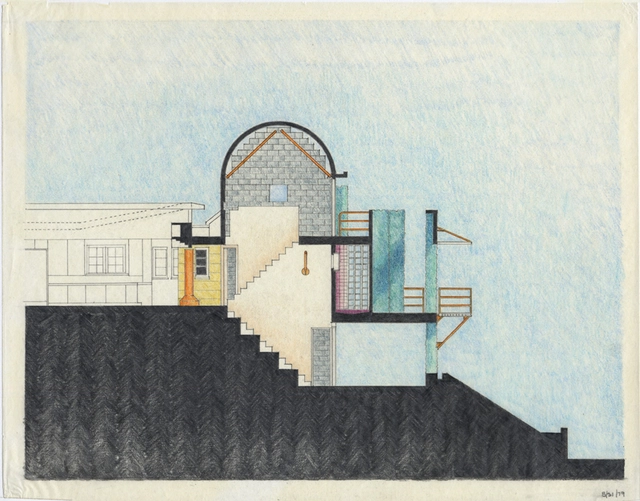
Running from 11 September till 15 November 2020, "Thom Mayne: Sculptural Drawings" is the latest architectural exhibition at Tchoban Foundation Museum for Architectural Drawing in Berlin. Curated by Kristin Feireiss, together with Esenija Bannan, the project questions the nature of architectural drawing and how it influenced the work of Thom Mayne, founder of Morphosis. The exhibition features Mayne’s works dating from 1979 through 2020 and leads visitors from “traditional” drawings and new experimentations with techniques, through to 3D paintings.

"Thom Mayne: Sculptural Drawings" Opens at the Museum for Architectural Drawing in Berlin - Image 1 of 4"Thom Mayne: Sculptural Drawings" Opens at the Museum for Architectural Drawing in Berlin - Image 2 of 4"Thom Mayne: Sculptural Drawings" Opens at the Museum for Architectural Drawing in Berlin - Image 3 of 4"Thom Mayne: Sculptural Drawings" Opens at the Museum for Architectural Drawing in Berlin - Image 4 of 4Thom Mayne: Sculptural Drawings Opens at the Museum for Architectural Drawing in Berlin - More Images+ 7

The Future of Universities, Offices and Cities: Highlights From Digital Futures 2020

Subscriber Access | 

Like most functions in recent months, this year’s Digital FUTURES, which is held annually since 2011 at Tongji University in Shanghai, had to move online due to the pandemic. The organizers took this as an opportunity to give the event a global dimension, turning the festival into what they rightfully call the most significant worldwide event for architectural education ever staged, with a 24/7 display of workshops, lectures and panel discussions involving some of the most prominent architects and educators. Here is an overview of the festival, together with a selection of lectures from Digital FUTURES World.

Thom Mayne Reflects on the Founding of Morphosis

Design:ED Podcast is an inside look into the field of architecture told from the perspective of individuals that are leading the industry. This motivational series grants unique insight into the making of a successful design career, from humble beginnings to worldwide recognition. Every week, featured guests share their personal highs and lows on their journey to success, that is sure to inspire audiences at all levels of the industry. Listening to their stories will provide a rare blueprint for anyone seeking to advance their career, and elevate their work to the next level.

Pritzker Prize Winner, Morphosis Founder & SCI-Arc Co-Founder, Thom Mayne joins the podcast to discuss his attraction to being an outsider, the use of technology within architecture, and how he founded the world-renowned architecture firm Morphosis.

“We’re Building New Ways of Working”: Morphosis Explores XR and the Future of Design Technologies

Shifts in technology reflect how designers are creating experiences of architecture and cities. New advances engender novel ways of working, and in turn, shape our design process. As a practice defined by pushing boundaries, experimenting with workflows, and embracing new design technologies, Morphosis has a forty-year history of enthusiastically wondering at the future.

“We’re Building New Ways of Working”: Morphosis Explores XR and the Future of Design Technologies - Image 1 of 4“We’re Building New Ways of Working”: Morphosis Explores XR and the Future of Design Technologies - Image 2 of 4“We’re Building New Ways of Working”: Morphosis Explores XR and the Future of Design Technologies - Image 3 of 4“We’re Building New Ways of Working”: Morphosis Explores XR and the Future of Design Technologies - Image 4 of 4“We’re Building New Ways of Working”: Morphosis Explores XR and the Future of Design Technologies - More Images+ 7

Morphosis Hits Construction Milestones Around The World

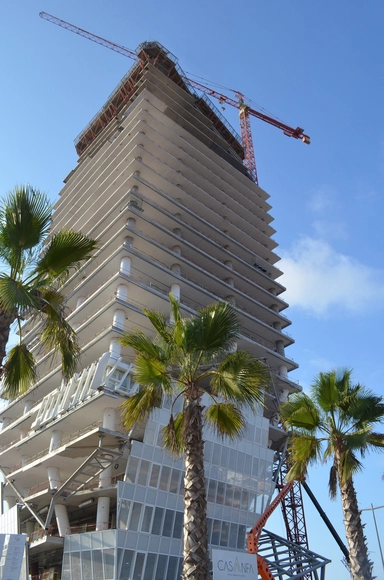
This Fall, global architecture and design firm, Morphosis has their plate full as four of their projects reach significant construction milestones. From Africa to the Middle East, Europe and the U.S., Morphosis is creating international landmarks that display their values of sustainability and future development. Read on to learn more about what Thom Mayne's team is up to.

Interview With Thom Mayne: “I Am a Pragmatic Idealist”

For many observers, Thom Mayne might easily be considered the most unpredictable personality in architecture. Once labeled the “bad boy of architecture” by critics—a moniker which he has, at times, enthusiastically adopted and even encouraged—Mayne's actions in the architecture world can range from something as responsible as designing one of the United States' most sustainable university campuses to something as outrageous as proposing one of the world's tallest towers in a revered Austrian mountain town. In this interview, the latest from Vladimir Belogolovsky's “City of Ideas” series, Mayne discusses his ideas, his past statements on architecture, and where he thinks the profession will go next. The interview was originally published by the Berlin-based SPEECH Magazine.

Interview With Thom Mayne: “I Am a Pragmatic Idealist” - Image 1 of 4Interview With Thom Mayne: “I Am a Pragmatic Idealist” - Image 2 of 4Interview With Thom Mayne: “I Am a Pragmatic Idealist” - Image 3 of 4Interview With Thom Mayne: “I Am a Pragmatic Idealist” - Image 4 of 4Interview With Thom Mayne: “I Am a Pragmatic Idealist” - More Images+ 29

Thom Mayne, Ando, Kuma & Zumthor Contribute Rooms for "House of Architects" Hotel in Vals

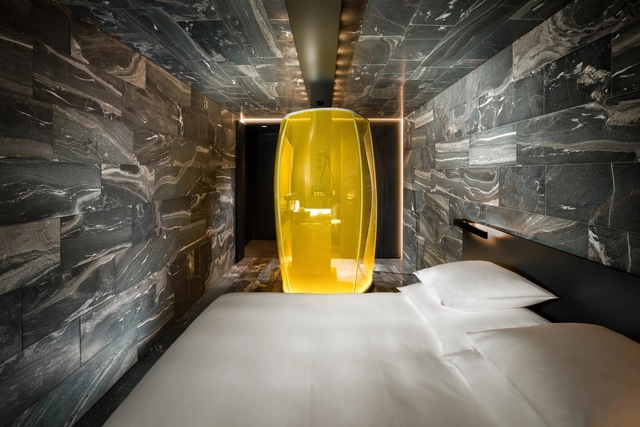
Four top architects – Thom Mayne (Morphosis), Tadao Ando, Kengo Kuma and Peter Zumthor – have been tapped to contribute designs for the new “House of Architects” at the 7132 Hotel in Vals Switzerland. The latest addition to the hotel, The House of Architects features a lobby and entrance also designed by Morphosis Architects, and 7 room designs centered around a single material.

Thom Mayne, Ando, Kuma & Zumthor Contribute Rooms for "House of Architects" Hotel in Vals - Image 4 of 4Thom Mayne, Ando, Kuma & Zumthor Contribute Rooms for "House of Architects" Hotel in Vals - Image 6 of 4Thom Mayne, Ando, Kuma & Zumthor Contribute Rooms for "House of Architects" Hotel in Vals - Image 13 of 4Thom Mayne, Ando, Kuma & Zumthor Contribute Rooms for "House of Architects" Hotel in Vals - Image 15 of 4Thom Mayne, Ando, Kuma & Zumthor Contribute Rooms for House of Architects Hotel in Vals - More Images+ 11

How a Retired 88-Year-Old Solar Design Pioneer Became one of 2017's "Game Changers"

This article was originally published by Metropolis Magazine as part of their 2017 Game Changers issue. You can read about all of their 2017 Game Changers here.

I meet architect and educator Ralph Knowles on an unseasonably warm autumn day, even for Southern California. He greets me in shirtsleeves (his shirt is a tropical pattern of vines and branches) and leads me to a seat on the balcony of his condo. The building—a retirement community—is fairly new, but mature oak trees line the quiet street. As we talk about his career, the California oaks form a poignant backdrop. For more than five decades, Knowles, 88, has argued for an architecture that hews closely to nature’s forces and rhythms.

Thom Mayne, Wang Shu and Lu Wenyu among the RIBA's 2015 Fellowships

The Royal Institute of British Architects (RIBA) has announced 13 Honorary Fellowships and 11 International Fellowships which it will award at an event on February 3rd, along with the recently announced RIBA Royal Gold Medal.

Among others, the Honorary Fellowships include Director of Architecture at the British Design Council Vicky Richardson and academic Dalibor Vesely; the International Fellowships include Pritzker Prize Winners Thom Mayne and Wang Shu and his Partner Lu Wenyu. The Honorary and International Fellowships entitle winners to use the initials 'Hon FRIBA' and 'Int FRIBA,' respectively after their names.

Read on after the break for the full Fellowship lists

The Berlage Archive: Thom Mayne (1996)

The Berlage Archive: Thom Mayne (1996) - Image 1 of 4

In this 1996 lecture Pritzker Prize winner Thom Mayne describes his views of architectural theory and his unique approach to the architectural process at a time when firms had begun the transition to 3D digital models. As one of the founders of Santa Monica based firm Morphosis, Mayne speaks about the evolution of their built and unbuilt projects in the late 70s and early 80s by giving insights into three general topics including objects, context, and the role of nature in architecture. His discussion touches on everything from music and art, to philosophical questions regarding the process of architecture and its role in society.

In the development of his first projects, Mayne reveals a preoccupation with objects, their materials, and their relationship to the craft of architecture. He also describes how context shapes his designs, using the example of his Sixth Street House of 1983. For him, the project's site in Los Angeles was particularly influential to his work in the way that it is a “prototype of the modern metropolis” in which “…there’s no inside, there’s no outside, there’s no way of perceiving it, its growing, its moving, its changing, quicker than one can absorb it.” These notions of context were reflected in many later works, and tied into his interest in “the space between randomness and order.”

Museum Round Up: The Box is Back

Museum Round Up: The Box is Back - Featured Image
Clyfford Still Museum. Image © Jeremy Bittermann

In a recent article for the Denver Post, Ray Rinaldi discusses how the box is making a comeback in U.S. museum design. Stating how architecture in the 2000’s was a lot about swoops, curves, and flying birds - see Frank Gehry and Santiago Calatrava - he points out the cool cubes of David Chipperfield and Renzo Piano. We've rounded up some of these boxy works just for you: the Clyfford Still Museum, the Kimbell Art Museum Expansion, The St. Louis Art Museum's East Building, Tod Williams and Billie Tsien's Barnes Foundation, and Shigeru Ban's Aspen Art Museum. Each project begins to show how boxes can be strong, secure, and even sly. Check out more about the article here.

SOHO China's Zhang Xin on Balancing Design and Commercial Viability

Subscriber Access | 

The list of architects that have collaborated with Zhang Xin’s development company, SOHO China, reads like the roster of an architectural dream team (which includes Zaha Hadid, Yung Ho Chang, Bjarke Ingels, Kengo Kuma, Kazuyo Sejima, Herzog & de Meuron, Thom Mayne, David Adjaye, Toyo Ito and others). So it’s no surprise that the self-made billionaire lectured to a packed house at Harvard University’s Graduate School of Design last Thursday. Xin spoke about her commitment to and love of design, explaining that her company’s mission is to bring a variety of architectural languages to China. And though SOHO’s projects are certainly experimental, Xin contends that her developer mindset actually helps meliorate the architect’s propensity to take the experiment too far—all without sacrificing the impressive and iconic forms of SOHO’s building portfolio.

Watch Zhang Xin link her practice in real estate to larger global issues and catch a glimpse of two Zaha Hadid-designs currently under construction: Wangjing SOHO and Sky SOHO.

SOHO China's Zhang Xin on Balancing Design and Commercial Viability - Featured ImageSOHO China's Zhang Xin on Balancing Design and Commercial Viability - Image 1 of 4SOHO China's Zhang Xin on Balancing Design and Commercial Viability - Image 2 of 4SOHO China's Zhang Xin on Balancing Design and Commercial Viability - Image 3 of 4SOHO China's Zhang Xin on Balancing Design and Commercial Viability - More Images