1. ArchDaily
  2. Kristin Feireiss

Kristin Feireiss: The Latest Architecture and News

Farewell to Masters: Remembering the Architects We Lost in 2025

Every year brings new ideas, projects, and shifts in architectural culture, but it also marks the loss of voices that have shaped the discipline across decades. Architecture moves forward, but it also advances through absence. When figures who helped articulate its language and its ambitions disappear, they leave behind more than completed works or influential texts. Their absence becomes a threshold, a moment in which the discipline pauses to understand what remains, what evolves, and what continues to guide us. These moments of loss remind us that architecture is a long, collective construction, carried not only by those shaping the present but also by those whose visions continue to orient how we think about cities and landscapes.

The architects and thinkers we lost in 2025 came from remarkably different worlds, yet the questions that shaped their work often intersected. Some approached the city through identity, symbolism, and historical continuity, seeking to ground the built environment in cultural memory. Others interpreted it through engineering precision, ecological systems, or radical experimentation, expanding what architecture could be and how it could be experienced. Their work spans contexts as diverse as postwar Britain, rapidly urbanizing China, Central European avant-gardes, and the evolving cultural institutions of Berlin and New York. Together, they form a spectrum of responses that defined, and continue to define, architectural culture over the last half-century, revealing the multiplicity of ways in which architecture can engage with society, technology, and the environment.


Farewell to Masters: Remembering the Architects We Lost in 2025 - Image 1 of 4Farewell to Masters: Remembering the Architects We Lost in 2025 - Image 2 of 4Farewell to Masters: Remembering the Architects We Lost in 2025 - Image 3 of 4Farewell to Masters: Remembering the Architects We Lost in 2025 - Image 4 of 4Farewell to Masters: Remembering the Architects We Lost in 2025 - More Images+ 33

Kristin Feireiss, Founder of the Aedes Architecture Forum, Passes Away at 82

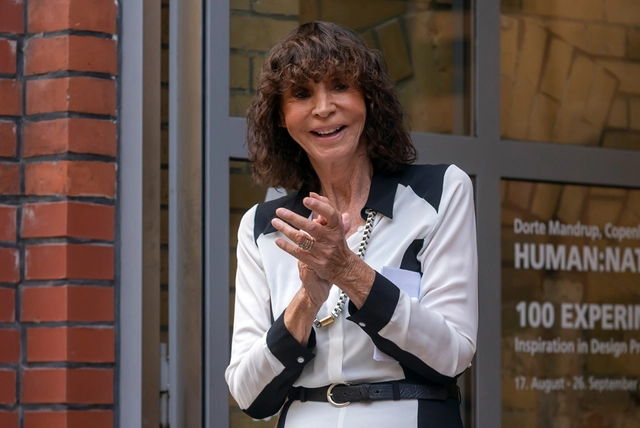
Kristin Feireiss, the German architecture curator, writer, and editor, passed away on April 20, 2025. With a career spanning over four decades, Feireiss played a significant role in promoting international public discourse on architecture, urban development, and social change.

Born in 1942, Feireiss studied art history and philosophy at Johann Wolfgang Goethe University in Frankfurt. In 1980, she co-founded the "Aedes Architecture Forum" in Berlin with Helga Retzer, establishing Europe's first private architecture gallery. After Retzer's passing in 1984, Feireiss continued to develop Aedes into an internationally recognized platform. Since 1994, in collaboration with Hans-Jürgen Commerell, she curated over 350 exhibitions and catalogues, expanding the forum's reach and impact. In 2009, the duo also founded "ANCB The Aedes Metropolitan Laboratory," which received the German Innovation Prize in 2010.

Kristin Feireiss, Founder of the Aedes Architecture Forum, Passes Away at 82 - Image 1 of 4Kristin Feireiss, Founder of the Aedes Architecture Forum, Passes Away at 82 - Image 2 of 4Kristin Feireiss, Founder of the Aedes Architecture Forum, Passes Away at 82 - Image 3 of 4Kristin Feireiss, Founder of the Aedes Architecture Forum, Passes Away at 82 - Image 4 of 4Kristin Feireiss, Founder of the Aedes Architecture Forum, Passes Away at 82 - More Images+ 1

The Museum for Architectural Drawing Explores Steven Holl’s Design Process Through Drawing in Berlin, Germany

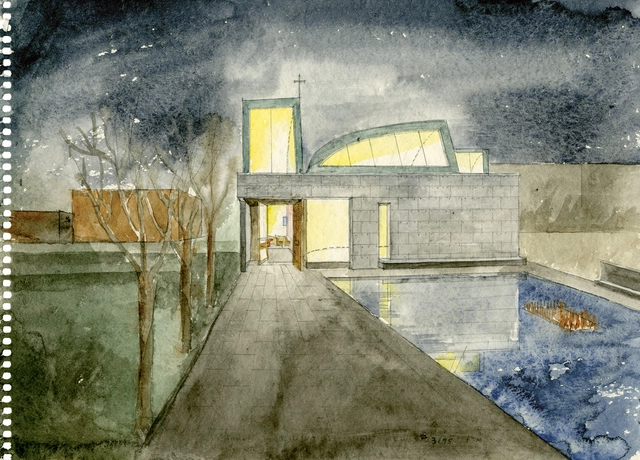
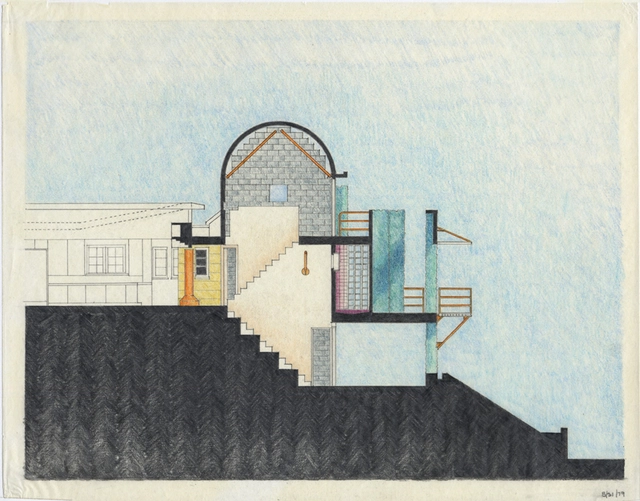
The Museum for Architectural Drawing in Berlin, Germany, will host a new exhibition titled "Steven Holl – Drawing as Thought," curated by Kristin Feireiss. The exhibition explores the creative process of internationally renowned architect Steven Holl with a focus on his use of drawing as a fundamental tool in architectural design. Furthermore, the exhibition highlights Holl's extensive artistic practice, which includes over 50,000 sketches, black-and-white drawings, and watercolors, offering insight into his approach to architecture through visual exploration.

The Museum for Architectural Drawing Explores Steven Holl’s Design Process Through Drawing in Berlin, Germany - Image 1 of 4The Museum for Architectural Drawing Explores Steven Holl’s Design Process Through Drawing in Berlin, Germany - Image 2 of 4The Museum for Architectural Drawing Explores Steven Holl’s Design Process Through Drawing in Berlin, Germany - Image 3 of 4The Museum for Architectural Drawing Explores Steven Holl’s Design Process Through Drawing in Berlin, Germany - Image 4 of 4The Museum for Architectural Drawing Explores Steven Holl’s Design Process Through Drawing in Berlin, Germany - More Images+ 16

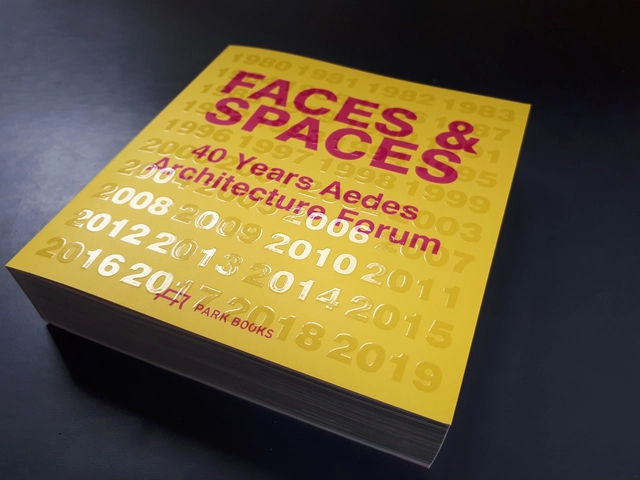
Faces & Spaces: 40 Years Aedes Architecture Forum

Berlin’s Aedes Architecture Forum is one of the most well-known centers for architecture and architectural culture in the world. Founded in 1980 by Kristin Feireiss und Helga Retzer, Aedes has since put on 500 important exhibitions on current themes, featuring many of the world’s most eminent architects. After Helga Retzer’s unexpected death in 1984, Aedes has been run by Feireiss, together with Hans-Jürgen Commerell and a large, committed team of collaborators.

"Thom Mayne: Sculptural Drawings" Opens at the Museum for Architectural Drawing in Berlin

Running from 11 September till 15 November 2020, "Thom Mayne: Sculptural Drawings" is the latest architectural exhibition at Tchoban Foundation Museum for Architectural Drawing in Berlin. Curated by Kristin Feireiss, together with Esenija Bannan, the project questions the nature of architectural drawing and how it influenced the work of Thom Mayne, founder of Morphosis. The exhibition features Mayne’s works dating from 1979 through 2020 and leads visitors from “traditional” drawings and new experimentations with techniques, through to 3D paintings.

"Thom Mayne: Sculptural Drawings" Opens at the Museum for Architectural Drawing in Berlin - Image 1 of 4"Thom Mayne: Sculptural Drawings" Opens at the Museum for Architectural Drawing in Berlin - Image 2 of 4"Thom Mayne: Sculptural Drawings" Opens at the Museum for Architectural Drawing in Berlin - Image 3 of 4"Thom Mayne: Sculptural Drawings" Opens at the Museum for Architectural Drawing in Berlin - Image 4 of 4Thom Mayne: Sculptural Drawings Opens at the Museum for Architectural Drawing in Berlin - More Images+ 7

Kristin Feireiss on the 40 Years of Aedes, Women Empowerment and the Future of Architecture

Subscriber Access | 

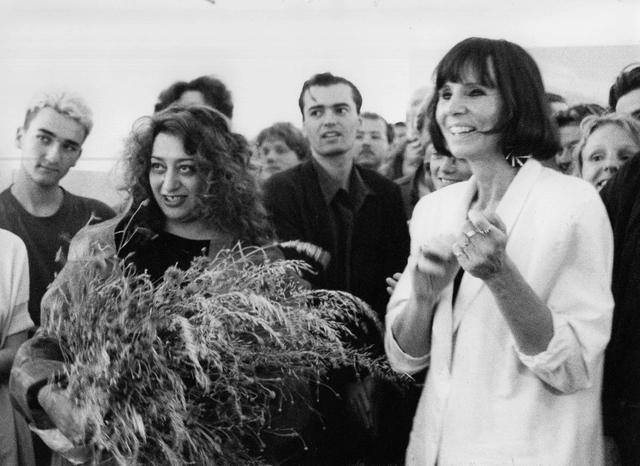
During the peak of Postmodernism, and the uprising of notions such as urban renewal and public participation, Aedes Architecture Forum, the first private architecture gallery in the world, opened in 1980 in Berlin. Founded by Journalist Kristin Feireiss and Helga Retzer, both neither architects nor regularly engaged with architecture at that time, Aedes aspired to encourage an international dialogue around the subjects of urban environment, space, and society.

Shortly after its inception, the center became an integral part of the contemporary international architectural scene, carrying out debates, seeking fresh ideas, showcasing the avant-garde, and highlighting young talents. Providing architects with a compelling space to present their architectural and urban ideas, Aedes hosted exhibitions for Zaha Hadid, Venturi Scott Brown, Cedric Price, John Hejduk, OMA (Office for Metropolitan Architecture), Peter and Alison Smithson, and Bernard Tschumi to name a few.

SIZA – Unseen & Unknown

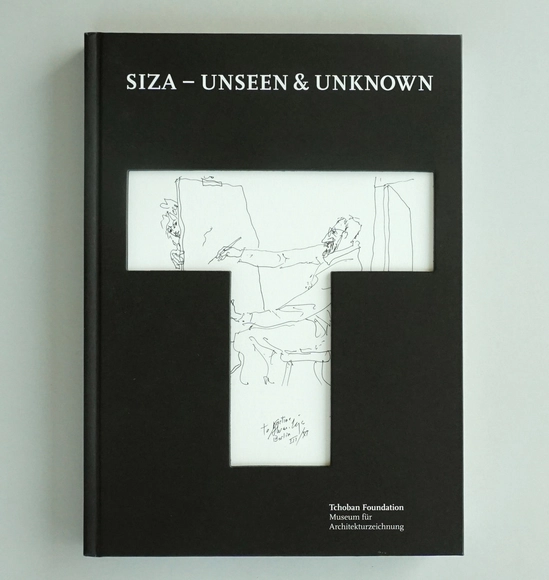
Álvaro Siza was born in 1933, on the same year that the Bauhaus closed its doors. He is perhaps the last living modernist or, at the very least, the most significant voice to carry out the unfinished modernist project all the way into the 21st century. 'Siza – Unseen & Unknown' showcases this continuity through 100 sketches, as well as its contradictions. These drawings are from his most personal archive, in addition to small collections of close friends and family. Hence, they focus not only on the professional legacy but also on the familial one, where Maria Antónia Siza (1940–1973) takes centre stage. His wife will draw him, he will draw her and the loving embrace of the human body will be transversal to architecture, art, life. In many ways, the Bernini folds of Maria Antónia’s clothes and hair develop in Siza’s own ink lines and this anthropomorphic research goes on long after her death at just thirty two years old. Those bodies will grow increasingly more abstract, like the Venus de Milo, losing its limbs and becoming something more.

The Pritzker Architecture Prize Adds Two New Jurors

Thomas J. Pritzker has announced that the Pritzker Architecture Prize has added two deserving jurors to their esteemed panel, stating: “We are delighted to welcome to the jury two individuals of great insight - Kristin Feireiss and Ratan N. Tata. [...] From different countries and backgrounds, they share a commitment to the art of architecture and its social responsibility. Each will be a tremendous asset to the Pritzker Architecture Prize.”