1. ArchDaily
  2. OMA/AMO

OMA/AMO: The Latest Architecture and News

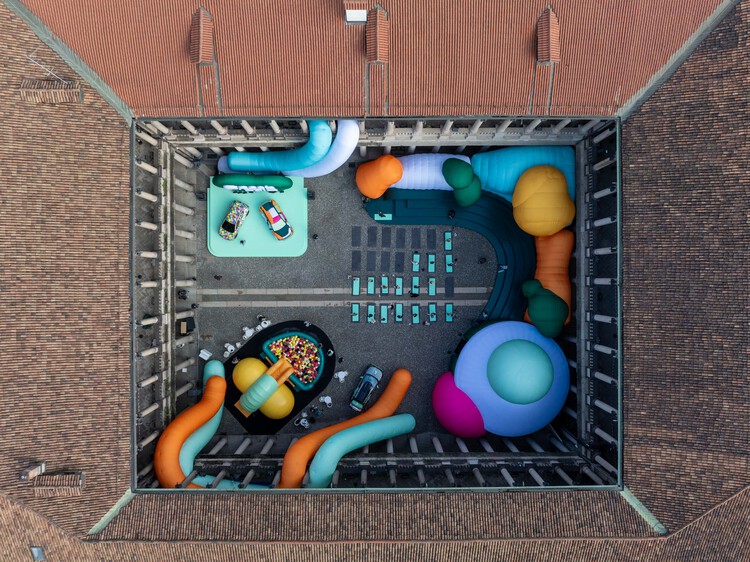
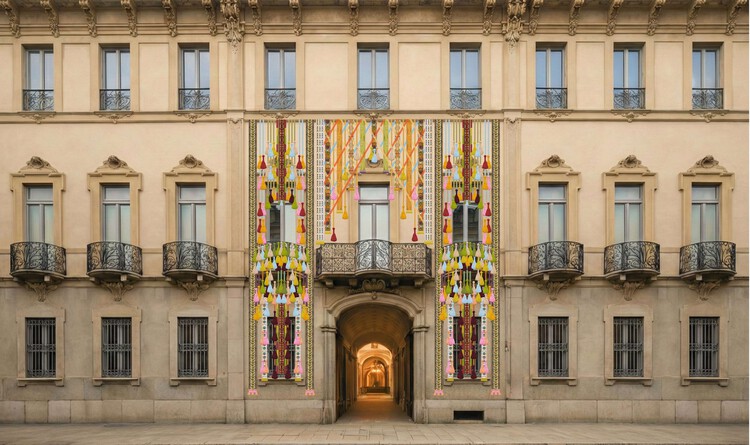
ArchDaily’s Selection: 15 Installations and Exhibitions from Milan Design Week 2026

Bringing together a week of exhibitions, installations, and industry exchange, Milan Design Week 2026 and the 64th edition of Salone del Mobile.Milano concluded on April 26, following six days of programming across the fairgrounds and the city. Held from April 20 to 26, this year's events reaffirmed Milan's central role within the global design calendar. The Salone itself drew over 316,000 visitors from 167 countries. With 1,900 brands represented and a strong international presence, the week once again operated as both a cultural platform and an economic engine, navigating a context marked by market uncertainty while maintaining its capacity to convene designers, institutions, and industry leaders at a global scale.

ArchDaily’s Selection: 15 Installations and Exhibitions from Milan Design Week 2026 - Image 1 of 4ArchDaily’s Selection: 15 Installations and Exhibitions from Milan Design Week 2026 - Image 2 of 4ArchDaily’s Selection: 15 Installations and Exhibitions from Milan Design Week 2026 - Image 3 of 4ArchDaily’s Selection: 15 Installations and Exhibitions from Milan Design Week 2026 - Image 4 of 4ArchDaily’s Selection: 15 Installations and Exhibitions from Milan Design Week 2026 - More Images+ 26

Milan Design Week 2026: Must-See Installations, Exhibitions, and Events

From April 20 to 26, Milan Design Week 2026 returns as a citywide platform where design operates as both a cultural practice and a form of exploration. Framed by the Fuorisalone theme "Be the Project," this year's edition shifts the focus from outcome to process, positioning design as a dynamic, human-centered act shaped by intuition, responsibility, and transformation. Installations and exhibitions across the city foreground making as an open-ended condition, one that embraces error, temporality, and experimentation as integral to creative production. Within this context, design becomes a space of exchange between disciplines, materials, and intelligences, reflecting broader conversations around sustainability, emerging technologies, and the evolving relationship between the physical and the digital.

Milan Design Week 2026: Must-See Installations, Exhibitions, and Events - Image 1 of 4Milan Design Week 2026: Must-See Installations, Exhibitions, and Events - Image 2 of 4Milan Design Week 2026: Must-See Installations, Exhibitions, and Events - Image 3 of 4Milan Design Week 2026: Must-See Installations, Exhibitions, and Events - Image 4 of 4Milan Design Week 2026: Must-See Installations, Exhibitions, and Events - More Images+ 14

Expanding Practice: Architecture Think Tanks at the Intersection of Research and Design

In architecture, most practices revolve around delivering projects to clients. Offices are shaped by deadlines, budgets, and clear briefs. While this structure produces buildings, it rarely leaves space for architects to question broader issues — about how we live, how cities are changing, or what the future demands of design. But alongside this production-focused system, a quieter movement has emerged: studios, collectives, and foundations that prioritize research, experimentation, and reflection. These are the architecture think tanks — spaces designed not to build immediately, but to think first.
The idea of a think tank is not new. Traditionally found in politics, economics, or science, think tanks bring together experts to study complex problems and propose solutions. In architecture, their rise reveals a tension at the heart of the discipline. If architecture is to remain socially and environmentally relevant, can it continue to rely only on client-driven practice? Or must it carve out space for slower, deeper inquiry?

Expanding Practice: Architecture Think Tanks at the Intersection of Research and Design - Image 1 of 4Expanding Practice: Architecture Think Tanks at the Intersection of Research and Design - Image 2 of 4Expanding Practice: Architecture Think Tanks at the Intersection of Research and Design - Image 3 of 4Expanding Practice: Architecture Think Tanks at the Intersection of Research and Design - Image 4 of 4Expanding Practice: Architecture Think Tanks at the Intersection of Research and Design - More Images+ 48

Shaping Desire: How Architects Redefine Commercial Spaces

Subscriber Access | 

In contemporary architecture, commercial spaces have become more than points of sale; they are stages where identity, image, and experience converge. Stores, showrooms, and branded interiors often operate as laboratories where architects experiment with form, material, and light, translating corporate narratives into spatial experiences. In this context, the architect emerges as a mediator of desire, shaping atmospheres that guide perception, evoke emotion, and subtly influence behavior. This role reveals a complex intersection between design and capitalism: the creation of spaces that sell not only products, but also aspirations, lifestyles, and cultural meaning. By transforming commerce into an architectural performance, these projects invite reflection on how the discipline negotiates its agency in a world where visibility and image have become as essential as function.

Shaping Desire: How Architects Redefine Commercial Spaces - Image 1 of 4Shaping Desire: How Architects Redefine Commercial Spaces - Image 2 of 4Shaping Desire: How Architects Redefine Commercial Spaces - Image 3 of 4Shaping Desire: How Architects Redefine Commercial Spaces - Image 4 of 4Shaping Desire: How Architects Redefine Commercial Spaces - More Images+ 55

Miami Architecture City Guide: 22 Projects Shaping Tropical Density on the Atlantic Coast

Subscriber Access | 

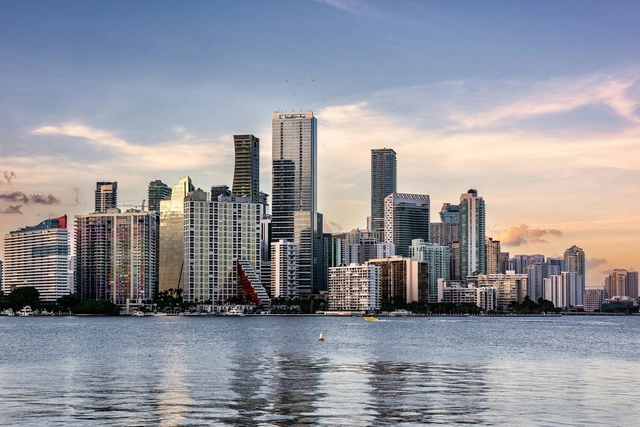
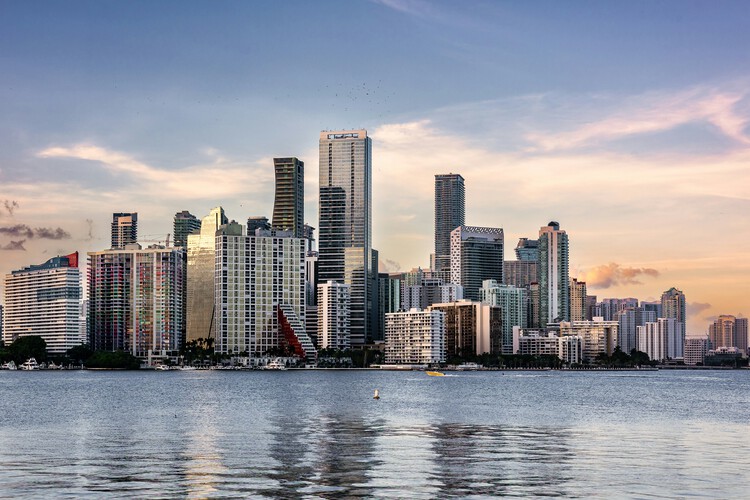
Stretching along the Atlantic coast at the southern tip of Florida, Miami is often introduced through postcard views of beaches, palm trees, and glass towers facing the water. Yet, behind this familiar image lies a city shaped by migration, tourism, and real estate cycles, where architecture has repeatedly been used to project new identities and reinvent the urban landscape. From early resort hotels and the Art Deco façades of South Beach to experimental high-rises and cultural institutions on the bay, the built environment offers a way to read how Miami negotiates climate, economy, and everyday life.

Over the past century, the city has grown through successive layers of development that remain visible in its streets and skylines. The streamlined geometry and pastel colors of the historic Art Deco District coexist with the exuberant forms of Miami Modern (MiMo) motels and postwar infrastructure along Biscayne Boulevard. Downtown and Brickell have transformed from low-rise business districts into dense clusters of residential and office towers, many designed by international firms working alongside local practices. At the same time, neighborhoods such as Little Havana, Allapattah, and Wynwood reveal how diasporic communities, industrial heritage, and creative industries occupy and adapt existing fabrics, often in contrast with the image-driven waterfront.

Miami Architecture City Guide: 22 Projects Shaping Tropical Density on the Atlantic Coast - Image 1 of 4Miami Architecture City Guide: 22 Projects Shaping Tropical Density on the Atlantic Coast - Image 2 of 4Miami Architecture City Guide: 22 Projects Shaping Tropical Density on the Atlantic Coast - Image 3 of 4Miami Architecture City Guide: 22 Projects Shaping Tropical Density on the Atlantic Coast - Image 4 of 4Miami Architecture City Guide: 22 Projects Shaping Tropical Density on the Atlantic Coast - More Images+ 36

New Cultural Venues, Awards and Transformative Architecture From Ghana to New York: This Week’s Review

This week's architecture news highlights a diverse global landscape of design innovation, cultural investment, and adaptive reuse. Across continents, new museums and cultural venues are opening to foster dialogue around art, design, and community engagement. At the same time, major recognitions and project announcements underscore the growing importance of sustainable, socially conscious practices in shaping contemporary architecture. From adaptive transformations in New York, Tainan, and Milan, including preparations for the Milano Cortina 2026 Winter Games, to new cultural landmarks in Ghana and Qatar, this week's overview features projects by leading firms such as Herzog & de Meuron, Snøhetta, and Mecanoo, alongside initiatives from emerging practices like Limbo Accra in West Africa.

New Cultural Venues, Awards and Transformative Architecture From Ghana to New York: This Week’s Review - Image 1 of 4New Cultural Venues, Awards and Transformative Architecture From Ghana to New York: This Week’s Review - Image 2 of 4New Cultural Venues, Awards and Transformative Architecture From Ghana to New York: This Week’s Review - Image 3 of 4New Cultural Venues, Awards and Transformative Architecture From Ghana to New York: This Week’s Review - Image 4 of 4New Cultural Venues, Awards and Transformative Architecture From Ghana to New York: This Week’s Review - More Images+ 17

AMO / OMA Explores the Future of Rural Living with “Countryside: A Place to Live, Not to Leave” in Doha

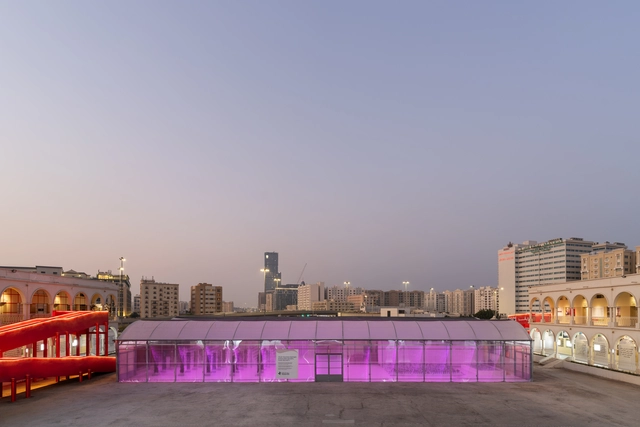
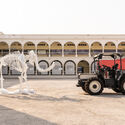
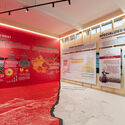
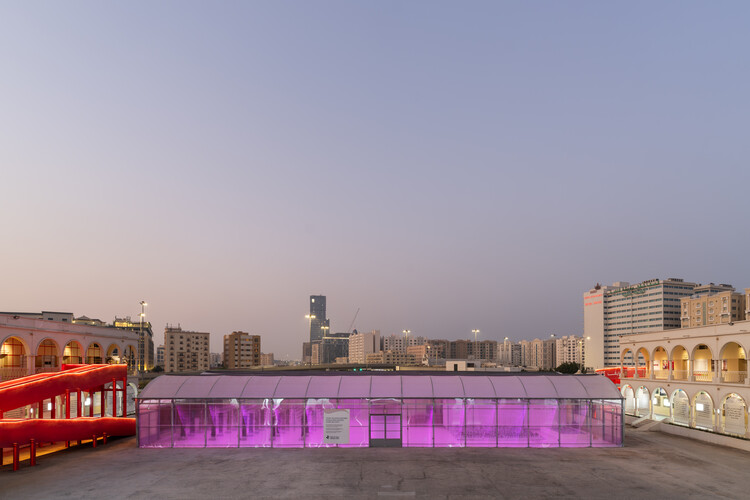
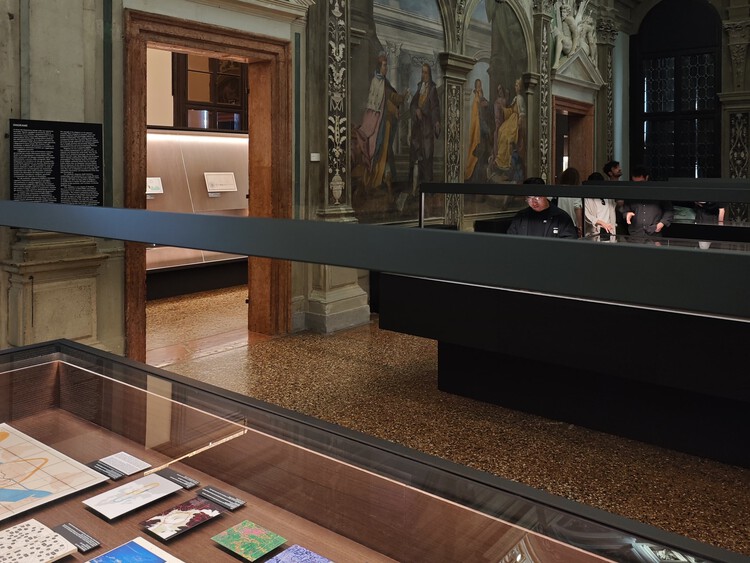
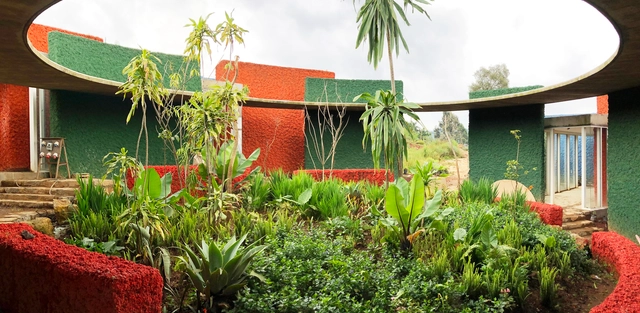
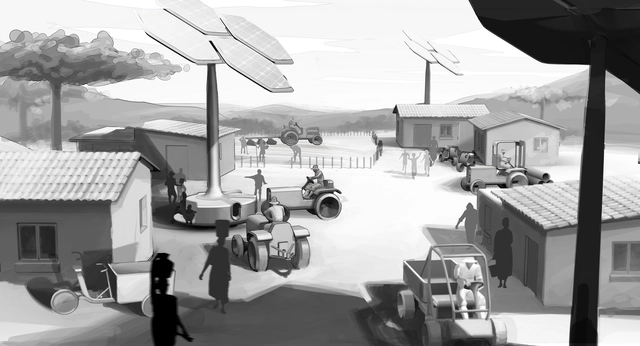
Countryside: A Place to Live, Not to Leave by AMO / OMA presents an exploration of contemporary life beyond the city, examining how rural territories adapt to global transformation. Conceived under the direction of Rem Koolhaas and Samir Bantal, with Yotam Ben Hur as project architect, the exhibition is presented by Qatar Museums in collaboration with the Qatar Fund for Development (QFFD), the Ministry of Environment and Climate Change (MoECC), Hassad Food, and Kahramaa. It is hosted across two venues in Doha, the Qatar Preparatory School and the National Museum of Qatar, and remains accessible to the public until June 30, 2026.

AMO / OMA Explores the Future of Rural Living with “Countryside: A Place to Live, Not to Leave” in Doha - Image 1 of 4AMO / OMA Explores the Future of Rural Living with “Countryside: A Place to Live, Not to Leave” in Doha - Image 2 of 4AMO / OMA Explores the Future of Rural Living with “Countryside: A Place to Live, Not to Leave” in Doha - Image 3 of 4AMO / OMA Explores the Future of Rural Living with “Countryside: A Place to Live, Not to Leave” in Doha - Image 4 of 4AMO / OMA Explores the Future of Rural Living with “Countryside: A Place to Live, Not to Leave” in Doha - More Images+ 13

Rhythms of the Soil: Architecture as Agroecology

At a time of ecological collapse and rising food insecurity, architecture is increasingly called upon to engage not only with landscapes but with the systems that sustain and regenerate them. Among these systems, agriculture occupies a paradoxical role, as both a leading contributor to environmental degradation and a potential agent of ecological recovery. Industrial farming has depleted soils, fragmented habitats, and driven climate change through monocultures, fossil-fuel dependency, and territorial standardization. In response, agroecology has emerged as a counter-practice rooted in biodiversity, local knowledge, and the cyclical rhythms of nature. It reframes farming not as extraction, but as regeneration of ecosystems, communities, and the soil itself.

This reframing opens space for architecture to contribute meaningfully. To align with agroecology is not only to support food production, but to engage with the broader cultural, spatial, and ecological conditions that sustain it. It implies designing with seasonal variation, supporting shared use, and building in ways that respect both the land and those who work it. Architecture becomes more than enclosure — it becomes a mediator of cultivation, reciprocity, and coexistence.

Rhythms of the Soil: Architecture as Agroecology - Image 1 of 4Rhythms of the Soil: Architecture as Agroecology - Image 2 of 4Rhythms of the Soil: Architecture as Agroecology - Image 3 of 4Rhythms of the Soil: Architecture as Agroecology - Image 4 of 4Rhythms of the Soil: Architecture as Agroecology - More Images+ 47

The Intelligence of What Remains: On Archiving and Architectural Knowledge

When we speak of intelligence at the 2025 Venice Biennale, the main exhibition broadly categorizes it into three domains: natural, artificial, and collective. While much attention has been drawn to robotic performances, future-forward material experiments—such as Boonserm Premthada's elephant dung bricks, or Canada's display of mesmerizing picoplankton, one often overlooked yet critical form of collective intelligence lies in the act of archiving.

Several national pavilions showcase this collective intelligence through beautifully curated exhibitions—the Spanish Pavilion's witty play on scale, for instance, features meticulously crafted models that invite close reading and delight. These curated collections offer a snapshot of the present, and in some cases, gestures toward the future. But without critically engaging with the past, without documenting and making sense of our shared spatial and architectural knowledge, the potential of collective intelligence remains incomplete. Archiving is not simply an act of preservation; it is a generative tool for projecting new futures.

The Intelligence of What Remains: On Archiving and Architectural Knowledge - Image 1 of 4The Intelligence of What Remains: On Archiving and Architectural Knowledge - Image 2 of 4The Intelligence of What Remains: On Archiving and Architectural Knowledge - Image 3 of 4The Intelligence of What Remains: On Archiving and Architectural Knowledge - Image 4 of 4The Intelligence of What Remains: On Archiving and Architectural Knowledge - More Images+ 10

Towards an Architecture of Many Intelligences: How Collective Knowledge Shapes the Built Environment

As architecture navigates a rapidly changing world shaped by ecological urgency, social transformation, and technological acceleration, the notion of intelligence is shifting. No longer confined to individual cognition or artificial computation, intelligence can emerge from cultural memory, collective practices, and adaptive systems. In this broader sense, architecture becomes a field of convergence, where natural, artificial, and social intelligences intersect to offer new ways of designing and building.

Vernacular traditions embed generations of environmental knowledge, often transmitted through materials, construction techniques, and spatial logics finely tuned to local conditions; participatory platforms expand decision-making to wider communities to take part in shaping their environments, redistributing agency in the design process; and computational processes simulate and respond to complex data in real time bringing the capacity to analyse, simulate, and respond to complex variables — whether environmental, social, or behavioural — offering new forms of adaptability.

Towards an Architecture of Many Intelligences: How Collective Knowledge Shapes the Built Environment - Image 1 of 4Towards an Architecture of Many Intelligences: How Collective Knowledge Shapes the Built Environment - Image 2 of 4Towards an Architecture of Many Intelligences: How Collective Knowledge Shapes the Built Environment - Image 3 of 4Towards an Architecture of Many Intelligences: How Collective Knowledge Shapes the Built Environment - Image 4 of 4Towards an Architecture of Many Intelligences: How Collective Knowledge Shapes the Built Environment - More Images+ 25

OMA's Expansion and Renovation Project of the Buffalo AKG Art Museum Will Open in May 2023

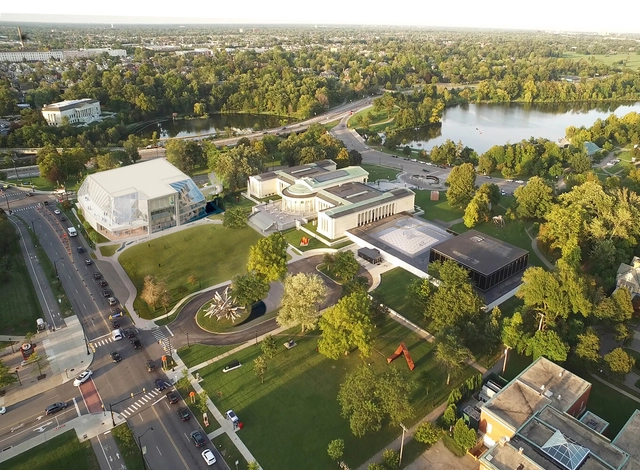
The Buffalo AKG Art Museum (formerly known as the Albright-Knox Art Gallery) has announced that it will welcome its first visitors on the 25th of May, 2023. Revamped and expanded, the new campus designed by OMA/Shohei Shigematsu in collaboration with Cooper Robertson features “new work of signature architecture, the Jeffrey E. Gundlach building, and extensive renovation to existing buildings”.

OMA's Expansion and Renovation Project of the Buffalo AKG Art Museum Will Open in May 2023 - Image 1 of 4OMA's Expansion and Renovation Project of the Buffalo AKG Art Museum Will Open in May 2023 - Image 2 of 4OMA's Expansion and Renovation Project of the Buffalo AKG Art Museum Will Open in May 2023 - Image 3 of 4OMA's Expansion and Renovation Project of the Buffalo AKG Art Museum Will Open in May 2023 - Image 4 of 4OMA's Expansion and Renovation Project of the Buffalo AKG Art Museum Will Open in May 2023 - More Images+ 10

Virgil Abloh, a Great Influential Figure in the Artistic World, Passes Away at 41

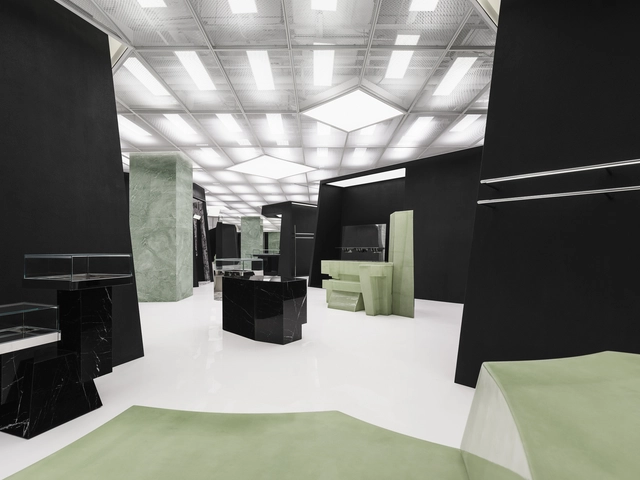
Virgil Abloh, a great American influential figure in the fashion, art, culture, design, and architecture scene, passed away at 41, after a silent battle with cancer. Known for his collaboration with AMO, especially for the Off-White Flagship Store in Miami, a brand he founded back in 2012, the trained architect was the first African-American to become the artistic director of a French luxury brand.

The news was announced on Sunday on Abloh’s official Instagram Account. The Creative Director of Louis Vuitton menswear battled a “rare, aggressive form of cancer, cardiac angiosarcoma […] privately since his diagnosis in 2019”, according to the post.

Virgil Abloh, a Great Influential Figure in the Artistic World, Passes Away at 41 - Image 1 of 4Virgil Abloh, a Great Influential Figure in the Artistic World, Passes Away at 41 - Image 2 of 4Virgil Abloh, a Great Influential Figure in the Artistic World, Passes Away at 41 - Image 3 of 4Virgil Abloh, a Great Influential Figure in the Artistic World, Passes Away at 41 - Image 4 of 4Virgil Abloh, a Great Influential Figure in the Artistic World, Passes Away at 41 - More Images+ 4

AMO Partners Up with Volkswagen to Research the Future of Rural Mobility

AMO, the think tank of the Office for Metropolitan Architecture (OMA), co-founded by Rem Koolhaas and led by Samir Bantal, has announced a recent research collaboration with Volkswagen. Focused on rural areas and the countryside, the partnership will look into the future of rural mobility, through a first conceptual study on electric tractors.

AMO Partners Up with Volkswagen to Research the Future of Rural Mobility - Image 1 of 4AMO Partners Up with Volkswagen to Research the Future of Rural Mobility - Image 2 of 4AMO Partners Up with Volkswagen to Research the Future of Rural Mobility - Image 3 of 4AMO Partners Up with Volkswagen to Research the Future of Rural Mobility - Image 4 of 4AMO Partners Up with Volkswagen to Research the Future of Rural Mobility - More Images+ 12

OMA Wins Competition to Create The New KaDeWe Department Store in Vienna

OMA's proposal won the competition for the new KaDeWe department store and hotel in Vienna’s Museumsquartier. Led by Ellen van Loon, Ippolito Pestellini Laparelli, and Laurence Bolhaar, the project will be OMA’s first venture in Vienna, upon its completion.

OMA Wins Competition to Create The New KaDeWe Department Store in Vienna - Image 1 of 4OMA Wins Competition to Create The New KaDeWe Department Store in Vienna - Image 2 of 4OMA Wins Competition to Create The New KaDeWe Department Store in Vienna - Image 3 of 4OMA Wins Competition to Create The New KaDeWe Department Store in Vienna - Image 4 of 4OMA Wins Competition to Create The New KaDeWe Department Store in Vienna - More Images+ 8

Why the EU Membership is Worth it According to Rem Koolhaas and Stephan Petermann

Subscriber Access | 

The EU costs you the same as Netflix - is it worth it? Rem Koolhaas thinks so.