1. ArchDaily
  2. Mobility

Mobility: The Latest Architecture and News

Los Angeles Ends Free Public Transportation Experiment with Future Plans of Reduced-Fare Transits

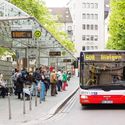
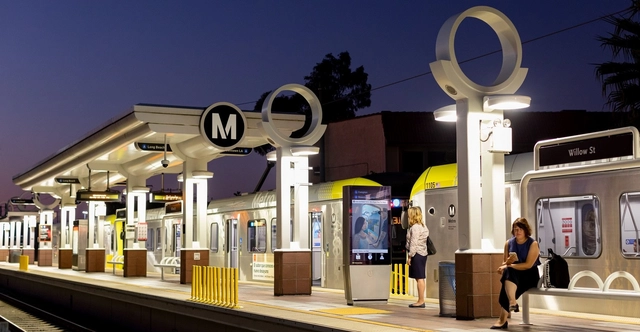
Following California's Covid-19 health regulations in early 2020, Metro, the Los Angeles public transit agency stopped collecting fares on its busses as a safety precaution measure. However, the company's decision turned into the United States' biggest free-transit experiment, as ridership never dipped below 50 percent, even with the stay-at-home orders enforced by the government. Following 22 months of the decision and around 281 million fare-free transits, the company has decided to restart collecting fares, but is planning on using the information gathered throughout these two years to implement future improvements and introduce other free or reduced-fare programs in the city.

Los Angeles Ends Free Public Transportation Experiment with Future Plans of Reduced-Fare Transits  - Image 1 of 4Los Angeles Ends Free Public Transportation Experiment with Future Plans of Reduced-Fare Transits  - Image 2 of 4Los Angeles Ends Free Public Transportation Experiment with Future Plans of Reduced-Fare Transits  - Featured ImageLos Angeles Ends Free Public Transportation Experiment with Future Plans of Reduced-Fare Transits  - Image 3 of 4Los Angeles Ends Free Public Transportation Experiment with Future Plans of Reduced-Fare Transits  - More Images

Berlin Citizens Propose World's Largest Car-Free Area in the German Capital

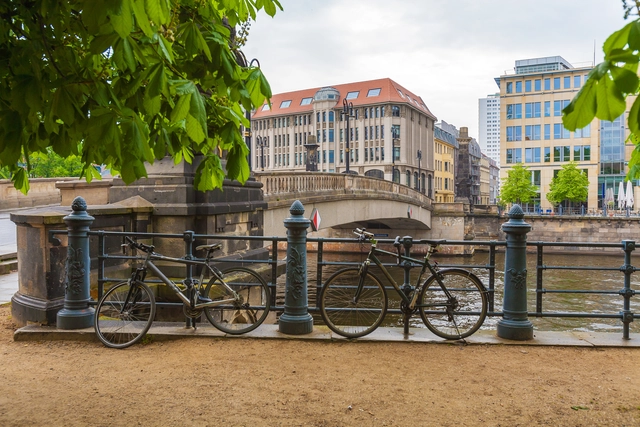
Volksentscheid Berlin Autofrei (People’s Decision for Auto-Free Berlin), has proposed a plan to limit cars within Berlin's Ringbahn, a long circle route around the inner city, making it the world's largest car-free area once approved. The citizen-initiative is aimed mostly at banning the use of private cars in central Berlin, with the exception of emergency vehicles, garbage trucks, taxis, delivery vehicles, and residents with limited mobility, who would all be given special access permits.

Berlin Citizens Propose World's Largest Car-Free Area in the German Capital - Image 1 of 4Berlin Citizens Propose World's Largest Car-Free Area in the German Capital - Image 2 of 4Berlin Citizens Propose World's Largest Car-Free Area in the German Capital - Image 3 of 4Berlin Citizens Propose World's Largest Car-Free Area in the German Capital - Image 4 of 4Berlin Citizens Propose World's Largest Car-Free Area in the German Capital - More Images

Milan to Introduce "Super-Cycle" Corridors Across City by 2035

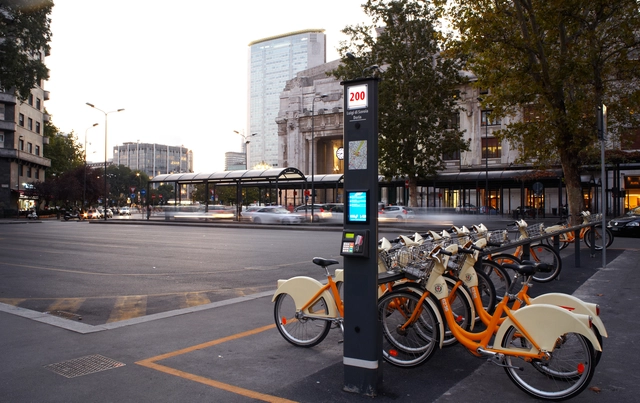
As part of Milan's ongoing vision of bicycle-friendly highways, the Metropolitan Council of Milan has approved its Biciplan “Cambio” project, a new transportation system that introduces "super-cycle" corridors across the urban fabric, prioritizing cycling, environmental protection, safety, and wellbeing. The project aims to compliment existing cycle paths with 750 kilometers of new corridors that will connect the city's 133 communes with its wider metropolitan area, and increase the amount of bicycle trips and reach by 10% internally and 20% on a greater scale.

Milan to Introduce "Super-Cycle" Corridors Across City by 2035 - Image 1 of 4Milan to Introduce "Super-Cycle" Corridors Across City by 2035 - Image 2 of 4Milan to Introduce "Super-Cycle" Corridors Across City by 2035 - Image 3 of 4Milan to Introduce "Super-Cycle" Corridors Across City by 2035 - Featured ImageMilan to Introduce Super-Cycle Corridors Across City by 2035 - More Images

Taking Comfort Anywhere: A Conversation About Mobile Saunas

Subscriber Access | 

Saunas are inseparable from the culture of Nordic countries and they are increasing in popularity as a result of their many physical and mental health benefits. Their projects are usually quite archetypal, combining efficiency and sobriety.

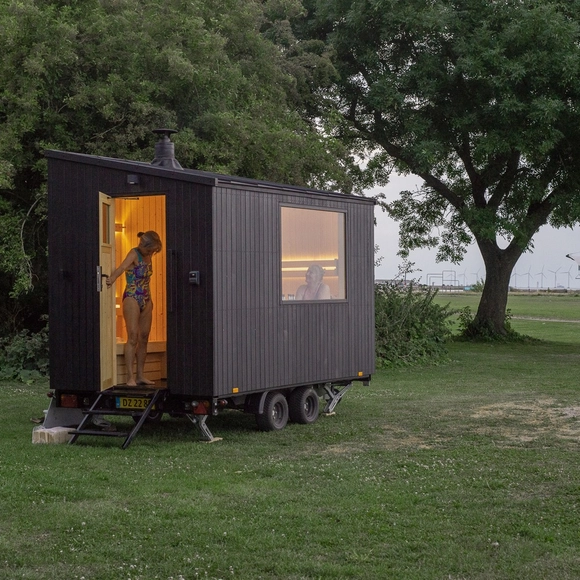
We spoke with Jakob Gate, co-founder of Native Narrative & Scandinavian Sauna, who has been developing sauna projects that combine the flexibility of being transported anywhere, with the expertise and tradition of Scandinavian design. They work without electricity, heated by wood, while LED lighting is provided by a rechargeable battery. Learn more in the following interview:

Transport by Electric Scooters: Are Our Cities Ready for Micromobility?

Subscriber Access | 

The rise of electric scooter fleets in cities around the globe happened almost overnight. By making transportation fun, they quickly took over a new market share and provided not only an easy way to travel but one that also prides itself in being sustainable. First becoming popular on the West Coast of the United States, scooters migrated eastward, eventually sweeping across Europe as well. Easy to maneuver and a convenient solution to get from place to place, we have to ask- can cities handle the accelerating rise of scooters and other forms of micromobility?

"Our Cities are not Designed for the Disabled" According to CityLab

Although disability laws have been put in place decades ago, architects are still struggling with disability requirements. A recent article by CityLab explored how the rise of speed and efficiency-driven cities have overlooked accessibility, neglecting the needs of people who are physically unable to live or keep up with these dense neighborhoods. And while the "15-Minute City", one that allows people to walk or bike to most essential services within 15 minutes of their home, may seem as the future of built environments, it does not cater to disabled individuals or their movements.

"Our Cities are not Designed for the Disabled" According to CityLab - Image 1 of 4"Our Cities are not Designed for the Disabled" According to CityLab - Image 2 of 4"Our Cities are not Designed for the Disabled" According to CityLab - Image 3 of 4"Our Cities are not Designed for the Disabled" According to CityLab - Featured ImageOur Cities are not Designed for the Disabled According to CityLab - More Images

Foster + Partners Designs Monumental Mobility Pavilion at the Expo 2020 Dubai

Designed by Foster + Partners, Alif-The Mobility Pavilion at the Expo 2020 Dubai blurs the boundaries between the physical and digital world, and invites visitors to meet the historical icons of mobility, whose innovations helped pave the way for our modern-day technology. The pavilion features the world’s largest passenger lift, which will be able to transport 160+ people at a time, and a semi-underground-semi-open-air 330-meter track which allows visitors to see cutting-edge mobility devices in action.

Foster + Partners Designs Monumental Mobility Pavilion at the Expo 2020 Dubai  - Featured ImageFoster + Partners Designs Monumental Mobility Pavilion at the Expo 2020 Dubai  - Image 1 of 4Foster + Partners Designs Monumental Mobility Pavilion at the Expo 2020 Dubai  - Image 2 of 4Foster + Partners Designs Monumental Mobility Pavilion at the Expo 2020 Dubai  - Image 3 of 4Foster + Partners Designs Monumental Mobility Pavilion at the Expo 2020 Dubai  - More Images

The Belgian Pavilion at the 2020 Dubai Expo Displays the Country's 2050 Mobility Vision

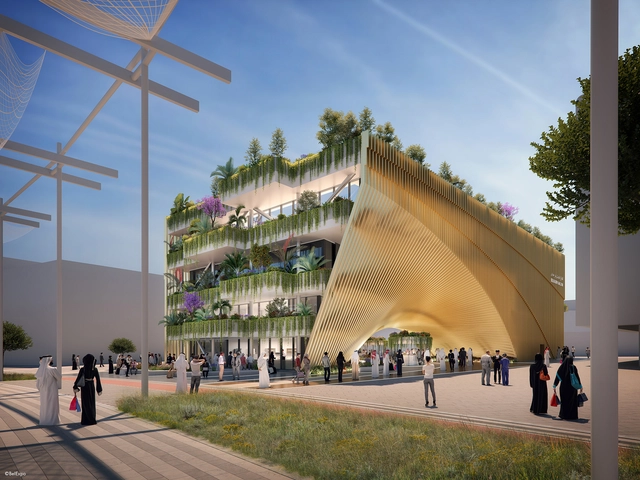
Titled "The Green Arch", the Belgian pavilion at the 2020 Dubai Expo highlights the emergence of connected green cities through its industrial, technological, and scientific knowledge. The pavilion, which is part of the Mobility district of the exhibition, consists of an arched, floral monolith that combines "Latin romanticism in the field of art and Anglo-Saxon technical precision in the industrial branches". The pavilion is designed by Belgian architects ASSAR ARCHITECTS and Vincent Callebaut Architectures, and will be represented by BelExpo, an autonomous department under the Belgian Ministry of Economy.

The Belgian Pavilion at the 2020 Dubai Expo Displays the Country's 2050 Mobility Vision - Image 1 of 4The Belgian Pavilion at the 2020 Dubai Expo Displays the Country's 2050 Mobility Vision - Image 2 of 4The Belgian Pavilion at the 2020 Dubai Expo Displays the Country's 2050 Mobility Vision - Image 3 of 4The Belgian Pavilion at the 2020 Dubai Expo Displays the Country's 2050 Mobility Vision - Image 4 of 4The Belgian Pavilion at the 2020 Dubai Expo Displays the Country's 2050 Mobility Vision - More Images

Jennifer Toole Makes the Case for Better Bike Networks

Jennifer Toole, ASLA, is the founder and President of Toole Design and has over 30 years of experience planning and designing multimodal transportation systems. A certified planner with a degree in landscape architecture, Toole has a strong background in urban design. She has been involved in numerous projects of national significance for the Federal Highway Administration, American Association of State Highway and Transportation Officials (AASHTO), and National Highway Traffic Safety Administration (NHTSA).

A Social Distancing Plaza in the Netherlands and a City without Cars in Italy: 10 Unbuilt Projects Submitted to ArchDaily

Looking at the urban environment, this week’s curated selection of the Best Unbuilt Architecture highlights interventions in public spaces, submitted by the ArchDaily Community. Suitable for this monthly topic, the article underlines worldwide approaches that tackle the challenges of these areas through the introduction of innovative solutions.

Exploring a multitude of methods fitting for different contexts, this feature presents a tactical urban strategy implemented in a neighborhood in Kosovo and micro-mobility measures in Italy. Other projects evoke public approaches in private developments and enhanced historical and cultural connections between parks, buildings, and cities. In addition, this roundup showcases conceptual interventions that tackle social distancing and the challenges of the pandemic, in order to allow people to move freely and safely across space.

A Social Distancing Plaza in the Netherlands and a City without Cars in Italy: 10 Unbuilt Projects Submitted to ArchDaily - Image 6 of 4A Social Distancing Plaza in the Netherlands and a City without Cars in Italy: 10 Unbuilt Projects Submitted to ArchDaily - Image 11 of 4A Social Distancing Plaza in the Netherlands and a City without Cars in Italy: 10 Unbuilt Projects Submitted to ArchDaily - Image 29 of 4A Social Distancing Plaza in the Netherlands and a City without Cars in Italy: 10 Unbuilt Projects Submitted to ArchDaily - Image 38 of 4A Social Distancing Plaza in the Netherlands and a City without Cars in Italy: 10 Unbuilt Projects Submitted to ArchDaily - More Images+ 50

Cities on the Move: What the Experts Predict for the Future of Urban Mobility

In our increasingly urbanized world, everything and everyone has adopted a lifestyle of nomadism. New environmental and social constraints have forced people to have a constant "on-the-go" behavior, so much so that almost everything has acquired wheels, even the buildings. But with the rise of debates like "is humankind being replaced by robots?" and "is technology taking over?", urban mobility has helped give access to housing, healthcare, and education in places with extreme difficult conditions.

To shed the light on globally-thriving mobile activities, the France-based Institut pour Ville en Mouvement, or City on the Move Institute, is an organization that has been addressing the challenges posed by urban mobility and contributing to the emergence of innovative solutions. In a series of short Youtube clips, the organization invited experts in the fields of architecture, urban planning, and technology to share their insights on the future of urban mobility.

Creating a Pedestrian-Friendly Utopia Through the Design of 15-Minute Cities

Think about the city or town where you live. How long does it take you to get to the grocery store on foot? Is your school or work close enough to walk to? What about a public park, a doctor’s office, a daycare, or any other places that you visit on a daily basis? While some cities have already considered what it means to live near all of these necessities, others are revamping their urban planning strategies and designing their neighborhoods to be more pedestrian-friendly with the concept of a “15-Minute City”.

What We Can (and Can’t) Learn from Copenhagen

This article was originally published on Common Edge

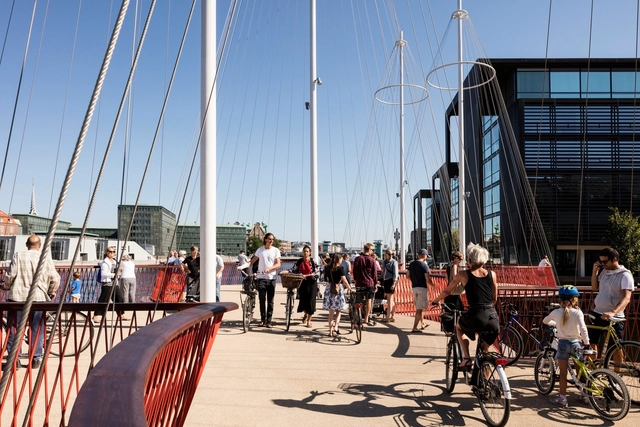
I spent four glorious days in Copenhagen in 2017 and left with an acute case of urban envy. (I kept thinking: It’s like..an American Portland—except better.) Why can’t we do cities like this in the United States? That’s the question an urban nerd like me asks while strolling the famously pedestrian-friendly streets, as hordes of impossibly blond and fit Danes bicycle briskly past.

UNStudio Completes First 37 Stations on the Doha Metro Network, in Qatar

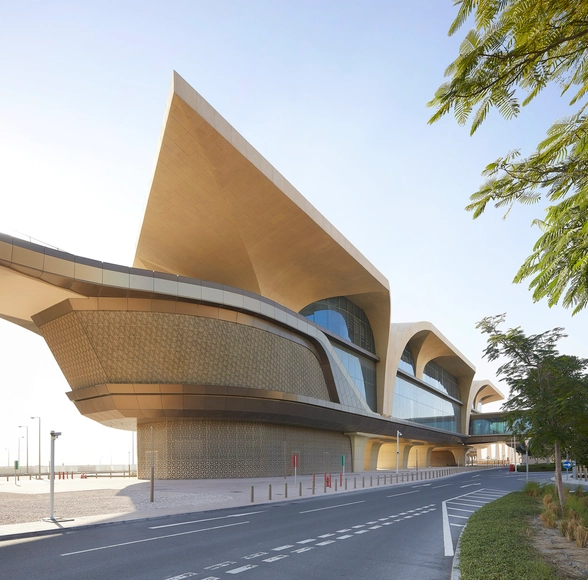
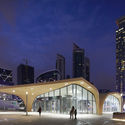
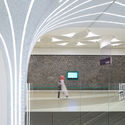
UNStudio has unveiled images of the first finished stations on the new Doha Metro Network, one of the most advanced and fastest driverless systems in the world. Phase one of the Qatar Integrated Railway Project (QIRP), involved the construction of three metro lines (Red, Green, and Gold), with 37 stations currently having been completed.

UNStudio Completes First 37 Stations on the Doha Metro Network, in Qatar - Image 1 of 4UNStudio Completes First 37 Stations on the Doha Metro Network, in Qatar - Image 2 of 4UNStudio Completes First 37 Stations on the Doha Metro Network, in Qatar - Image 3 of 4UNStudio Completes First 37 Stations on the Doha Metro Network, in Qatar - Image 4 of 4UNStudio Completes First 37 Stations on the Doha Metro Network, in Qatar - More Images+ 14

KCAP’s Dynamic Masterplan for Heidelberg, Germany Moves Forward

The PHVision Masterplan for Heidelberg in Germany has been approved by the City Council. Located on the site of the Patrick-Henry-Village (PHV) in Heidelberg, the 100-hectare development, designed by KCAP can now move forward, transforming the former military area into a new quarter, establishing the knowledge city of the future.

The (E)motional Landscapes of the Extra-urban: How Does the Perception of Surroundings Evolve Through Mobility Innovation?

Subscriber Access | 

Autonomous vehicles can read Baidu POIs (Point of Interests) and digitally enable a physical interaction between riders and surrounding landscapes. (Image © Shuman Wu, Huai Kuan Chung, Carmelo Ignaccolo for the UABB 2019 “Transforming the landscapes of mobility”)
What happens when the sensor-imbued city acquires the ability to see – almost as if it had eyes? During the 2019 Shenzhen Biennale of Urbanism\Architecture (UABB), titled "Urban Interactions," Archdaily is working with the curators of the "Eyes of the City" section at the Biennial to stimulate a discussion on how new technologies – and Artificial Intelligence in particular – might impact architecture and urban life. Here you can find all the information about the “Eyes of the City” section, curated by Carlo Ratti, Politecnico di Torino, and SCUT - including exhibits, events, and project's blueprints.

From horse-drawn trolley to railways to the automobile, innovations in transportation have shaped not only the way our cities develop but also how people experience the surrounding landscapes while in motion. When in the 5th millennium BCE, Sumerians developed the first freely-spinning wheel with axle mechanism, this invention not only brought significant military advantage during the city-state wars in Mesopotamia but it also boosted the development of cities.

London Introduces Car-Free Streets as Lockdown Eases

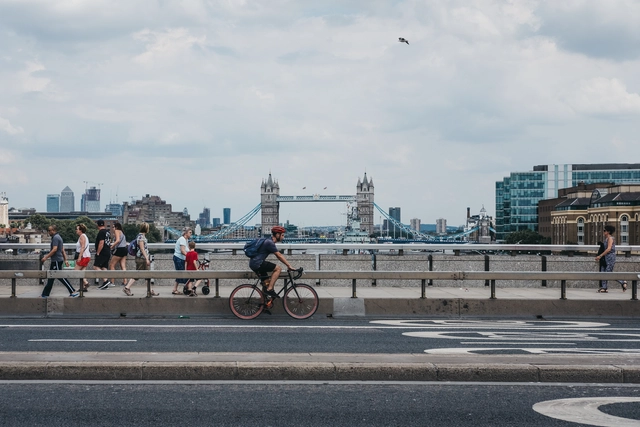
After Milan and Paris, London has announced its plans to transform large areas in the city, converting streets to car-free zones, as the coronavirus lockdown loosens up. Repurposing the city for people, London aims to emerge differently from the pandemic, supporting a low-carbon and sustainable recovery. Works have already started and are expected to be completed within six weeks.

AMO Partners Up with Volkswagen to Research the Future of Rural Mobility

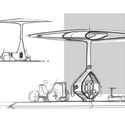
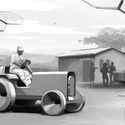
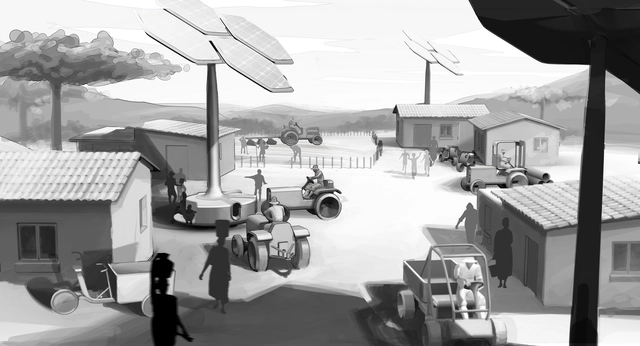
AMO, the think tank of the Office for Metropolitan Architecture (OMA), co-founded by Rem Koolhaas and led by Samir Bantal, has announced a recent research collaboration with Volkswagen. Focused on rural areas and the countryside, the partnership will look into the future of rural mobility, through a first conceptual study on electric tractors.

AMO Partners Up with Volkswagen to Research the Future of Rural Mobility - Image 1 of 4AMO Partners Up with Volkswagen to Research the Future of Rural Mobility - Image 2 of 4AMO Partners Up with Volkswagen to Research the Future of Rural Mobility - Image 3 of 4AMO Partners Up with Volkswagen to Research the Future of Rural Mobility - Image 4 of 4AMO Partners Up with Volkswagen to Research the Future of Rural Mobility - More Images+ 12