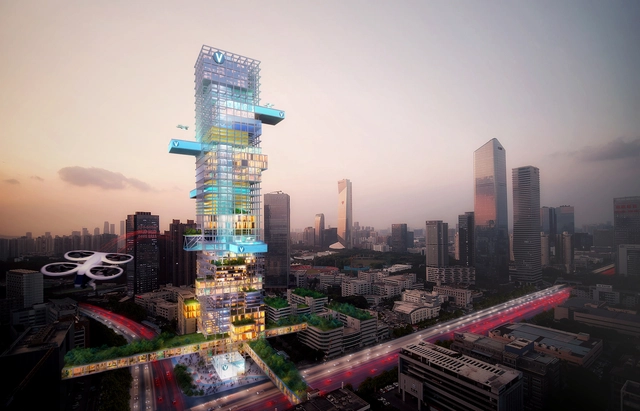
MVRDV in collaboration with Airbus, Bauhaus Luftfahrt, ETH Zurich, and Systra, is developing a plan for the future of Urban Air Mobility (UAM). The investigation tackles the integration of “flying vehicles” into our urban environments and envisions a comprehensive mobility concept.
BIG unveiled its latest intervention, the Toyota Woven City, the company's first venture in Japan. Nestled at the foothills of Mt. Fuji, the project, in collaboration with Toyota Motor Corporation, is the world’s first urban incubator pushing forward the development and progress of mobility.
City of the Future is a bi-weekly podcast from Sidewalk Labs that explores ideas and innovations that will transform cities.
In the third episode from season 2, hosts Eric Jaffe and Vanessa Quirk discuss the future of mobility in cities and share ideas that would make it way easier to get around without owning a car. In the podcast, author Horace Dediu talks about micro-mobility; TriMet's Bibiana McHugh tells the story behind GTFS and the OpenTrip Planner; MaaS Global CEO Sampo Hietanen explains the concept of Mobility as a Service (MaaS); and Sidewalk Labs' Corinna Li explains what Mobility on Demand could be like in the city of the future.
Accessibility and mobility. When perceived through the architectural lens, these terms often evoke a range capped by two extremes. On the one end, the flexibility of circulation systems; the universality of egress networks; and the technicalities of minimums and maximums. On the other end, a project’s capacity to support broad ranges of socioeconomic narratives; its malleability in the face of rapid fluctuations of program and function; and its reactivity in maintaining a productive role amidst the ebbs and flows of societal dynamics.
Advances in technology have changed the way people work and move around congested cities. Since free space in these urban areas has become scarce, people have shifted their perspective upwards and are now looking to the sky for new means of mobility, transporting their goods via cargo drones and flying ‘taxis’.
A public event at Harvard GSD examines the lower sky as a site of mobility
Increasing congestion and advances in autonomous technology are set to transform how we move around our cities. Many are now looking to the sky — the third dimension — as an expansive space for new kinds of mobility. Autonomous flying vehicles, such as cargo drones and flying taxis, have the capacity to disrupt how we move goods and passengers around urban space. Responding to these real-world changes, AERIAL FUTURES: The Third Dimension examines Urban Air Mobility (UAM), asking how scalable and on-demand UAM models could reduce road traffic, pollution, accidents and the strain on existing public transport networks. Within these opportunities are also challenges to overcome: noise, community acceptance, safety, cyber security and seamless integration with existing aircraft operations.
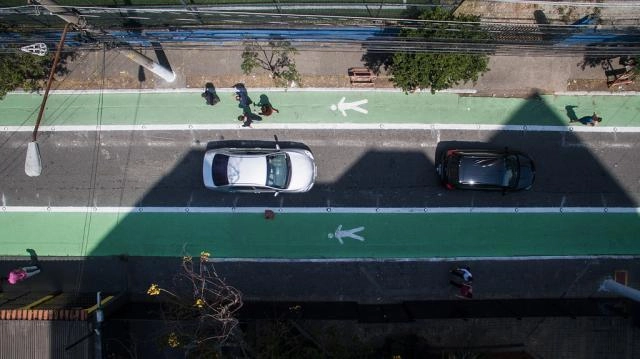
Rua Joel Carlos Borges, in Sao Paulo. Image: Pedro Mascaro/WRI Brasil
The implementation of a Complete Street is something to be celebrated. A Complete Street initiative is a clear indication that a city is striving for urban mobility and seeking a more democratic and safer use of space. Nevertheless, it is vital to measure the impact of these interventions when implementing future actions.
Joel Carlos Borges Street, the first Complete Street in São Paulo, underwent an evaluation two months after it was completed. The study revealed that 92% of its users approved of the project and believed that the changes were beneficial.
https://www.archdaily.com/909371/the-first-complete-street-in-sao-paulo-has-a-92-percent-approval-ratingWRI Brasil
Clay Cockrell, a psychotherapist from New York (where there are so many psychotherapists that they could have their own neighborhood) takes her sessions outdoors. These sessions specifically entail walking, in places like Central Park or Battery Park, or wherever else the client prefers to go, as the location of the consultation is totally flexible. Though her method and fees are relatively similar to any other psychotherapist, the one marked difference is the environment in which the doctor-patient interaction takes place. The typical sofa, leather chair, Persian rug and prop library are all replaced with the street´s pavement, gravel or the park where the patient chooses to go.
Walking is much more than covering a certain distance by foot. It is also one of the most basic tools to achieve what is commonly referred to as “clearing the mind.” Walking is a free resource, easily accessible and almost always available, and facilitates the return to a calmer world where the mind can make connections free of interferences with the body, and the body, in turn, can connect with the ground that it walks on and the environment it is surrounded by.
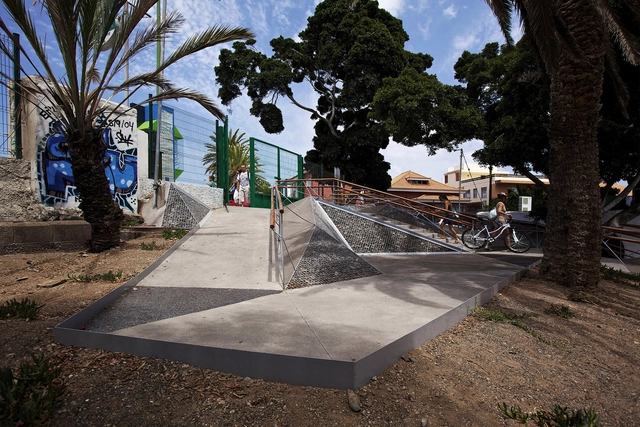
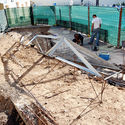
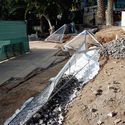
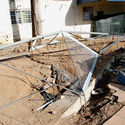
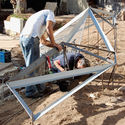
The geometric design from Lab for Planning and Architecture for the Municipality of Las Palmas de Gran Canaria in Spain is a morphological response that conditions Julio Navarro's and Roque Díaz's swimming pools allowing adequate movement of people with reduced mobility.
The project is a path of stairs and ramps with a triangular design that integrates with the surrounding landscape; the materiality and the constructive details are adapted to the different needs and natural conditions of the land.
This month, in the city of Xiamen, China's first elevated cycling path was inaugurated. At nearly 8 kilometers long, the structure is now the world's longest elevated cycling path.
The construction of this exclusive cycling path was promoted by the Xiamen City Government to provide inhabitants with a new sustainable transportation alternative that could significantly reduce vehicular traffic on the city's already congested highways.
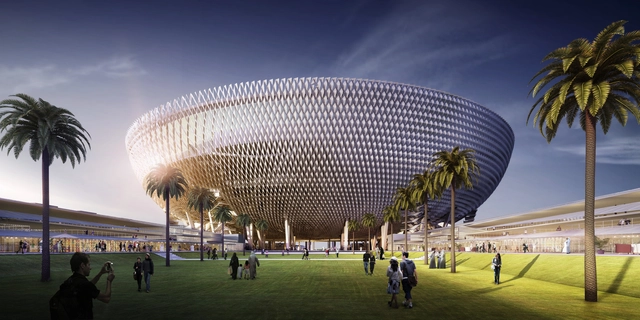
The Boston office of Perkins+Will has been selected to design a new mixed-use sports complex in Dubai. The development's centerpiece will be the 60,000-seat Mohammed bin Rashid Stadium, which when completed will become the largest stadium in the UAE. Other facilities will include training facilities, a practice pitch, warm-up areas, a 5,000 space car park, a museum, and a multi-purpose sports hall, as well as retail, restaurant and public plaza areas.
It seems to be part of the architect's daily life: hunching over drawing or model making, uncomfortably crouching to try get that perfect shot through your 1:100 model. Javier Cuñado, designer at Actiu, has tackled these perennial problems with Mobility, a desk that ascends or descends according to your needs. Available in an architect's range of colours - black, white or with an aluminium finish - this stylish desk is an investment your back will thank you for. Learn more in the video above and check out images after the break.
“A New Online Marketplace for Mobility,” an innovative proposal by city planner Philip Parsons and mobility expert Federico Parolotto that aims to optimize mobility in megacities, has been named the first participant in the Audi Urban Future Award 2014. Selected from a shortlist of three, the winners will now assemble a team of urban designers in order to pursue their visionary idea. Read more about their winning proposal, here.
“Mobility in cities is THE issue. We can try regulation like London or driverless cars. But what we really need is an open online marketplace, where the best alternatives win – for internationals or small entrepreneurs and of course for us,” stated Parsons and Parolotto.