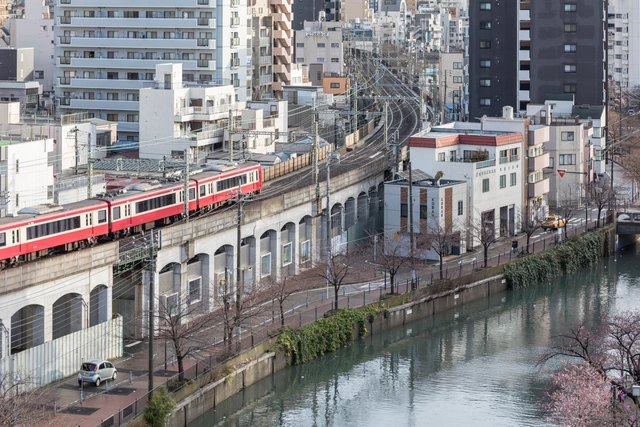
A +100 meter stretch of land beneath a train overpass in Koganecho, a district of Yokohama, Japan, underwent a progressive refurbishment in which seven different types of community space, each designed by a different architect, were built within a pre-set spatial grid. Historically there were many social issues in the area, largely in relation to its profitable but dangerous black market and red-light district. Once the illegal activity was eradicated in 2005, the underpass presented a great opportunity for social re-development, and the resultant project - the Koganecho Centre - emphasized an age-old Japanese cultural commitment, where what was once broken is used to make something new.
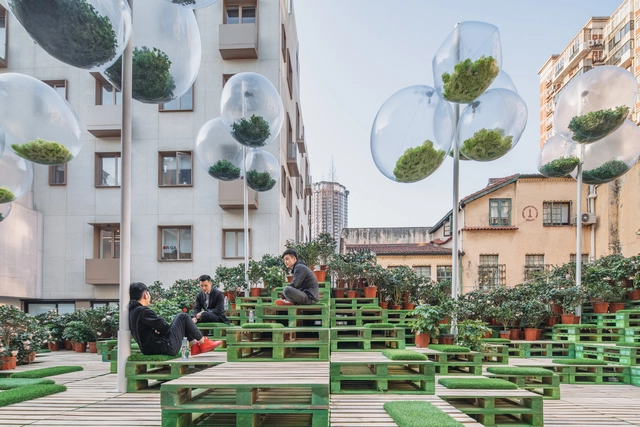
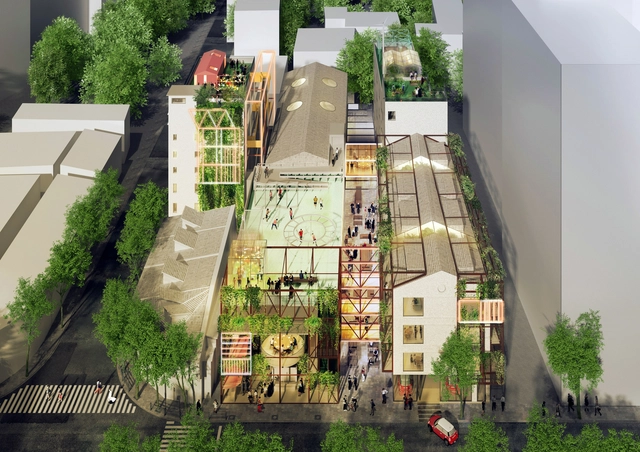
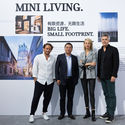
MINI LIVING has revealed plans for its first building-scale project: the transformation of a cluster of six buildings at a former paint factory in Shanghai into an mixed-use “urban hotspot” and co-living facility with space for living, working and socializing.
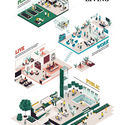
Partnering with Chinese project developer Nova Property Investment Co., MINI LIVING will fill the industrial shells of the existing buildings with a range of adaptable, program-rich spaces including apartments, rentable workspaces and shared-service areas that will enable “maximum personal flexibility and optimum use of space.”
Cities around the world are facing a shortage of attractive housing options that use resources in a responsible, environmentally-positive manner. Looking to solve this challenge, New York-based firm SO-IL has teamed up with car manufacturer MINI to create MINI LIVING – Breathe, a “ forward-thinking interpretation of resource-conscious, shared city living within a compact footprint.
Now on display at the Milan Salone del Mobile 2017, the prototype structure is constructed of a translucent fabric membrane stretched across a modular metal frame that rises vertically from a previously unused 50-square-meter urban plot. Six rooms and a roof garden provide the space for flexible programmatic arrangements, adhering to the MINI LIVING principles of “Creative use of space” and “Minimal footprint.”
In a recent article published by the Financial Times, architect and public speaker Michael Pawlyn delves into how biomimicry can be applied to architecture in order to solve design problems and create a more sustainable future. Even in very early examples, biomimicry has been critical in the development of architecture; for example when Filippo Brunelleschi studied eggshells to create a thinner and lighter dome for his cathedral in Florence. In a modern example, biomimicry has been utilized—through the examination of termite mounds—to create cool environments without air conditioning in warm climates, such as in Zimbabwe.
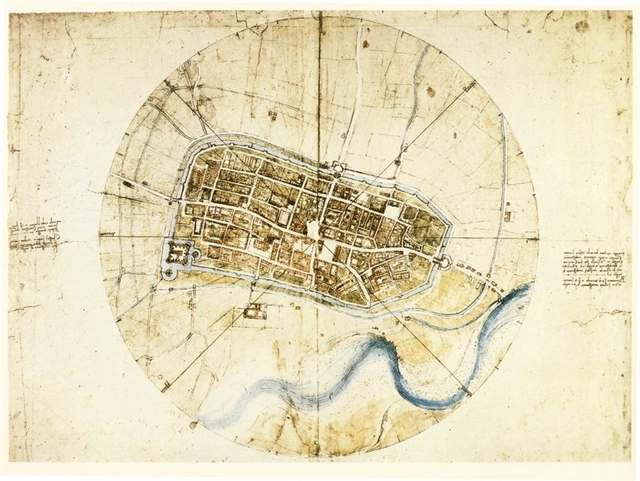
CityLab has recently published an article outlining Leonardo da Vinci's Town Plan of Imola, an "ichnographic" map from 1502, and the earliest of its kind in existence. Rather than utilizing elevations or oblique mapping methods like most other Renaissance mappers, da Vinci developed his own technique -- possibly using special hodometer and magnetic compass technologies that he invented -- to draw the city "as if viewed from an infinite number of viewpoints."
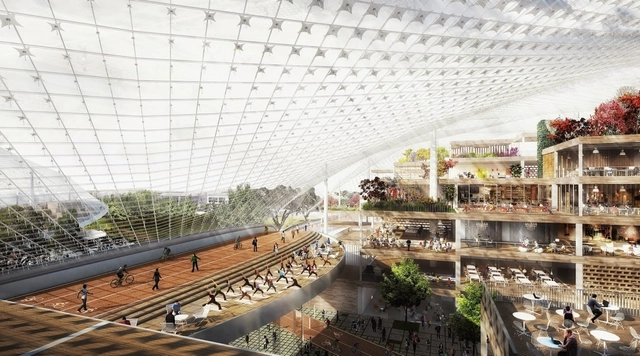
This past February, BIG and Heatherwick Studiounveiled their designs for Google’s new Mountain View Headquarters in California. The project, which will be built by robots, faced sizeable critique, as well as site complications—that have since been resolved—over the past year. Now, as a part of Esquire’s 2015 Breakouts, Bjarke Ingels—founder of BIG—is speaking out about how the firm won the Google bid, and why the headquarters could create a new mold for Silicon Valley urbanism. Ingels goes on to discuss other major BIG projects, like 2 World Trade Center, and an upcoming NFL stadium. Read the full Esquire interview, here.
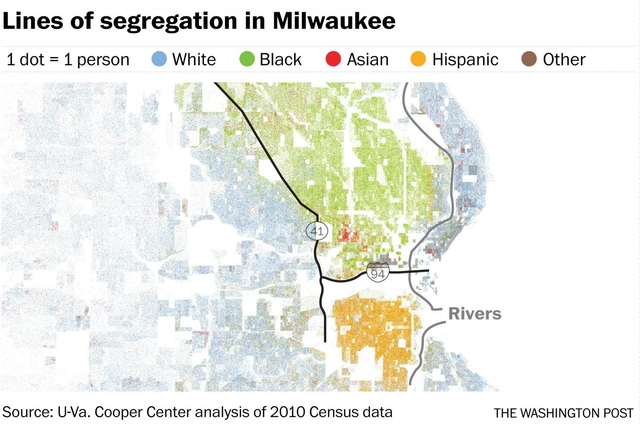
The Washington Post has published a piece looking at how infrastructure acts as a form of segregation in cities in the US. Using racial dot maps from the University of Virginia’s Weldon Cooper Center for Public Service, they show how highways, railroads, historically uncrossable avenues, and similar urban design decisions have a huge impact on the physical isolation of different races. These types of infrastructure were also found to reinforce boundaries set by natural patterns of topography and bodies of water. Cities found to have clear infrastructural segregation include Pittsburgh, Hartford, Detroit, Washington, D.C., and Milwaukee. Read the full article, here.
As an unavoidable art form, “architecture is one of humanity’s most visible and long-lasting forms of expression,” writes Complex Media. Within the past 150 years—the period of modern architecture—a distinct form of artistry has developed, significantly changing the way we look at the urban environments around us. To highlight some of the key figures in architecture over the past 150 years, Complex Media has created a list of “25 Architects You Should Know,” covering a range of icons including Zaha Hadid, Ieoh Ming Pei, Philip Johnson, Oscar Neimeyer, SOM, Daniel Libeskind, and more. Read the full list to learn more about each iconic architect, here.
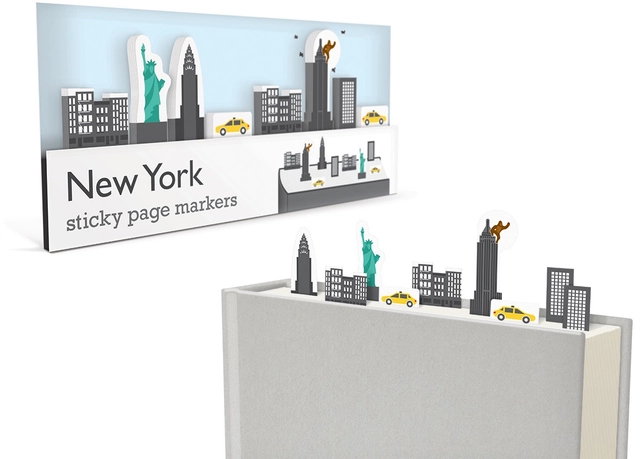
Building a city has never been so easy. With Duncan Shotton Design Studio's Sticky Page Markers you can create your own urban landscape, while marking the pages of your books, catalogues, or notes.
The paper post-it sets feature landmarks like the Empire State Building (complete with King Kong), St. Paul’s Cathedral, Skytree, and Peak Tower to create a micro landscape of either New York, London, Tokyo, or Hong Kong. City packs can also be combined with Forest, Desert, Ocean, or Polar sets, among others, to add a natural touch to some of the world’s best known urban skylines. Explore more Sticky Page Markers here.
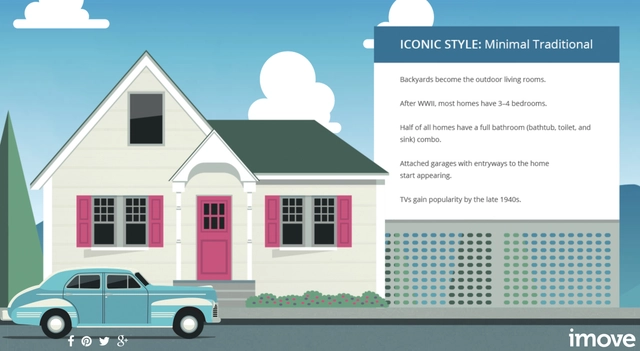
Screenshot from "115 Years of American Homes Scrolling Parallax Infographic"
Moving specialists iMove have created 115 Years of American Homes, a Scrolling Parallax Infographic in which viewers can “drive” through a neighborhood of single-family homes that reflect the style of their respective decades. For each home, graphics detail “tell-tale architectural features, design trends, average home price, and the historical and cultural context” of each decade from the 1900s through the present. Test out the interactive timeline here, and let us know: which decade of residential architecture is your favorite?
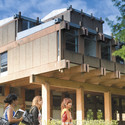
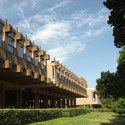
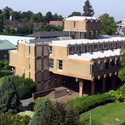
Hawkins\Brown has been chosen to design the new School of Architecture for the University of Reading in Reading, Berkshire, in the United Kingdom. The new School “will be housed in a retrofitted 1970’s concrete brutalist building originally designed by Howell, Killick, Partridge & Amis,” which is currently the University’s School of Construction Management and Engineering. Brutalist buildings, like the Prentice Women’s Hospital and the Preston Bus Station are continuously at risk of being demolished, which makes this retrofit all the more valuable. While the University seeks to modernize the building and improve efficiency, they also plan to respect the original design. Construction is set to begin in January 2017 and wrap up by December 2018. Learn more about the project here.
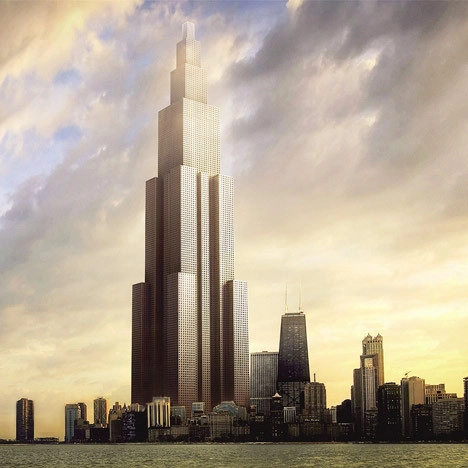
BBC News has published a profile on the new projects and ambitions of Broad Sustainable Building’s Zhang Yue. A few months ago, Yue became known as the man behind Mini Sky City, a 57-story building that went up in 19 days. Now, Yue wants to further his idea of modular construction to build Sky City, which will be the world’s tallest skyscraper, stretching ten meters taller than the 828 meter-tall Burj Khalifa in Dubai, and take only seven months to complete. In addition to being constructed from prefabricated parts, Sky City will be sustainable and built from steel to help prevent earthquake damage. Construction is expected to begin on the skyscraper in early 2016. Read more about Yue, his company, and their projects in the BBC News article.
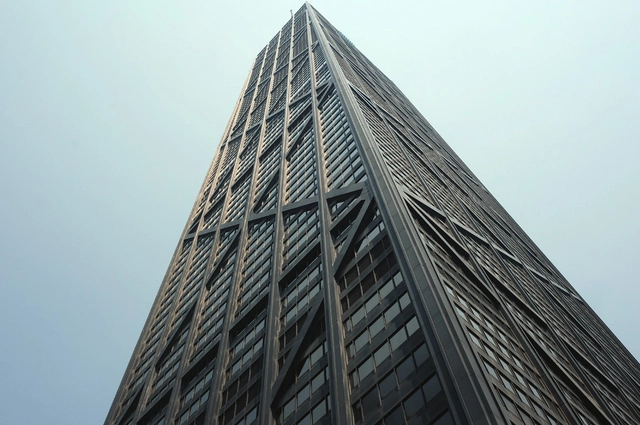
Nothing is more iconic of progress than the skyscraper - but as developers continue to build up, it begs the question: what effect does higher living have on our mental health? Taking opinions from authors, architects, engineers and residences of high-rise apartments, Fast Company reports on the pros and cons of the vertical obsession of the 21st century. Comparing the liberation offered by the Hancock building and the failure of the Pruitt-Igoe project, the article looks at how living at high altitudes may change the way that we socialize and perceive space. Read the full article, “The Psychology of Skyscrapers,” and decide for yourself whether this trend of growing buildings is a good or bad thing.
Last week, the Knight Foundation announced the 126 finalists for its Knight Cities Challenge. This Challenge was an open call for ideas on how to invigorate the 26 US communities that receive funding from the Foundation. Over 7,000 submissions were received, with ideas ranging from the installation of street arcades to the transformation of vacant city lots. The Knight Foundation chose submissions from each of the 26 communities, selecting those that best encouraged community engagement, provided economic opportunity, and made the city a more attractive place to be. See the full list of finalists, here!
Has the concept of the smart city "crystallised into an image of the city as a vast, efficient robot?" In the age of the "Internet of Things," where does the citizen fit in? In this article from The Guardian, journalist Steven Poole takes a critical stance against the purported utopian ideals of smart cities. Poole delves into the nuances of who the smart city is truly meant to serve, questions the debate over whether it should develop along a top-down or bottom-up approach, and poses the provocative thought: "a vast network of sensors amounting to millions of electronic ears, eyes and noses - also potentially enable(s) the future city to be a vast arena of perfect and permanent surveillance by whomever has access to the data feeds." Questions of control, virtual reality, free-will, and hierarchies of power, Poole asserts are critical to the discussion of technology's powerful role in the future. Read the full article to learn more about the possible potential of the smart city to "destroy democracy," here.
Award-winning architect, writer, and professor David Heymann has just released his first work of fiction: My Beautiful City Austin. Composed of seven humorous tales, the stories document the misadventures of a young architect in Austin and his accidental involvement in the slow decimation of his city’s charms. Unable to deter his clients from their poor choices, the well-intentioned designer finds himself complicit. Using fiction, Heymann paints a sharply dynamic picture of the architectural consequences of Austin’s rapid growth and “rediscovered allure.” Check out the book, here.










.jpg?1491327845&format=webp&width=640&height=580)
.jpg?1491327852 "© Laurian Ghinitoiu")
.jpg?1491327860 "© Laurian Ghinitoiu")
.jpg?1491327869 "© Laurian Ghinitoiu")
.jpg?1491327876 "© Laurian Ghinitoiu")
.jpg?1491327845)