1. ArchDaily
  2. Mountain View

Mountain View: The Latest Architecture and News

Bofill Taller de Arquitectura Unveils Landscape-Inspired Resort in Dhërmi, Albania

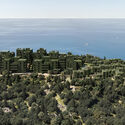
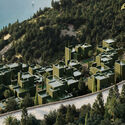
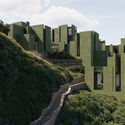
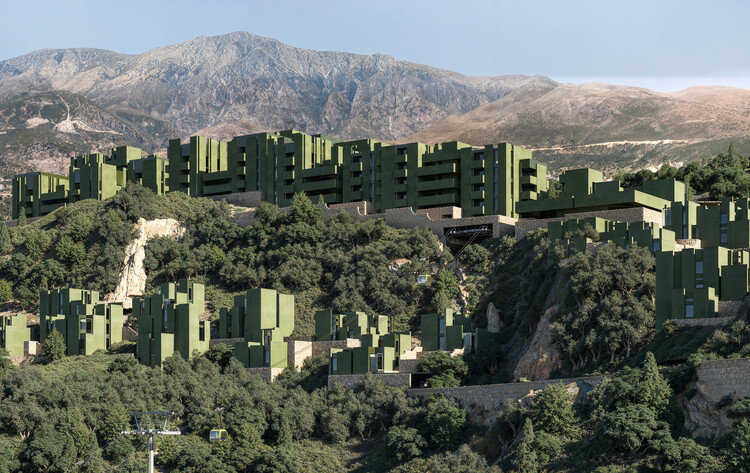
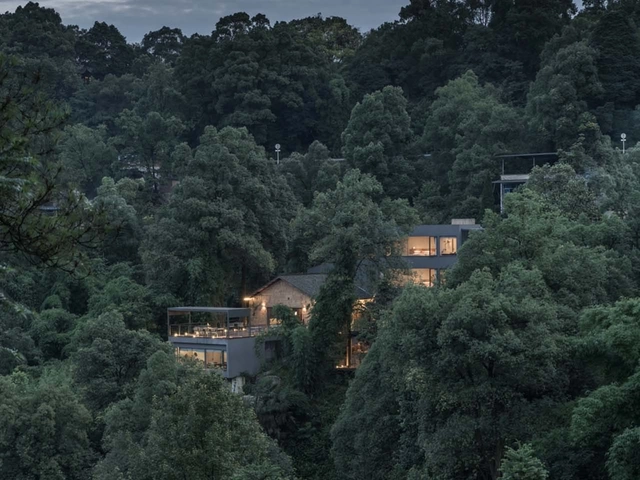
Bofill Taller de Arquitectura has revealed the final images of a new resort in Dhërmi, Albania, currently under construction. The project was first announced in 2024, in the context of the numerous developments proposed across the country over the past decade. This time, the project is neither a skyscraper nor an institutional building in Tirana, but a resort set along the mountainous coastline in the south of the country. The design responds to the existing landscape conditions, a coastal, mountainous area surrounded by forests that cover a significant portion of Albania's land surface. The project aims to preserve the character of the forest while engaging with the rugged terrain, jagged rocks, steep mountainsides, and dense pine and cypress forests.

Bofill Taller de Arquitectura Unveils Landscape-Inspired Resort in Dhërmi, Albania - Image 1 of 4Bofill Taller de Arquitectura Unveils Landscape-Inspired Resort in Dhërmi, Albania - Image 2 of 4Bofill Taller de Arquitectura Unveils Landscape-Inspired Resort in Dhërmi, Albania - Image 3 of 4Bofill Taller de Arquitectura Unveils Landscape-Inspired Resort in Dhërmi, Albania - Image 4 of 4Bofill Taller de Arquitectura Unveils Landscape-Inspired Resort in Dhërmi, Albania - More Images+ 20

Gonio Yachts & Marina Masterplan by Spectrum Architecture to Transform Georgia’s Black Sea Coast

 | Sponsored Content

Spectrum Architecture, in collaboration with SOG and F&M, introduces the masterplan for Gonio Yachts and Marina—a significant waterfront development on the Black Sea coast designed to provide high-end residential and hospitality infrastructure for over 30,000 people.

The project is part of EMAAR's substantial investment in Georgian real estate under the Eagle Hills brand, which plans to develop two megaprojects in Tbilisi and Batumi. The total investment exceeds $6.5 billion and aims to attract $10 billion in foreign direct investment, generate 30,000 jobs across multiple sectors, and host 350,000 visitors annually.

Architecture Above: 25 Observation Towers Around the World

Subscriber Access | 

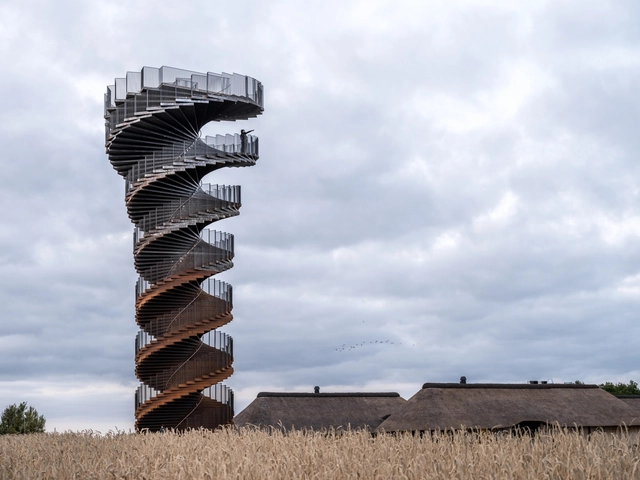
The desire to see the world from above transcends cultures and time — an almost instinctive impulse to seek new horizons, gain perspective, and momentarily step outside everyday life. Observation towers embody that desire: built in forests, mountains, urban parks, or coastal landscapes, they invite us to pause, look closely, and discover the surroundings in a quiet or playful way. These structures offer more than just views; they offer experiences. As we climb their steps or ramps, our bodies take part in a ritual of transition — from ground to sky.

Architecture Above: 25 Observation Towers Around the World - Image 1 of 4Architecture Above: 25 Observation Towers Around the World - Image 2 of 4Architecture Above: 25 Observation Towers Around the World - Image 3 of 4Architecture Above: 25 Observation Towers Around the World - Image 4 of 4Architecture Above: 25 Observation Towers Around the World - More Images+ 24

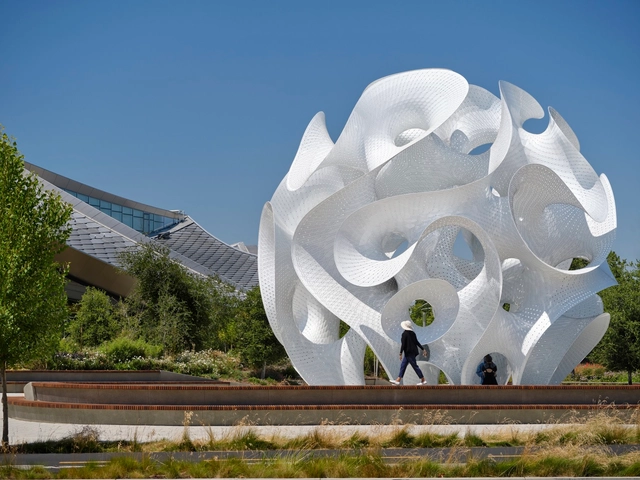
The Orb / MARC FORNES / THEVERYMANY

The Orb / MARC FORNES / THEVERYMANY - Exterior Photography, Installations & StructuresThe Orb / MARC FORNES / THEVERYMANY - Drawings, Installations & StructuresThe Orb / MARC FORNES / THEVERYMANY - Installations & StructuresThe Orb / MARC FORNES / THEVERYMANY - Exterior Photography, Installations & StructuresThe Orb / MARC FORNES / THEVERYMANY - More Images+ 20

Mid-Century Modernism and East Coast Ruralism: A Study of Adaptive Design

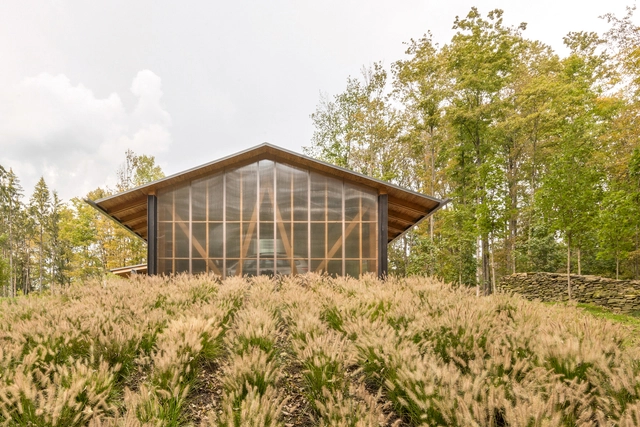
Mid-century modernism, celebrated for its simplicity, functionality, and direct connection with nature, is often associated with urban and suburban environments. However, its principles found fertile ground in the rural landscapes of the United States East Coast. The post-war architectural movement, characterized by innovative materials, clean lines, and harmony with natural surroundings, reveals its adaptability in the hands of architects and craftsmen working in rural regions of the East Coast. Although associated with metropolitan areas, its adoption in rural settings reveals a compelling story of cultural and environmental adaptation.

Mid-Century Modernism and East Coast Ruralism: A Study of Adaptive Design - Image 1 of 4Mid-Century Modernism and East Coast Ruralism: A Study of Adaptive Design - Image 2 of 4Mid-Century Modernism and East Coast Ruralism: A Study of Adaptive Design - Image 3 of 4Mid-Century Modernism and East Coast Ruralism: A Study of Adaptive Design - Image 4 of 4Mid-Century Modernism and East Coast Ruralism: A Study of Adaptive Design - More Images+ 11

On Mountains: Architectural Designs Adjusted for High-Altitude Climates

Mountainous and high-altitude regions are considered to be among the most fragile ecosystems on Earth. From melting glaciers to land erosion, these environments face mounting threats from climate change, making it imperative to reimagine how architecture and its supporting infrastructure are designed for such places.

The communities settled in mountain ecosystems are especially vulnerable to the impacts of climate change because of their proximity to early symptoms of changing environments and lack of access to adaptive resources and materials. Beyond all poetic aspirations of building and living in mountain environments, it is an urgent challenge to design solutions that properly resist hostile climatic conditions and promote sustainable and safe human settlements in mountainous regions.

On Mountains: Architectural Designs Adjusted for High-Altitude Climates - Image 1 of 4On Mountains: Architectural Designs Adjusted for High-Altitude Climates - Image 2 of 4On Mountains: Architectural Designs Adjusted for High-Altitude Climates - Image 3 of 4On Mountains: Architectural Designs Adjusted for High-Altitude Climates - Image 4 of 4On Mountains: Architectural Designs Adjusted for High-Altitude Climates - More Images+ 15

The Beaten Path: Connecting Towns and Identity through Appalachian Trail Networks

Subscriber Access | 

Every year, over a thousand people complete the 2,192-mile (3528-kilometer) Appalachian Trail between Springer Mountain in Georgia and Mount Katahdin in Maine. Millions more follow the trail for a shorter stretch by spending time at the countless overlooks, walking along the wooded ridges, or meandering through the small town centers, making this network one of the world's most visited and widely recognized trail corridors. However, the proposal for this expansive trail corridor, originally entered in a 1921 Journal of the American Institute of Architects article by Benton MacKaye, was far from a mere recreational outdoor amenity. This "project in regional planning" was a radical critique of the industrializing modernity that sharpened the divide between expanding cities of the Eastern coast and waning towns of the Appalachian mountains.

The Beaten Path: Connecting Towns and Identity through Appalachian Trail Networks - Image 1 of 4The Beaten Path: Connecting Towns and Identity through Appalachian Trail Networks - Image 2 of 4The Beaten Path: Connecting Towns and Identity through Appalachian Trail Networks - Image 3 of 4The Beaten Path: Connecting Towns and Identity through Appalachian Trail Networks - Image 4 of 4The Beaten Path: Connecting Towns and Identity through Appalachian Trail Networks - More Images+ 26

Snøhetta Reveals Design for a Mountain Refuge in France’s Pyrenees National Park

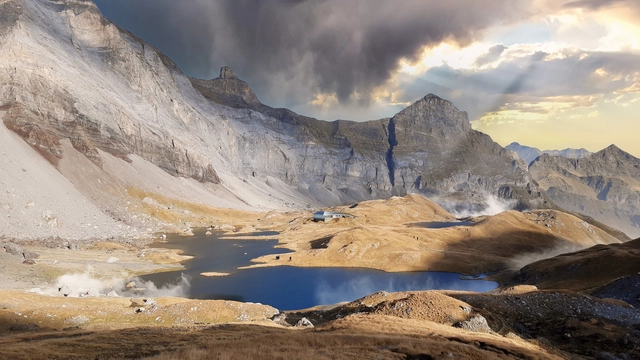
Snøhetta has announced a project to rebuild the Refuge de Barroude, a mountain refuge located in a UNESCO World Heritage site in the Pyrenees Mountain range of France. The old building, destroyed in an accidental fire ten years ago, is set to be revived as a stop-off point for hikers on the Haute Route des Pyrénées and as a support center for the staff of the National Park. The next phase of the project is due to begin in 2025.

Snøhetta Reveals Design for a Mountain Refuge in France’s Pyrenees National Park - Image 1 of 4Snøhetta Reveals Design for a Mountain Refuge in France’s Pyrenees National Park - Image 2 of 4Snøhetta Reveals Design for a Mountain Refuge in France’s Pyrenees National Park - Image 3 of 4Snøhetta Reveals Design for a Mountain Refuge in France’s Pyrenees National Park - Image 4 of 4Snøhetta Reveals Design for a Mountain Refuge in France’s Pyrenees National Park - More Images+ 6

BIOSIS Reveals Design for Minimal-Impact Housing in Nuuk, Greenland

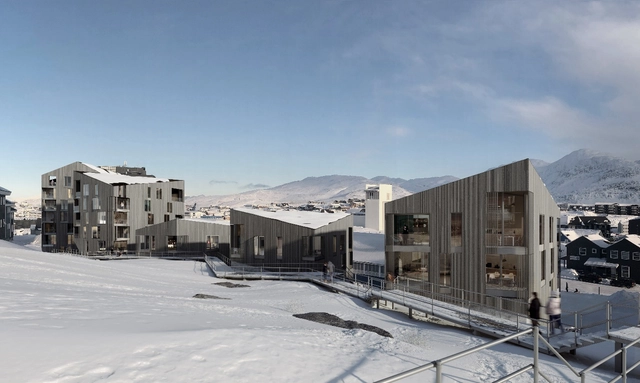
Copenhagen-based multidisciplinary studio BIOSIS has revealed the design for a new housing complex in Nuuk, Greenland. The project aims to create a minimal-impact and climate-driven design by integrating the intervention in the area's natural terrain and adapting the solutions to the local conditions. The Qullilerfik housing project consists of five prism-shaped residences created to complement the sloped site, initially considered unsuitable.

BIOSIS Reveals Design for Minimal-Impact Housing in Nuuk, Greenland - Image 1 of 4BIOSIS Reveals Design for Minimal-Impact Housing in Nuuk, Greenland - Image 2 of 4BIOSIS Reveals Design for Minimal-Impact Housing in Nuuk, Greenland - Image 3 of 4BIOSIS Reveals Design for Minimal-Impact Housing in Nuuk, Greenland - Image 4 of 4BIOSIS Reveals Design for Minimal-Impact Housing in Nuuk, Greenland - More Images+ 1

Zaha Hadid Architects Unveils Design for a Crystal-like Skyscraper for NEOM’s Trojena Region

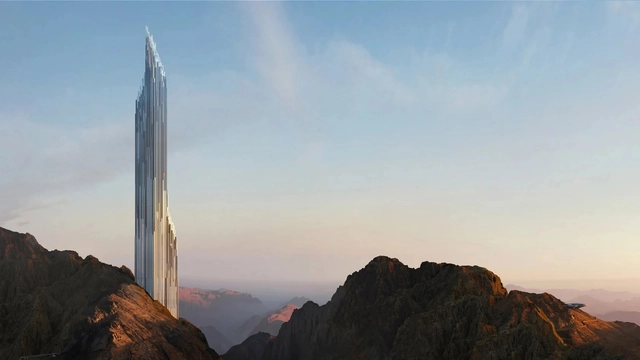
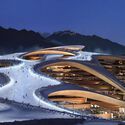
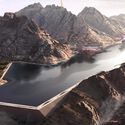
Zaha Hadid Architects has unveiled plans for a striking 330-meter-tall skyscraper within the Trojena ski resort, situated in the Neom development in Saudi Arabia. The design was first presented at the Cityscape Conference in Riyadh as part of an exhibition focused on the Neom project. The new crystal-like skyscraper will be located on a mountain overlooking a central artificial lake, as it is planned to become an integral element of the Trojena, a region allegedly master-planned by LAVA architects. Zaha Hadid Architects have also revealed the design of a second structure within Trojena, a lookout pavilion located next to the skyscraper.

Zaha Hadid Architects Unveils Design for a Crystal-like Skyscraper for NEOM’s Trojena Region - Image 1 of 4Zaha Hadid Architects Unveils Design for a Crystal-like Skyscraper for NEOM’s Trojena Region - Image 2 of 4Zaha Hadid Architects Unveils Design for a Crystal-like Skyscraper for NEOM’s Trojena Region - Image 3 of 4Zaha Hadid Architects Unveils Design for a Crystal-like Skyscraper for NEOM’s Trojena Region - Image 4 of 4Zaha Hadid Architects Unveils Design for a Crystal-like Skyscraper for NEOM’s Trojena Region - More Images+ 3

Steven Holl Architects Unveils New Masterplan in Abruzzo, Italy

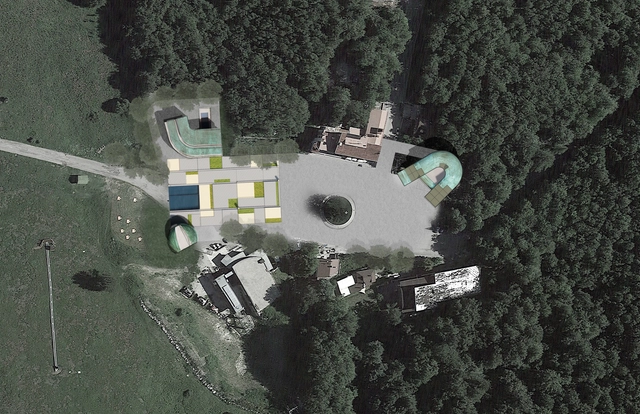
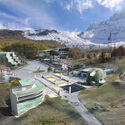
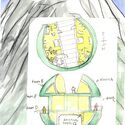
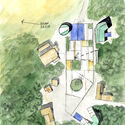
Steven Holl Architects has revealed a plan for the Gran Sasso area in Abruzzo, Italy, specifically in Prati di Tivo. The project aims to develop an area dedicated to tourists and mountaineers, complete with accommodation spaces, pools, spas, a restaurant, and a public plaza with views toward the mountain range. The designs and models of the project, along with the initial watercolor sketches, are presented at the Antonia Jannone Disegni di Architettura exhibition titled "Steven Holl: Half Earth," which will be available for viewing from May 26 to July 14.

Steven Holl Architects Unveils New Masterplan in Abruzzo, Italy - Image 1 of 4Steven Holl Architects Unveils New Masterplan in Abruzzo, Italy - Image 2 of 4Steven Holl Architects Unveils New Masterplan in Abruzzo, Italy - Image 3 of 4Steven Holl Architects Unveils New Masterplan in Abruzzo, Italy - Image 4 of 4Steven Holl Architects Unveils New Masterplan in Abruzzo, Italy - More Images

Peter Pichler Architecture Unveils the Design of a Family of Ski Stations in the Italian Alps

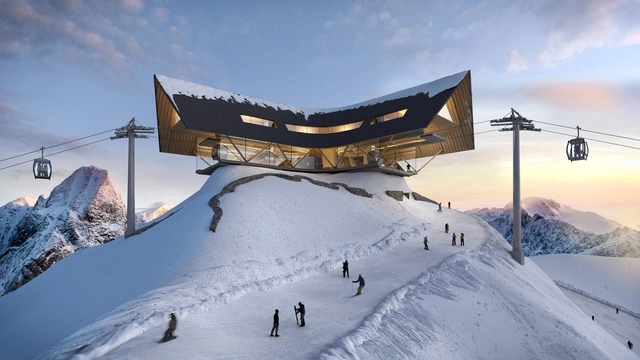
Peter Pichler Architecture has been invited to participate in a private competition for the design of a set of Ski Facilities in Ponte di Legno, Italy. The project includes the addition of three new cableway lines for the ski resort, each marked by an architectural intervention designed to provide shelter and dining options. The buildings also include exhibition spaces dedicated to the preservation of the cultural, natural, and historical heritage of the site.

Aedas and GDAD Unveil Design for New Twin Towers and Mixed-Use Complex in Guangzhou, China

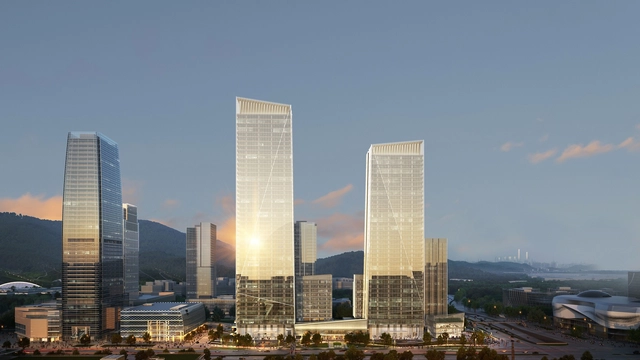
Aedas Global, in collaboration with GDAD, revealed the design of a 230 meters tall mixed-use complex comprising of two twin towers and a plaza. The development, located at the base of the Baiyun Mountain range in Guangzhou, China, contains industrial, commercial, and publicly available areas while also including large urban green spaces and panoramic views of the mountains. The massing of the project is inspired and informed by the local topography, with sight-seeing corridors opening up toward the surrounding scenery.

Aedas and GDAD Unveil Design for New Twin Towers and Mixed-Use Complex in Guangzhou, China - Image 1 of 4Aedas and GDAD Unveil Design for New Twin Towers and Mixed-Use Complex in Guangzhou, China - Image 2 of 4Aedas and GDAD Unveil Design for New Twin Towers and Mixed-Use Complex in Guangzhou, China - Image 3 of 4Aedas and GDAD Unveil Design for New Twin Towers and Mixed-Use Complex in Guangzhou, China - Image 4 of 4Aedas and GDAD Unveil Design for New Twin Towers and Mixed-Use Complex in Guangzhou, China - More Images+ 11

Google Bay View / BIG + Heatherwick Studio

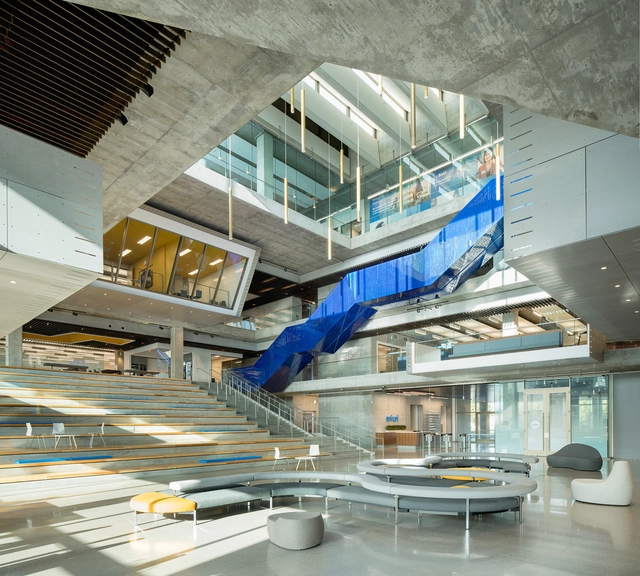
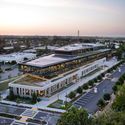
Google Bay View / BIG + Heatherwick Studio - Exterior Photography, Research Center, FacadeGoogle Bay View / BIG + Heatherwick Studio - Exterior Photography, Research Center, Facade, CityscapeGoogle Bay View / BIG + Heatherwick Studio - Interior Photography, Research Center, Lighting, ChairGoogle Bay View / BIG + Heatherwick Studio - Interior Photography, Research Center, Beam, Facade, HandrailGoogle Bay View / BIG + Heatherwick Studio - More Images+ 7

Escaping the Urban Jungle: 10 Exemplary Design of Guesthouses in China

A border city can be classified as an urban agglomeration close to the boundary of two countries, states, or regions. Nowadays, as our cities are rapidly expanding and our transportation modes continually upgrading, the boundary between cities and rural areas has been constantly pushed and redefined.

New Renderings Revealed of Google's Mountain View Campus

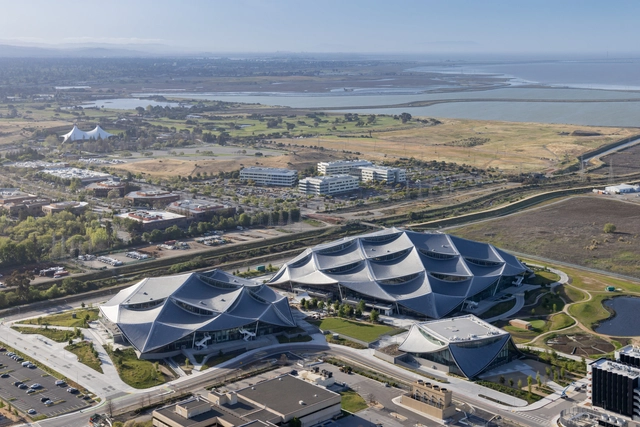
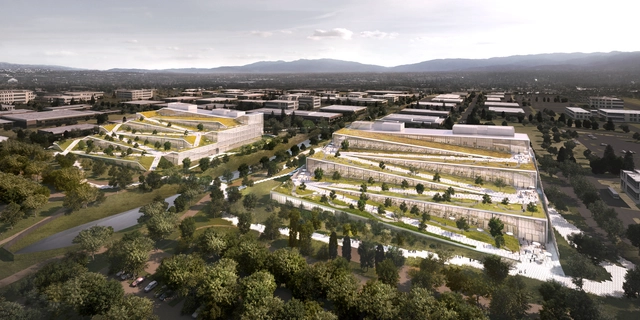
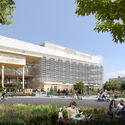
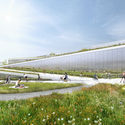
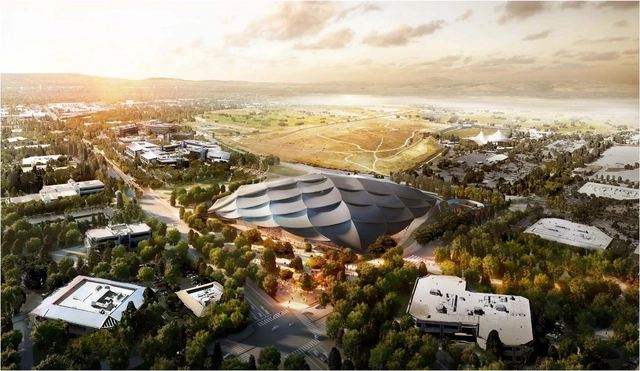
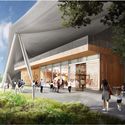
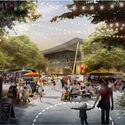
New images of BIG and Heatherwick Studio’s proposed Google campus in Mountain View California have been revealed in planning documents presented to the city last month. Initially announced in 2015, the project has seen several revisions after first running into difficulty with the city planning board, and then after swapping sites with fellow tech giant LinkedIn. The latest iteration, the 18.6-acre Charleston East campus, features a 2-story, 595,000-square-foot building topped with a flowing, tent-like canopy.

New Renderings Revealed of Google's Mountain View Campus - Image 1 of 4New Renderings Revealed of Google's Mountain View Campus - Image 2 of 4New Renderings Revealed of Google's Mountain View Campus - Image 3 of 4New Renderings Revealed of Google's Mountain View Campus - Image 4 of 4New Renderings Revealed of Google's Mountain View Campus - More Images+ 9

See BIG & Heatherwick's Design for Google's California Headquarters

Images have been unveiled of BIG and Heatherwick Studio’s design for Google’s Mountain View headquarters. The plan, submitted to city council today, proposes to redevelop and expand the company’s home office with a series of lightweight canopy-like structures organized within a flexible landscape of bicycle paths and commercial opportunities for local companies.

"It's the first time we'll design and build offices from scratch and we hope these plans by Bjarke Ingels at BIG and Thomas Heatherwick at Heatherwick Studio will lead to a better way of working,” says Google. “The idea is simple. Instead of constructing immoveable concrete buildings, we’ll create lightweight block-like structures which can be moved around easily as we invest in new product areas… Large translucent canopies will cover each site, controlling the climate inside yet letting in light and air. With trees, landscaping, cafes, and bike paths weaving through these structures, we aim to blur the distinction between our buildings and nature.”

A video about the design and a statement from Bjarke Ingels and Thomas Heatherwick, after the break.

See BIG & Heatherwick's Design for Google's California Headquarters - Image 1 of 4See BIG & Heatherwick's Design for Google's California Headquarters - Image 2 of 4See BIG & Heatherwick's Design for Google's California Headquarters - Image 3 of 4See BIG & Heatherwick's Design for Google's California Headquarters - Image 4 of 4See BIG & Heatherwick's Design for Google's California Headquarters - More Images+ 5

Google Taps BIG and Heatherwick to Design New California Headquarters

The City of Mountain View is expected to receive a massive proposal from the city’s largest employer; reports confirm that Google has enlisted Bjarke Ingels Group (BIG) and Heatherwick Studio to design its new California headquarters. With the few details released, it is unclear if the proposal plans to update the company’s existing 3.1 million-square-foot Googleplex or replace it. However, as the New York Times reports, the proposal will boast a “series of canopy-like buildings” on a campus organized around bicycle and pedestrian paths.

This means Google is now joining a list of powerful corporations who have enlisted world-renowned architects to design their California headquarters, including Apple’s Foster + Partners-designed “spaceship” and Facebook’s Gehry-Esque 10-acre “room.” If approved, Google will shift its focus on new housing, ensuring there is enough living space within Mountain View to accommodate its growing workforce (a topic of concern for many residents).

The proposal will be submitted to the city this Friday. Take a look at the company’s existing Mountain View headquarters, after the break.