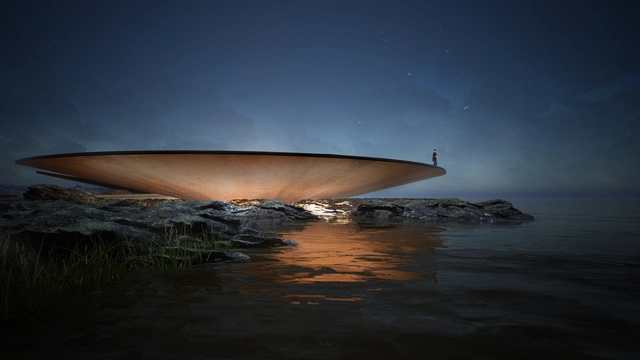
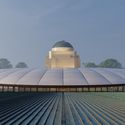
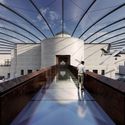
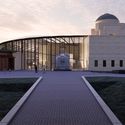
Cavatina Concert Hall by Cavatina. Image Courtesy of Cavatina
The diversity of civic spaces in cities and rural areas have continuously showcased how strongly they explore human connections regardless of program, construction technique, scale, and geography. Ranging from educational facilities and museums, to art centers, libraries, religious halls, and memorials, these projects have enriched urban fabrics with cultural programs that have provided members of the community with places to learn, entertain, create, and unwind.
This week’s curated selection of Best Unbuilt Architecture highlights cultural projects submitted by the ArchDaily community from across the world. From a water management system that targets the natural crises in Egypt to a structurally intertwined memorial in the United States, this round up of unbuilt projects showcases how architects responded to the contextual and spatial needs of their projects through innovative and local solutions. The article also includes projects from Italy, China, Uruguay, Poland, Iran, Hungary, Russia, and the United Kingdom.
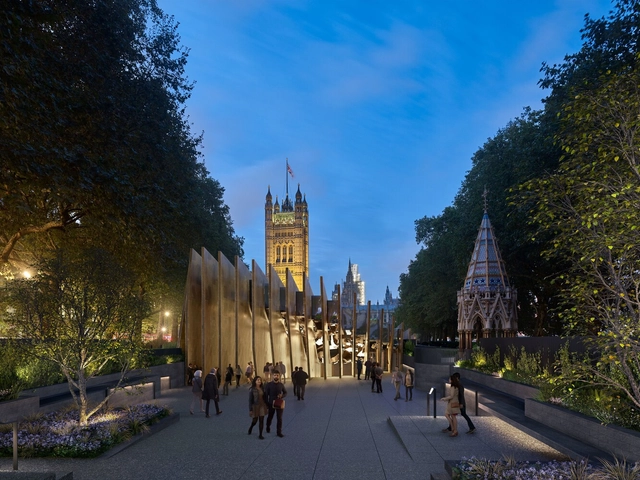
David Adjaye was announced as the lead designer of the Barbados Heritage District, dedicated to documenting and recounting the impact of slavery on Barbados as well as cultures and nations in the Western hemisphere. The project will comprise a memorial, a museum and a research institute, the latter in charge of presenting Barbados’s pivotal role within the slave trade history as the place of departure for millions of enslaved Africans towards the Americas. The Heritage District, whose announcement closely follows Barbados’ transition to a parliamentary republic, marks a cornerstone in the development of the country’s identity more than five decades after declaring its independence from Britain.
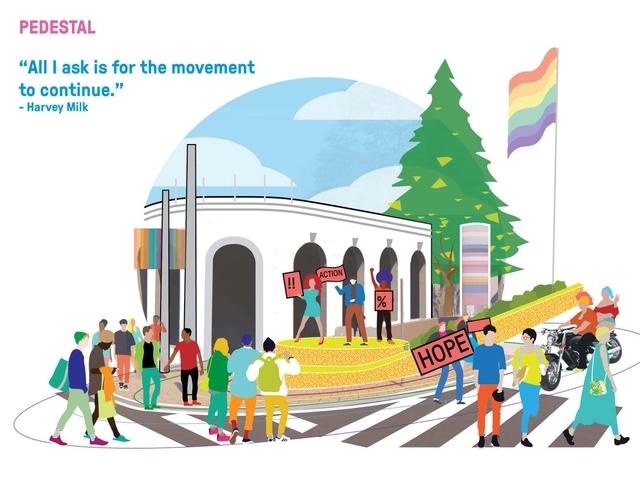
Courtesy of Friends of Harvey Milk Plaza & SWA Group
Matt Hickman reports on San Francisco's latest inclusive memorial, for the Architect's Newspaper, designed by SWA, a firm that operates two Bay Area studios (San Francisco and Sausalito) as well as offices in Texas, Southern California, New York City, and Shanghai. Selected by FHMP from a shortlist of four firms that submitted proposals, out of 17 invited offices, SWA shared their winning conceptual design for the memorial at Harvey Milk Plaza.
Going out twice per month, our curated selection of Best Unbuilt Architecture submitted by our readers highlights inventive conceptual approaches and designs. Showcasing projects from all over the world, this article puts together several programs, from houses to master plans. Moreover, it presents winning proposals from international competitions, buildings in progress, and creative concepts.
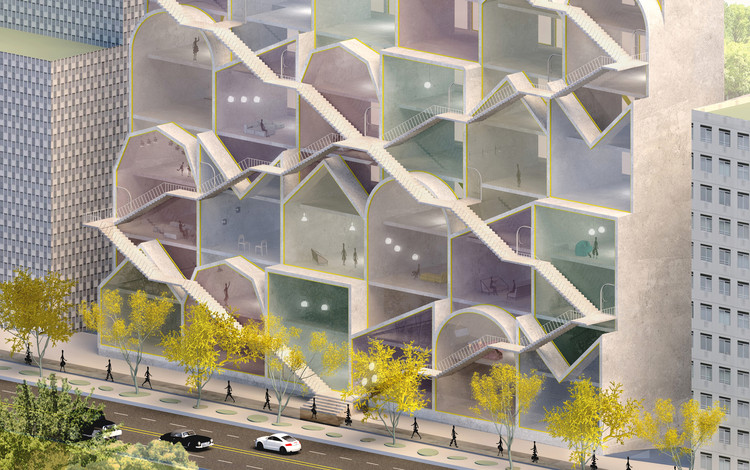
In the housing category, the roundup features an underground bunker-like house plan in Ukraine, a suspended glass structure cabin in Portugal, a complex of residential units in France, and a site-less, style-inclusive reinterpretation of the vertical housing block. In addition, a playful commercial building in Iran, a WWI memorial in Serbia, and an extension for the Glasgow School of Art join the selection, with their imaginative architecture and out of the box ideas.
Courtesy of Liu Yihuan, Zhang Xingwang, & Lin Zichun
Liu Yihuan, Zhang Xingwang and Lin Zichun from the Harbin Institute of Technology in Shenzhen have won the Covid-19 Community Memorial Design Competition. DesignClass hosted the competition to create a local memorial that honors the individuals and families affected by the virus. 145 designers entered from dozens of countries.
Adjaye Associates has recently designed a project in Niamey, Niger to honor all those that lost their lives in the fight against terrorism on the country’s southern and western borders. The Martyrs Memorial is in fact “tangible documentation of the continuous fight against extremist entities and the soldiers who have fallen in the process”.
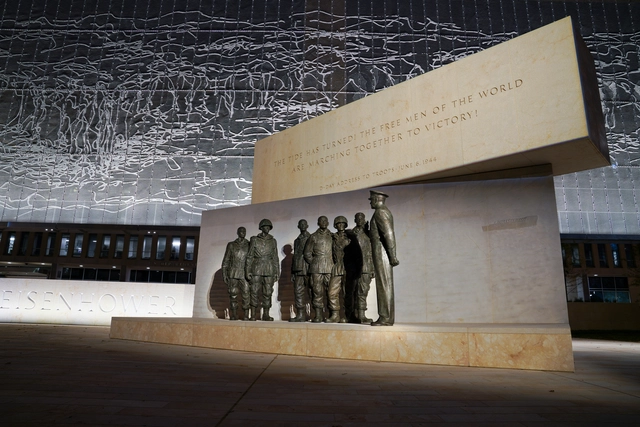
Courtesy of Dwight D. Eisenhower Memorial Commission
Over two decades in the making, Frank Gehry's design for the Dwight D. Eisenhower Memorial in Washington, D.C. will finally open to the public this Friday. A tribute to the 34th President of the United States, the memorial was commissioned by Congress in 1999 to honor the legacy of the World War II Supreme Allied Commander. Eisenhower is well known for leading the invasion of Normandy, a turning point in the war, and for serving two terms as President of United States.
With a complex debate underway about monuments and the way we engage history, we should start thinking about a COVID-19Memorial. Yes, I know we are in the middle (or is it still the start?) of this pandemic, but the intensity of the moment might actually help us envision what such a memorial could be. Instead of waiting for a time when we have more distance from our current catastrophe, we should capture the passions coursing through society right now.
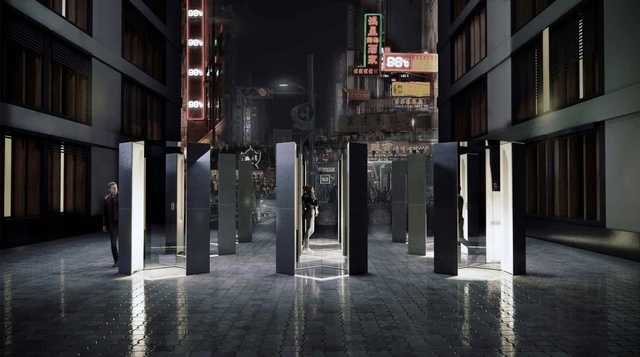
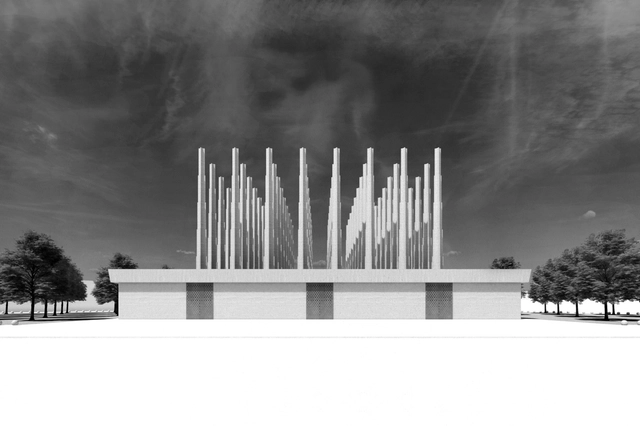
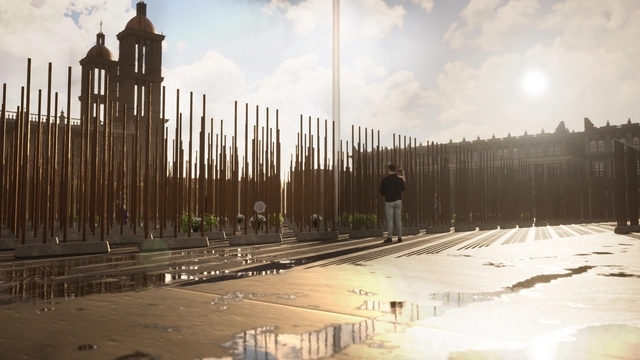
Rojkind Arquitectos has revealed a "mourning claim" memorial proposal for coronavirus victims. The design project led by Michel Rojkind, Arturo Ortíz Struck, and Diego Díaz Lezama has initially envisioned the memorial both in New York City's Times Square and Mexico City's Zocalo.
"We are claiming the act of mourning. We can at least take care of that, of building symbols where we can place the testimony of our life and the lives of others," stated the authors.
https://www.archdaily.com/946451/rojkind-arquitectos-proposes-a-mourning-claim-memorial-for-coronavirus-victimsArchDaily Team
Architecture is often associated with the idea of sheltering, ever since primitive constructions. However, memorials are among the few types of architecture that are not primarily intended to shelter, but to remember. A space that respectfully aims to keep alive the memory of those who have fallen in heroic acts or have been unfortunate victims of cruel historical events, which can, therefore, be perceived as a monument or a building with the purpose of materializing intangible emotions, creating collective memories that can be remembered through time.
Architecture firm Gómez Platero has designed a new memorial to honor those affected by COVID-19. Sited in Uruguay, the monument is made to be an expression of hope in an uncertain time. As the first large-scale monument to the worldwide victims of the COVID-19 pandemic, the project is called the "World Memorial to the Pandemic." It aims to be a space for mourning and reflection that's environmentally conscious and emotionally impactful.
This article is part of "Eastern Bloc Architecture: 50 Buildings that Defined an Era", a collaborative series by The Calvert Journal and ArchDaily highlighting iconic architecture that had shaped the Eastern world. Every week both publications will be releasing a listing rounding up five Eastern Bloc projects of certain typology. Read on for your weekly dose: Monumental Museums and Memorials.
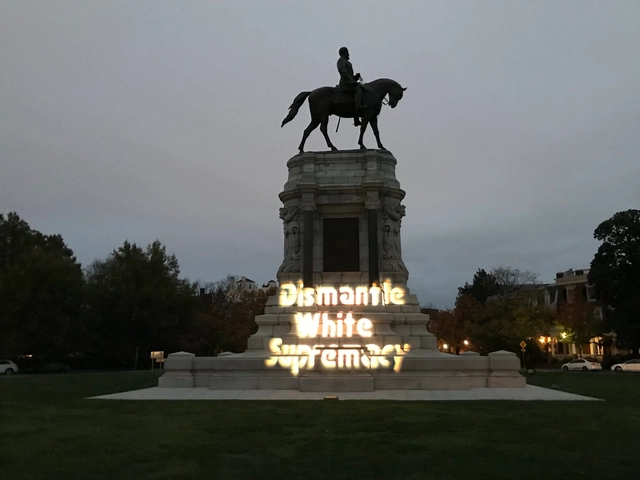
Monuments, as Alois Riegl pointed out a century ago, are aids to memory. “In memoriam,” the carvings cry out. Though they are almost always tainted with political ideologies and social values, they can stand on their own as works of art, absorbing meanings over millennia. Many that we continue to treasure were once associated with events and practices antithetical to modern mores and taboos: Greek temples were founded on the altars of animal—and, earlier, human—sacrifice; the pyramids were made by slaves; market crosses may have served as flogging posts. There really are no innocent human artifacts dedicated to remembering human acts, as fact or fiction.
https://www.archdaily.com/943834/status-statues-and-statutes-the-issue-with-monuments-to-flawed-menMark Alan Hewitt
Ensuring a platform for everyone, ArchDaily is rounding up, every once in a while, a curated selection from our readers’ submissions. With proposals coming from all over the world, our aim is to feature the best Unbuilt Architecture out there.
In this article, we are highlighting proposals that were awarded the first prize in international competitions. Each one of these projects showcases a unique conceptual approach and responds to a different program. With a mixed-use project in France, a market in Helsinki, an aquarium in New York and a civic building in Norway, to name a few, the variety of these unbuilt interventions underlines the vast scope of the architectural field.
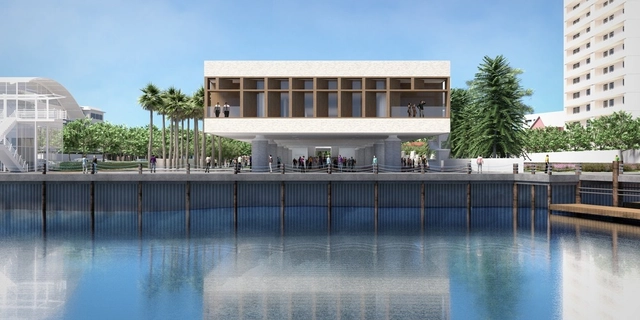
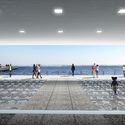
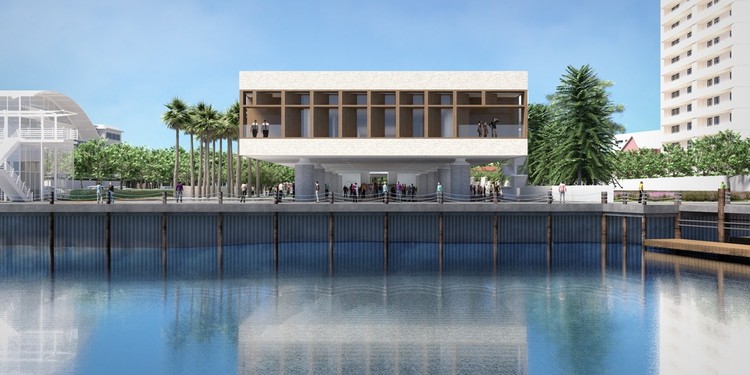
Views from the eastern end of the main level of IAAM are oriented slightly south across Charleston Harbor toward the Atlantic Ocean and the west coast of Africa.. Image Courtesy of Pei Cobb Freed & Partners
After 20 years in the planning, the International African American Museum is now under construction in Charleston, United States. Designed by Pei Cobb Freed & Partners, IAAM aims to honor the site where enslaved Africans passed away, by sharing narratives, previously overlooked by historians.
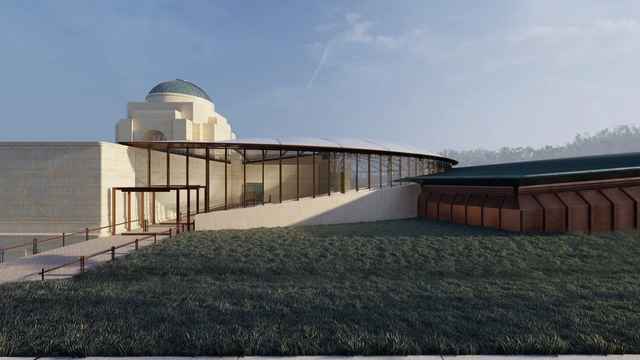
The AWM or the Australian War Memorial will undergo a series of development and refurbishments works, in order to renovate its galleries and its buildings. COX architecture will design the new Anzac Hall with its connection to the main structure, while Scott Carver will be in charge of the southern entrance.
Courtesy of Coldefy & Associés with RDAI_onePULSE Foundation
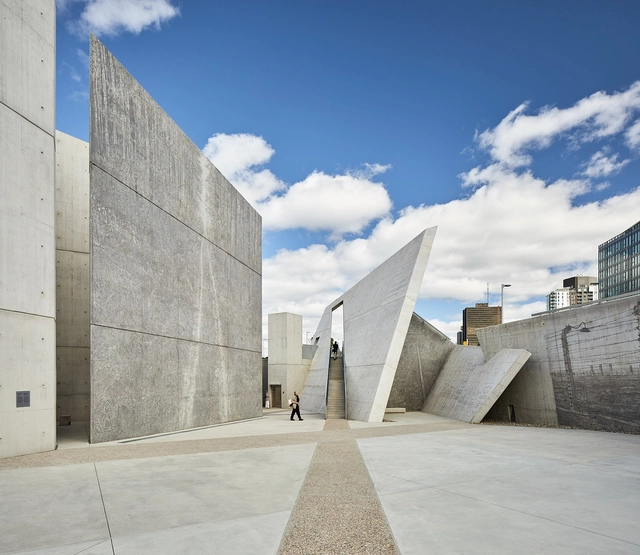
OnePULSE Foundation has selected Coldefy & Associés with RDAI, Orlando-based HHCP Architects, Xavier Veilhan, dUCKS scéno, Agence TER, and Prof. Laila Farah, to design the National Pulse Memorial & Museum.


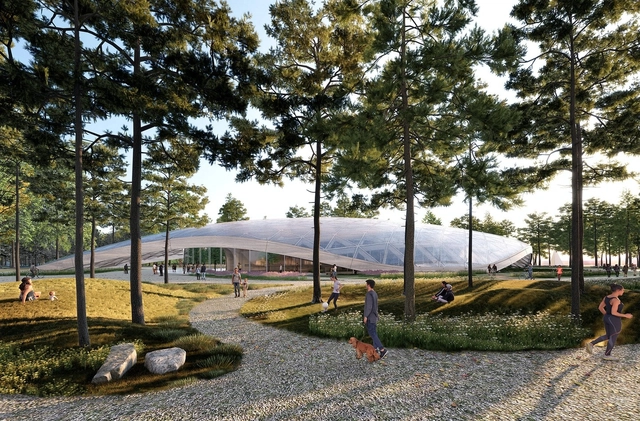


_-_West_Elevation.jpg?1641304390 "So Close , So Far Cultural Center by Shahab Shariat. Image Courtesy of Shahab Shariat")





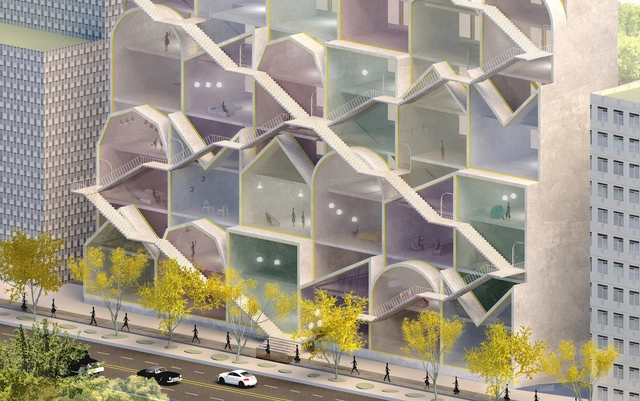

.jpg?1594806627 "Glasgow School of Art Extension . Image Courtesy of Barry Wark Architecture")
.jpg?1594808114 "Underground House Plan B . Image Courtesy of Sergey Makhno Architecs")



.jpg?1599848656 "Courtesy of Dwight D. Eisenhower Memorial Commission")
.jpg?1599849450 "Courtesy of Dwight D. Eisenhower Memorial Commission")
.jpg?1599848766 "Courtesy of Dwight D. Eisenhower Memorial Commission")


.jpg?1598034412 "© Rojkind Arquitectos")
.jpg?1598034341 "© Rojkind Arquitectos")
.jpg?1598034569 "© Rojkind Arquitectos")











.jpg?1572522806&format=webp&width=640&height=580)