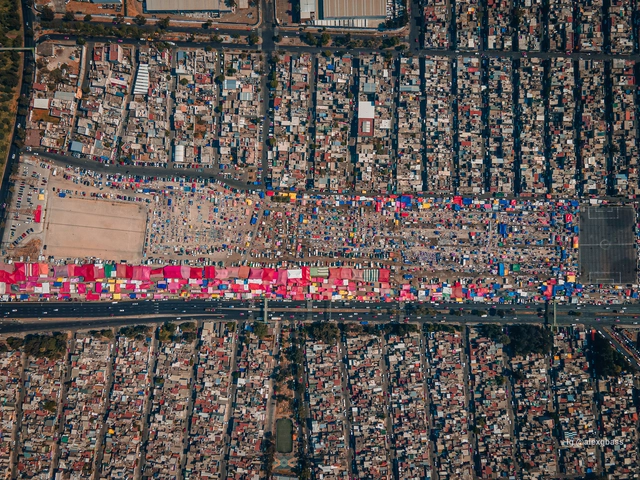
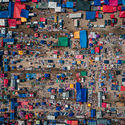
Commerce has seen many changes over the past few years, especially as people worldwide have found new ways to connect and work with one another. In spite of this rapid progress, traditional commerce and cultures remain strong in Mexico City's tianguis, derived from the Nahuatl word tianquiz(tli) for “market." These open air spaces have operated since before European invasion and colonization, when bartering was the primary means of commerce and transactions were done in large public areas like plazas and corridors. Eventually, products derived from copper and cacao became a form of currency with which to purchase basic necessities.
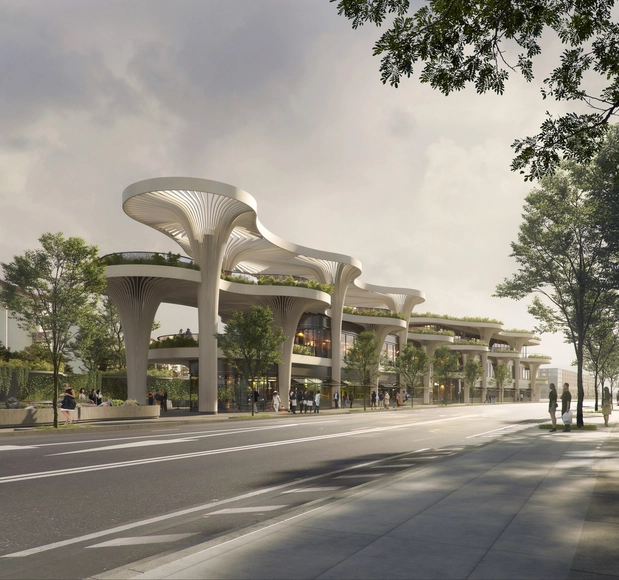
For its latest design in China, the Australian firm Koichi Takada Architects takes inspiration from Shanghai's forest-rich landscape and creates a series of architectural "trees" that branch out, forming a canopy above a new marketplace. Through its open, biophilic design, the Solar Trees Marketplace will be an extension of the outdoor public space, reinterpreting the traditional Chinese market as a community place.
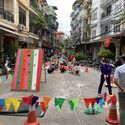
Mobile playground in Vietnam. Image Courtesy of UN-Habitat, Global Public Space Programme
The Un-Habitat or the United Nations agency for human settlements and sustainable urban development, whose primary focus is to deal with the challenges of rapid urbanization, has been developing innovative approaches in the urban design field, centered on the active participation of the community. ArchDaily has teamed up with UN-Habitat to bring you weekly news, article, and interviews that highlight this work, with content straight from the source, developed by our editors.
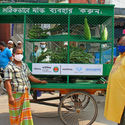
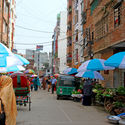
“During this pandemic, public spaces have played a vital role in the health and sustainability of urban communities around the world” states James Delaney, Block by Block chair. In fact, people need to go outside, now more than ever. In order to equip these public spaces to face the challenges of Covid-19, UN-Habitat with the Block by Block Foundation has been supporting ten cities, throughout this past year. With the help of local governments and the community, the initiatives helped covid-proof open urban entities, especially in poor neighborhoods, where there are few shared and green spaces. From creating mobile pop-up playgrounds for children in Hanoi, Vietnam, improving livelihood for street vendors in Dhaka and Khulna, Bangladesh to Covid Proofing of Public Spaces in Bhopalinformal settlements, India, these responses have provided help to those who need it the most.
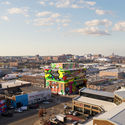
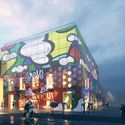
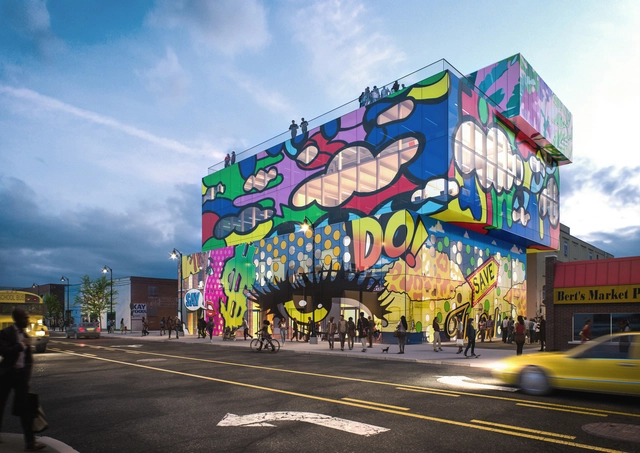
MVRDV was commissioned the design of Glass Mural, a new 3,716-square-meter office and retail building with a custom glass façade that integrates colorful murals by artists DENIAL and Sheefy McFly. Located in Detroit’s Eastern Market neighborhood, the project will be MVRDV’s third mixed-use project in the United States and first in the Midwest.
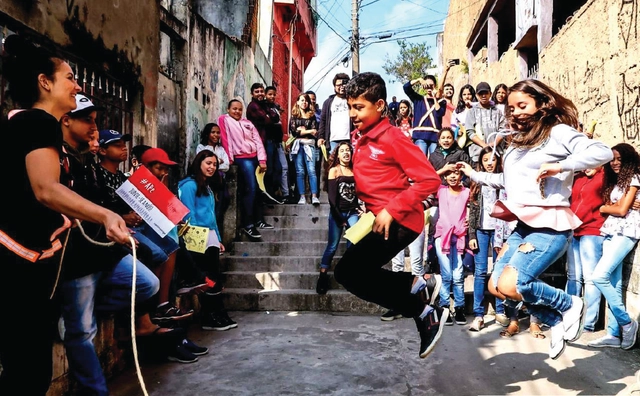
Mind the Step - Jardim Nakamura, São Paulo, Brazil. Image Courtesy of UN-Habitat
The Un-Habitat or the United Nations agency for human settlements and sustainable urban development, whose primary focus is to deal with the challenges of rapid urbanization, has been developing innovative approaches in the urban design field, centered on the active participation of the community. ArchDaily has teamed up with UN-Habitat to bring you weekly news, article, and interviews that highlight this work, with content straight from the source, developed by our editors.
Discover in this feature the first lesson to learn from UN-Habitat, on how to design with and for the people. In order to create great public spaces, the only secret is listening to the community. Questioning “how can we design together”, this article presents cases in Ghana, Brazil, and India, focusing on street, market, and open public spaces implementation projects, where interventions took on participatory approaches and involved local residents from the beginning of the process.
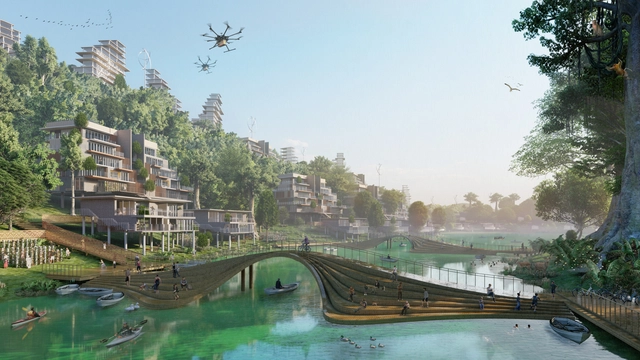
“The Infinite City” smart city design for Indonesia New Capital. Image Courtesy of AntiStatics Architecture
Presented part of international competitions, this week’s best-unbuilt architecture gathers award-winning projects submitted by our readers. Highlighting as usual diverse approaches from across the globe, ArchDaily is rounding up in this article, a curated selection of cultural, civic, and urban proposals.
In Singapore, an adaptive reuse project transforms a power station into a creative industrial hub, while in Indonesia, a smart city design for the new capital generates an ecologically responsible environment. Moreover, Kjellander Sjöberg designs and develops an original city block in Stockholm, and TheeAe imagines a city hall for China. Other proposals include an entire reflective surface for a public square in Italy, a new city district in Tampere Finland, a University building in Warsaw, and a school for contemporary art in Vienna.
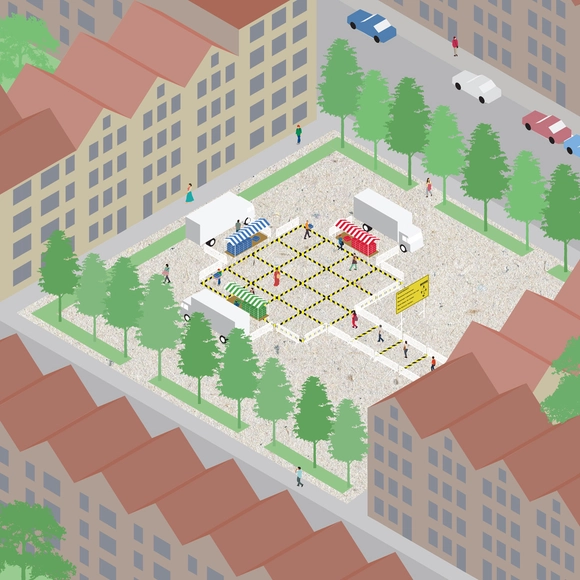
Shift architecture urbanism developed micro-markets that can operate on a hyper-local scale during coronavirus shutdowns. The research elaborated on a scheme allowing traders to provide fresh food in a safe way to the self-quarantined inhabitants of the city.


.jpg?1627416884 "© Alex González / Dronalexmx")
.jpg?1627416979 "© Alex González / Dronalexmx")



(1).jpg?1614161719&format=webp&width=640&height=580)
.jpg?1614161736 "Mobile playground in Vietnam. Image Courtesy of UN-Habitat, Global Public Space Programme")
(1).jpg?1614161719)
.jpg?1601537708 "© MVRDV")
.jpg?1601537440 "© MVRDV")