1. ArchDaily
  2. Public Spaces

Public Spaces: The Latest Architecture and News

World Environment Day 2026 Coincides with Record Heatwaves, Renewing Focus on Climate Adaptation in Cities

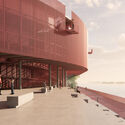
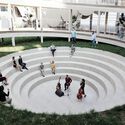
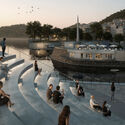
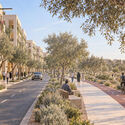
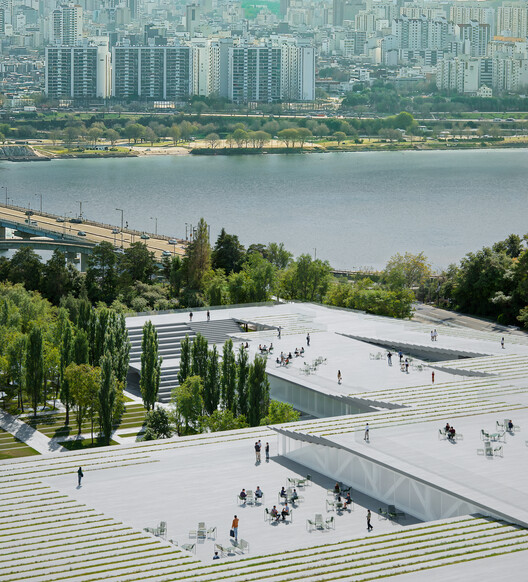
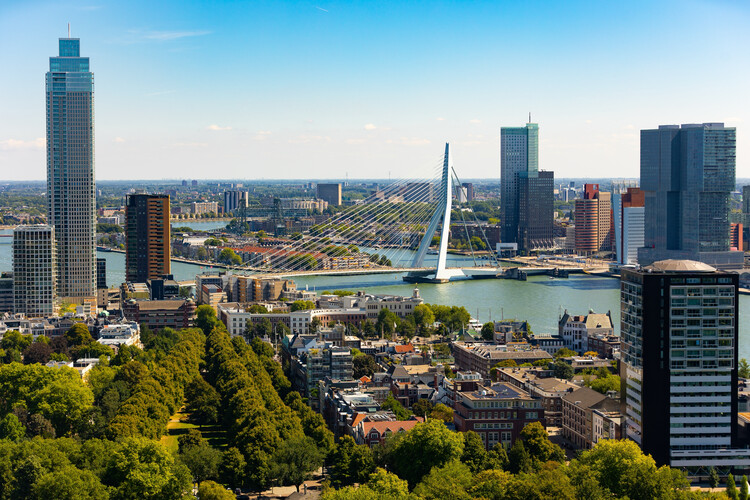
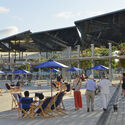
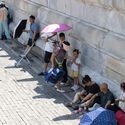
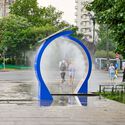
As Europe experiences one of its earliest and most intense heatwaves in recent years, World Environment Day 2026 arrives amid renewed discussions about climate adaptation, urban resilience, and the capacity of cities to respond to increasingly extreme temperatures. Across Portugal, France, Italy, Spain, Germany, Switzerland, Ireland, and the United Kingdom, temperatures have surged well above seasonal averages, prompting heat alerts, school closures, emergency planning measures, and growing concerns about the performance of buildings and public infrastructure under prolonged heat stress. The convergence of these highlights a reality that is becoming increasingly worldwide: climate change is no longer solely an environmental concern but an issue that is fundamentally reshaping the spaces where people live, work, and gather.

World Environment Day 2026 Coincides with Record Heatwaves, Renewing Focus on Climate Adaptation in Cities - Image 1 of 4World Environment Day 2026 Coincides with Record Heatwaves, Renewing Focus on Climate Adaptation in Cities - Image 2 of 4World Environment Day 2026 Coincides with Record Heatwaves, Renewing Focus on Climate Adaptation in Cities - Image 3 of 4World Environment Day 2026 Coincides with Record Heatwaves, Renewing Focus on Climate Adaptation in Cities - Image 4 of 4World Environment Day 2026 Coincides with Record Heatwaves, Renewing Focus on Climate Adaptation in Cities - More Images+ 3

First Look at the Serpentine Pavilion and Getty Center Modernization Plans Revealed: This Week’s Review

This week, architecture's cultural dimension took center stage through a series of new platforms, institutional developments, and public-facing projects that expand how the discipline is discussed, preserved, and experienced. From the announcement of participants for the inaugural Pan-African Biennale in Nairobi and the unveiling of Concéntrico Festival's urban interventions across Logroño, to the opening of La Biennale di Venezia's new archival headquarters at the Arsenale, architecture emerged as a vehicle for research, exchange, and collective reflection. Alongside these initiatives, projects such as the expansion of Crystal Bridges Museum in Arkansas and the opening of the 2026 Serpentine Pavilion demonstrate how cultural institutions continue to invest in new spaces for gathering and engagement. This week's selection spans Kenya, Spain, Albania, Saudi Arabia, Italy, Lebanon, the United Kingdom, and the United States, reflecting the diverse contexts in which cultural institutions, public events, and architectural initiatives continue to evolve.
First Look at the Serpentine Pavilion and Getty Center Modernization Plans Revealed: This Week’s Review - Image 1 of 4First Look at the Serpentine Pavilion and Getty Center Modernization Plans Revealed: This Week’s Review - Image 2 of 4First Look at the Serpentine Pavilion and Getty Center Modernization Plans Revealed: This Week’s Review - Image 3 of 4First Look at the Serpentine Pavilion and Getty Center Modernization Plans Revealed: This Week’s Review - Image 4 of 4First Look at the Serpentine Pavilion and Getty Center Modernization Plans Revealed: This Week’s Review - More Images+ 10

SLA Designs Public Spaces and Streetscapes for Toronto's New Island Community in the Port Lands

Landscape and urban design studio SLA has unveiled the design for the public realm and streetscapes of Toronto's new 39.8-hectare waterfront community. The urban landscape project "Ookwemin Minising" is located in the Port Lands, an industrial and recreational district southeast of downtown Toronto, currently undergoing urban revitalization to transform the area from a former industrial zone into a naturalized river valley, mixed-use neighbourhoods, and public parkland. The overall transformation is being led by Waterfront Toronto, a publicly funded, not-for-profit corporation established in 2001 to oversee the regeneration of the area, as part of a broader government initiative to renaturalize urban areas and increase housing density. The redevelopment of Ookwemin Minising is expected to be completed in phases between 2031 and 2040.

SLA Designs Public Spaces and Streetscapes for Toronto's New Island Community in the Port Lands - Image 1 of 4SLA Designs Public Spaces and Streetscapes for Toronto's New Island Community in the Port Lands - Image 2 of 4SLA Designs Public Spaces and Streetscapes for Toronto's New Island Community in the Port Lands - Image 3 of 4SLA Designs Public Spaces and Streetscapes for Toronto's New Island Community in the Port Lands - Image 4 of 4SLA Designs Public Spaces and Streetscapes for Toronto's New Island Community in the Port Lands - More Images+ 6

Stefano Boeri Architetti Converts Former Rome Transit Depot Into Multifunctional Civic Space

The Rome City Council has approved a Memorandum for the urban regeneration of the Depositi delle Vittorie in Piazza Bainsizza, a former ATAC depot in Rome dating back to the early 1900s. Abandoned for nearly two decades and now privately owned, the site is set to be transformed into a multifunctional complex designed by Stefano Boeri Architetti. The project envisions the adaptive reuse of the former transportation infrastructure through the introduction of cultural, educational, commercial, co-working, and leisure functions, alongside new public spaces and extensive landscaped areas.

Stefano Boeri Architetti Converts Former Rome Transit Depot Into Multifunctional Civic Space - Image 1 of 4Stefano Boeri Architetti Converts Former Rome Transit Depot Into Multifunctional Civic Space - Image 2 of 4Stefano Boeri Architetti Converts Former Rome Transit Depot Into Multifunctional Civic Space - Image 3 of 4Stefano Boeri Architetti Converts Former Rome Transit Depot Into Multifunctional Civic Space - Image 4 of 4Stefano Boeri Architetti Converts Former Rome Transit Depot Into Multifunctional Civic Space - More Images

A Project in Motion: The Story Behind Realengo Park Market Square in Rio de Janeiro

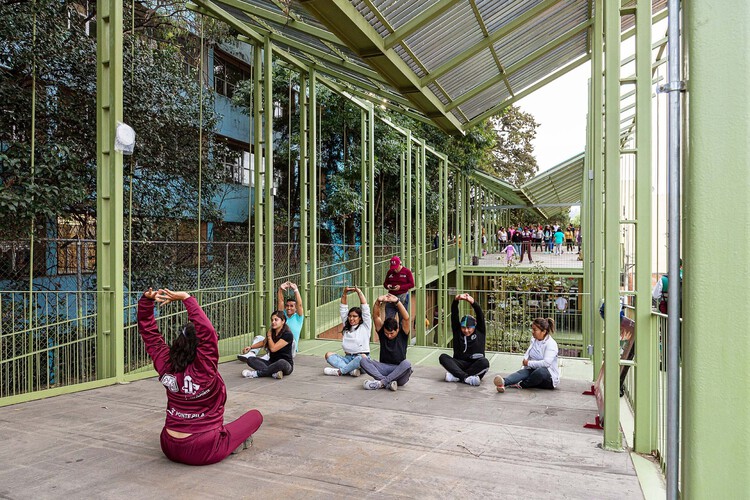
Even before any drawing or formal decision, the place now occupied by Praça do Mercado in Parque Realengo, Rio de Janeiro, already pulsed with movement. Improvised stalls, informal gatherings, music, children running, and adults gathered beneath temporary shelters composed a vibrant landscape, sketching an ephemeral architecture.

It is within this context that the work developed by Juliana Ayako—one of the winners of the ArchDaily 2025 Next Practices Awards—together with Carlos Zebulun, Helena Meirelles, Larissa Monteiro, Rodrigo Messina, Francisco Rivas, emerged. The project management, urban planning, and landscape design were carried out by Ecomimesis Soluções Ecológicas, winner of the public competition organized by the Municipality of Rio de Janeiro in 2023.

A Project in Motion: The Story Behind Realengo Park Market Square in Rio de Janeiro - Image 1 of 4A Project in Motion: The Story Behind Realengo Park Market Square in Rio de Janeiro - Image 2 of 4A Project in Motion: The Story Behind Realengo Park Market Square in Rio de Janeiro - Image 3 of 4A Project in Motion: The Story Behind Realengo Park Market Square in Rio de Janeiro - Image 4 of 4A Project in Motion: The Story Behind Realengo Park Market Square in Rio de Janeiro - More Images+ 18

Baku Architecture City Guide: 15 Projects Reframing Azerbaijan’s Capital

Subscriber Access | 

Some cities grow through continuity, others construct themselves through moments of acceleration. Baku, in Azerbaijan, seems to operate somewhere in between. Its historic core, the Icherisheher, still holds a spatial logic that resists expansion: dense, enclosed, defined by proximity and repetition. But just beyond its walls, the city begins to shift. Scale increases, distances expand, and the relationship between buildings becomes less about continuity and more about visibility.

Over the past two decades, Baku has been the site of a deliberate effort to construct an image of itself. Oil wealth provided the means, but architecture became one of its primary tools. Projects such as the Heydar Aliyev Center by Zaha Hadid Architects or the Flame Towers are symbols of this transformation, their forms designed to circulate as much through media as through the city itself. They are precise, controlled, and highly resolved objects. But they also introduce a different urban logic, one that privileges singularity over continuity and positions architecture as an agent of representation.

Baku Architecture City Guide: 15 Projects Reframing Azerbaijan’s Capital - Image 1 of 4Baku Architecture City Guide: 15 Projects Reframing Azerbaijan’s Capital - Image 2 of 4Baku Architecture City Guide: 15 Projects Reframing Azerbaijan’s Capital - Image 3 of 4Baku Architecture City Guide: 15 Projects Reframing Azerbaijan’s Capital - Image 4 of 4Baku Architecture City Guide: 15 Projects Reframing Azerbaijan’s Capital - More Images+ 12

When Sculpture Becomes Discourse: Reflections on Mujassam Watan

 | Sponsored Content

In the city, aesthetics are not measured by the height of towers or the width of roads, but by their ability to evoke meaning within space. From this perspective, the Mujassam Watan initiative emerges as more than a mere artistic endeavor. It involves a deliberate attempt to redefine the relationship between people and place, between material memory and imagined identity. In the city of Khobar, in the Kingdom of Saudi Arabia—where urban modernity intersects with rapid social transformation—this initiative raises the question: How can a sculpture become an open text, one that is both visually read and experientially felt?

The Illusion of Lightness: Designing Civic Voids for Public Life

In our current cities, urban density and rising land values often force a choice between large-scale civic buildings and open public space. Traditionally, plazas have been treated as areas surrounding a building's footprint, but this strategy was modified when pilotis were introduced by the early 20th-century modernist movement. While the original intent was to create a sense of lightness that would allow circulation and light to flow beneath a structure, contemporary requirements for seismic loads, fire egress, and heavy occupancies render thin columns insufficient for the needs of current large-scale civic projects.

However, the pursuit of architectural lightness is not a strictly contemporary phenomenon. Following the modernist introduction of pilotis, several mid-century projects began experimenting with the illusion of suspension to achieve civic transparency. In 1953, the National Congress of Honduras in Tegucigalpa, designed by Mario Valenzuela, applied these principles to a legislative setting. The building consists of a solid assembly chamber elevated on a series of slender columns. Because the site sits on a terrace at the end of a sloping street, the resulting void does more than just provide circulation; it frames views of the city, creating the impression that the heavy legislative mass is lightly suspended above the urban fabric.

The Illusion of Lightness: Designing Civic Voids for Public Life - Image 1 of 4The Illusion of Lightness: Designing Civic Voids for Public Life - Image 2 of 4The Illusion of Lightness: Designing Civic Voids for Public Life - Image 3 of 4The Illusion of Lightness: Designing Civic Voids for Public Life - Image 4 of 4The Illusion of Lightness: Designing Civic Voids for Public Life - More Images+ 11

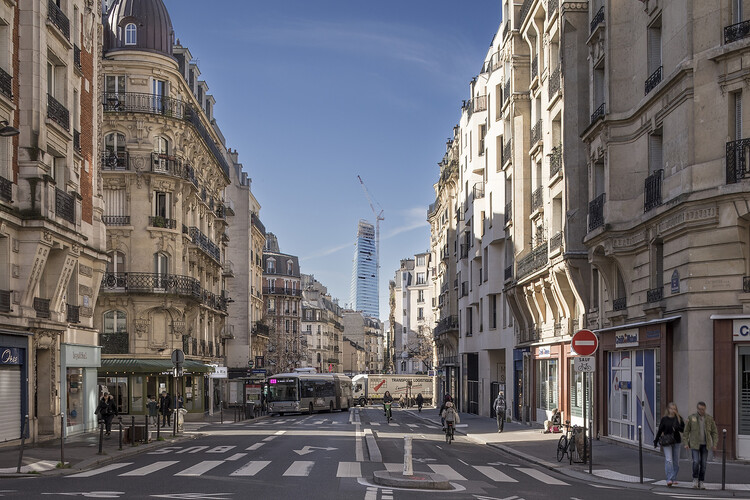
RSHP Wins Competition to Redevelop Rives-Défense Site in Paris

RSHP has won a competition to redevelop the Rives-Défense site in La Défense, the business district of Paris. Announced during MIPIM, the project envisions the transformation of an 8-hectare site at the western edge of the district into a low-carbon mixed-use neighborhood. Commissioned by Paris La Défense, the proposal is developed by a multidisciplinary team led by RSHP and including Atelier SOIL as co-architect and urban planner, Altitude 35 as landscape architect, Arcadis as engineering consultant, as well as Atelier Franck Boutté, Urban Eco, and Mobius.

Designing With, Not For: CatalyticAction’s Participatory Practice

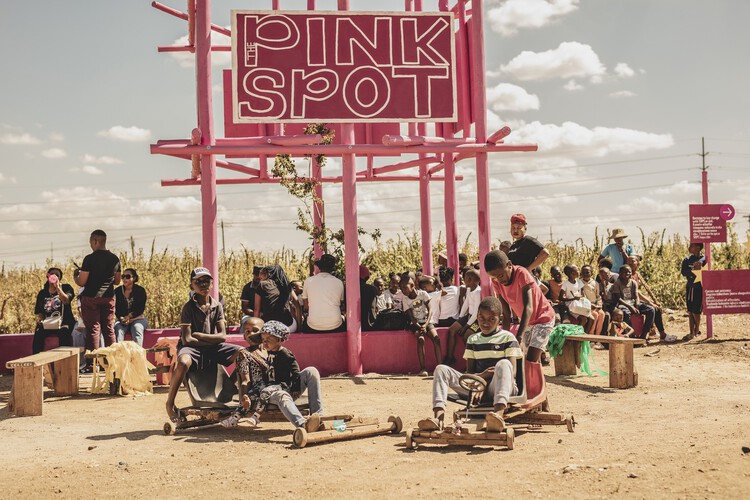
Architecture is often evaluated through finished forms, yet some practices operate in a different register, one where design unfolds through relationships, time, and use rather than through a single outcome. For CatalyticAction, participation is not a parallel social activity, but the means through which spaces are conceived, constructed, and sustained over time.

Based between Beirut and London, the practice has worked across the Middle East and Europe, developing public spaces, schools, playgrounds, and everyday urban infrastructures through long-term collaboration with local communities. Grounded in participatory research and collective decision-making, this approach was recognized through ArchDaily's 2025 Next Practices Awards, highlighting a mode of practice where architecture is understood as a shared, evolving process rather than a fixed object. In this context, architectural value is measured through continuity, use, and collective ownership, rather than through form alone.

Designing With, Not For: CatalyticAction’s Participatory Practice - Image 1 of 4Designing With, Not For: CatalyticAction’s Participatory Practice - Image 2 of 4Designing With, Not For: CatalyticAction’s Participatory Practice - Image 3 of 4Designing With, Not For: CatalyticAction’s Participatory Practice - Image 4 of 4Designing With, Not For: CatalyticAction’s Participatory Practice - More Images+ 21

Festival Concéntrico 2026 Announces Three Selected Urban Installations From Its International Open Calls

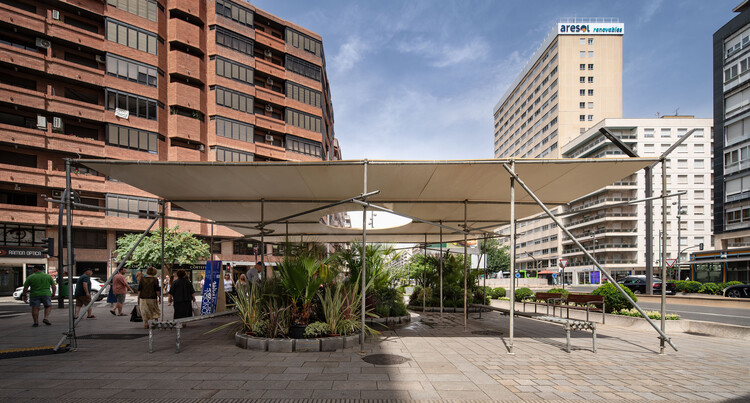
Concéntrico is an urban innovation laboratory that invites reflection on the city through architecture and design. Since 2015, it has carried out more than 180 interventions in Logroño, Spain. The new 2025/2026 season of the festival expands on this experimental spirit with three international calls for proposals that bring the ideas in the book Concéntrico: Laboratorio de Innovación Urbana (Park Books, 2025) into action. Through these calls, the organization seeks to explore further three lines of research, the ephemeral, the ecological, and the symbolic, to imagine different ways of inhabiting the city. The winning projects from this edition's calls for entries will be developed, built as urban installations, and presented in the exhibition during the festival, taking place in Logroño from June 18–23, 2026.

Festival Concéntrico 2026 Announces Three Selected Urban Installations From Its International Open Calls - Image 1 of 4Festival Concéntrico 2026 Announces Three Selected Urban Installations From Its International Open Calls - Image 2 of 4Festival Concéntrico 2026 Announces Three Selected Urban Installations From Its International Open Calls - Image 3 of 4Festival Concéntrico 2026 Announces Three Selected Urban Installations From Its International Open Calls - Image 4 of 4Festival Concéntrico 2026 Announces Three Selected Urban Installations From Its International Open Calls - More Images+ 14

Dispatched: Architecture of the American Post Office and the Privatization of Civic Space

Post offices stand among the most enduring monuments of civic life in the United States. Across towns and city centers, they carry the shifting architectural ambitions of the nineteenth and twentieth centuries, from Greek Revival formality to Beaux-Arts monumentality and Art Deco ornament. Architects and federal planners would give these buildings a clear public role and a powerful physical presence. Stone façades, monumental halls, and crafted interiors projected stability, trust, and permanence. The post office placed the federal government directly into the everyday landscape of American life.

Dispatched: Architecture of the American Post Office and the Privatization of Civic Space - Image 4 of 4Dispatched: Architecture of the American Post Office and the Privatization of Civic Space - Image 6 of 4Dispatched: Architecture of the American Post Office and the Privatization of Civic Space - Image 7 of 4Dispatched: Architecture of the American Post Office and the Privatization of Civic Space - Featured ImageDispatched: Architecture of the American Post Office and the Privatization of Civic Space - More Images+ 10

Rojkind Arquitectos Selected for Tirana Multifunctional Development as Part of Broader Citywide Renewal

Rojkind Arquitectos, in collaboration with artist Pedro Reyes, SON Architects, Motus Holdings, and ASAB, has been selected as the winner of the mixed-use component in the International Concept Design and Build Competition for the redevelopment of the Zyber Hallulli site in Tirana, Albania. Organized by the Albanian Investment Corporation in partnership with the National Agency for Territorial Planning, the competition was launched in September 2025, with the jury announcing its decision on January 29, 2026. The proposal led by the Mexico-based office was awarded the mixed-use development, while a separate Mexican practice, Taller Héctor Barroso, was selected to design CASA FAMILIA, a new children's campus to be built on a greener, more child-oriented site.

Rojkind Arquitectos Selected for Tirana Multifunctional Development as Part of Broader Citywide Renewal - Image 1 of 4Rojkind Arquitectos Selected for Tirana Multifunctional Development as Part of Broader Citywide Renewal - Image 2 of 4Rojkind Arquitectos Selected for Tirana Multifunctional Development as Part of Broader Citywide Renewal - Image 3 of 4Rojkind Arquitectos Selected for Tirana Multifunctional Development as Part of Broader Citywide Renewal - Image 4 of 4Rojkind Arquitectos Selected for Tirana Multifunctional Development as Part of Broader Citywide Renewal - More Images+ 4

Playful and Ironic: The Legacy of Postmodernist Architecture in the United States

Postmodernism in the United States turned architecture into a stage for cultural memory, irony, and heritage at a moment when the built environment was becoming less civic and more commercial and curated. By the late twentieth century, architectural investment no longer centered on monumental public institutions or shared federal commitment to civic space. Private development, corporate expansion, and consumer environments increasingly shaped cities across the country. Buildings took on a new role as cultural images, expected to communicate identity and meaning as much as they provided function.

Postmodernism began as a critique of modernism's exhausted promises. By the late 1960s and early 1970s, many designers no longer treated modernism as radical or socially redemptive. Urban renewal projects accelerated the demolition of historic neighborhoods, and landmark preservation battles raised urgent questions about what the United States valued and, ultimately, protected. The loss of major civic icons, including New York's Penn Station, sharpened public awareness that progress often arrives through erasure. In Chicago, architect and provocateur Stanley Tigerman captured this sense of rupture in his 1978 photomontage The Titanic, which depicts Mies van der Rohe's Crown Hall sinking into Lake Michigan, a blunt image of modernism's symbolic collapse. Postmodern architects worked inside this turbulence, shaped by economic shocks, corporate excess, shifting cultural production, and a growing skepticism toward grand architectural solutions.

Playful and Ironic: The Legacy of Postmodernist Architecture in the United States - Image 1 of 4Playful and Ironic: The Legacy of Postmodernist Architecture in the United States - Image 2 of 4Playful and Ironic: The Legacy of Postmodernist Architecture in the United States - Image 3 of 4Playful and Ironic: The Legacy of Postmodernist Architecture in the United States - Image 4 of 4Playful and Ironic: The Legacy of Postmodernist Architecture in the United States - More Images+ 19

Zaha Hadid Architects Designs Cultural District Along the Qiantang Bay Central Water Axis in Hangzhou, China

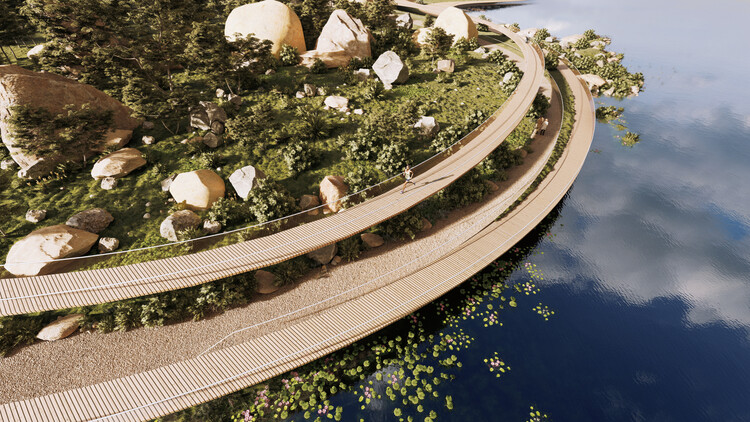
Zaha Hadid Architects has released images of its design for the redevelopment of the waterfront along the Zhedong Canal in Hangzhou's Xiaoshan District, China. The Qiantang Bay Central Water Axis project envisions a sequence of landscaped parklands, terraces, and gardens along the canal basin, proposing the transformation of former industrial areas into a green corridor extending toward the city center. The proposal adds to other recent design initiatives in the area, including Snøhetta's Qiantang Bay Art Museum, planned at the confluence of the Qiantang River and the Central Water Axis, as well as Zaha Hadid Architects' Grand Canal Gateway Bridge, a pedestrian bridge intended to connect the firm's 800,000-square-meter Seamless City masterplan on the east and west banks of the Grand Canal.

Zaha Hadid Architects Designs Cultural District Along the Qiantang Bay Central Water Axis in Hangzhou, China - Image 1 of 4Zaha Hadid Architects Designs Cultural District Along the Qiantang Bay Central Water Axis in Hangzhou, China - Image 2 of 4Zaha Hadid Architects Designs Cultural District Along the Qiantang Bay Central Water Axis in Hangzhou, China - Image 3 of 4Zaha Hadid Architects Designs Cultural District Along the Qiantang Bay Central Water Axis in Hangzhou, China - Image 4 of 4Zaha Hadid Architects Designs Cultural District Along the Qiantang Bay Central Water Axis in Hangzhou, China - More Images+ 2

The Long Table as a Spatial Protocol: Designing Conditions for Gathering and Pause

A long table can sit almost anywhere and still do the same work. It can stretch beneath a market canopy, run along a school dining hall, or occupy the center of a shared living room, and it immediately changes the room's temperature.

That is why the long table is less an object than a spatial instrument. It does not guarantee a connection, and it rarely looks "inclusive" by default. Instead, it sets conditions: a shared edge, a common rhythm of arrival, a field of mutual visibility, or a rule that turns eating into a scene with others. Food studies describe this practice as commensality, the act of eating together and the social order it can create, reinforce, or contest. But what matters here is not a specific dimension or the table's function, but the way a long surface holds difference, conversation, and silence; intimacy and distance; the decision to join and the right to hesitate.

The Long Table as a Spatial Protocol: Designing Conditions for Gathering and Pause - Image 1 of 4The Long Table as a Spatial Protocol: Designing Conditions for Gathering and Pause - Image 2 of 4The Long Table as a Spatial Protocol: Designing Conditions for Gathering and Pause - Image 3 of 4The Long Table as a Spatial Protocol: Designing Conditions for Gathering and Pause - Image 4 of 4The Long Table as a Spatial Protocol: Designing Conditions for Gathering and Pause - More Images+ 22

How Cities Design Public Life in the Shade

Cities are warming at roughly twice the global rate, a trend accelerated by rapid urbanization. While rising temperatures are reshaping daily life worldwide, some towns and neighborhoods, often the most vulnerable and least resourced, are warming more than others. The reason comes down to the urban environment. Built infrastructure, such as roads, buildings, sidewalks, and public spaces, determines how heat moves through a city, where it accumulates, and how long it remains trapped. No matter the climate zone or geographical location, shade remains the most effective and immediate way to cool pedestrians and relieve the built environment.

How Cities Design Public Life in the Shade - Image 1 of 4How Cities Design Public Life in the Shade - Image 2 of 4How Cities Design Public Life in the Shade - Image 3 of 4How Cities Design Public Life in the Shade - Image 4 of 4How Cities Design Public Life in the Shade - More Images+ 15

Designing for Presence: When Architecture Invites Us to Stay

Architecture is increasingly asked to do less, not more. In environments shaped by constant movement, noise, and expectation, spaces that allow people to stay, pause, and be present have become both rarer and more necessary. Many public and semi-public places are designed to keep people moving, consuming, or reacting, leaving little room for lingering, observation, or simply being without a reason.

In response, a growing body of work is shifting attention away from activation and toward presence. Rather than asking users to interact or participate, these spaces create conditions that support staying. Comfort, continuity, and openness allow people to remain without pressure or obligation, making presence a spatial quality rather than an activity.

Designing for Presence: When Architecture Invites Us to Stay - Image 1 of 4Designing for Presence: When Architecture Invites Us to Stay - Image 2 of 4Designing for Presence: When Architecture Invites Us to Stay - Image 3 of 4Designing for Presence: When Architecture Invites Us to Stay - Image 4 of 4Designing for Presence: When Architecture Invites Us to Stay - More Images+ 25