1. ArchDaily
  2. Islamic Architecture

Islamic Architecture: The Latest Architecture and News

Diriyah Biennale Foundation Announces Four Studios Shortlisted for the 2027 AlMusalla Prize

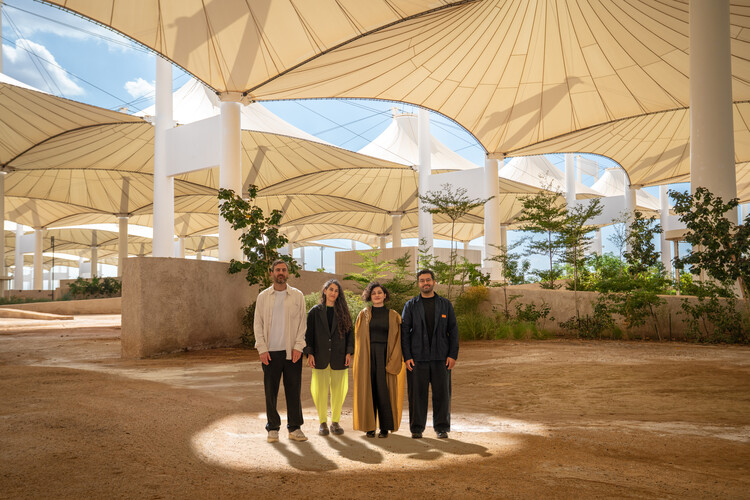
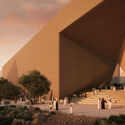
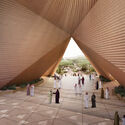
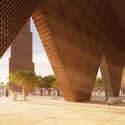
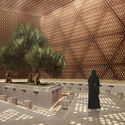
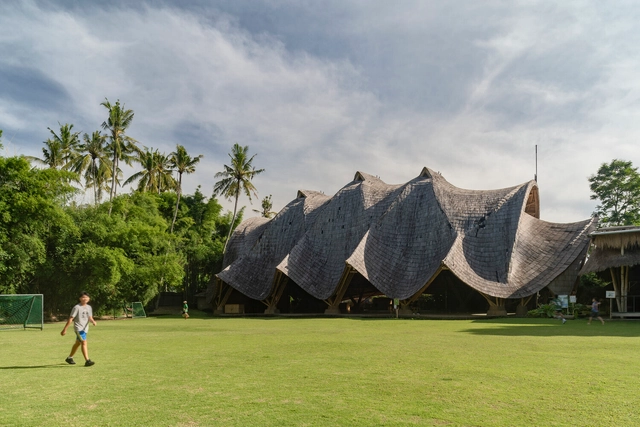
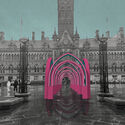
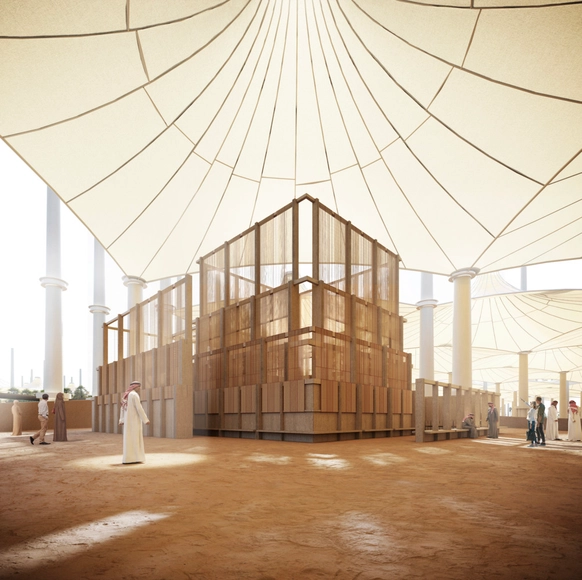
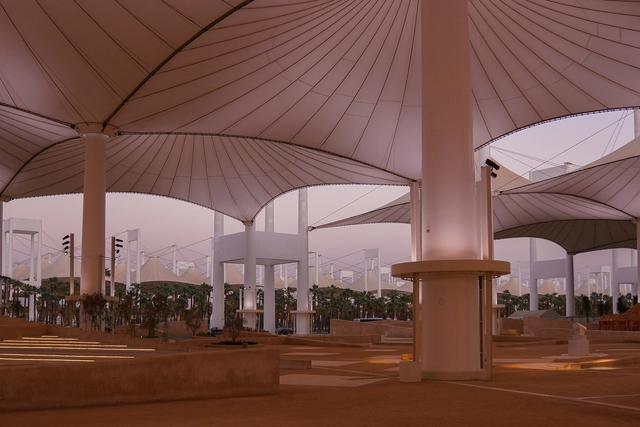
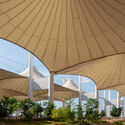
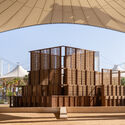
The Diriyah Biennale Foundation has revealed the four architecture studios shortlisted for the 2027 AlMusalla Prize, an international competition that commissions the design of a musalla, a space for prayer and contemplation, for the third edition of the Islamic Arts Biennale. Opening on November 1, 2027, at the Western Hajj Terminal in Jeddah, Saudi Arabia, the Biennale will feature a new prayer structure designed by one of the shortlisted teams: Al-Jawad Pike (United Kingdom), Civil Architecture (Bahrain/Kuwait), MILLIØNS (United States), or NEW SOUTH (France). The winning proposal will be announced in March 2027 and realized as part of the exhibition before being permanently relocated to JAX District in Diriyah.
Diriyah Biennale Foundation Announces Four Studios Shortlisted for the 2027 AlMusalla Prize - Image 1 of 4Diriyah Biennale Foundation Announces Four Studios Shortlisted for the 2027 AlMusalla Prize - Image 2 of 4Diriyah Biennale Foundation Announces Four Studios Shortlisted for the 2027 AlMusalla Prize - Image 3 of 4Diriyah Biennale Foundation Announces Four Studios Shortlisted for the 2027 AlMusalla Prize - Image 4 of 4Diriyah Biennale Foundation Announces Four Studios Shortlisted for the 2027 AlMusalla Prize - More Images+ 7

Jaali, Mashrabiya, Cobogó: The Lightest Skins in Architecture

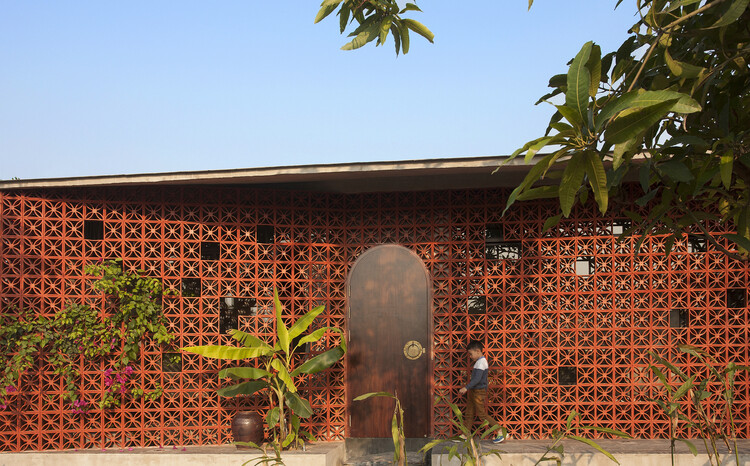
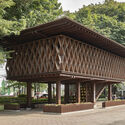
A perforated screen is often treated as an afterthought, something applied to soften light, to decorate a façade, or to add texture where a wall might otherwise feel flat. It is photographed as a surface, drawn as a pattern, and discussed as a craft. But in many buildings across the Indian subcontinent and the Islamic world, the screen was never an addition. It was the wall itself. Remove it, and the building does not simply change in appearance; it loses its ability to regulate heat, move air, and mediate between inside and outside.

This misreading reveals more about contemporary habits than about the screen itself. Architectural thinking has long separated structure from envelope, performance from expression. Within that framework, elements like the jaali or mashrabiya are easy to categorize as ornamental, visually rich but technically secondary. Yet these screens were conceived as integrated systems, where geometry, material, and climate operate together. Their intelligence lies in what they do.

Jaali, Mashrabiya, Cobogó: The Lightest Skins in Architecture - Image 1 of 4Jaali, Mashrabiya, Cobogó: The Lightest Skins in Architecture - Image 2 of 4Jaali, Mashrabiya, Cobogó: The Lightest Skins in Architecture - Image 3 of 4Jaali, Mashrabiya, Cobogó: The Lightest Skins in Architecture - Image 4 of 4Jaali, Mashrabiya, Cobogó: The Lightest Skins in Architecture - More Images+ 11

X Architects Design Grand Mosque for Saudi Arabia’s Diriyah Gate Development

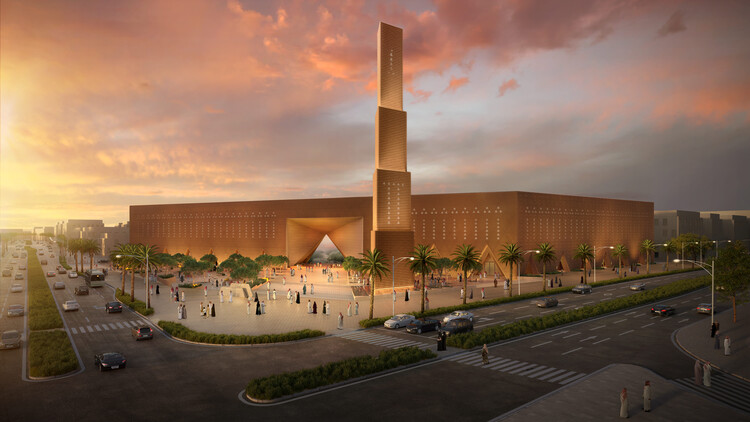
Set within the historic district of Diriyah, widely recognized as the birthplace of the first Saudi state, the Grand Mosque by X Architects forms part of the ongoing transformation of the area into a major cultural destination in Riyadh. Envisioned within the Diriyah Gate II development, the project is positioned at the intersection of heritage preservation and large-scale urban redevelopment, contributing to a broader master plan that includes museums, civic institutions, residential neighborhoods, and public spaces. Within this context, the mosque is conceived not only as a place of worship but also as an urban anchor embedded in the evolving fabric of the district.

X Architects Design Grand Mosque for Saudi Arabia’s Diriyah Gate Development - Image 1 of 4X Architects Design Grand Mosque for Saudi Arabia’s Diriyah Gate Development - Image 2 of 4X Architects Design Grand Mosque for Saudi Arabia’s Diriyah Gate Development - Image 3 of 4X Architects Design Grand Mosque for Saudi Arabia’s Diriyah Gate Development - Image 4 of 4X Architects Design Grand Mosque for Saudi Arabia’s Diriyah Gate Development - More Images+ 3

Tashkent Architecture City Guide: Ten Buildings of Soviet Hybrid Modernism

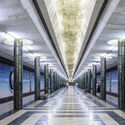
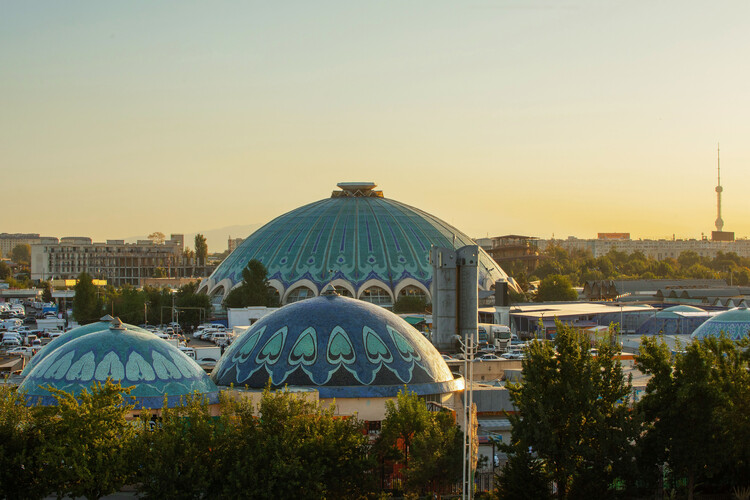
Situated along the historic Silk Road in Central Asia, Tashkent is a city with a long history spanning thousands of years. Its historic architecture is known for its courtyards, domes, and blue ceramics, typical of its Timurid heritage. The capital of Uzbekistan today, it was absorbed into the Russian Empire in the 19th century, before becoming a Soviet republic. While part of the Soviet Union, the city became an example of modernization, celebrating socialist achievements in Asia. A devastating earthquake in 1966 accelerated this modernization as the city was reconstructed, leading to many of the modernist monuments for which Tashkent is known today.

Tashkent Architecture City Guide: Ten Buildings of Soviet Hybrid Modernism - Image 1 of 4Tashkent Architecture City Guide: Ten Buildings of Soviet Hybrid Modernism - Image 2 of 4Tashkent Architecture City Guide: Ten Buildings of Soviet Hybrid Modernism - Image 3 of 4Tashkent Architecture City Guide: Ten Buildings of Soviet Hybrid Modernism - Image 4 of 4Tashkent Architecture City Guide: Ten Buildings of Soviet Hybrid Modernism - More Images+ 12

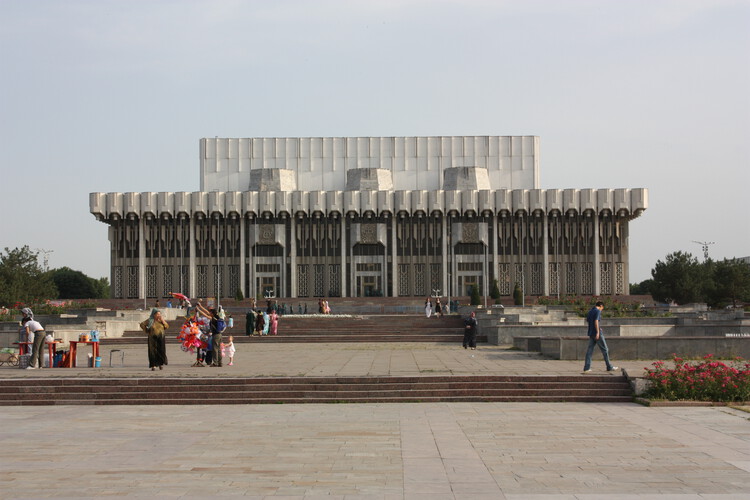
The Aesthetics of Power: Soviet Modernism Meets Uzbek Tradition in Tashkent’s Palace of Peoples’ Friendship

Subscriber Access | 

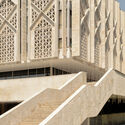
Tashkent, the capital of Uzbekistan and one of the oldest cities in Central Asia, has long been shaped by a hybrid culture. Located at a strategic point along the Silk Road, the city developed an architectural tradition defined by inner courtyards, domes, decorative ceramics, and Islamic geometric patterns. The annexation by the Russian Empire in the 19th century introduced administrative buildings, orthogonal squares, and straight avenues, creating a dual urban fabric — between the “old” Eastern city and the “new” European one — in which contrasts and overlaps became the norm.

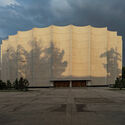
During the Soviet period, when Tashkent became the capital of the Uzbek Soviet Socialist Republic and received intense migration from across the union, the city was transformed into a modernist showcase. The coexistence between Islamic heritage and the ideology of socialist progress found a new inflection point with the 1966 earthquake, whose destruction triggered a large-scale reconstruction effort involving architects from across the USSR. Massive housing complexes, cultural institutions, and monumental buildings emerged, reinterpreting local motifs through ideological and technological language. It was in this context that the Palace of Peoples’ Friendship took shape.

The Aesthetics of Power: Soviet Modernism Meets Uzbek Tradition in Tashkent’s Palace of Peoples’ Friendship - Image 1 of 4The Aesthetics of Power: Soviet Modernism Meets Uzbek Tradition in Tashkent’s Palace of Peoples’ Friendship - Image 2 of 4The Aesthetics of Power: Soviet Modernism Meets Uzbek Tradition in Tashkent’s Palace of Peoples’ Friendship - Image 3 of 4The Aesthetics of Power: Soviet Modernism Meets Uzbek Tradition in Tashkent’s Palace of Peoples’ Friendship - Image 4 of 4The Aesthetics of Power: Soviet Modernism Meets Uzbek Tradition in Tashkent’s Palace of Peoples’ Friendship - More Images+ 3

First Ismaili Center in the U.S., Designed by Farshid Moussavi Architecture, Opens in Houston

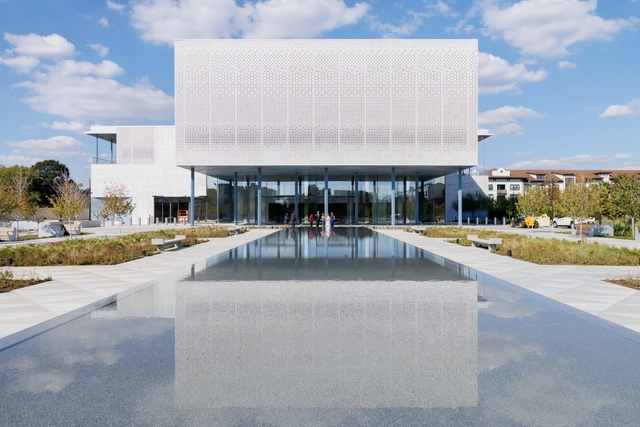
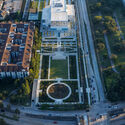
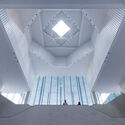
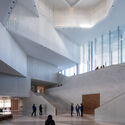
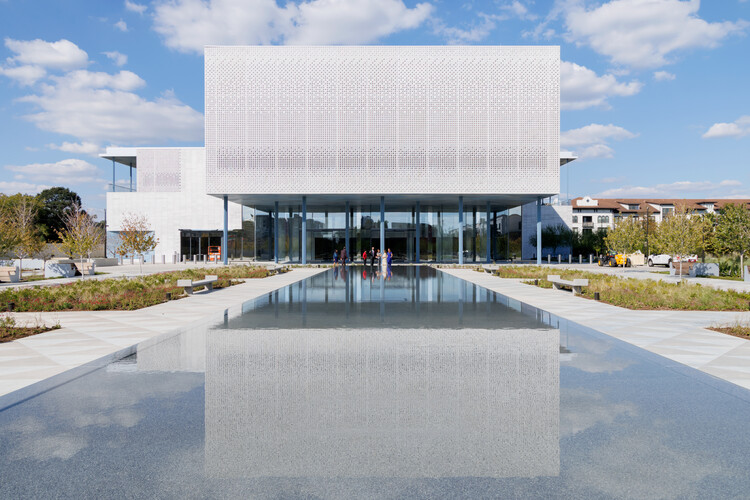
The Ismaili Center in Houston, the first of its kind in the United States, was inaugurated on November 6, 2025, by Mayor John Whitmire. Designed by Farshid Moussavi Architecture and Nelson Byrd Woltz Landscape Architects, the 11-acre site overlooking Buffalo Bayou Park establishes a new architectural and cultural landmark within Houston's urban and social landscape. Located at the intersection of Allen Parkway and Montrose Boulevard, the Center builds upon a vision first outlined by His Highness Prince Karim Aga Khan IV in 2006 and later developed under the direction of his successor. Joining six existing Ismaili Centers worldwide, in London, Vancouver, Lisbon, Dubai, Dushanbe, and Toronto, the Houston Center aims to continue a global tradition of fostering intercultural dialogue and civic engagement.

First Ismaili Center in the U.S., Designed by Farshid Moussavi Architecture, Opens in Houston - Image 1 of 4First Ismaili Center in the U.S., Designed by Farshid Moussavi Architecture, Opens in Houston - Image 2 of 4First Ismaili Center in the U.S., Designed by Farshid Moussavi Architecture, Opens in Houston - Image 3 of 4First Ismaili Center in the U.S., Designed by Farshid Moussavi Architecture, Opens in Houston - Image 4 of 4First Ismaili Center in the U.S., Designed by Farshid Moussavi Architecture, Opens in Houston - More Images+ 17

Abdelwahed El-Wakil Receives the 2025 Tamayouz Lifetime Achievement Award

Egyptian architect Abdelwahed El-Wakil has been named the recipient of the 2025 Tamayouz Lifetime Achievement Award. The recognition was announced during the Tamayouz Excellence Award Ceremony in Baghdad, held as part of the inaugural Arab Architecture Festival. The recognition highlights his contributions to the revival of traditional Islamic architecture, as well as his contributions as a researcher, educator, and mentor whose work has influenced generations of architects across the region and beyond.

Abdelwahed El-Wakil Receives the 2025 Tamayouz Lifetime Achievement Award - Image 1 of 4Abdelwahed El-Wakil Receives the 2025 Tamayouz Lifetime Achievement Award - Image 2 of 4Abdelwahed El-Wakil Receives the 2025 Tamayouz Lifetime Achievement Award - Image 3 of 4Abdelwahed El-Wakil Receives the 2025 Tamayouz Lifetime Achievement Award - Image 4 of 4Abdelwahed El-Wakil Receives the 2025 Tamayouz Lifetime Achievement Award - More Images+ 13

From Saudi Arabia to Uzbekistan: AlMusalla Pavilion Reinstalled for the Inaugural Bukhara Biennial 2025

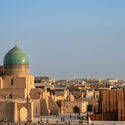
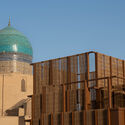
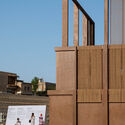
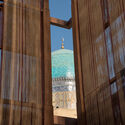
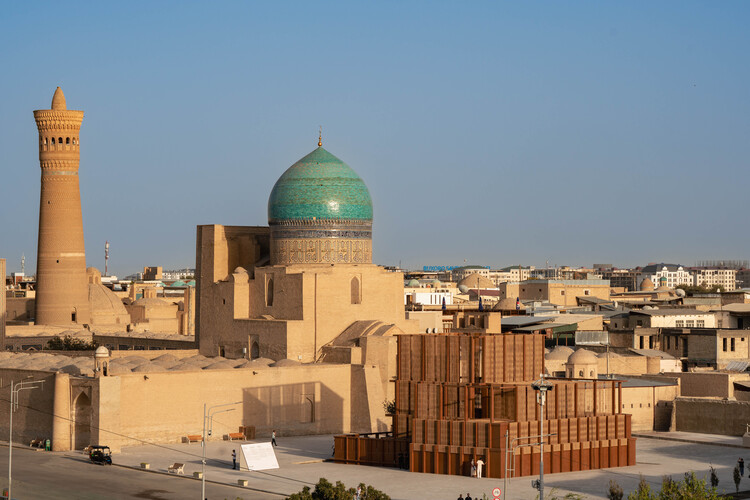
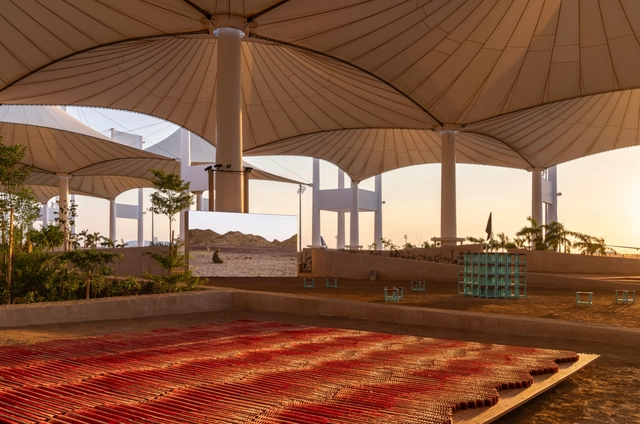
In April 2024, the Diriyah Biennale Foundation announced the AlMusalla Prize, an international architecture competition focused on designing a musalla: a flexible space for prayer and reflection accessible to people of all faiths. The winning project, designed by EAST Architecture Studio in collaboration with artist Rayyane Tabet and engineering firm AKT II, is a modular structure built with materials derived from local date palm waste, including fronds and fibers, and inspired by regional weaving traditions. Installed in the Western Hajj Terminal of King Abdulaziz International Airport in Jeddah, Saudi Arabia, the musalla served for four months during the Islamic Arts Biennale as a space for prayer, welcoming both Muslim and non-Muslim visitors. Conceived to be dismantled and reassembled, the structure was recently relocated to Uzbekistan for the inaugural Bukhara Biennial 2025.

From Saudi Arabia to Uzbekistan: AlMusalla Pavilion Reinstalled for the Inaugural Bukhara Biennial 2025 - Image 1 of 4From Saudi Arabia to Uzbekistan: AlMusalla Pavilion Reinstalled for the Inaugural Bukhara Biennial 2025 - Image 2 of 4From Saudi Arabia to Uzbekistan: AlMusalla Pavilion Reinstalled for the Inaugural Bukhara Biennial 2025 - Image 3 of 4From Saudi Arabia to Uzbekistan: AlMusalla Pavilion Reinstalled for the Inaugural Bukhara Biennial 2025 - Image 4 of 4From Saudi Arabia to Uzbekistan: AlMusalla Pavilion Reinstalled for the Inaugural Bukhara Biennial 2025 - More Images+ 58

12 Pavilions at EXPO 2025 Osaka Highlight Immersive Spatial Experiences

 | Sponsored Content

Since its inauguration this spring, Expo 2025 Osaka has captured global attention from multiple perspectives, demonstrating how architecture can function as a laboratory for exploring solutions to pressing challenges. After 55 years, Osaka is once again hosting the World Expo, with each installation organized around the sub-themes Saving Lives, Empowering Lives, and Connecting Lives. These pavilions take forms that express the identity and values of their region through distinctive architectural languages, forming the central axis of their design. Building on this foundation, some installations serve as laboratories for the future society, utilizing technology to enhance experiences both inside and outside the spaces, transforming the visit through light, sound, visuals, and movement as part of the technological innovation showcased at the event.

12 Pavilions at EXPO 2025 Osaka Highlight Immersive Spatial Experiences - Image 1 of 412 Pavilions at EXPO 2025 Osaka Highlight Immersive Spatial Experiences - Image 2 of 412 Pavilions at EXPO 2025 Osaka Highlight Immersive Spatial Experiences - Image 3 of 412 Pavilions at EXPO 2025 Osaka Highlight Immersive Spatial Experiences - Image 4 of 412 Pavilions at EXPO 2025 Osaka Highlight Immersive Spatial Experiences - More Images+ 27

Aga Khan Award for Architecture Announces 2025 Winners

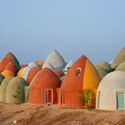
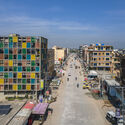
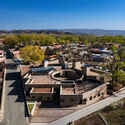
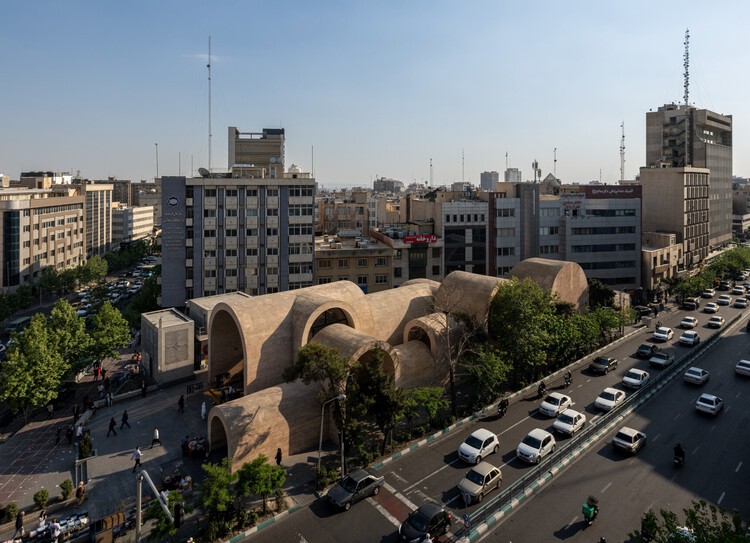
The independent Master Jury of the 16th Award Cycle (2023–2025) of the Aga Khan Award for Architecture has announced seven winners, selected following on-site reviews of projects shortlisted earlier in June. Collectively, the awarded works demonstrate architecture's potential to act as a catalyst for pluralism, community resilience, social transformation, cultural dialogue, and climate-responsive design. Two projects from Iran, and one each from Bangladesh, China, Egypt, Pakistan, and Palestine, will share a prize of $1 million, among the most significant awards in the field of architecture.

Aga Khan Award for Architecture Announces 2025 Winners - Image 1 of 4Aga Khan Award for Architecture Announces 2025 Winners - Image 2 of 4Aga Khan Award for Architecture Announces 2025 Winners - Image 3 of 4Aga Khan Award for Architecture Announces 2025 Winners - Image 4 of 4Aga Khan Award for Architecture Announces 2025 Winners - More Images+ 63

Aga Khan Award for Architecture 2025 Announces 19 Shortlisted Projects from 15 Countries

The Aga Khan Award for Architecture (AKAA) has announced the 19 shortlisted projects for its 2025 cycle. Selected from a pool of 369 nominations, these projects will compete for a share of the USD 1 million prize, one of the most significant awards in the field. The shortlist was determined by an independent Master Jury composed of nine members: Azra Akšamija, Noura Al Sayeh-Holtrop, Lucia Allais, David Basulto, Yvonne Farrell, Kabage Karanja, Yacouba Konaté, Hassan Radoine, and Mun Summ Wong. The Jury will meet later this summer to review on-site evaluations and select the final recipients of the 16th Award Cycle (2023–2025).

Aga Khan Award for Architecture 2025 Announces 19 Shortlisted Projects from 15 Countries - Image 1 of 4Aga Khan Award for Architecture 2025 Announces 19 Shortlisted Projects from 15 Countries - Image 2 of 4Aga Khan Award for Architecture 2025 Announces 19 Shortlisted Projects from 15 Countries - Image 3 of 4Aga Khan Award for Architecture 2025 Announces 19 Shortlisted Projects from 15 Countries - Image 4 of 4Aga Khan Award for Architecture 2025 Announces 19 Shortlisted Projects from 15 Countries - More Images+ 16

Bradford Unveils Ramadan Pavilion ‘Infinite Light’ for 2025 United Kingdom City of Culture

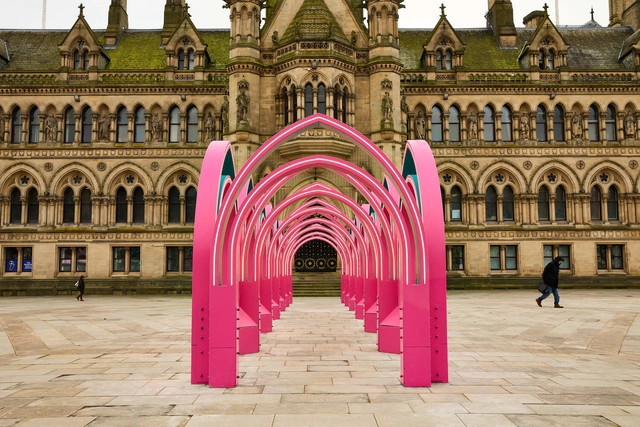
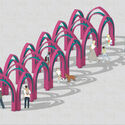
A new site-specific pavilion has been unveiled in Bradford city centre as part of the 2025 UK City of Culture celebrations. Designed by artist Zarah Hussain and architectural designer Fatima Mejbil, Infinite Light marks the beginning of the holy month of Ramadan and the launch of Ramadan Festival 2025. The project has been commissioned by the Ramadan Tent Project in collaboration with Bradford 2025 and follows the inaugural Ramadan Pavilion designed by Shahed Saleem in 2023.

Bradford Unveils Ramadan Pavilion ‘Infinite Light’ for 2025 United Kingdom City of Culture - Image 1 of 4Bradford Unveils Ramadan Pavilion ‘Infinite Light’ for 2025 United Kingdom City of Culture - Image 2 of 4Bradford Unveils Ramadan Pavilion ‘Infinite Light’ for 2025 United Kingdom City of Culture - Image 3 of 4Bradford Unveils Ramadan Pavilion ‘Infinite Light’ for 2025 United Kingdom City of Culture - Image 4 of 4Bradford Unveils Ramadan Pavilion ‘Infinite Light’ for 2025 United Kingdom City of Culture - More Images+ 4

Global Architects, Local Contexts: Navigating Identity in the Gulf’s Cultural Landmarks

Subscriber Access | 

In recent years, the Gulf region has emerged as a global center for cultural and architectural development, commissioning internationally acclaimed architects to design its most high-profile museums and institutions. These projects, ranging from Louvre Abu Dhabi by Jean Nouvel to Museum of Islamic Art in Doha by I. M. Pei, are often designed by foreign architects, yet they aim to embed themselves within their context through strategies that reference the region's landscape, climate, and architectural traditions. This raises a fundamental question: What defines local architecture in the 21st century?

Global Architects, Local Contexts: Navigating Identity in the Gulf’s Cultural Landmarks - Image 1 of 4Global Architects, Local Contexts: Navigating Identity in the Gulf’s Cultural Landmarks - Image 2 of 4Global Architects, Local Contexts: Navigating Identity in the Gulf’s Cultural Landmarks - Image 3 of 4Global Architects, Local Contexts: Navigating Identity in the Gulf’s Cultural Landmarks - Image 4 of 4Global Architects, Local Contexts: Navigating Identity in the Gulf’s Cultural Landmarks - More Images+ 9

Islamic Arts Biennale 2025 Opens in Jeddah, Saudi Arabia

The second edition of the Islamic Arts Biennale, titled And All That Is In Between, has officially opened in Jeddah. Organized by the Diriyah Biennale Foundation, the Biennale takes place at the Western Hajj Terminal of King Abdulaziz International Airport, a site that holds profound significance for millions of Muslim pilgrims traveling for Hajj and Umrah. The exhibition scenography is designed by the international architecture firm OMA, enhancing the experience with a thoughtful spatial narrative. The exhibition, which runs until May 25, 2025, explores how faith is experienced, expressed, and celebrated through feeling, thinking, and making.

Islamic Arts Biennale 2025 Opens in Jeddah, Saudi Arabia - Image 1 of 4Islamic Arts Biennale 2025 Opens in Jeddah, Saudi Arabia - Image 4 of 4Islamic Arts Biennale 2025 Opens in Jeddah, Saudi Arabia - Image 5 of 4Islamic Arts Biennale 2025 Opens in Jeddah, Saudi Arabia - Image 2 of 4Islamic Arts Biennale 2025 Opens in Jeddah, Saudi Arabia - More Images+ 10

Revitalizing Historic Cairo: May al-Ibrashy's Vision for Heritage, Community, and Sustainable Conservation

Cairo, often called the "City of a Thousand Minarets," boasts one of the richest cultural and architectural tapestries in the world. Its heritage reflects centuries of diverse influences from Pharaonic monuments to Islamic and Mamluk architecture. However, preserving this legacy is an ongoing challenge in the face of urban pressures, climate change, and socio-economic dynamics. Heritage conservation in Cairo is not just about safeguarding these structures; it's about integrating them into the lives of local communities, ensuring they remain dynamic and accessible spaces.

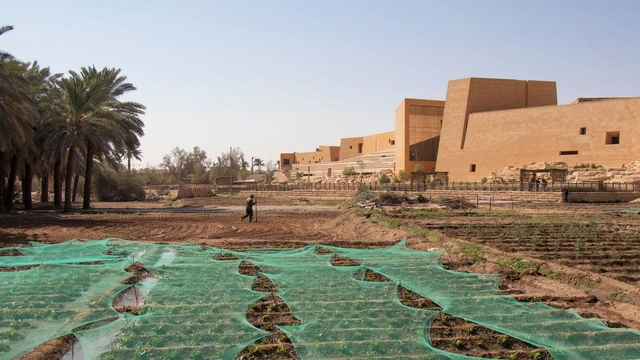
At the forefront of this mission is Dr. May al-Ibrashy, an architect and conservationist whose innovative and community-driven approach has redefined how heritage is preserved. As the founder of Megawra–Built Environment Collective, she has worked tirelessly in neighborhoods like Al-Khalifa, Al-Hattaba, and Sayyida Zeinab to restore historic monuments while creating vibrant public spaces. Her work bridges the gap between architectural preservation and urban regeneration, ensuring that these historic districts serve both as cultural landmarks and as living, functional spaces for their residents.

Revitalizing Historic Cairo: May al-Ibrashy's Vision for Heritage, Community, and Sustainable Conservation - Image 1 of 4Revitalizing Historic Cairo: May al-Ibrashy's Vision for Heritage, Community, and Sustainable Conservation - Image 2 of 4Revitalizing Historic Cairo: May al-Ibrashy's Vision for Heritage, Community, and Sustainable Conservation - Image 3 of 4Revitalizing Historic Cairo: May al-Ibrashy's Vision for Heritage, Community, and Sustainable Conservation - Image 4 of 4Revitalizing Historic Cairo: May al-Ibrashy's Vision for Heritage, Community, and Sustainable Conservation - More Images+ 9

EAST Architecture Studio Wins Inaugural AlMusalla Prize for Islamic Arts Biennale 2025 in Saudi Arabia

The Diriyah Biennale Foundation has announced Lebanon-based EAST Architecture Studio, in collaboration with artist Rayyane Tabet and engineering firm AKT II, as the winners of the inaugural AlMusalla Prize, a significant new architectural competition launched as part of the Islamic Arts Biennale. Their winning design, a modular structure inspired by regional weaving traditions, uses sustainable materials derived from local date palm waste, including palm fronds and fibers. After the four-month Biennale, the Musalla will be dismantled and reassembled at a new location.

EAST Architecture Studio Wins Inaugural AlMusalla Prize for Islamic Arts Biennale 2025 in Saudi Arabia - Image 1 of 4EAST Architecture Studio Wins Inaugural AlMusalla Prize for Islamic Arts Biennale 2025 in Saudi Arabia - Image 2 of 4EAST Architecture Studio Wins Inaugural AlMusalla Prize for Islamic Arts Biennale 2025 in Saudi Arabia - Image 3 of 4EAST Architecture Studio Wins Inaugural AlMusalla Prize for Islamic Arts Biennale 2025 in Saudi Arabia - Image 4 of 4EAST Architecture Studio Wins Inaugural AlMusalla Prize for Islamic Arts Biennale 2025 in Saudi Arabia - More Images+ 1

Aga Khan Award for Architecture Announces Master Jury for the 2025 Edition

The Aga Khan Award for Architecture has announced the Master Jury for the 16th award cycle. The independent panel includes Pritzker Prize laureate Yvonne Farrell, ArchDaily founder David Basulto, and Lucia Allais, director of the Buell Center. Established in 1977 by Aga Khan IV, this competition set out to highlight architectural projects that have a significant positive impact on Islamic communities worldwide. The Award is presented in three-year cycles and has a monetary prize totaling US$1 million.

Aga Khan Award for Architecture Announces Master Jury for the 2025 Edition - Image 1 of 4Aga Khan Award for Architecture Announces Master Jury for the 2025 Edition - Image 2 of 4Aga Khan Award for Architecture Announces Master Jury for the 2025 Edition - Image 3 of 4Aga Khan Award for Architecture Announces Master Jury for the 2025 Edition - Image 4 of 4Aga Khan Award for Architecture Announces Master Jury for the 2025 Edition - More Images+ 2

Islamic Arts Biennale 2025 Announces Theme: Exploring Faith Through Art and Culture

The Diriyah Biennale Foundation has revealed the theme and title for the 2025 Islamic Arts Biennale: And all that is in between. Scheduled from January 25 to May 25, 2025, at the Western Hajj Terminal of King Abdulaziz International Airport in Jeddah, this second edition will explore how faith is experienced, expressed, and celebrated through the acts of feeling, thinking, and making.

Islamic Arts Biennale 2025 Announces Theme: Exploring Faith Through Art and Culture - Image 1 of 4Islamic Arts Biennale 2025 Announces Theme: Exploring Faith Through Art and Culture - Image 2 of 4Islamic Arts Biennale 2025 Announces Theme: Exploring Faith Through Art and Culture - Image 3 of 4Islamic Arts Biennale 2025 Announces Theme: Exploring Faith Through Art and Culture - Image 4 of 4Islamic Arts Biennale 2025 Announces Theme: Exploring Faith Through Art and Culture - More Images+ 11