1. ArchDaily
  2. Interview

Interview: The Latest Architecture and News

Eyal Weizman on Forensic Architecture: ''Mapping is Power''

“Since I remember myself, I have wanted to be an architect… I could see the way that neighborhoods were organized. I could see the separation. I could see the frontier areas between the Palestinian community and the Jewish majority,” expresses Eyal Weizman in conversation with Louisiana Channel, in regards to understanding the ‘political significance’ of architecture and the potential of the occupation as a critical tool for understanding the world.

Eyal Weizman was interviewed by Marc-Christoph Wagner at Forensic Architecture’s studio in London, in April 2022. As the head of Forensic Architecture, he is renowned for his part within the multidisciplinary research group, using a combination of architectural technologies and techniques to investigate instances of state violence and violations of human rights across the globe. Growing up in Haifa, Israel he developed an understanding of the political connotations within architecture from an early stage.

Eyal Weizman on Forensic Architecture: ''Mapping is Power'' - Image 1 of 4Eyal Weizman on Forensic Architecture: ''Mapping is Power'' - Image 2 of 4Eyal Weizman on Forensic Architecture: ''Mapping is Power'' - Image 3 of 4Eyal Weizman on Forensic Architecture: ''Mapping is Power'' - Image 4 of 4Eyal Weizman on Forensic Architecture: ''Mapping is Power'' - More Images

Queer Spaces and the Path of Positive Possibilities Within Architecture: an Interview with Adam Nathaniel Furman

Subscriber Access | 
Queer Spaces and the Path of Positive Possibilities Within Architecture: an Interview with Adam Nathaniel Furman - Featured Image
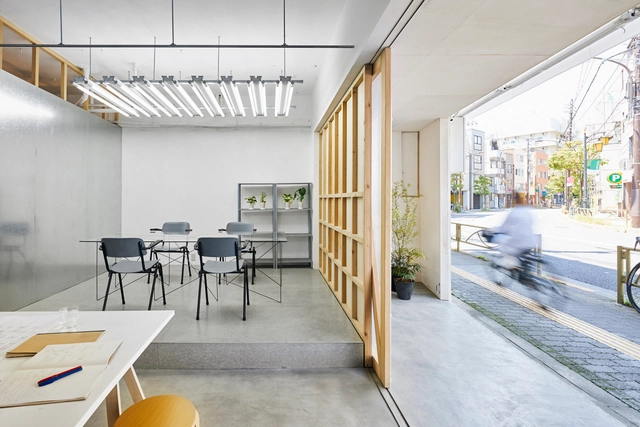
© Kaoru Yamada

"Growing up queer means experiencing the destabilizing absence of a broad and accessible queer history, most notably, in our case, in relation to spatial design". This account is what intrigued artist Adam Nathaniel Furman and architectural historian Joshua Mardell to bring together a community of contributors who bring new perspectives to the field of architecture and share stories of spaces that challenge cis-heteronormative morals, sheltering lives that seek to live their own truths. The result of this quest is a book titled Queer Spaces: An Atlas of LGBTQIA+ Places and Stories, which explores stories about distinct social, political, and geographical contexts within the community.

Queer Spaces and the Path of Positive Possibilities Within Architecture: an Interview with Adam Nathaniel Furman - Image 1 of 4Queer Spaces and the Path of Positive Possibilities Within Architecture: an Interview with Adam Nathaniel Furman - Image 2 of 4Queer Spaces and the Path of Positive Possibilities Within Architecture: an Interview with Adam Nathaniel Furman - Image 3 of 4Queer Spaces and the Path of Positive Possibilities Within Architecture: an Interview with Adam Nathaniel Furman - Image 4 of 4Queer Spaces and the Path of Positive Possibilities Within Architecture: an Interview with Adam Nathaniel Furman - More Images+ 16

Cities of the Future: Julia Watson on Nature-based Technologies and Radical Materials

Subscriber Access | 
Cities of the Future: Julia Watson on Nature-based Technologies and Radical Materials - Featured Image
Las Islas Flotantes is a floating island system on Lake Titicaca in Peru inhabited by the Uros, who build their entire civilization from the locally grown totora reed. Image © Enrique Castro-Mendivil

Looking ahead to the future of our built environment, a one-size-fits-all approach simply won’t do. Issues like rising sea levels, temperatures, and water scarcity in urban communities need localized solutions that take into account questions of sustainability, culture, and public health. Having investigated vernacular infrastructure across indigenous communities for her book Lo-TEK. Design by Radical Indigenism, designer Julia Watson is an expert in local, nature-based technologies that are inherently adaptable and resilient. We talk to her about the future of our cities, building materials, and her latest project for Our Time on Earth – a five year, world-touring exhibition that just opened at London's Barbican Centre to investigate how radical, collaborative ideas for the way we live can get us to a much improved place by 2040.

Cities of the Future: Julia Watson on Nature-based Technologies and Radical Materials - Image 1 of 4Cities of the Future: Julia Watson on Nature-based Technologies and Radical Materials - Image 2 of 4Cities of the Future: Julia Watson on Nature-based Technologies and Radical Materials - Image 3 of 4Cities of the Future: Julia Watson on Nature-based Technologies and Radical Materials - Image 4 of 4Cities of the Future: Julia Watson on Nature-based Technologies and Radical Materials - More Images+ 8

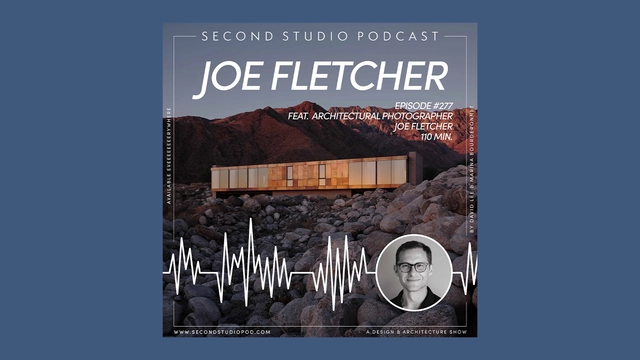
The Second Studio Podcast: Interview with Joe Fletcher

The Second Studio (formerly The Midnight Charette) is an explicit podcast about design, architecture, and the everyday. Hosted by Architects David Lee and Marina Bourderonnet, it features different creative professionals in unscripted conversations that allow for thoughtful takes and personal discussions.

A variety of subjects are covered with honesty and humor: some episodes are interviews, while others are tips for fellow designers, reviews of buildings and other projects, or casual explorations of everyday life and design. The Second Studio is also available on iTunes, Spotify, and YouTube.

This week David and Marina are joined by Joe Fletcher, Architectural Photographer to discuss his transition from painting to photography; his experience with a formalized education in photography; how an architectural photographer can influence architects and architecture; his process; the distillation of architecture through photography; why photogenic buildings are not always comfortable to be in; and more.

The Second Studio Podcast: Interview with Joe Fletcher  - Image 1 of 4The Second Studio Podcast: Interview with Joe Fletcher  - Image 2 of 4The Second Studio Podcast: Interview with Joe Fletcher  - Image 3 of 4The Second Studio Podcast: Interview with Joe Fletcher  - Image 4 of 4The Second Studio Podcast: Interview with Joe Fletcher  - More Images+ 13

"Visualizations Always Start with the Story": An Interview with Visual Artist Ceren Arslan

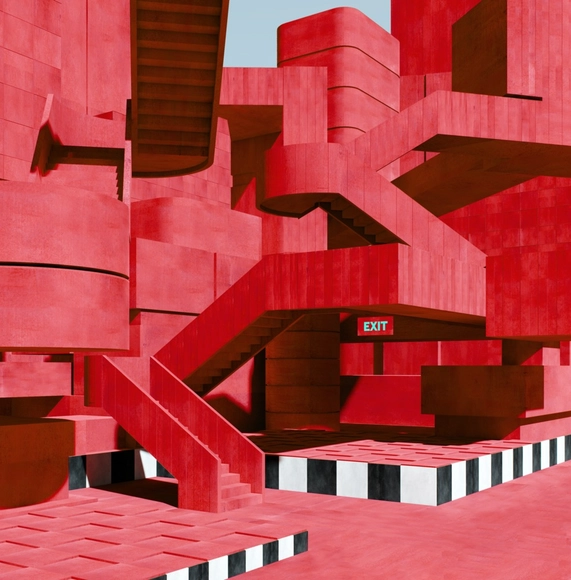
Beyond hyper-realistic renders and accurate depictions of what projects look like once completed, visualizations have become tools to communicate atmospheres and emotions portrayed by architects. The use of mixed media, combined with architectural compositions, art, lighting, and oftentimes music, have generated a new genre of architectural storytelling, one that combines reality with imagination. And as the world immerses in NFT's and experimenting with cutting-edge technologies to create digital environments, visualizations might soon become "the new reality". 

ArchDaily had the opportunity to talk to Visual Artist Ceren Arslan about branching out from the architecture practice, how she describes her creative process, her latest project EXIT, and what the future holds for architectural visualizations.

"Visualizations Always Start with the Story": An Interview with Visual Artist Ceren Arslan - Image 1 of 4"Visualizations Always Start with the Story": An Interview with Visual Artist Ceren Arslan - Image 2 of 4"Visualizations Always Start with the Story": An Interview with Visual Artist Ceren Arslan - Image 3 of 4"Visualizations Always Start with the Story": An Interview with Visual Artist Ceren Arslan - Image 4 of 4Visualizations Always Start with the Story: An Interview with Visual Artist Ceren Arslan - More Images+ 10

"I Wanted to Look at Places in a New Three-Dimensional Way": In Conversation with Daniel Libeskind

"I Wanted to Look at Places in a New Three-Dimensional Way": In Conversation with Daniel Libeskind - Featured Image
Jewish Museum Berlin. Image © Hufton+Crow

Daniel Libeskind (b. 1946, Lodz, Poland) studied architecture at Cooper Union in New York, graduating in 1970, and received his post-graduate degree from Essex University in England in 1972. While pursuing a teaching career he won the 1989 international competition to design the Jewish Museum in Berlin before ever realizing a single building. He then moved his family there to establish a practice with his wife Nina and devoted the next decade to the completion of the museum that opened in 2001. The project led to a series of other museum commissions that explored such notions as memory and history in architecture.

"I Wanted to Look at Places in a New Three-Dimensional Way": In Conversation with Daniel Libeskind - Image 1 of 4"I Wanted to Look at Places in a New Three-Dimensional Way": In Conversation with Daniel Libeskind - Image 2 of 4"I Wanted to Look at Places in a New Three-Dimensional Way": In Conversation with Daniel Libeskind - Image 3 of 4"I Wanted to Look at Places in a New Three-Dimensional Way": In Conversation with Daniel Libeskind - Image 4 of 4I Wanted to Look at Places in a New Three-Dimensional Way: In Conversation with Daniel Libeskind - More Images+ 15

The Second Studio Podcast: Should I Go To Architecture School?

The Second Studio Podcast: Should I Go To Architecture School? - Featured Image
© The Second Studio Podcast

The Second Studio (formerly The Midnight Charette) is an explicit podcast about design, architecture, and the everyday. Hosted by Architects David Lee and Marina Bourderonnet, it features different creative professionals in unscripted conversations that allow for thoughtful takes and personal discussions.

A variety of subjects are covered with honesty and humor: some episodes are interviews, while others are tips for fellow designers, reviews of buildings and other projects, or casual explorations of everyday life and design. The Second Studio is also available on iTunes, Spotify, and YouTube.

This week David and Marina answer the question, “Should I go to architecture school?” The two cover the relevancy of college/university, the architecture school experience, if studying architecture is needed to practice architecture, if having a degree helps with getting a job, preparing for architecture school, choosing the right degree, the cost of architecture school, and more.

“Architecture Is Much More Than Art, and It Is by Far More Than Just Buildings:” in Conversation With Francis Kéré

Subscriber Access | 

Meet 2022 Pritzker Architecture Prize winner, Francis Kéré, Burkina Faso-born black architect, in an interview about his architectural philosophy, with Louisiana Channel. As the official statement of the Pritzker Architecture Prize notes, “Through buildings that demonstrate beauty, modesty, and invention, and by the integrity of his architecture and geste, Kéré gracefully upholds the mission of this Prize”, continually “empowering and transforming communities through the process of architecture.”

“Architecture Is Much More Than Art, and It Is by Far More Than Just Buildings:” in Conversation With Francis Kéré - Image 1 of 4“Architecture Is Much More Than Art, and It Is by Far More Than Just Buildings:” in Conversation With Francis Kéré - Image 2 of 4“Architecture Is Much More Than Art, and It Is by Far More Than Just Buildings:” in Conversation With Francis Kéré - Image 3 of 4“Architecture Is Much More Than Art, and It Is by Far More Than Just Buildings:” in Conversation With Francis Kéré - Image 4 of 4“Architecture Is Much More Than Art, and It Is by Far More Than Just Buildings:” in Conversation With Francis Kéré - More Images+ 16

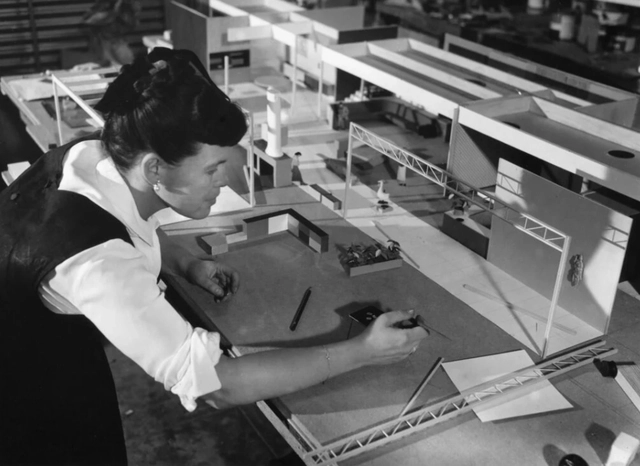
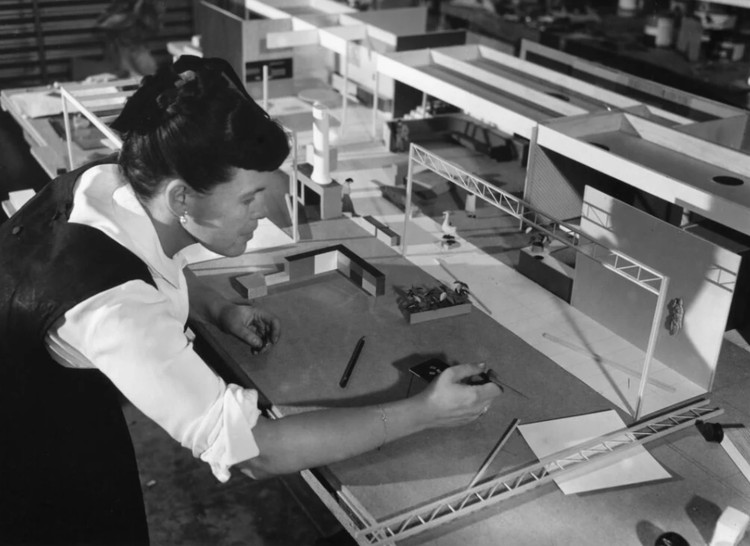
Putting Ray Eames’s Design Contributions in Context

On the heels of the Eames Office’s 80th anniversary marked by an exhibition and a Ray-inspired sneaker, director Eames Demetrios spoke to Metropolis about the matriarch who continues to inspire design.

Putting Ray Eames’s Design Contributions in Context - Image 1 of 4Putting Ray Eames’s Design Contributions in Context - Image 2 of 4Putting Ray Eames’s Design Contributions in Context - Image 3 of 4Putting Ray Eames’s Design Contributions in Context - Image 4 of 4Putting Ray Eames’s Design Contributions in Context - More Images+ 7

The Second Studio Podcast: Architecture’s Mental Health & Burnout Problem

The Second Studio (formerly The Midnight Charette) is an explicit podcast about design, architecture, and the everyday. Hosted by Architects David Lee and Marina Bourderonnet, it features different creative professionals in unscripted conversations that allow for thoughtful takes and personal discussions.

A variety of subjects are covered with honesty and humor: some episodes are interviews, while others are tips for fellow designers, reviews of buildings and other projects, or casual explorations of everyday life and design. The Second Studio is also available on iTunes, Spotify, and YouTube.

This week David and Marina discuss mental health and burnout in architecture, covering how the issue is perceived by different generations, why looking to other colleagues and professions can be helpful but also not helpful, passion as a solution and problem, the inherent complexity of architecture, architects being undervalued, whether or not architecture school should change, the instability of a project-based practice, and the main reasons for poor mental health and burnout exist in architecture and how they can be addressed.

"It’s Not Because You Are Limited in Resources That You Should Accept Mediocrity": Interview with Francis Kéré, 2022 Pritzker Winner

African architecture has received deserved international attention in the last decade and one of the main responsible for this is, undoubtedly, Diébédo Francis Kéré, 2022 Pritzker Prize Winner. Born in Gando, Burkina Faso, Kéré graduated in architecture at the Technische Universität Berlin, in Germany. Today, he maintains branches of his firm, Kéré Architecture, in both countries, through which he seeks to develop works in the "intersection of utopia and pragmatism", exploring the border between Western architecture and local practice.

Known for involving community in the construction process of its buildings, Kéré and his office have developed works that go beyond the conventional limits of architecture and touch on themes such as local economy, migration, culture and equity. We had the pleasure and privilege of talking with the architect about some of his projects and his broader vision on architecture. Read the full interview below.

Architects Beyond the Traditional Practice: ArchDaily Editors Talk

Graduating with an architecture degree is often met with the expectations of working a 9-5 job at an office. However, the reality is that many fresh graduates are venturing into diversified careers and exploring fields such as architectural photography, writing, rendering, set design, and project management. In this Editor's Talk, ArchDaily's Founder and Editor in Chief, Director of Software Product Development, Managing Editors, and Social Media Editor share their experiences of graduating with a Bachelor's Degree in Architecture then finding themselves exploring different, yet very complimentary career paths post graduation, proving that there is a lot more to the architecture practice beyond designing built spaces.

Architects Beyond the Traditional Practice: ArchDaily Editors Talk - Image 1 of 4Architects Beyond the Traditional Practice: ArchDaily Editors Talk - Image 2 of 4Architects Beyond the Traditional Practice: ArchDaily Editors Talk - Image 3 of 4Architects Beyond the Traditional Practice: ArchDaily Editors Talk - Image 4 of 4Architects Beyond the Traditional Practice: ArchDaily Editors Talk - More Images+ 7

"If you Build a House, You Need a Piece of Land": In Conversation with Not Vital

“If you’re a painter, you need a canvas. If you’re a sculptor, you need marble or plaster. And if you build a house, you need a piece of land.” Welcome to the wonderful world of Not Vital, where the Swiss multi-faceted artist shows us his sculpture park, foundation, and castle in this video.

Louisiana Channel meets Not Vital in his studio in Sent, the town in Switzerland where he grew up and one of the places where he still lives. Building places to live have been with him since childhood: “My first work was more related to trying to build a house or a habitat. The first one was when I was only three years old in 1951. There was so much snow that my brother and I built a tunnel,” he says and continues: “I think that it was the first time I realized that I like to build my own habitat. Even though it was much more comfortable to live in the house, I spent the day in the tunnel. I remember the light, the smell of the snow. I just felt great.”

''A Building Should Address our Own Fragility'' : In Conversation with Dorte Mandrup

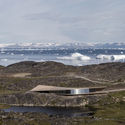
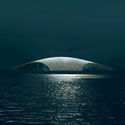
''A Building that Should Address our own Fragility'' says Dorte Mandrup in conversation with Louisiana Channel, in regards to her recent work, the Ilulissat Icefjord Center, in Greenland. An exhibition house in its own right, this powerful filmography explores the surrounding environment, offering insight into the changes seen on the ice and the harmonious relationship between the structure itself and the glacial landscape.

Dorte Mandrup was interviewed by Marc-Christopher Wagner in her studio in the Spring of 2021. Regarded as Humanist, Mandrup has been heavily influenced by medicine, sculpture and ceramics, creating engaging and evocative architectural form. As part of her philanthropic work the center is set to tell a narrative of evolution, human history and the secrets of the ice.

''A Building Should Address our Own Fragility'' : In Conversation with Dorte Mandrup - Image 1 of 4''A Building Should Address our Own Fragility'' : In Conversation with Dorte Mandrup - Image 2 of 4''A Building Should Address our Own Fragility'' : In Conversation with Dorte Mandrup - Image 3 of 4''A Building Should Address our Own Fragility'' : In Conversation with Dorte Mandrup - Image 4 of 4''A Building Should Address our Own Fragility'' : In Conversation with Dorte Mandrup - More Images

The Second Studio Podcast: Interview with Sarah Whiting

The Second Studio (formerly The Midnight Charette) is an explicit podcast about design, architecture, and the everyday. Hosted by Architects David Lee and Marina Bourderonnet, it features different creative professionals in unscripted conversations that allow for thoughtful takes and personal discussions.

A variety of subjects are covered with honesty and humor: some episodes are interviews, while others are tips for fellow designers, reviews of buildings and other projects, or casual explorations of everyday life and design. The Second Studio is also available on iTunes, Spotify, and YouTube.

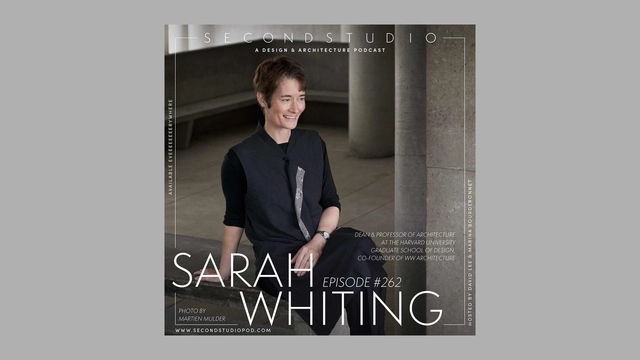
This week, David and Marina are joined by Sarah Whiting, Dean and Josep Lluís Sert Professor of Architecture at the Harvard University Graduate School of Design; Co-Founder of WW Architecture to discuss her early interests in architecture, communicating the value of architecture to the public, the GSD, social and environmental issues in architecture, the future of architecture practice, movements in architecture, and more.

''The Delight I Get Out of Doing Buildings is to Say: It Can be Built'' : In Conversation with Peter Cook

‘’The delight I get out of doing buildings is to say: Screw you, it can be built’’ says Architect Peter Cook in conversation with Louisiana Channel, where he discusses his determination to communicate ideas through vivid Architectural drawings and the skepticism he has faced in regards to his ambitious design proposals and their outlandish appearance.

Peter Cook was interviewed at his studio in January 2022 prior to his exhibition ‘City Landscapes’ at the Louisiana Museum of Modern Art, Denmark. As the first artwork displayed that has been produced by an Architect, it explores his reverence for hand-drawing as an Architect's primary medium. The work depicts innovative new ways of exploring the city and our physical space in striking and evocative texture and color.

''The Delight I Get Out of Doing Buildings is to Say: It Can be Built'' : In Conversation with Peter Cook  - Image 1 of 4''The Delight I Get Out of Doing Buildings is to Say: It Can be Built'' : In Conversation with Peter Cook  - Image 2 of 4''The Delight I Get Out of Doing Buildings is to Say: It Can be Built'' : In Conversation with Peter Cook  - Image 3 of 4''The Delight I Get Out of Doing Buildings is to Say: It Can be Built'' : In Conversation with Peter Cook  - Image 4 of 4''The Delight I Get Out of Doing Buildings is to Say: It Can be Built'' : In Conversation with Peter Cook  - More Images

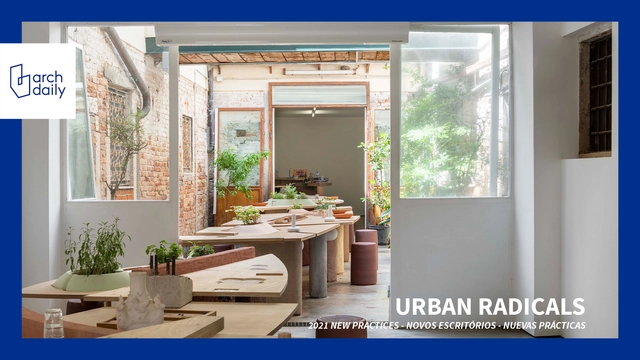
"It is Important to Give Authorship to the Public": An Interview With Urban Radicals

Urban Radicals is a design collective based in London, founded in 2019 by Era Savvides and Athanasios Varnavas. The practice operates at the intersection of multiple disciplines, exploring public space and the notion of collectivity across a variety of scales, contexts and design expressions. One of Archdaily's Best New Practices of 2021, Urban Radicals shrinks and grows organically through the projects, dissolving the boundaries between diverse fields of knowledge and circumventing traditional office structure to integrate a multiplicity of perspectives within architecture.

"It is Important to Give Authorship to the Public": An Interview With Urban Radicals - Image 1 of 4"It is Important to Give Authorship to the Public": An Interview With Urban Radicals - Image 2 of 4"It is Important to Give Authorship to the Public": An Interview With Urban Radicals - Image 3 of 4"It is Important to Give Authorship to the Public": An Interview With Urban Radicals - Image 4 of 4It is Important to Give Authorship to the Public: An Interview With Urban Radicals - More Images+ 13

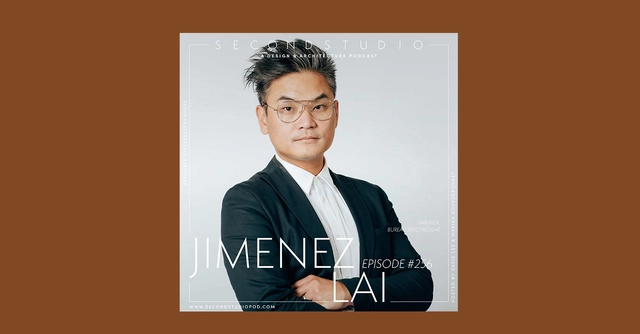
The Second Studio Podcast: Interview with Jimenez Lai

The Second Studio (formerly The Midnight Charette) is an explicit podcast about design, architecture, and the everyday. Hosted by Architects David Lee and Marina Bourderonnet, it features different creative professionals in unscripted conversations that allow for thoughtful takes and personal discussions.

A variety of subjects are covered with honesty and humor: some episodes are interviews, while others are tips for fellow designers, reviews of buildings and other projects, or casual explorations of everyday life and design. The Second Studio is also available on iTunes, Spotify, and YouTube.

This week David and Marina are joined by Jimenez Lai, Founder of Bureau Spectacular to discuss civic and infrastructural spaces in cities; collage architecture; what makes a living room, a living room?; his current project, “Citizens With No Places”; his book “Citizen of No Place”; living and studying at Taliesin West; and suburban developments.

The Second Studio Podcast: Interview with Jimenez Lai - Image 1 of 4The Second Studio Podcast: Interview with Jimenez Lai - Image 2 of 4The Second Studio Podcast: Interview with Jimenez Lai - Image 3 of 4The Second Studio Podcast: Interview with Jimenez Lai - Image 4 of 4The Second Studio Podcast: Interview with Jimenez Lai - More Images+ 5