1. ArchDaily
  2. Editor's Talk

Editor's Talk: The Latest Architecture and News

Architects Beyond the Traditional Practice: ArchDaily Editors Talk

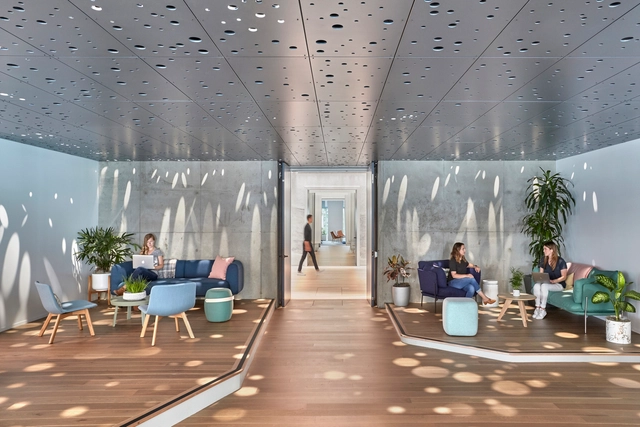
Graduating with an architecture degree is often met with the expectations of working a 9-5 job at an office. However, the reality is that many fresh graduates are venturing into diversified careers and exploring fields such as architectural photography, writing, rendering, set design, and project management. In this Editor's Talk, ArchDaily's Founder and Editor in Chief, Director of Software Product Development, Managing Editors, and Social Media Editor share their experiences of graduating with a Bachelor's Degree in Architecture then finding themselves exploring different, yet very complimentary career paths post graduation, proving that there is a lot more to the architecture practice beyond designing built spaces.

Architects Beyond the Traditional Practice: ArchDaily Editors Talk - Image 1 of 4Architects Beyond the Traditional Practice: ArchDaily Editors Talk - Image 2 of 4Architects Beyond the Traditional Practice: ArchDaily Editors Talk - Image 3 of 4Architects Beyond the Traditional Practice: ArchDaily Editors Talk - Image 4 of 4Architects Beyond the Traditional Practice: ArchDaily Editors Talk - More Images+ 7

Does Urban Development Drive Gentrification?

Subscriber Access | 
Does Urban Development Drive Gentrification? - Featured Image
Photo by Miguel A. Amutio on Unsplash

Urban environments are in a constant process of social evolution, political and economic transformation. Attached to the idea of urban renewal is gentrification, a complex phenomenon circumscribing a variety of issues, from the improvement of the built environment and strengthening the local economy to displacement and demographic change. On the one hand, redevelopment means revitalizing neighbourhoods, improving the built environment and infrastructure and boosting the local economy, and on the other hand, gentrification drives up property prices and cost of living, forcing out low-income communities. Is the displacement of local communities a "collateral damage" of urban development? Does redevelopment intrinsically drive gentrification, and can urban environments be revitalized more ethically?

In this Editor's Talk edition, editors from Argentina, Lebanon, Brasil, Chile, Tanzania share their views on gentrification.

Does Urban Development Drive Gentrification? - Image 1 of 4Does Urban Development Drive Gentrification? - Image 2 of 4Does Urban Development Drive Gentrification? - Image 3 of 4Does Urban Development Drive Gentrification? - Image 4 of 4Does Urban Development Drive Gentrification? - More Images

Architecture as a Heterogenous Practice: What is to be an Architect Around the World

Subscriber Access | 

Although architecture itself is universal, the day-to-day practice still varies across the world, influenced by a wide range of factors, from the professional requirements and responsibilities of an architect, the local environment, history and building customs, to local priorities and challenges. In a hyper-connected world, where architecture seems to become more uniform, how do local contexts and characteristics shape the built environment? This article taps into the commonalities and the variations within the architecture profession.

The Value of an Address: How Cities Around the World Utilize Street Names and Building Numbers

Subscriber Access | 

In cities across the United States, an address is more than just a street name or a building number- but a brand that translates directly into a symbol of wealth and prestige. Take the tallest residential tower in the country, 432 Park Avenue in New York City, which doesn't actually sit quite on park avenue. Instead, it’s neighboring lot to the east sits on Park Avenue, and this mega structure actually faces 56th avenue- a significantly less iconic street. However, this inflated valuation doesn’t happen everywhere. Cities in other countries don't place the same weight on an address and refer to buildings or locations as landmarks or by their appearances, which doesn't force a high monetary value based on an address or a marketing scheme alone. How do places in the world differ in how they brand buildings and streets in cities, and what does that tell us about their urban culture?

Public Spaces Aren't Really Available for Everyone

When we talk about public space, we often imagine a park with happy, relaxed people on a sunny day. In actuality, this is a very restricted approach. A young woman does not cross a deserted street at dawn in the same way as a white man wearing a suit or as an immigrant who may not be welcomed by local citizens. Have you ever felt discriminated while visiting a public space?

In this edition of Editors’ Talk, editors from Los Angeles, São Paulo, Argentina, and Uruguay share their views on defining public spaces for everyone

How Will COVID-19 Shape the Future of Work?

Subscriber Access | 

The COVID-19 pandemic has transformed how we work around the world. From telecommuting and distance learning to virtual events, designers have quickly rethought traditional workflows to stay connected. With the rise of both self-imposed and mandated social distancing, as well as global turn towards remote work, ArchDaily is exploring the impact of COVID-19 and what it will mean for the future.

How Will COVID-19 Shape the Future of Work? - Image 1 of 4How Will COVID-19 Shape the Future of Work? - Image 2 of 4How Will COVID-19 Shape the Future of Work? - Image 3 of 4How Will COVID-19 Shape the Future of Work? - Image 4 of 4How Will COVID-19 Shape the Future of Work? - More Images+ 9

Neutral Architecture Doesn't Exist

Accessibility is often approached as a field related to disability, whether physical or mental. When it comes to architectural design, it always comes up as a peripheral consideration of the project and not as something fundamental. However, there are other barriers.

In this edition of Editor's Talk, editors from ArchDaily Brazil share their thoughts on what they understand as accessibility and whether it's possible to create a neutral architecture.

Why Do We Travel?

Everyone wants to travel the world, whether it's to meet new people, taste new food, or visit new places. Travel is consequently an extremely lucrative industry, but tourist destinations are getting more crowded than ever and associated pollution emissions are only worsening the climate emergency.

Why do we travel? In this edition of Editor's Talk, four editors from ArchDaily based in Lebanon, the United States, and Chile share their thoughts on the meaning of travel, and why tourists enjoying a beach in a location like Brazil should also care about the cities they visit.

What's Pushing Refurbishment Fever in China?

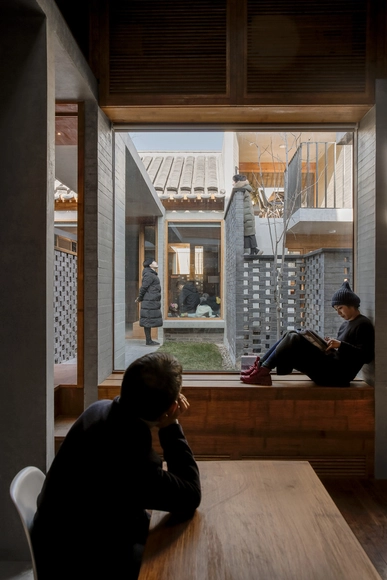
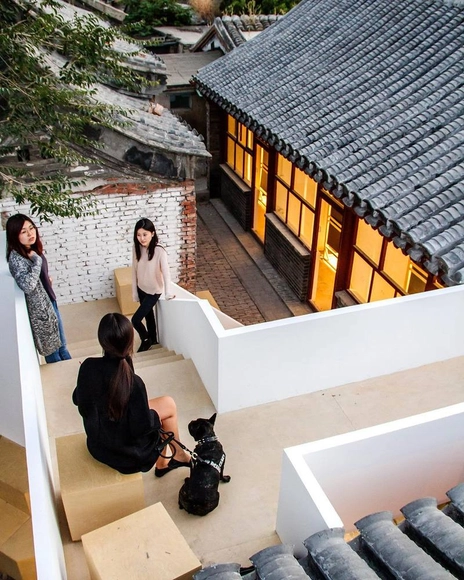
China seems to be at the peak of a refurbishment fever. Not only hutongs in historic downtowns, but abandoned industrial factories are becoming new tech or cultural hubs, and even buildings in the risk of collapse are refurbished to extend their lifespan. Why is this happening? Who is investing? How could this happen in a country where you cannot buy properties?

In this edition of Editor's Talk, our editors from ArchDaily China share their thoughts on how in a fast-paced development process, such as the one China is going through, there is a refurbishment fever in its biggest cities.

Why Do Architects Love Designing Houses?

Home. Our shelter. Our private space. In an urbanized world with dense megalopolises like Tokyo, Shanghai, and São Paulo, homes are getting smaller and more expensive than ever. If you are claustrophobic, Marie Kondo is your best ally in the quest to earn some extra space.  And even though private backyards have become a luxury for most, our data shows that single-family houses are still the most popular project type on ArchDaily. Why is this? (Especially when it seems incongruous given the reality of today’s crowded cities.) Why do some universities still insist on designing and building houses as academic exercises? Wouldn’t it be more creative—and more useful—to develop architecture in small-scale spaces? Would it be more rewarding to develop solutions on bigger scales?

Why Keep Drawing When Digital Tools Deliver Hyperrealistic Images?

Starting this month, ArchDaily has introduced monthly themes that we’ll explore in our stories, posts and projects. We began this month with Architectural Representation: from Archigram to Instagram; from napkins sketching to real-time-sync VR models; from academic lectures to storytellers.

It isn’t particularly novel or groundbreaking to say that the internet, social media, and design apps have challeged the relation between representation and building. A year ago we predicted that "this is just the beginning of a new stage of negotiation between the cold precision of technology and the expressive quality inherent in architecture". But, is it? Would you say digital tools are betraying creativity? This is an older dilemma than you think.

In this new edition of our Editor's Talk, four editors and curators at ArchDaily discuss drawings as pieces of art, posit why nobody cares about telephone poles on renders and explore how the building itself is becoming a type of representation.

Why Keep Drawing When Digital Tools Deliver Hyperrealistic Images? - Image 1 of 4Why Keep Drawing When Digital Tools Deliver Hyperrealistic Images? - Image 2 of 4Why Keep Drawing When Digital Tools Deliver Hyperrealistic Images? - Image 4 of 4Why Keep Drawing When Digital Tools Deliver Hyperrealistic Images? - Image 8 of 4Why Keep Drawing When Digital Tools Deliver Hyperrealistic Images? - More Images+ 4