Fired clay has been used in construction for over 9,000 years, evolving from vernacular craft into one of the most widely applied materials in the built environment. Its durability, water resistance, thermal performance, and adaptability have made it a staple for facades, sanitaryware, flooring, architectural surfaces, and structural systems. Today, new manufacturing technologies are extending these possibilities as architects and manufacturers confront the environmental implications of material extraction and production.
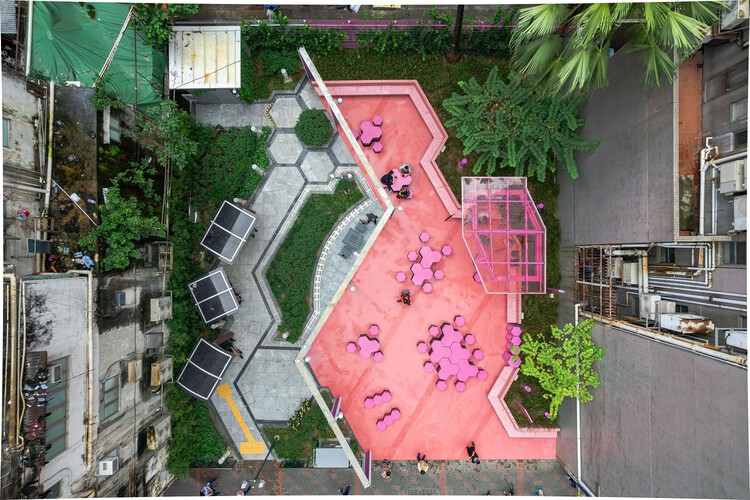
In Hong Kong, where architecture is often driven by real estate logic, infrastructure, and accelerated development, the space for bodily-scaled civic experimentation can be surprisingly narrow. This is where Design Trust has become distinctive. As a grant-making and project-enabling platform, it supports spatial interventions that sit between architecture, research, and public programming—work that is often too modest, collective, or uncertain to fit conventional client–architect pipelines.
At the center of this work is Marisa Yiu, whose leadership positions Design Trust as both an enabler and a cultural actor. Through initiatives such as Micro-Parks Hong Kong, alongside exhibitions and public programs, the organization treats discourse and prototyping as forms of spatial agency, linking designers, communities, institutions, and policy conversations while foregrounding questions of stewardship, maintenance, and the "afterlife" of public space.
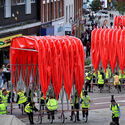
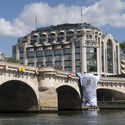
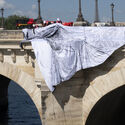
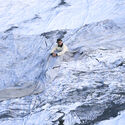
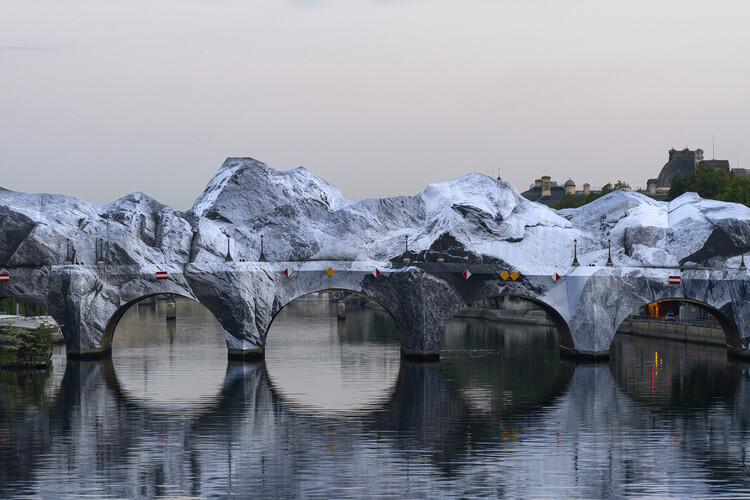
On May 21st, a realistic cave took shape on Paris' Pont Neuf, the oldest standing bridge across the Seine. The inflatable artwork was designed and built by French photographer and street artist JR, along with an extensive multidisciplinary team. La Caverne du Pont Neuf was conceived in honor of Christo and Jeanne-Claude's 1985 work The Pont Neuf Wrapped, an environmental artwork in which the artists wrapped the historic bridge in sandstone-colored fabric for two weeks. The structure creates a trompe-l'œil effect that mimics a textured rock formation through photographic printing in tones of white, black, and gray. The shape of the exterior already gives the public the optical illusion of the artwork, while paving the way for the final stage of the interior design.
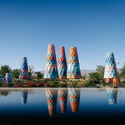
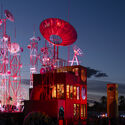
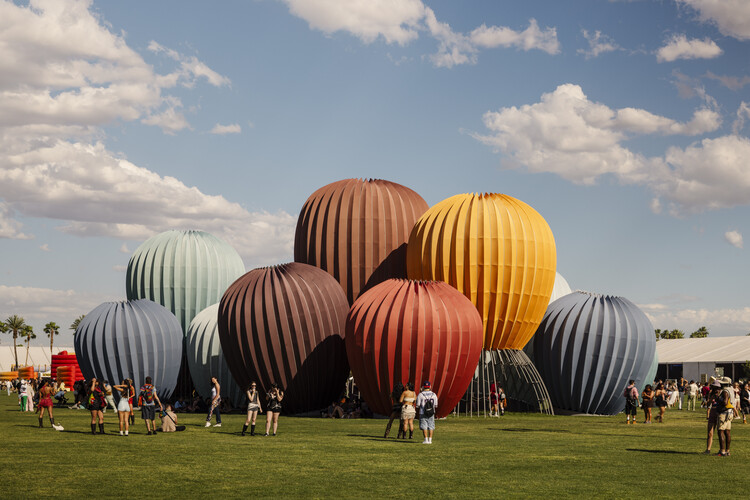
The 25th edition of the Coachella Valley Music and Arts Festival returns to the Empire Polo Club in Indio, California, from April 10 to 12 and April 17 to 19, 2026, bringing together more than 130 acts alongside an ambitious program of large-scale art installations. Presented by Public Art Company (PAC) and curated by founder Raffi Lehrer in collaboration with Goldenvoice Art Director Paul Clemente, this year's selection explores monumentality through luminance, transparency, and lightness of form. Set within Coachella's desert oasis, the installations invite visitors to engage physically and sensorially, responding to shifting daylight and the evolving atmosphere from sunrise to nightfall.
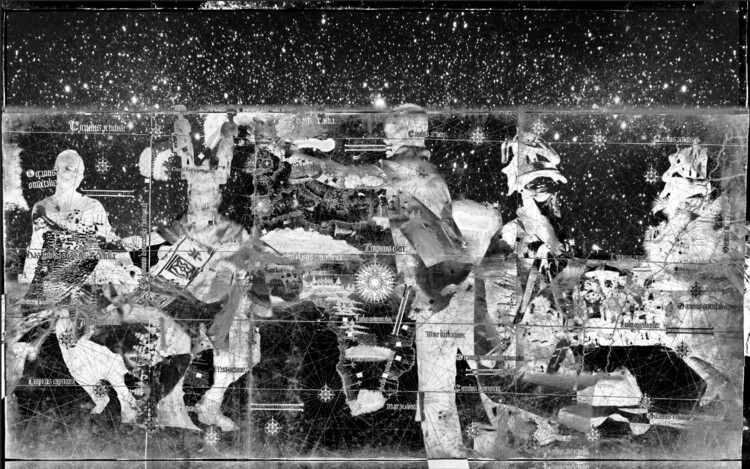
The Cosmogony of (Racial) Capitalism. Image Courtesy of Dele Adeyemo
Having thrown a stone today, Eshu kills a bird of yesterday. The Yoruba proverb tells both a story of reparation and of ancestrality by joyfully bending spacetime conventions and accessing subjects from the past with present actions. The saying offers a poetic entry point to broader West African traditions and to the practice of Scottish-Nigerian artist and architect Dele Adeyemo. Named one of the winners of the ArchDaily 2025 Next Practices Awards, Adeyemo's work brings together ecology, spirituality, dance, and territory, examining how embodied cultural practices can generate alternative spatial possibilities within and against the architecture of racial capitalism.
Born in Nigeria and raised in the United Kingdom, Adeyemo has been visiting Lagos for many years. Through this engagement, he has developed an extensive body of research on collective movement practices that predate capitalism and offer distinct, often imaginative spatial intelligences operating alongside dominant systems. ArchDaily spoke with Dele about his artistic and pedagogical practices, and how he identifies design sophistication where architects often perceive deficiency.
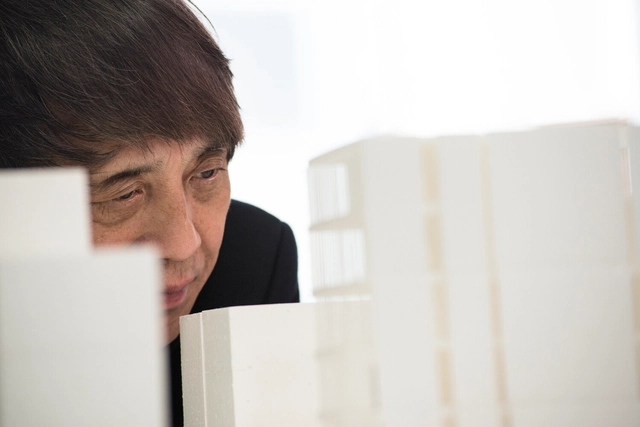
Tadao Ando. Image Courtesy of Tadao Ando Architect & Associates
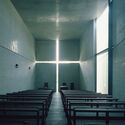
The Naomi Milgrom Foundation announced Tadao Ando as the winner of the commission to design the MPavilion 10 in Queen Victoria Gardens in Melbourne. This will be Ando’s first project in Australia, as he will be taking part in the country’s foremost annual architecture commission and design festival. Now in its 10th edition, the MPavilion gives complete freedom to the designers to create their concepts and realize their vision, hoping to encourage new and unique design languages to further develop this vital site in the cultural and community life of Melbourne. Details of Tadao Ando’s design will be revealed in May, and the pavilion is scheduled to open to the public on November 16, 2023.
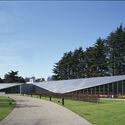
Architecture design firm Buchan was selected to lead the design for the Australian Pavilion at Expo 2025 in Osaka, Japan. Under the theme "Chasing the Sun," the installation will encapsulate Australia's connection to the land and the Cosmos, displaying its rich culture and diverse arts scene. From 13 April 2025 to 13 October 2025, more than 150 countries will participate in a single location, anticipating 28 million visitors from across the globe.
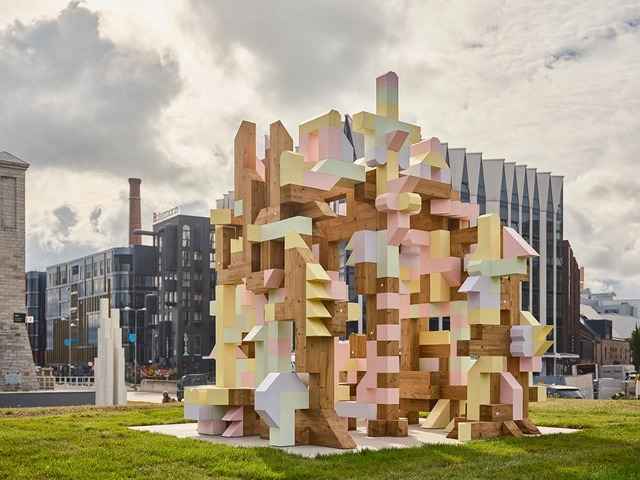
Tallinn Architecture Biennale 2022: "Edible; Or, The Architecture of Metabolism" announced record numbers in its 6th edition after 3 months of exhibitions in Estonia's capital. From installations and a symposium to satellite events, the biennale received in its opening week a record of circa 3000 visitors between architects, planners, designers, and students from more than 20 countries. Due to the successful outcome, the Installation "Fungible Non-Fungible" will be installed until 2024 marking the beginning of the 7th TAB.
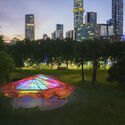
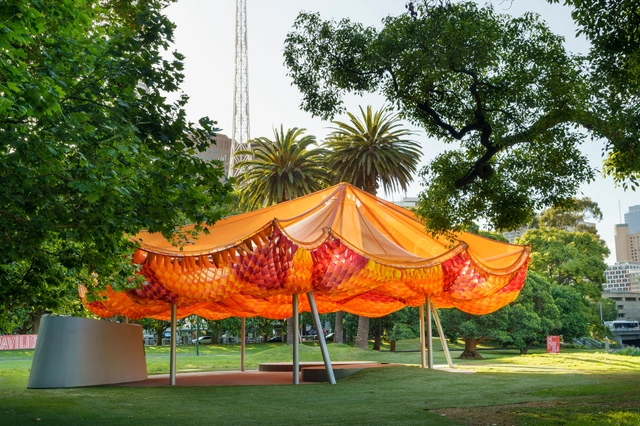
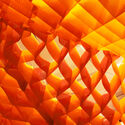
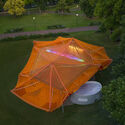
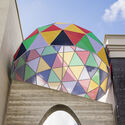
The ninth edition of the MPavilion opened with an orange canopy installation designed by Bangkok-based practice all(zone) in collaboration with AECOM and Schiavello Architects. From December 2022 to April 2023, visitors will experience a vibrant and joyful setting made of upcycling materials, featuring an architectural lighting program by Melbourne-based design practice Bluebottle.
CRA - Carlo Ratti Associati and architect Italo Rota have developed a project to transform an 18th-century hospital complex in Modena, Italy, into a multidisciplinary cultural and innovation hub. The master plan for the new hub, called AGO Modena Fabbriche Culturali, includes an origami-inspired kinetic roof designed in collaboration with artist-engineer Chuck Hoberman. The feature will cover a triangular-shaped plaza in the center of the complex. The restoration plan also aims to create flexibility so that the structure can easily adapt to changing future configurations.
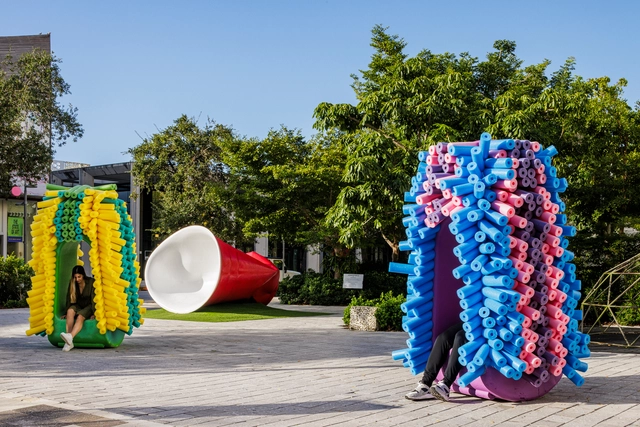
Rock | Roll by Germane Barnes. Image Courtesy of Miami Design District
Distinguished for its quality, depth, and diversity, Design Miami 2022 has concluded, giving worldwide collectors and locals the best in contemporary and emerging art and design. Kicking off at the end of November and running through the first week of December, this event ran alongside the annual Art Basel Miami Beach. The ultimate international art fair ranged from interactive installations to art exhibitions by promising up-and-comers to 20th-century masterworks, including Daniel Arsham and Andrés Reisinger, and Stefano Boeri. Also during this event, MetaMundo has presented their Top 50 Creators of the Metaverse - a hand-picked collection of some of the world’s best 3D artists.
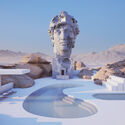
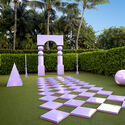
For this edition, The Miami Design District has awarded Miami-based architect and designer Germane Barnes and commissioned a multifaceted installation that honors the city's polyethnic culture. Along with other relevant architectural installations during the Miami Art Week, the following selection includes work by Leandro Erlich at Perez Art Museum Miami and Pilar Zeta.
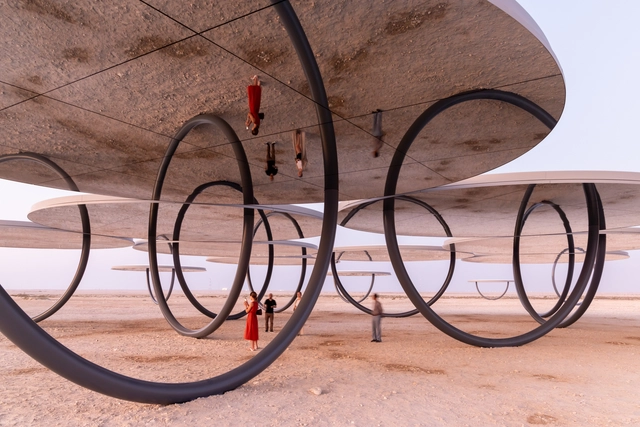
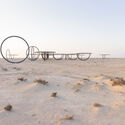
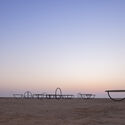
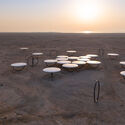
The internationally recognized artist Olafur Eliasson has inaugurated his most recent public art installation in Doha, Qatar. The installation, titled “Shadows Travelling on the Sea of the Day”, can be reached by diving through the rugged desert landscape northwards from Doha, past Fort Zubarah, and the village of Ain Mohammed. The artwork is visible from afar, but it is best experienced when approached on foot. Its hospitable shadows reward the journey.
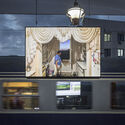
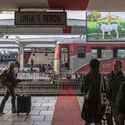
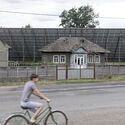
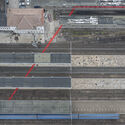
LINIA, a project signed by VICE VERSA Association, is a photographic installation exploring and documenting the stories, and the collective mindset of the territories near one of the most fragile, yet rigid lines in today’s context: the line separating NATO from non-NATO nations. The project, initiated by Dorin Ștefan Adam and Laurian Ghinițoiu, is on display at the Timișoara train station, in Romania, and it represents one of the main exhibitions of the Timișoara 2022 Architecture Biennale, which ran from 23 September to 23 October 2022. The schedule of LINIA has been extended however to remain open to the public until April 23.
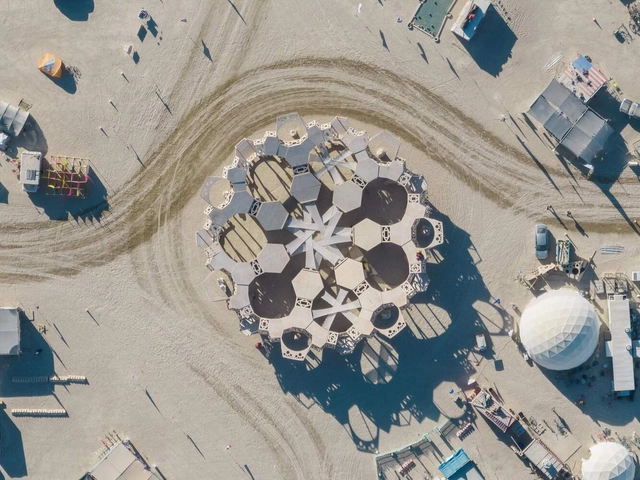
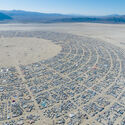
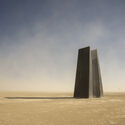
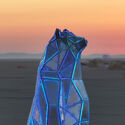
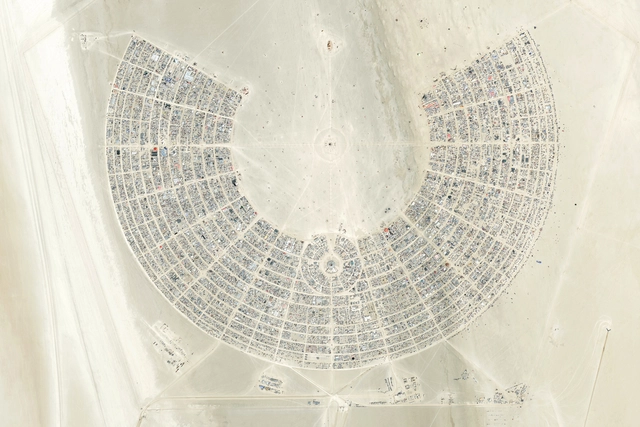
Nevada's annual Burning Man has retured to the Black Rock Desert, after a three-year physical attendance hiatus due to the pandemic. From August 28 until September 5th, this year's festival explored the theme of "Walking Dreams", celebrating the dreamers who channel the power of dreams and imagination, both in literal and figurative ways. Similar to every year, the pavilions that were installed in the desert explored the theme in creative and unexpected ways.
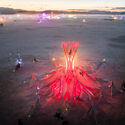
This year, many of the installations approached themes of ecology and sustainability. Some of the installations were built with reused materials, including an interactive light sculpture made from plastic recovered from the ocean. Every year, the Burning Manfestival issues a number of grants, funded from revenues from ticket sales, for the purpose of partially funding specific art projects.
Housing is a mess in Northwest Arkansas. The metropolitan area between the college town of Fayetteville, the buzzing art hub of Bentonville, and the bedroom communities of Rogers and Springdale are expected to double in size over the next two decades, and like many quickly growing urban areas across the country, there aren’t enough places to live.
Nevada's annual Burning Man is underway at the Black Rock Desert. Under the theme of Waking Dreams, this year's festival is exploring the "transformative power of dreams, both literal and figurative, and celebrating the dreamers who channel this potent energy in eye-opening, often surrealistic, sometimes life-changing ways". The "temporary metropolis" is running until September 5th, and is expected to showcase numerous installations and pavilions that celebrate "community, art, self-expression, and self-reliance".
After a three-year physical attendance hiatus due to the pandemic, Nevada's annual Burning Man is making a return to the Black Rock Desert. From August 28 until September 5th, this year's festival will welcome thousands of burners to celebrate music and art in a temporary metropolis dedicated to "community, art, self-expression, and self-reliance". Ahead of its 2022 inauguration, we are taking a look at some of the best installations to have been constructed during Burning Man's previous editions.