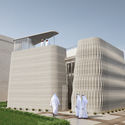
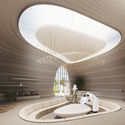
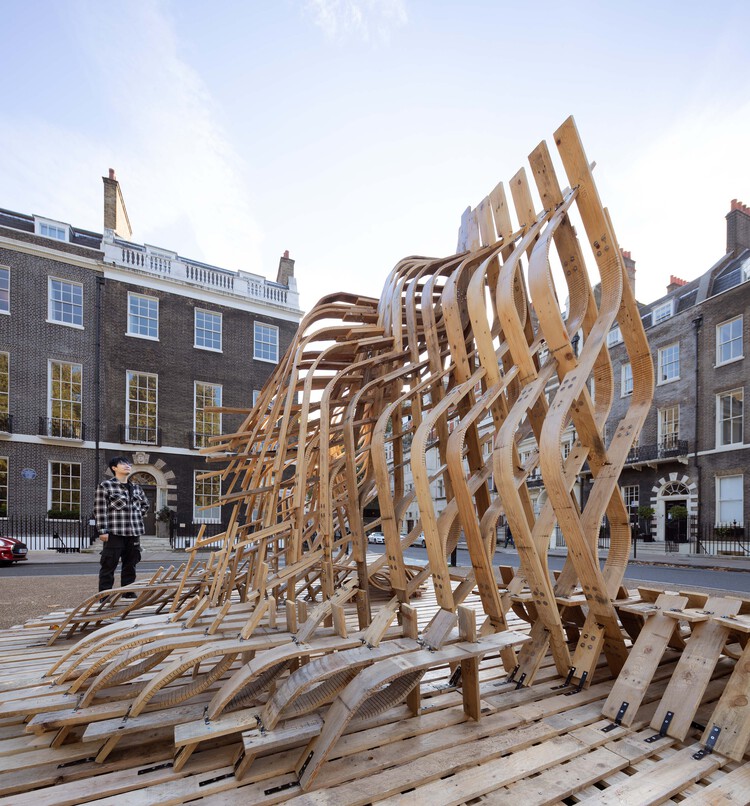
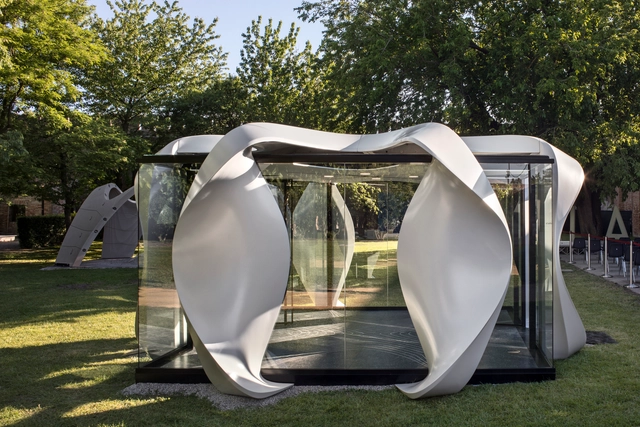
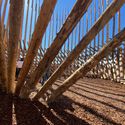
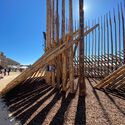
In collaboration with architecture practice Hassell, Architectural Association's Association's Emergent Technologies and Design (EmTech) programme created a reclaimed wood pavilion, exploring the convergence of computational design, new construction technologies, and material reuse. Titled Re-Emerge, the project addresses the issue of limited material resources, exploring the architectural potential of material recycling in the context of generative design.
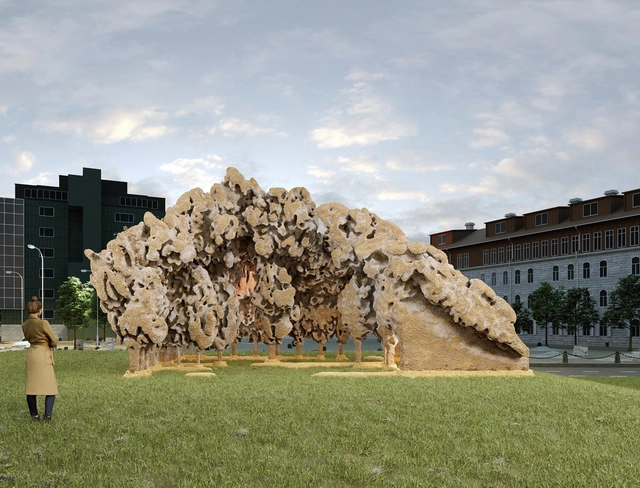
Australian duo Simulaa and Natalie Alima have won the competition for the 2022 Tallinn Architecture Biennale in Estonia with an installation made of mushrooms. Titled Burlasite, the structure's base will employ 3D printing technology that will be taken over by mycelia over time. The proposal highlights repurposing and reusing local materials, and how humans can create sustainable designs with invention and environmental adaptation. The Tallinn Architecture Biennale will open to the public on September 7th, 2022, and the installation will be on display until 2024 in front of the Museum of Estonian Architecture.
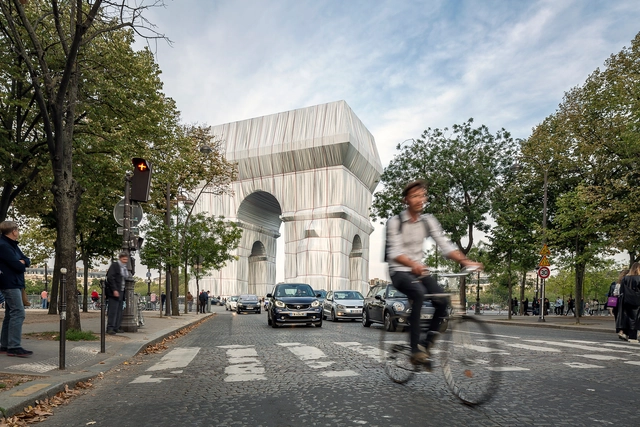
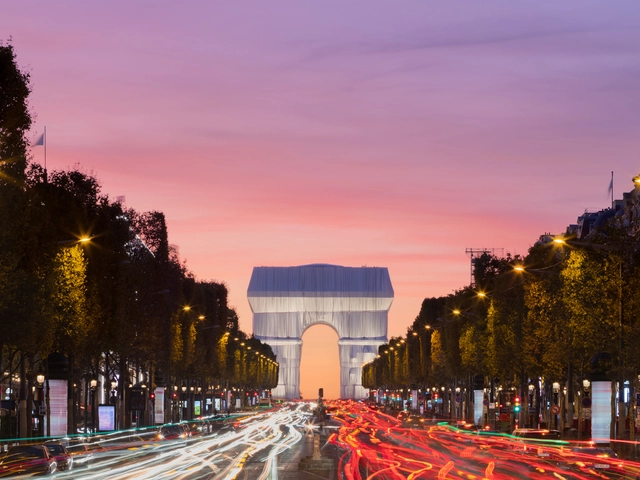
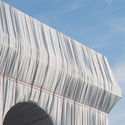
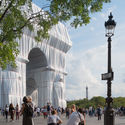
Andreas Ruby, Director of the Swiss Architecture Museum shares his thoughts on the wrapped Arc de Triomphe installation by Christo and Jeanne-Claude, in a 3 part essay, converting a monument glorifying war into a monument of decolonization. The temporary installation opened to the public on September 18, 2021, and will be dismantled starting October 3, 2021.
Architectural events like biennales, urban festivals or the World Expo provide a framework for research and experimentation, allowing architects to showcase their visions on an international stage, with the aim of advancing the practice and driving innovation. World Expos, in particular, allow for these lines of inquiry to unfold at an architectural scale rather than that of an installation. Within these platforms for discourse and knowledge exchange, temporary architecture becomes a medium for communicating ideas about architecture and the city, its challenges and possible lines of development.
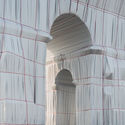
After almost 60 years of its initial ideation, Artists Christo and Jeanne-Claude’s temporary installation, the complete wrapping of L’Arc de Triomphe in Paris has opened to the public on September 18th, attracting thousands of tourists and locals. In this new photoseries, photographer Jared Chulski captures the wrapped monument, focusing on the details of the temporary intervention and how it compliments the city's urban fabric.
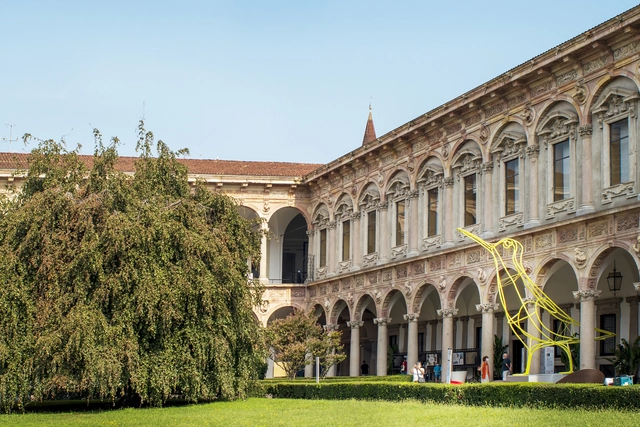
A large seabird gazing towards the sky appeared in the Cortile d’Onore in Milan as a metaphor for life retaking its course in the post-pandemic world. Designed by MAD Architects, the installation titled “Freedom” is a nod to inclusiveness and borderless, as well as a playful symbol of hope. In addition, for the 2021 edition of Milan Design Week, the studio taps again into furniture design with two projects, “Meteor” and “Gu Table”, created in collaboration with Dior and Sawaya & Moroni, respectively.
For the 2021 Milan Design Week, Kengo Kuma Associates designed a bamboo installation that merges form, materiality and music, creating a multisensory experience. Created in collaboration with smart device manufacturer OPPO, Bamboo (竹) Ring :|| Weaving a Symphony of Lightness and Form answers the "Creative Connections" theme by merging architecture and music, as well as craftsmanship and technology.
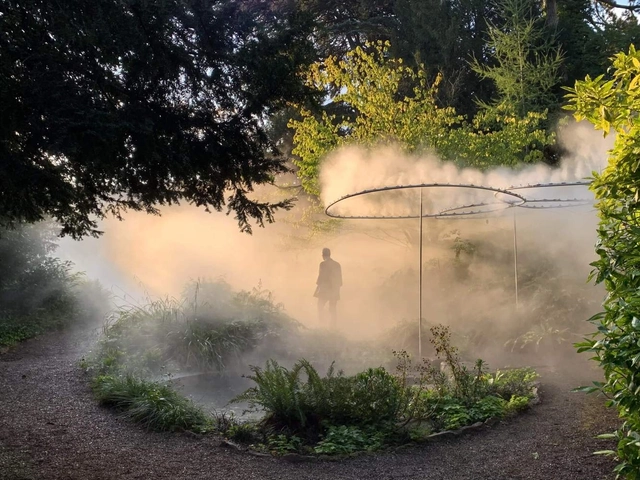
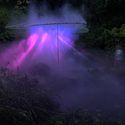
Design consultancy office AUTHOS and Swiss multidisciplinary Interactive Designer Stella Speziali have collaborated to create a unique spatial intervention at the Zurich Design Biennale 2021. Titled NEBULOSUS, the installation uses mist and augmented reality as an immersive and intangible 'structure' that changes the spatial boundary of Zurich's botanical garden and creates and explorative experience for visitors.
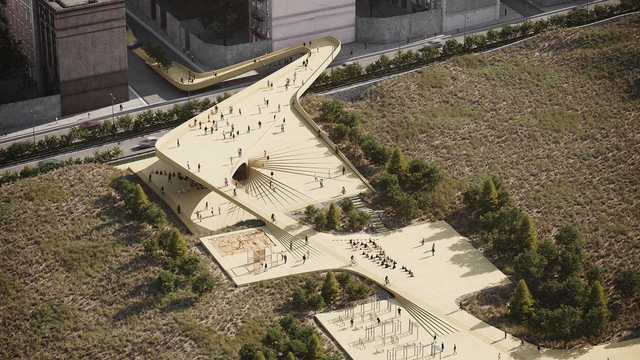
This week's curated selection of Best Unbuilt Architecture highlights different competition-winning designs submitted by the ArchDaily Community. From large scale urban developments to small interventions in the landscape, from commercial projects to public spaces and urban planning strategies with an environmental focus, this article showcases a variety of design approaches, programs and scales. The proposals featured are the results of local and international competitions, either creative concepts or projects currently in progress.
The award-winning entries include a range of different projects, designed by both young architects and established firms. An adaptive reuse project for office towers in New York, the redevelopment of an industrial site in China, an abstract installation for a Russian festival, or a masterplan focused on climate resilience and ecosystems protection are a few of this week's highlights.
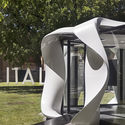
Zaha Hadid Architects has been invited to exhibit at the 17th International Architecture Exhibition - La Biennale di Venezia. Titled ‘High-performing Urban Ecologies', the installation responds to the theme of Resilient Communities by displaying the Alis Meeting Pod, a modular structure of ZHA’s Unicorn Island Masterplan that is currently under construction in Chengdu, China. The installation is on display at the Giardino delle Vergini at the entrance of the Italian Pavilion.
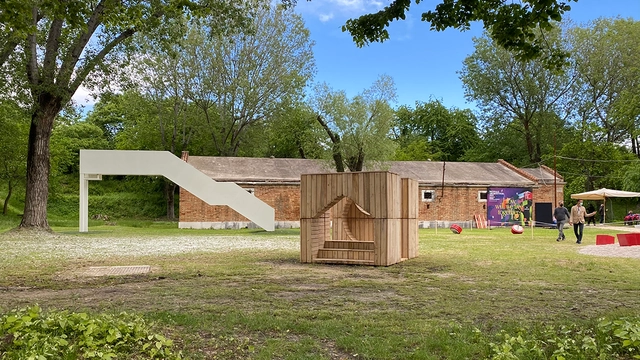
Basel-based HHF Architects have been invited to exhibit at the 17th International Architecture Exhibition - La Biennale di Venezia as part of the "How Will We Play Together?" exhibition. Titled "The Playful Eight", the 8-piece installation extends the biennale's brief to adults, and gives visitors "unsolicited elements that offer the possibility to escape control and productivity in order to play together".
Among the many topics explored at the 17th Venice Architecture Biennale, the idea of community has been at the forefront, with several national pavilions exploring its many manifestations, evolution, and its relationship with the future of built environments. ArchDaily met with the curators of Testimonial Spaces, Emilio Marín and Rodrigo Sepúlveda, the Chilean Pavilion at the Biennale, and discussed how the project tackled the question of the future of living together and how they bridged the stories from Santiago to Venice. The interview was conducted in Spanish but is provided with English subtitles.
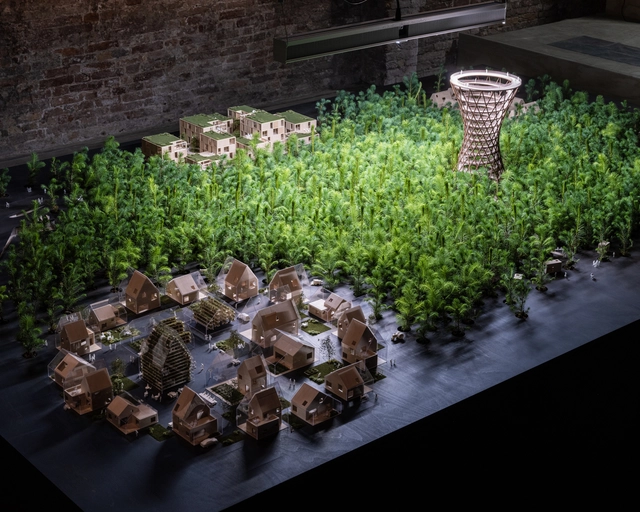
EFFEKT Architects have been invited to exhibit their work at the 17th International Architecture Exhibition - La Biennale di Venezia. Titled "Ego to Eco", the installation focuses on the future of communities and ecosystems, and presents a series of 7 miniature projects created by the architecture firm, nestled within a fictional landscape. Exhibited at the Corderie dell'Arsenale, the exhibition will be on display from May 22nd until November 21st, 2021.
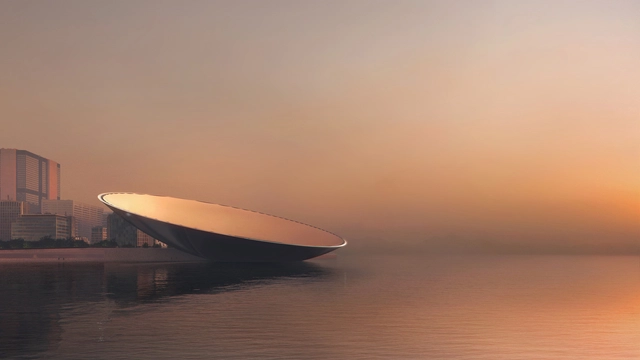
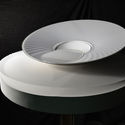
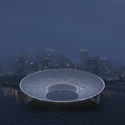
Snøhetta has proposed Lunar for the International Competition of the Landmark Design of Qianhai's New City Center. Inspired by the city's pioneering past and technology-driven future, the proposal is satellite-like structure that resembles landmarks in the era of data and technology. The proposal ranked second place in the competition alongside Sou Fujimito's floating tower.
The 17th Venice Architecture Biennale invited architects to ponder the question “How will we live together”, eliciting a variety of answers, readings and interpretations. The International Exhibition unfolding in Giardini, the Arsenale and Forte Maghera presents 112 participants in the competition, coming from 46 countries, whose contributions are organized into five scales: Among Diverse Beings, As New Households, As Emerging Communities, Across Borders, and As One Planet. Answering “How will we live together as a community? “ is Chilean office ELEMENTAL and Archdaily met in Venice with Alejandro Aravena to discuss the idea behind the project KOYAÜWE, which creates a space that recovers the tradition of parleys, as a means to address the historical Chilean-Mapuche conflict.
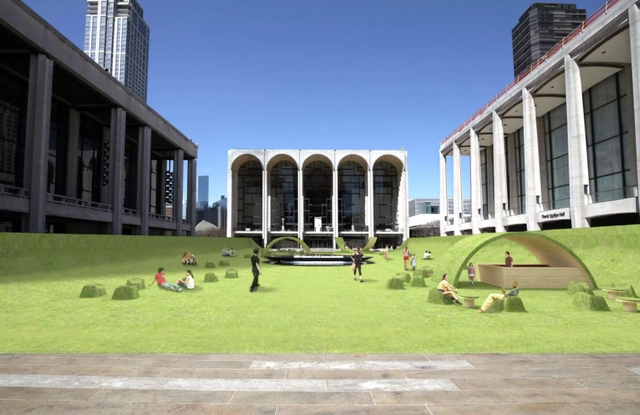
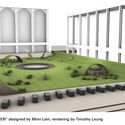
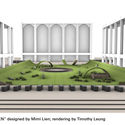
The Green. Image Courtesy of Mimi Lien/Rendering by Timothy Leung
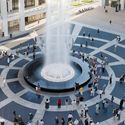
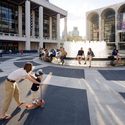
After several event cancellations due to the pandemic, Manhattan’s Lincoln Center for the Performing Arts complex have transformed their outdoor plaza into a green park and outdoor performance venue called The Green. As of May 10, the Restart Stagesinitiative will add fake grass across the 14,000-square-foot (1,300 sqm) Josie Robertson Plaza. The plaza, which was originally designed by Philip Johnson, Wallace K. Harrison, and Max Abramovitz, and renovated by award-winning architecture firm DS+R in 2010, will transform into a public urban space of gathering, leisure, and entertainment.
This week’s curated selection of Best Unbuilt Architecture highlights cultural structures submitted by the ArchDaily Community. From pavilions to installations, this article explores the topic of cultural urban interventions and presents approaches submitted to us from all over the world.
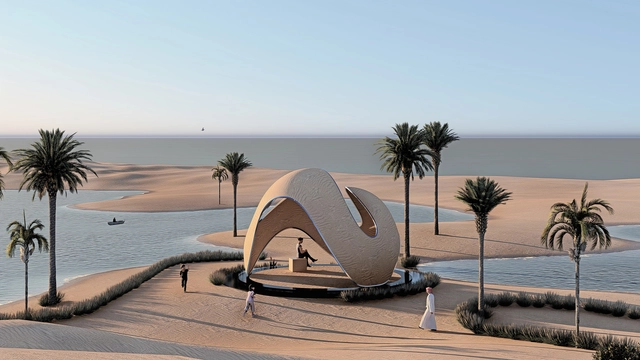
Featuring a pavilion nestled in the sand dunes of the Persian desert, an afrofuturistic, interactive art installation proposed for the upcoming Burning Man event, and a new take on summer cinemas in Russia, this roundup explores how architects reimagined traditional gathering places and created urban interventions in all scales. The round up also includes a collection of structures in the United Arab Emirates, United Sates of America, France, and the United Kingdom, each responding to different contexts and topographies.
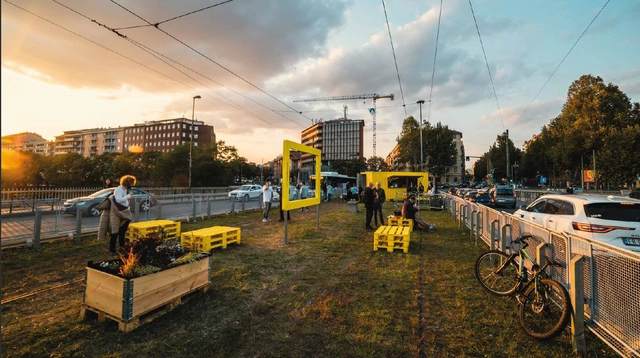
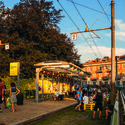
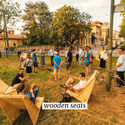
Ever since the tramline’s closure, the 800-meter-long strip in the center of Corso Gabetti and Ponte Regina Margherita in Turin, has been abandoned. To make use of the dead area and give residents an extra space outdoors following Italy's severe pandemic repercussions, non-profit cultural association Torino Stratosferica has transformed the tree-lined strip into Precollinear Park, a temporary public space fit for socially-distanced leisure.





























.jpg?1623242708)