1. ArchDaily
  2. Hollywood

Hollywood: The Latest Architecture and News

Los Angeles Wildfires Threatens Architectural Landmarks Including the Hollywood Bowl and the Eames House

On Tuesday morning, wildfires erupted in the Pacific Palisades, one of Los Angeles' wealthiest neighborhoods. The catastrophic fire left a significant mark on the infrastructure and neighborhoods of Los Angeles, resembling a war-torn landscape by the morning of January 8, 2025. Iconic locations along Sunset Boulevard transformed into scenes of devastation, with charred buildings. Over 2,000 structures have been destroyed, displacing tens of thousands of residents and sparking urgent appeals for access to homes for medication retrieval. Several hotels in Los Angeles have been taking in displaced residents.

Architecture works such as the celebrated Case Study Homes, the Getty Villa museum and significant works by architects like Richard Neutra, Eero Saarinen, A. Quincy Jones, Charles and Ray Eames, and Charles Moore are all now under threat from the fires fueled by strong Santa Ana winds and drought conditions.
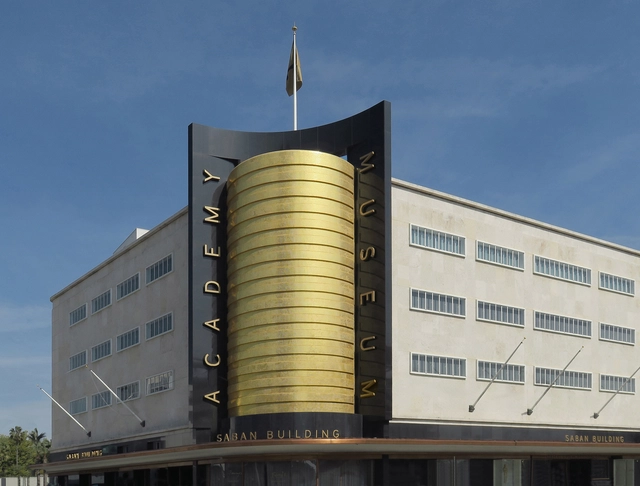

Discover the Academy Museum of Motion Pictures through the Lens of Paul Clemence

This Oscars Season, photographer Paul Clemence turned his lens to the Academy Museum of Motion Pictures, the most famous institution dedicated to the art and science of movies. Designed and revitalized by Gensler and Renzo Piano Building Workshop, the building is located on the famed 'Miracle Mile' in Los Angeles, opening with expansive views towards Hollywood. This year, the museum opened its rooftop terrace for the Oscars Night at the Museum, a unique event to celebrate the 96th Oscars.

Discover the Academy Museum of Motion Pictures through the Lens of Paul Clemence - Image 5 of 4Discover the Academy Museum of Motion Pictures through the Lens of Paul Clemence - Image 15 of 4Discover the Academy Museum of Motion Pictures through the Lens of Paul Clemence - Image 46 of 4Discover the Academy Museum of Motion Pictures through the Lens of Paul Clemence - Image 42 of 4Discover the Academy Museum of Motion Pictures through the Lens of Paul Clemence - More Images+ 50

Lehrer Architects Unveils Gower Mausoleum at Hollywood Forever Cemetery in Los Angeles, United States

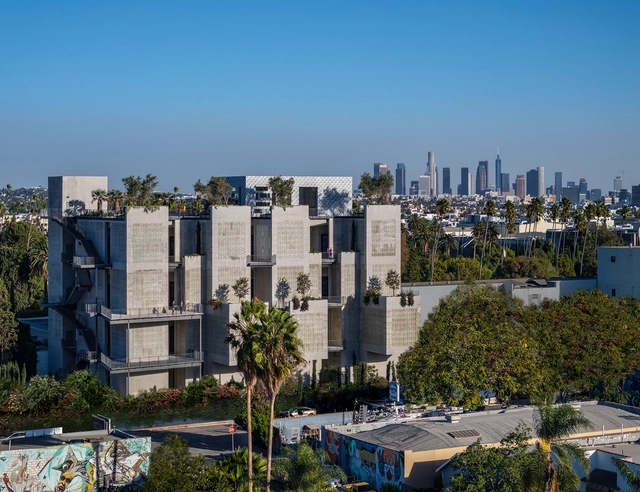
Architects Lehrer Architects LA and Arquitectura y Diseño have just unveiled the first phase of the Gower Mausoleum at Hollywood Forever Cemetery in Los Angeles, United States. This innovative vertical structure, rising 100 feet, is set to provide eternal resting spaces for over 50,000 individuals, while also serving as a cultural and spiritual landmark in the heart of Hollywood.

Lehrer Architects Unveils Gower Mausoleum at Hollywood Forever Cemetery in Los Angeles, United States - Image 1 of 4Lehrer Architects Unveils Gower Mausoleum at Hollywood Forever Cemetery in Los Angeles, United States - Image 2 of 4Lehrer Architects Unveils Gower Mausoleum at Hollywood Forever Cemetery in Los Angeles, United States - Image 3 of 4Lehrer Architects Unveils Gower Mausoleum at Hollywood Forever Cemetery in Los Angeles, United States - Image 4 of 4Lehrer Architects Unveils Gower Mausoleum at Hollywood Forever Cemetery in Los Angeles, United States - More Images+ 11

15 Landscaped Offices With Garden Space For Free-Range Employees to Roam

Subscriber Access | 

Representing 32% of the global population, Generation Z (those born between 1995 – 2010) accounts for a healthy chunk of the workforce (27% by 2025 and rising every year). These are the fresh young minds employers are fighting to attract. With prospective employers’ impact on society (93%) and a healthy work/life balance (77%) the two biggest motivators in deciding where Gen Z’ers want to work, a large part of any new office building’s design brief is green space.

While hybrid working and flexible hours represent the most obvious ways to improve work/life balance for many, because of the missed social interactions and the lack of space or functionality at unproductive home workspaces, the majority of 16-24-year-olds are the only age group who prefer to work from the office.

15 Landscaped Offices With Garden Space For Free-Range Employees to Roam - Image 1 of 415 Landscaped Offices With Garden Space For Free-Range Employees to Roam - Image 2 of 415 Landscaped Offices With Garden Space For Free-Range Employees to Roam - Image 3 of 415 Landscaped Offices With Garden Space For Free-Range Employees to Roam - Image 4 of 415 Landscaped Offices With Garden Space For Free-Range Employees to Roam - More Images+ 18

Foster + Partners Unveils Design for Office Tower with Spiraling Gardens in Los Angeles, US

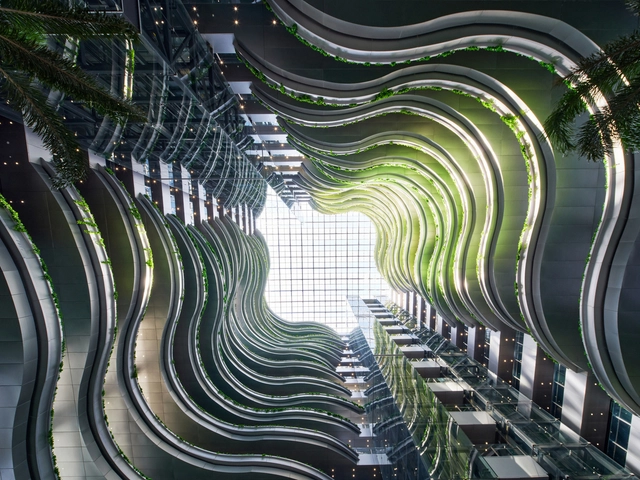
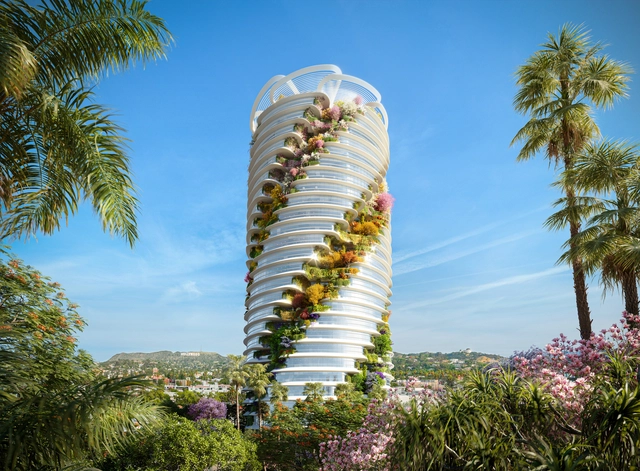
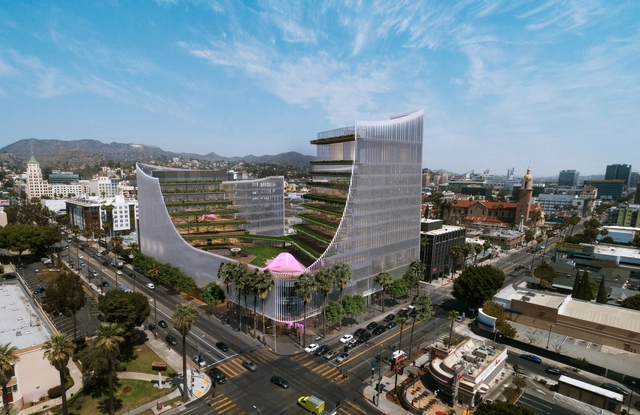
Foster + Partners, led by Norman Foster, has revealed designs for a new “vertical creative office” campus on Sunset Boulevard in Los Angeles, overlooking Hollywood. Developed by real estate firm The Star LLC, the tower is wrapped in spiraling gardens, giving the project its distinctive image and introducing generous outdoor areas throughout. Dubbed “The Star,” the project strives to use active and passive design strategies to bring a welcoming and comfortable space for all future users.

Foster + Partners Unveils Design for Office Tower with Spiraling Gardens in Los Angeles, US - Image 1 of 4Foster + Partners Unveils Design for Office Tower with Spiraling Gardens in Los Angeles, US - Image 2 of 4Foster + Partners Unveils Design for Office Tower with Spiraling Gardens in Los Angeles, US - Image 3 of 4Foster + Partners Unveils Design for Office Tower with Spiraling Gardens in Los Angeles, US - Image 4 of 4Foster + Partners Unveils Design for Office Tower with Spiraling Gardens in Los Angeles, US - More Images+ 1

Architecture and Fashion: YSL at Mies van der Rohe’s Neue Nationalgalerie and AMO/OMA’s Set Design for Prada

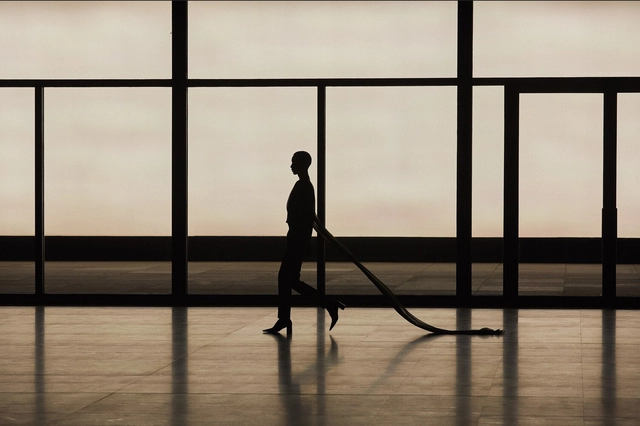
Architecture and fashion share an interesting interplay in the formation of cultural expressions and identities. Both disciplines can become vehicles for creativity at different levels. Architecture is often described as the “third skin” of humans, while clothes represent the second skin, highlighting somewhat similar functionality of protecting the body while also allowing for self-expression and individuality.

The relationship between architecture and fashion can also be seen in the shared design principles, such as form, proportion, human scale, and materiality. More than a simple background for runway shows, architecture can contribute to setting the atmosphere, becoming a source of inspiration, and orienting the movement through space. Collaborations between architects and fashion houses, such as the renowned partnership between OMA/AMO and Prada, further blur the boundaries between the two disciplines, demonstrating the myriad of interconnections between the two creative fields.

Architecture and Fashion: YSL at Mies van der Rohe’s Neue Nationalgalerie and AMO/OMA’s Set Design for Prada - Image 1 of 4Architecture and Fashion: YSL at Mies van der Rohe’s Neue Nationalgalerie and AMO/OMA’s Set Design for Prada - Image 2 of 4Architecture and Fashion: YSL at Mies van der Rohe’s Neue Nationalgalerie and AMO/OMA’s Set Design for Prada - Image 3 of 4Architecture and Fashion: YSL at Mies van der Rohe’s Neue Nationalgalerie and AMO/OMA’s Set Design for Prada - Image 4 of 4Architecture and Fashion: YSL at Mies van der Rohe’s Neue Nationalgalerie and AMO/OMA’s Set Design for Prada - More Images+ 15

Art Deco: How Discovery, Invention and Fashion Created a Movement

Subscriber Access | 

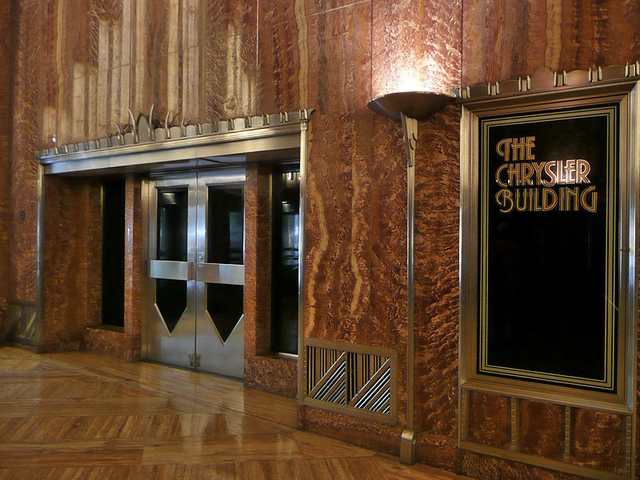
Art Deco or Arts Décoratifs originated in the 1920's, following the Exposition Internationale des Arts Décoratifs et Industriels Modernes held in Paris (1925). However, it wasn’t until the 1930’s that the movement gained momentum across both Europe and the US, broadening Art Deco to cover all elements of decorative art including furniture, interior design, jewelry and architecture. Its popularity stems from its unique origins. Rather than a design movement driven by political or philosophical forces, it was created for the desire of glamorous and alluring change, a reflection of the golden age in Hollywood and a widespread economic boom.

Characterized by its decadence, rich application of color, and geometrical shapes, the movement is dramatically influenced by the discovery of the artifacts of ancient civilizations, and the introduction and admiration of the automobile. A movement heavily influenced by aspects in vogue it sought to create a form of luxury modernism, a step away from a more traditional architecture. It put an emphasis on handcrafted and individually designed elements, rarely to be mass produced.

Art Deco: How Discovery, Invention and Fashion Created a Movement - Image 1 of 4Art Deco: How Discovery, Invention and Fashion Created a Movement - Image 2 of 4Art Deco: How Discovery, Invention and Fashion Created a Movement - Image 3 of 4Art Deco: How Discovery, Invention and Fashion Created a Movement - Image 6 of 4Art Deco: How Discovery, Invention and Fashion Created a Movement - More Images+ 7

HKS Designs Hollywood's First Creative Campus

Architecture firm HKS and landscape designer Hood Design Studio have been selected by global entertainment and media company CMNTY Culture to design a new creative campus in the heart of Hollywood. Dubbed CMNTY Culture Campus, the project will feature production spaces, offices, performance venues, bringing together creative industries in a 500,000-square-foot development.

HKS Designs Hollywood's First Creative Campus - Image 1 of 4HKS Designs Hollywood's First Creative Campus - Image 2 of 4HKS Designs Hollywood's First Creative Campus - Featured ImageHKS Designs Hollywood's First Creative Campus - Image 3 of 4HKS Designs Hollywood's First Creative Campus - More Images

MAD Architects Unveils Hollywood-Inspired "Office of the Future"

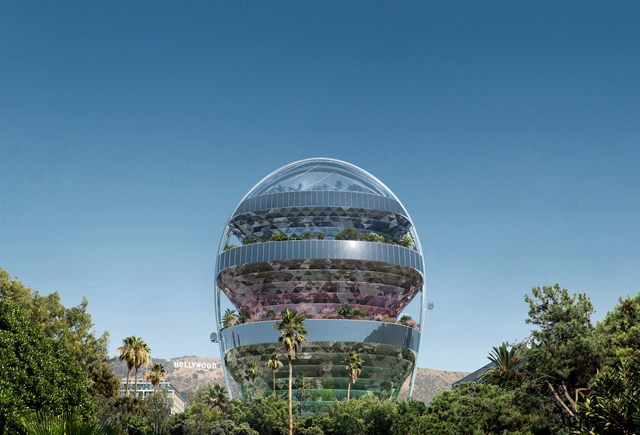
MAD Architects has announced "The Star", a new landmark that will foster culture, creativity, and inspiration in Los Angeles, California. Nestled in the heart of Hollywood, the Star's reflective architecture nods the neighborhood's glamorous characteristics and embeds nature within its structure with natural lighting, greenery, and workplaces that cater to the employees' mental and physical wellbeing.

MAD Architects Unveils Hollywood-Inspired "Office of the Future" - Image 1 of 4MAD Architects Unveils Hollywood-Inspired "Office of the Future" - Featured ImageMAD Architects Unveils Hollywood-Inspired "Office of the Future" - Image 2 of 4MAD Architects Unveils Hollywood-Inspired "Office of the Future" - Image 3 of 4MAD Architects Unveils Hollywood-Inspired Office of the Future - More Images

Hawkins\Brown Designs Mixed-Use Tower for Hollywood

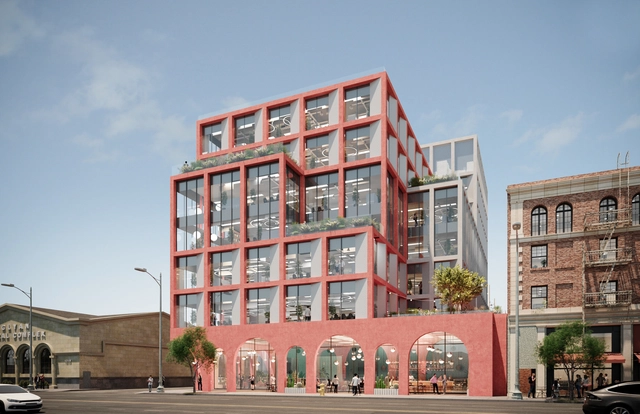
Architectural practice Hawkins\Brown has designed a new mixed-use tower development for Hollywood. The project combines 117,000 square feet of office and retail space for the area's growing media and creative community. As the design team outlines, the proposed project was made to address a growing demand for creative offices in Hollywood, where an influx of entertainment and technology firms are seeking Class-A space in a tight market.

LA's Millennium Hollywood Project

Subscriber Access | 
LA's Millennium Hollywood Project - Image 3 of 4
Millennium Hollywood Project via Millennium Partners

Millennium Partners and Argent Ventures are moving forward with their plan to transform 4.47 acres of vacant parking lots surrounding Hollywood’s iconic, mid-century Capitol Records Building into a transit-oriented, mixed-use development. Located on the famous intersection of Hollywood and Vine, the Millennium Hollywood Project will feature two residential buildings reaching heights up to 585 feet, designed by Handel Architects, that are grounded by a High Line-inspired public space by James Corner Field Operations.

With the Draft Environmental Impact Report (DEIR) currently on public review, the New York-based developers are hoping to get city approvals underway in early 2013.

Continue reading to learn more…

Laws Behind LA's Flat Skyscrapers

Subscriber Access | 
Laws Behind LA's Flat Skyscrapers - Featured Image
© Wikimedia Commons / Pintaric

Ever wonder why the skyline of Los Angeles is peppered with flat top skyscrapers? Or for that matter, why does such a global cosmopolitan city have so relatively few skyscrapers dotting its cityscape, the majority residing in downtown LA?

The answer lies in a section of the Los Angeles Municipal Code introduced in 1974 – Sec. 57.118.12 – “Emergency Helicopter Landing Facility.” The code stipulates that “Each building shall have a rooftop emergency helicopter landing facility in a location approved by the Chief.” The text also dictates that the helipads measure 50′x50′ in addition to a 25′ safety buffer. The resulting skyline thus far has been dominated by flat roof skyscrapers that would only make it through the planning process if in strict accordance with this code. However, a newly introduced proposal called the Hollywood Community Plan would allow skyscrapers to be constructed along the subway served “Hollywood Corridor.” In lieu of embarking on a plan that would surely result in more box type towers, an amendment has been introduced into the plan that would exempt skyscrapers within the corridor from having to conform to Sec. 57.118.12 helipad requirements. More After the break.