1. ArchDaily
  2. Historic Buildings

Historic Buildings: The Latest Architecture and News

Casanova+Hernandez Architects Advances Renovation of Albania’s National Historical Museum

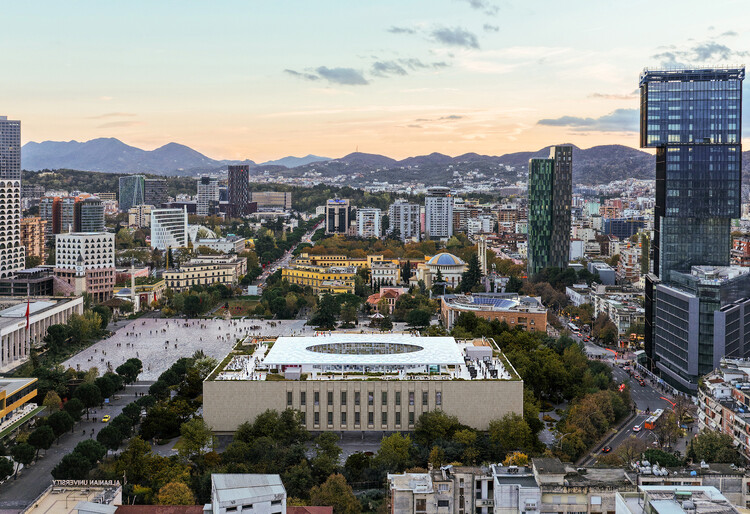
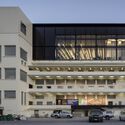
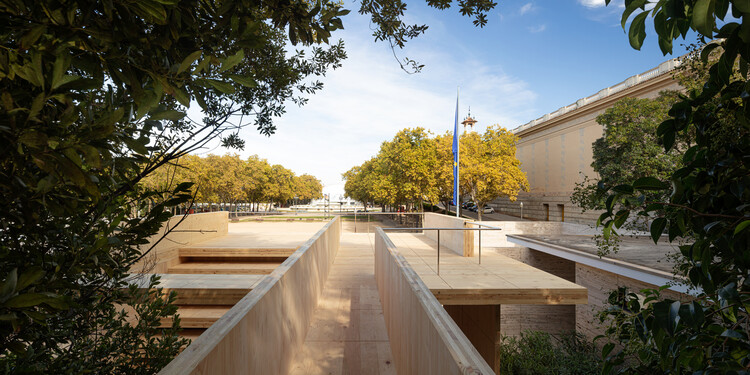
The initial phase of the complete renovation project for the National Historical Museum in Tirana is approaching completion. The project was commissioned by the Ministry of Economy, Culture, and Innovation of Albania and UNOPS, and financed by the European Commission through the EU for Culture (EU4C) program in Albania. The full restoration of the museum's 21,400 square meters is planned in two phases, led by Rotterdam-based Casanova + Hernandez Architects in collaboration with local partner iRI. The first phase consists of restoring the existing building in Skanderbeg Square and is expected to be completed this year, enabling the immediate start of the second phase, focused on implementing the new design for all interior spaces, the courtyard, and the roof.

Casanova+Hernandez Architects Advances Renovation of Albania’s National Historical Museum - Image 1 of 4Casanova+Hernandez Architects Advances Renovation of Albania’s National Historical Museum - Image 2 of 4Casanova+Hernandez Architects Advances Renovation of Albania’s National Historical Museum - Image 3 of 4Casanova+Hernandez Architects Advances Renovation of Albania’s National Historical Museum - Image 4 of 4Casanova+Hernandez Architects Advances Renovation of Albania’s National Historical Museum - More Images+ 19

London’s Southbank Centre Receives National Heritage Protection After 35-Year Campaign

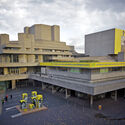
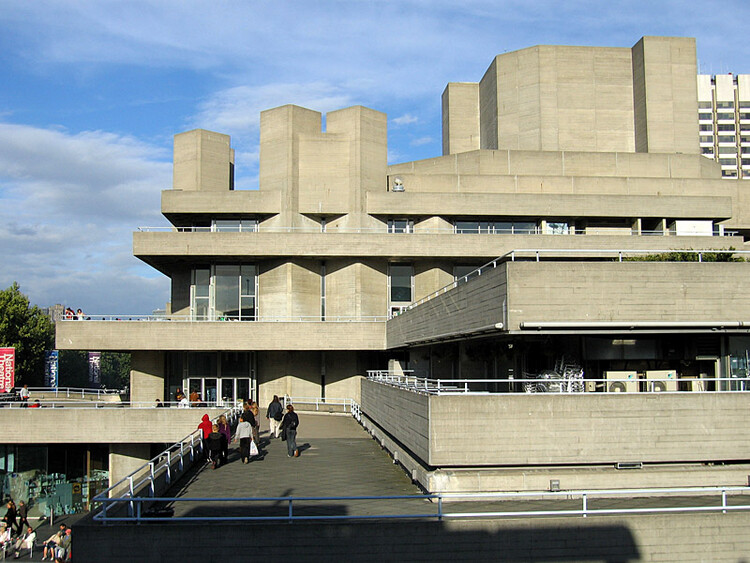
The Southbank Centre is a cultural complex in London built between 1963 and 1968 and widely regarded as a representative example of British Brutalism. Today, the site hosts a wide range of events, including visual arts, theatre, dance, classical and contemporary music, literature, poetry, and debate. The building was designed by a team from the Architects' Department of the London County Council, led by architect Norman Engleback. It became a controversial example of modern architecture following its opening in October 1967, when engineers voted Queen Elizabeth Hall "the supreme ugly" in a poll of new buildings, and the Daily Mail referred to it as "Britain's ugliest building." Fifty-nine years later, on February 10, 2026, the complex was granted Grade II listed status by the UK government's Department for Culture, Media and Sport (DCMS), following a 35-year campaign advocating for its protection as modern architectural heritage.

London’s Southbank Centre Receives National Heritage Protection After 35-Year Campaign - Image 1 of 4London’s Southbank Centre Receives National Heritage Protection After 35-Year Campaign - Image 2 of 4London’s Southbank Centre Receives National Heritage Protection After 35-Year Campaign - Image 3 of 4London’s Southbank Centre Receives National Heritage Protection After 35-Year Campaign - Image 4 of 4London’s Southbank Centre Receives National Heritage Protection After 35-Year Campaign - More Images+ 3

Heritage in Motion: Bangkok’s Buildings That Continue to Become

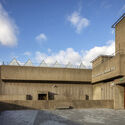
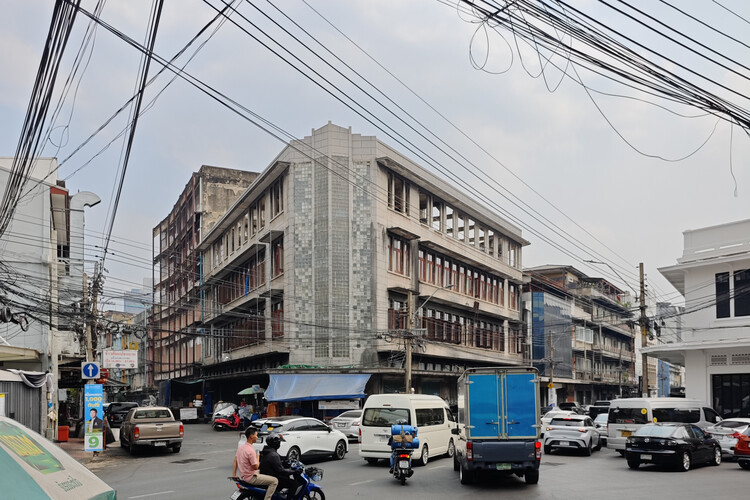
Architectural heritage is not only what a building was, but what it continues to become: a long process of building, rebuilding, and re-occupying over time. Where opportunities allow, this continuity produces a layered condition—one in which visitors can witness, experience, and feel the gradual shifting of a building's fabric, materiality, spatial order, and patterns of use, and occasionally even participate in that transformation.
Yet many projects—particularly those driven primarily by commercial imperatives—do not choose to value, or even to recognize, this slower work of adaptive reuse and heritage continuation. Developments governed by a numbers-only logic often opt for the easier path of demolition and rebuild: maximizing plot ratio, GFA, and rentable area with the efficiency of a clean slate. And still, every now and then, an opportunity surfaces that allows us to see—and to enjoy—the city's process of architectural "heritaging" in real time.
Heritage in Motion: Bangkok’s Buildings That Continue to Become - Image 1 of 4Heritage in Motion: Bangkok’s Buildings That Continue to Become - Image 2 of 4Heritage in Motion: Bangkok’s Buildings That Continue to Become - Image 3 of 4Heritage in Motion: Bangkok’s Buildings That Continue to Become - Image 4 of 4Heritage in Motion: Bangkok’s Buildings That Continue to Become - More Images+ 17

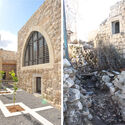
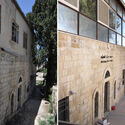
Palestinian Architect Suad Amiry Wins 2025 Great Arab Minds Award in Architecture and Design

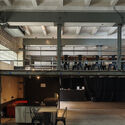
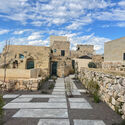
Palestinian architect Suad Amiry has been awarded the 2025 Great Arab Minds Award in the Architecture and Design category. Founder and director of the Riwaq - Centre for Architectural Conservation, Amiry was recognised for her long-standing work in documenting, preserving, and reusing Palestinian architectural heritage through conservation practices that link historic structures with contemporary community needs. Her approach positions architecture as both a repository of collective memory and an active social framework, emphasising the role of heritage in everyday urban and rural life.

Palestinian Architect Suad Amiry Wins 2025 Great Arab Minds Award in Architecture and Design - Image 1 of 4Palestinian Architect Suad Amiry Wins 2025 Great Arab Minds Award in Architecture and Design - Image 2 of 4Palestinian Architect Suad Amiry Wins 2025 Great Arab Minds Award in Architecture and Design - Image 3 of 4Palestinian Architect Suad Amiry Wins 2025 Great Arab Minds Award in Architecture and Design - Image 4 of 4Palestinian Architect Suad Amiry Wins 2025 Great Arab Minds Award in Architecture and Design - More Images+ 3

The Aesthetics of Power: Soviet Modernism Meets Uzbek Tradition in Tashkent’s Palace of Peoples’ Friendship

Subscriber Access | 

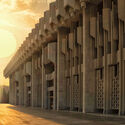
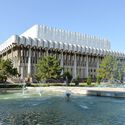
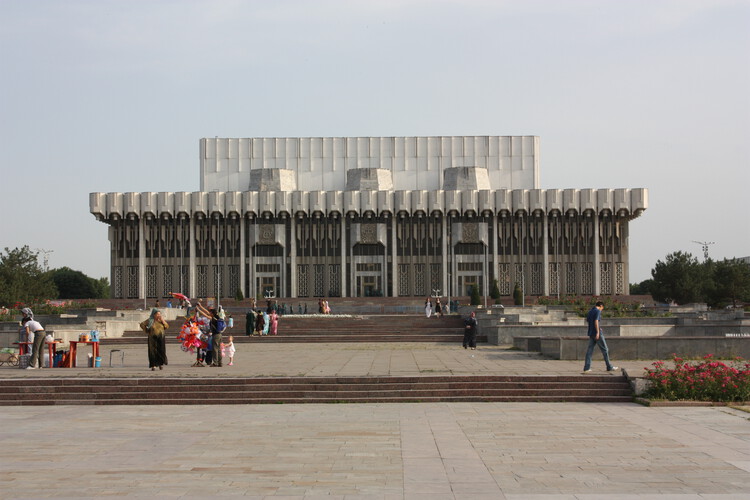
Tashkent, the capital of Uzbekistan and one of the oldest cities in Central Asia, has long been shaped by a hybrid culture. Located at a strategic point along the Silk Road, the city developed an architectural tradition defined by inner courtyards, domes, decorative ceramics, and Islamic geometric patterns. The annexation by the Russian Empire in the 19th century introduced administrative buildings, orthogonal squares, and straight avenues, creating a dual urban fabric — between the “old” Eastern city and the “new” European one — in which contrasts and overlaps became the norm.

During the Soviet period, when Tashkent became the capital of the Uzbek Soviet Socialist Republic and received intense migration from across the union, the city was transformed into a modernist showcase. The coexistence between Islamic heritage and the ideology of socialist progress found a new inflection point with the 1966 earthquake, whose destruction triggered a large-scale reconstruction effort involving architects from across the USSR. Massive housing complexes, cultural institutions, and monumental buildings emerged, reinterpreting local motifs through ideological and technological language. It was in this context that the Palace of Peoples’ Friendship took shape.

The Aesthetics of Power: Soviet Modernism Meets Uzbek Tradition in Tashkent’s Palace of Peoples’ Friendship - Image 1 of 4The Aesthetics of Power: Soviet Modernism Meets Uzbek Tradition in Tashkent’s Palace of Peoples’ Friendship - Image 2 of 4The Aesthetics of Power: Soviet Modernism Meets Uzbek Tradition in Tashkent’s Palace of Peoples’ Friendship - Image 3 of 4The Aesthetics of Power: Soviet Modernism Meets Uzbek Tradition in Tashkent’s Palace of Peoples’ Friendship - Image 4 of 4The Aesthetics of Power: Soviet Modernism Meets Uzbek Tradition in Tashkent’s Palace of Peoples’ Friendship - More Images+ 3

How Can Hidden Niches Transform Walls into Functional Architecture?

 | Sponsored Content

The niche has been a space of visible intention throughout the history of architecture. In ancient Roman architecture, it served as a formal device carved into masonry to display statues, vases, or other objects. These recesses animated the walls of temples, bath complexes, and civic buildings, adding rhythm, depth, and focal points to otherwise massive structures. The interior spaces of the Pantheon framed statues of gods, and the Baths of Caracalla used similar voids to structure expansive halls. By the Renaissance, the niche evolved into a refined architectural frame. In Florence, the external cavities of Orsanmichele held guild-commissioned statues, while the Uffizi Palace's recesses displayed sculptural works. Whether filled or intentionally left empty, these openings articulated internal and external walls and facades, introduced hierarchy, and provided visual interest, serving as deliberate gestures meant to be seen.

Ubani Publishes First Volume of the Guide to Tbilisi Districts, Focusing on Kala

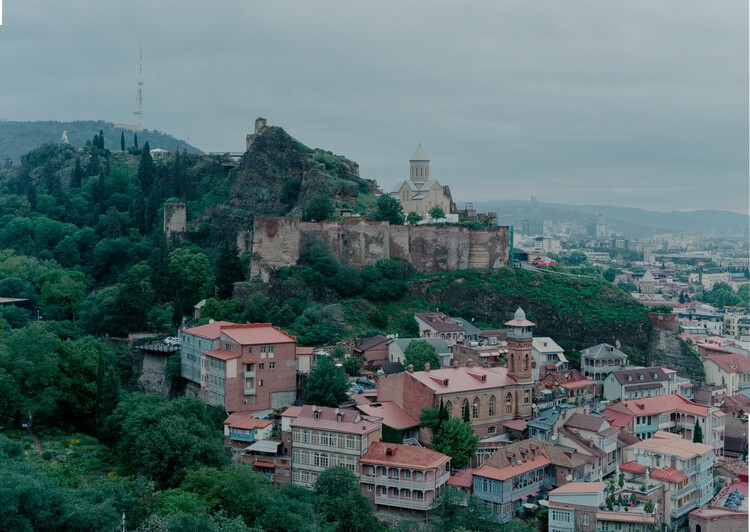
Ubani — Tbilisi Cityscape Research Center has released "Kala," the first publication in its new Guide to Tbilisi Districts series, offering an in-depth look at one of the Georgian capital's oldest urban areas. As a non-profit organization dedicated to researching and promoting Tbilisi's architectural heritage and landscape, Ubani develops public programs, exhibitions, workshops, and events aimed at making the city's built environment more widely understood. This inaugural guidebook continues that broader mission, situating Kala within the long-term evolution of Tbilisi's urban fabric.

Ubani Publishes First Volume of the Guide to Tbilisi Districts, Focusing on Kala - Image 1 of 4Ubani Publishes First Volume of the Guide to Tbilisi Districts, Focusing on Kala - Image 2 of 4Ubani Publishes First Volume of the Guide to Tbilisi Districts, Focusing on Kala - Image 3 of 4Ubani Publishes First Volume of the Guide to Tbilisi Districts, Focusing on Kala - Image 4 of 4Ubani Publishes First Volume of the Guide to Tbilisi Districts, Focusing on Kala - More Images+ 9

Foster + Partners Unveils Redevelopment Master Plan for Historic Site in Thessaloniki, Greece

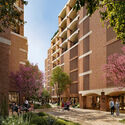
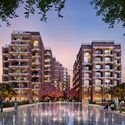
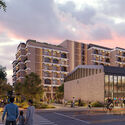
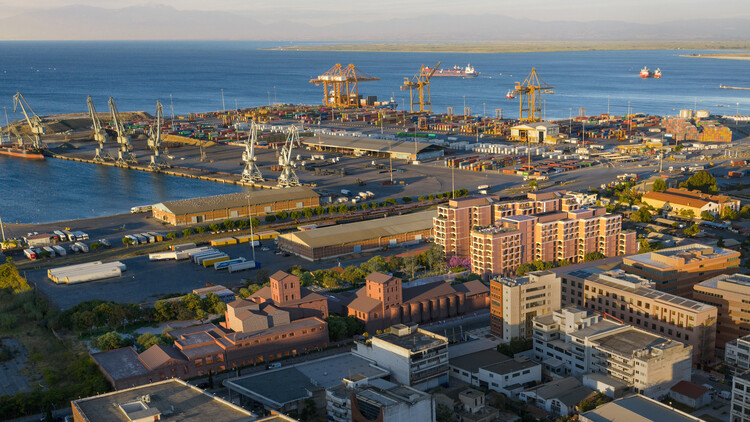
Foster + Partners has developed a master plan for the redevelopment of the former FIX brewery in Thessaloniki, Greece. The proposal, commissioned by Dimand, outlines a mixed-use district that integrates public space, housing, hospitality, and cultural programs. Positioned along the western seafront and within walking distance of the city center, the site serves as a key point of connection between emerging neighborhoods and the waterfront. The project builds on the industrial history of the brewery complex while introducing new spatial configurations intended to support broader urban regeneration efforts across Thessaloniki.

Foster + Partners Unveils Redevelopment Master Plan for Historic Site in Thessaloniki, Greece - Image 1 of 4Foster + Partners Unveils Redevelopment Master Plan for Historic Site in Thessaloniki, Greece - Image 2 of 4Foster + Partners Unveils Redevelopment Master Plan for Historic Site in Thessaloniki, Greece - Image 3 of 4Foster + Partners Unveils Redevelopment Master Plan for Historic Site in Thessaloniki, Greece - Image 4 of 4Foster + Partners Unveils Redevelopment Master Plan for Historic Site in Thessaloniki, Greece - More Images+ 3

First Chapter of the 18th Istanbul Biennial Opens, Exploring Self-Preservation and Futurity

The 18th Istanbul Biennial, organized by the Istanbul Foundation for Culture and Arts (İKSV), has opened its first phase to visitors and will remain on view until November 23, 2025. Curated by Christine Tohmé under the title "The Three-Legged Cat," the biennial is envisioned as a three-year process unfolding between 2025 and 2027. The second phase, scheduled for 2026, will focus on establishing an academy and collaborating with local initiatives through a series of public programs. The third and final chapter in 2027 will bring together the accumulated encounters through exhibitions and workshops.

First Chapter of the 18th Istanbul Biennial Opens, Exploring Self-Preservation and Futurity - Image 1 of 4First Chapter of the 18th Istanbul Biennial Opens, Exploring Self-Preservation and Futurity - Image 2 of 4First Chapter of the 18th Istanbul Biennial Opens, Exploring Self-Preservation and Futurity - Image 3 of 4First Chapter of the 18th Istanbul Biennial Opens, Exploring Self-Preservation and Futurity - Image 4 of 4First Chapter of the 18th Istanbul Biennial Opens, Exploring Self-Preservation and Futurity - More Images+ 8

Uzbekistan’s Inaugural Bukhara Biennial 2025 Opens Across Restored Historic Landmarks

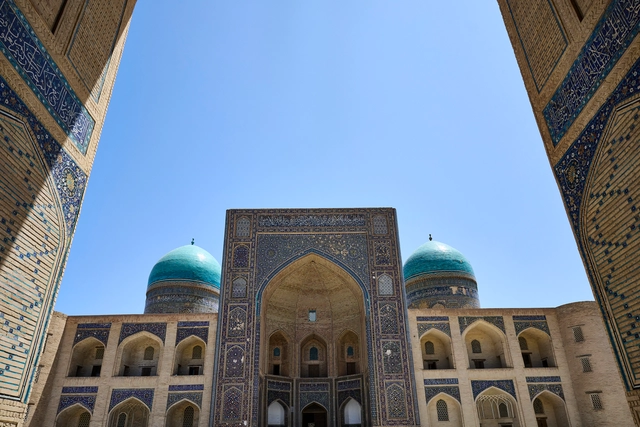
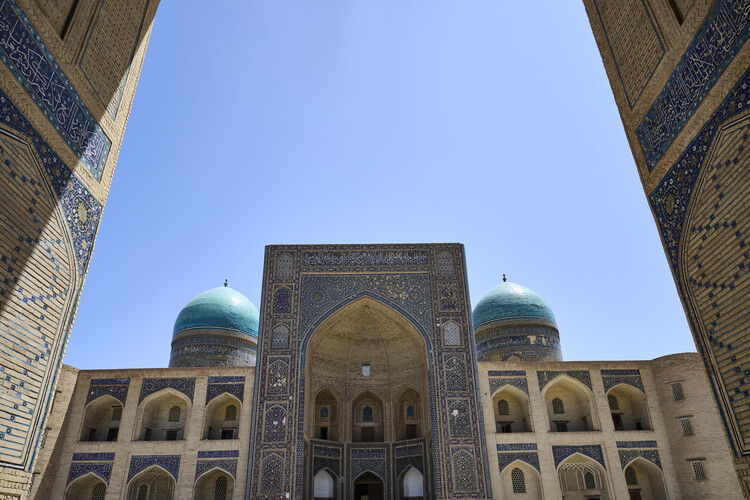
The inaugural edition of the Bukhara Biennial opened on September 5, 2025, bringing over 70 site-specific commissions by more than 200 participants from 39 countries to the historic core of the Uzbek city. Commissioned by the Uzbekistan Art and Culture Development Foundation (ACDF) and Commissioner Gayane Umerova, the Biennial is described as the largest and most diverse cultural event in Central Asia to date. Curated by Diana Campbell under the theme Recipes for Broken Hearts, the ten-week event is staged across a constellation of newly restored sites, including madrassas, caravanserais, and mosques, all part of Bukhara's UNESCO World Heritage listing. Beyond an exhibition platform, the biennial is framed as part of a broader master plan, positioning culture as a catalyst for urban transformation and heritage renewal.

Uzbekistan’s Inaugural Bukhara Biennial 2025 Opens Across Restored Historic Landmarks - Image 1 of 4Uzbekistan’s Inaugural Bukhara Biennial 2025 Opens Across Restored Historic Landmarks - Image 2 of 4Uzbekistan’s Inaugural Bukhara Biennial 2025 Opens Across Restored Historic Landmarks - Image 3 of 4Uzbekistan’s Inaugural Bukhara Biennial 2025 Opens Across Restored Historic Landmarks - Image 4 of 4Uzbekistan’s Inaugural Bukhara Biennial 2025 Opens Across Restored Historic Landmarks - More Images+ 8

The 18th Istanbul Biennial Unveils Venues and Artists for Its First Leg

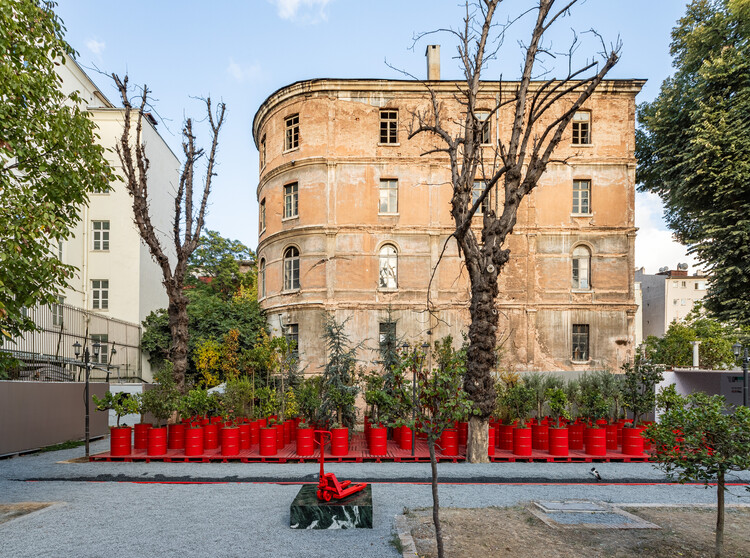
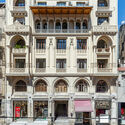
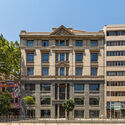
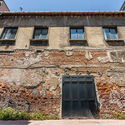
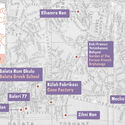
Organized by the Istanbul Foundation for Culture and Arts (İKSV), the 18th Istanbul Biennial will be realized in three stages between 2025 and 2027, continuing to be Türkiye's largest international exhibition dedicated to contemporary art. Curated by Christine Tohmé under the title The Three-Legged Cat, the first leg will be held from September 20 to November 23, 2025. Continuing the Biennial's approach of engaging directly with Istanbul through a dispersed model rather than a fixed venue, this edition will use eight sites located within walking distance along the BeyoğluKaraköy axis. Over this period, works by 47 artists from more than 30 countries will be presented to the public, accompanied by a program of performances, screenings, and live events during the opening week.

The 18th Istanbul Biennial Unveils Venues and Artists for Its First Leg - Image 1 of 4The 18th Istanbul Biennial Unveils Venues and Artists for Its First Leg - Image 2 of 4The 18th Istanbul Biennial Unveils Venues and Artists for Its First Leg - Image 3 of 4The 18th Istanbul Biennial Unveils Venues and Artists for Its First Leg - Image 4 of 4The 18th Istanbul Biennial Unveils Venues and Artists for Its First Leg - More Images+ 4

The Barcelona Method: How Climate Data is Saving Historic Architecture from Carbon Stranding

Subscriber Access | 

In heritage districts from Prague to Paris, a countdown has begun. Years until countless architectural treasures become, quite literally, worthless. Not through the slow erosion of time or the erratic shifts of cultural taste, but through the inevitable mathematics of atmospheric chemistry. In UrbanDecarbonisation: Destranding Cities for a Post-fossil Future, Paolo Cresci, Francesca Galeazzi, and Aurel von Richthofen introduce the concept of "carbon stranding", a scenario in which buildings become financially non-viable due to tightening carbon regulations. This threatens to render entire heritage districts financially extinct before they reach their centennials.

The Barcelona Method: How Climate Data is Saving Historic Architecture from Carbon Stranding - Image 1 of 4The Barcelona Method: How Climate Data is Saving Historic Architecture from Carbon Stranding - Image 2 of 4The Barcelona Method: How Climate Data is Saving Historic Architecture from Carbon Stranding - Image 3 of 4The Barcelona Method: How Climate Data is Saving Historic Architecture from Carbon Stranding - Image 4 of 4The Barcelona Method: How Climate Data is Saving Historic Architecture from Carbon Stranding - More Images+ 3

Foster + Partners Reveals Design for Retail Plaza on Istanbul’s Golden Horn

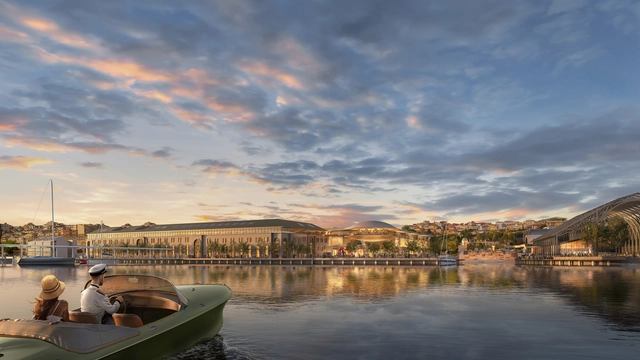
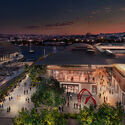
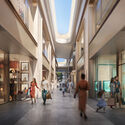
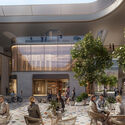
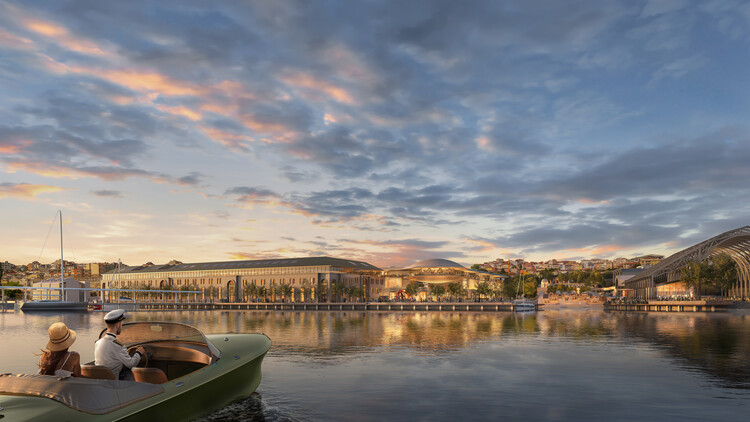
Foster + Partners has revealed designs for a retail plaza located on the northern bank of the Golden Horn in Istanbul, Türkiye. The project forms part of the larger Tersane master plan, which proposes to redevelop 1.6 kilometers of previously underutilized waterfront. The master plan integrates a mix of retail, residential, hospitality, cultural buildings, and landscaped public spaces, aiming to enhance access along the shoreline. The plaza sits within close proximity to several of Istanbul's historic landmarks, drawing on the area's maritime and industrial heritage. The design's scale and material choices reflect this context, seeking to align with the site's historic layers while introducing a contemporary retail environment.

Foster + Partners Reveals Design for Retail Plaza on Istanbul’s Golden Horn - Image 2 of 4Foster + Partners Reveals Design for Retail Plaza on Istanbul’s Golden Horn - Image 3 of 4Foster + Partners Reveals Design for Retail Plaza on Istanbul’s Golden Horn - Image 4 of 4Foster + Partners Reveals Design for Retail Plaza on Istanbul’s Golden Horn - Image 1 of 4Foster + Partners Reveals Design for Retail Plaza on Istanbul’s Golden Horn - More Images

The White House Announces Plans for New Ballroom

The White House has unveiled plans for a new permanent event space on its historic grounds. Intended to address long-standing spatial limitations for large-scale ceremonial functions, the proposed White House State Ballroom will provide a venue with an expanded capacity. McCrery Architects, a Washington-based firm recognized for its work in classical architecture, was initially appointed as lead architect. Clark Construction will oversee the build, with engineering support provided by AECOM. The construction is scheduled to begin in September 2025, with completion planned within the current administration.
The White House Announces Plans for New Ballroom - Image 1 of 4The White House Announces Plans for New Ballroom - Image 2 of 4The White House Announces Plans for New Ballroom - Image 3 of 4The White House Announces Plans for New Ballroom - Image 4 of 4The White House Announces Plans for New Ballroom - More Images+ 6

An Epic of Fire and Stone: The Story Behind the Intervention at the Benedictine Monastery of Catania, Sicily

The Benedictine Monastery of San Nicolò l’Arena in Catania, Sicily, holds within its stones the echoes of five centuries, shaped by time, varied uses, violent earthquakes, and the blazing force of Mount Etna. Its walls, silent witnesses to history, were molded both by the fire of nature and by human hands. Yet among all the transformations it underwent, none was as profound or poetic as the one led by Italian architect Giancarlo De Carlo, starting in 1980. After 30 years of dedicated work, time required to truly understand such a complex and awe-inspiring site, the former monastic residence was reborn as a university, not by force, but through revelation.

An Epic of Fire and Stone: The Story Behind the Intervention at the Benedictine Monastery of Catania, Sicily - Image 1 of 4An Epic of Fire and Stone: The Story Behind the Intervention at the Benedictine Monastery of Catania, Sicily - Image 2 of 4An Epic of Fire and Stone: The Story Behind the Intervention at the Benedictine Monastery of Catania, Sicily - Image 3 of 4An Epic of Fire and Stone: The Story Behind the Intervention at the Benedictine Monastery of Catania, Sicily - Image 4 of 4An Epic of Fire and Stone: The Story Behind the Intervention at the Benedictine Monastery of Catania, Sicily - More Images+ 22

Foster + Partners Reveals Central Crossing Mixed-Use Development in Hong Kong

Foster + Partners has unveiled designs for Central Crossing, a new mixed-use development in the heart of Hong Kong's Central district. Located at 118 Wellington Street and bordered by Graham, Gage, and Cochrane Streets, the project is a joint venture between Wing Tai Properties Limited and CSI Properties Limited. Positioned within a triangle formed by the historic landmarks Tai Kwun, PMQ, and Central Market, the site offers a rare opportunity to build within one of the city's most vibrant and historically layered neighborhoods. Central Crossing continues Foster + Partners' ongoing engagement with historical contexts, following earlier interventions such as the Carré d'Art in Nîmes and the extension to the Royal Academy in London. The project seeks to balance sensitivity to its urban fabric with an architectural presence, contributing to the evolving identity of Central.
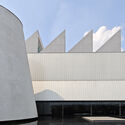
Foster + Partners Reveals Central Crossing Mixed-Use Development in Hong Kong - Image 1 of 4Foster + Partners Reveals Central Crossing Mixed-Use Development in Hong Kong - Image 2 of 4Foster + Partners Reveals Central Crossing Mixed-Use Development in Hong Kong - Image 3 of 4Foster + Partners Reveals Central Crossing Mixed-Use Development in Hong Kong - Image 4 of 4Foster + Partners Reveals Central Crossing Mixed-Use Development in Hong Kong - More Images

Earthquake in Istanbul Raises Questions About the City's Seismic Preparedness

On April 23, 2025, a 6.2 magnitude earthquake in the Sea of Marmara struck Türkiye's largest city, Istanbul, causing widespread panic and injuring over 230 people, primarily due to falls and panic-induced accidents. Over the course of the day, at least 272 aftershocks were recorded, with the strongest reaching a magnitude of 5.9. According to an initial statement by Minister of the Interior Ali Yerlikaya, there was no major destruction apart from the collapse of a single abandoned building. However, the event has reignited public and professional discourse around the city's preparedness for a much larger seismic event, long anticipated by experts monitoring the North Anatolian Fault.

Earthquake in Istanbul Raises Questions About the City's Seismic Preparedness - Image 1 of 4Earthquake in Istanbul Raises Questions About the City's Seismic Preparedness - Image 2 of 4Earthquake in Istanbul Raises Questions About the City's Seismic Preparedness - Image 3 of 4Earthquake in Istanbul Raises Questions About the City's Seismic Preparedness - Image 4 of 4Earthquake in Istanbul Raises Questions About the City's Seismic Preparedness - More Images

A Culture of Reuse: 5 European Museums Embedded into Their Historical Contexts

Subscriber Access | 

Throughout their relatively recent history, museums have evolved to condense particular aspects of a culture and present them in a coherent and unified manner. This makes the connection between the architecture and the exhibit a crucial matter, as the architect is tasked with designing not only the framework and background of the exhibited arts or artifacts but also taking charge of the journey undertaken by the visitor, harmonizing the cultural gain with the lived spatial experience of walking the exhibition halls. However, not all museums have been purposely built for this task.

Across Europe, museums are being organized within or expanding upon historical monuments and buildings that have lost their original purpose. Then in a state of decay, this decision to reorganize them as cultural venues stops the decay and preserves the historical material, adding a new layer of complexity to the intended exhibits. The architect's role becomes that of introducing order and a system that can balance the heritage of the place with the needs of modern functionality, ensuring that the essence of the original structure is preserved while meeting the needs of contemporary exhibitions and public engagement.

A Culture of Reuse: 5 European Museums Embedded into Their Historical Contexts - Image 1 of 4A Culture of Reuse: 5 European Museums Embedded into Their Historical Contexts - Image 2 of 4A Culture of Reuse: 5 European Museums Embedded into Their Historical Contexts - Image 3 of 4A Culture of Reuse: 5 European Museums Embedded into Their Historical Contexts - Image 4 of 4A Culture of Reuse: 5 European Museums Embedded into Their Historical Contexts - More Images+ 23