1. ArchDaily
  2. Green Design

Green Design: The Latest Architecture and News

When Façades Become Habitats: Architecture Making Room for Other Species

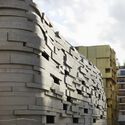
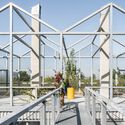
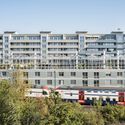
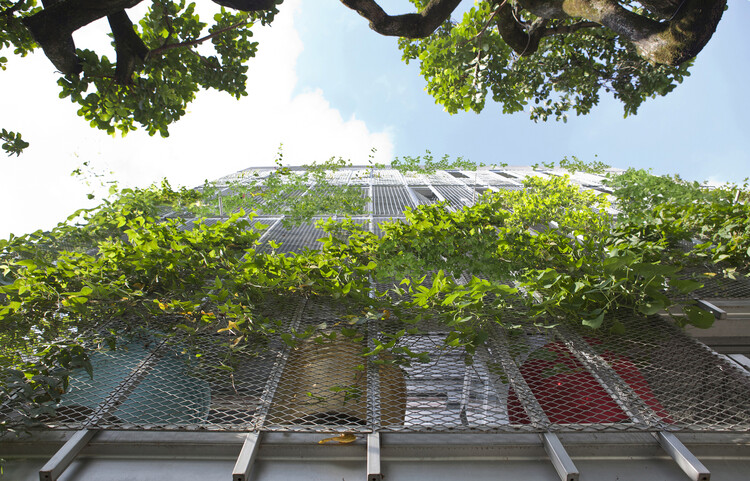
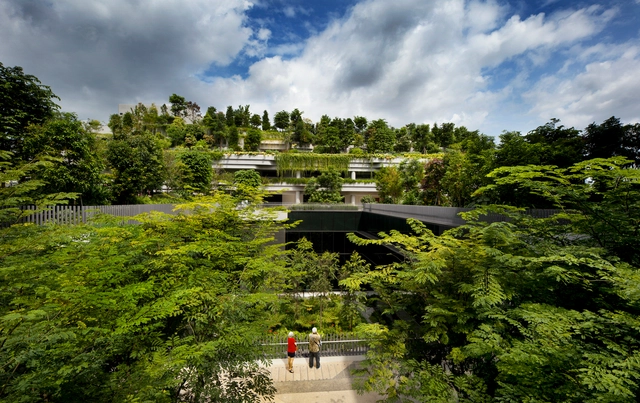
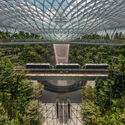
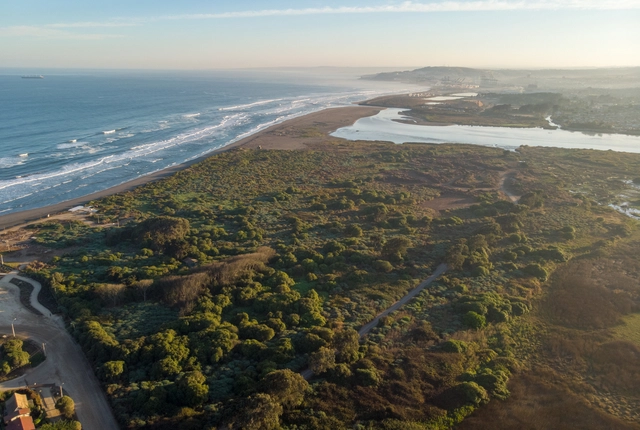
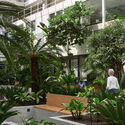
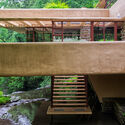
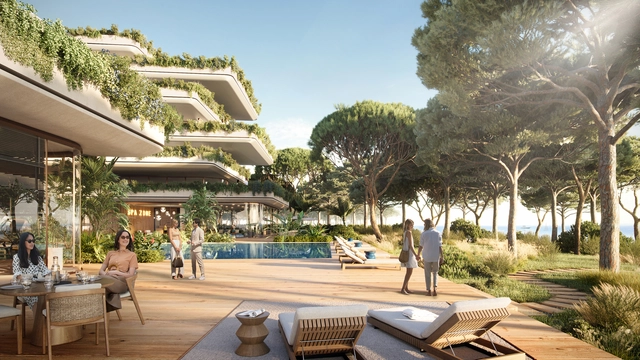
When we think of façades, we rarely think of them as habitats. We see them as the elements that separate interior from exterior, regulate temperature, reduce noise, and protect buildings from external conditions. They give architecture its visual language, but they are also expected to keep the outside world at a distance. In doing so, façades have often been understood as barriers: surfaces that define where human comfort begins and where the environment is meant to remain outside.

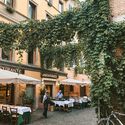
But the outside of a building is never empty. For centuries, architecture has unintentionally created opportunities for other forms of life. Birds nested beneath roof tiles, insects occupied cracks in masonry walls, and mosses or plants took root along ledges, gutters, and rough stone surfaces. These conditions were rarely designed with other species in mind, but they created small opportunities for life to inhabit them.

When Façades Become Habitats: Architecture Making Room for Other Species - Image 1 of 4When Façades Become Habitats: Architecture Making Room for Other Species - Image 2 of 4When Façades Become Habitats: Architecture Making Room for Other Species - Image 3 of 4When Façades Become Habitats: Architecture Making Room for Other Species - Image 4 of 4When Façades Become Habitats: Architecture Making Room for Other Species - More Images+ 21

The 2026 Edition of the UIA 2030 Award Honors Built Projects Advancing the UN Sustainable Development Goals

During a ceremony held at the World Urban Forum (WUF) in Baku, Azerbaijan, on May 20, 2026, the International Union of Architects (UIA) and UN-Habitat announced the winners of the third cycle of the UIA 2030 Award. The biennial award recognizes built projects that make meaningful contributions to achieving the United Nations Sustainable Development Goals (SDGs). Architects were invited to submit architecture, landscape, and urban design projects addressing pressing environmental, social, and economic challenges across six categories: sustainable water management, the promotion of safe working environments, adequate and affordable housing, efficient and inclusive planning, access to green and public space, and climate resilience.

The third cycle launched in July 2025, and regional finalists from the UIA's five global regions were announced in January. In the final stage, the jury selected winning, highly commended, and commended projects in each category, recognizing works in China, Bangladesh, India, Thailand, Mexico, Peru, Colombia, Spain, Kenya, Morocco, and the United States.

The 2026 Edition of the UIA 2030 Award Honors Built Projects Advancing the UN Sustainable Development Goals - Image 1 of 4The 2026 Edition of the UIA 2030 Award Honors Built Projects Advancing the UN Sustainable Development Goals - Image 2 of 4The 2026 Edition of the UIA 2030 Award Honors Built Projects Advancing the UN Sustainable Development Goals - Image 3 of 4The 2026 Edition of the UIA 2030 Award Honors Built Projects Advancing the UN Sustainable Development Goals - Image 4 of 4The 2026 Edition of the UIA 2030 Award Honors Built Projects Advancing the UN Sustainable Development Goals - More Images+ 119

Reimagining the Complete Neighborhood through Urban Renaturing

Subscriber Access | 

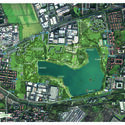
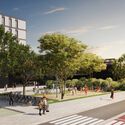
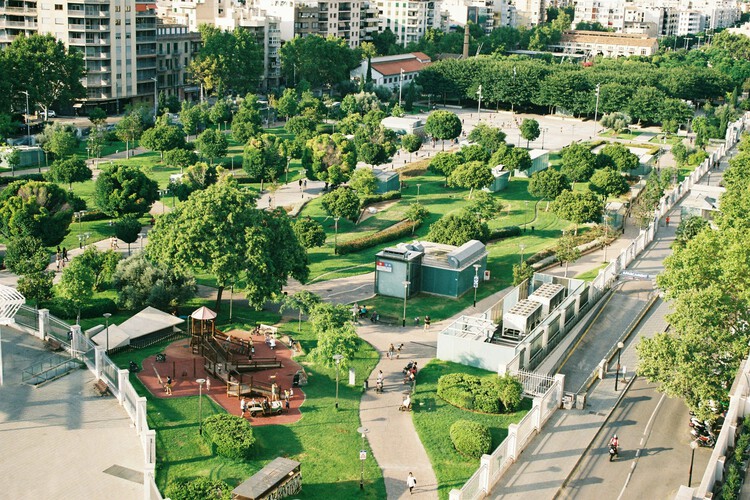
The ReGreeneration project, a Horizon Europe project led by Inetum and supported by C40 Cities, ARUP, Placemaking Europe, and several others, operates as an active collaboration with local governments, private companies, academia, and civil society organizations at the intersection of urban regeneration, green public spaces, and neighborhood-scale design. Its premise addresses how European cities are built and maintained and how they experience a changing climate, arguing that cities must fundamentally change to remain livable under accelerating climate pressures.

Reimagining the Complete Neighborhood through Urban Renaturing - Image 1 of 4Reimagining the Complete Neighborhood through Urban Renaturing - Image 2 of 4Reimagining the Complete Neighborhood through Urban Renaturing - Image 3 of 4Reimagining the Complete Neighborhood through Urban Renaturing - Image 4 of 4Reimagining the Complete Neighborhood through Urban Renaturing - More Images+ 12

The Garden City Movement in Asia: Evolution and Modern Legacies

Subscriber Access | 

Ebenezer Howard's verdant visions for cities have spread eastwards, far beyond his British roots. In the 1900s, city planning welcomed the Garden City Movement as a champion of good design - a response to Western industrial urbanization. Soon, Asian cities conceived their archetypes, juggling local constraints in climate and density. Designs and development, from colonial-era experiments to contemporary mega-projects, have embraced and reinvented Howard's vision well into the 21st century.

The Garden City Movement in Asia: Evolution and Modern Legacies - Image 1 of 4The Garden City Movement in Asia: Evolution and Modern Legacies - Image 2 of 4The Garden City Movement in Asia: Evolution and Modern Legacies - Image 3 of 4The Garden City Movement in Asia: Evolution and Modern Legacies - Image 4 of 4The Garden City Movement in Asia: Evolution and Modern Legacies - More Images+ 3

Earth Day 2025: Our Agency in Rethinking Sustainability Across Cities, Scales, and Sectors

Subscriber Access | 

On Earth Day 2025, observed annually on April 22, we are once again reminded of the urgent environmental and sustainability challenges that face our planet—challenges that continue to evolve alongside global economic, political, and cultural shifts. The building and construction industry remains one of the most critical sectors in the effort to manage and reduce global carbon emissions. This year, these issues are being addressed through increasingly diverse lenses, calling for more holistic and integrated approaches. It's vital that we view sustainability not as a one-size-fits-all solution, but as a multi-scalar effort—one that spans from large-scale urban development and strategic planning, to the advancement of sustainable materials, and even to temporary, thought-provoking interventions like exhibitions and installations. In doing so, we reaffirm our commitment to reducing our collective carbon footprint, while shaping a built environment that promotes human well-being and planetary health.

Earth Day 2025: Our Agency in Rethinking Sustainability Across Cities, Scales, and Sectors - Image 1 of 4Earth Day 2025: Our Agency in Rethinking Sustainability Across Cities, Scales, and Sectors - Image 2 of 4Earth Day 2025: Our Agency in Rethinking Sustainability Across Cities, Scales, and Sectors - Image 3 of 4Earth Day 2025: Our Agency in Rethinking Sustainability Across Cities, Scales, and Sectors - Image 4 of 4Earth Day 2025: Our Agency in Rethinking Sustainability Across Cities, Scales, and Sectors - More Images+ 23

Modernism Reconsidered: Revisiting the Movement’s Complex Relationship with Sustainability

Modernism emerged in the early 20th century as a revolutionary movement that rejected historical styles, prioritizing functionality, innovation, and rationality. Grounded in the promise of industrial progress, architects like Walter Gropius, Le Corbusier, and Ludwig Mies van der Rohe championed using new materials and construction methods, striving for a universal architectural language. Their work introduced radical ideas: open floor plans, expansive glazing for natural light, and pilotis that elevated structures, symbolizing a new architectural era. However, alongside its groundbreaking ideas, modernism's relationship with sustainability has sparked ongoing debates.

While modernist architects sought to address social and economic challenges through affordable housing and efficient design, their reliance on energy-intensive materials like concrete and steel created unintended environmental consequences. The large-scale industrialization celebrated by modernists often disregarded local climates and ecological systems, leading to inefficiencies. Yet, the principles of functionality and adaptability embedded in modernist architecture laid the groundwork for what we now recognize as sustainable practices. From Le Corbusier's rooftop gardens to Frank Lloyd Wright's integration of nature, the seeds of environmentally conscious design were undeniably present, albeit limited in their execution.

Modernism Reconsidered: Revisiting the Movement’s Complex Relationship with Sustainability - Image 1 of 4Modernism Reconsidered: Revisiting the Movement’s Complex Relationship with Sustainability - Image 2 of 4Modernism Reconsidered: Revisiting the Movement’s Complex Relationship with Sustainability - Image 3 of 4Modernism Reconsidered: Revisiting the Movement’s Complex Relationship with Sustainability - Image 4 of 4Modernism Reconsidered: Revisiting the Movement’s Complex Relationship with Sustainability - More Images+ 25

Cultivating Green Apartments: A Guide to Integrating Nature in Small Urban Spaces

Subscriber Access | 

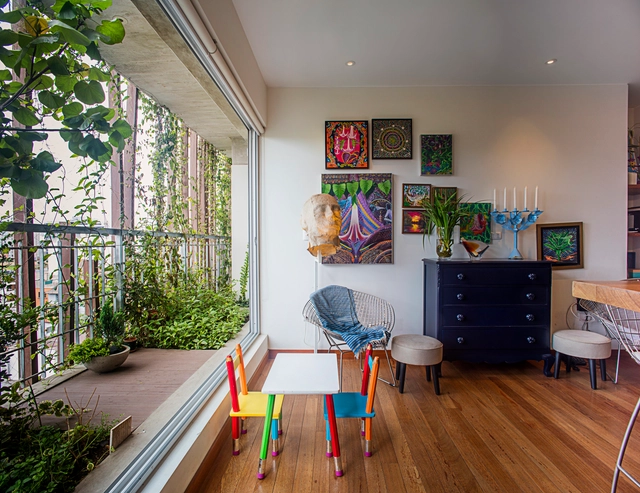
Urban living has become synonymous with limited space and creativity for compact apartments. As cities become more dominated by concrete and steel, there is an exciting, yet unsurprising, rise in interest in embracing the green thumb, even within the constraints of a dense urban environment. This interest is not purely to tend aesthetic tastes, as studies consistently show that exposure to nature reduces stress, improves focus, and enhances overall well-being. However, in dense urban environments, the challenge lies in finding innovative ways to make this vision a reality for apartments where every inch matters.

Cultivating Green Apartments: A Guide to Integrating Nature in Small Urban Spaces - Image 1 of 4Cultivating Green Apartments: A Guide to Integrating Nature in Small Urban Spaces - Image 2 of 4Cultivating Green Apartments: A Guide to Integrating Nature in Small Urban Spaces - Image 3 of 4Cultivating Green Apartments: A Guide to Integrating Nature in Small Urban Spaces - Image 4 of 4Cultivating Green Apartments: A Guide to Integrating Nature in Small Urban Spaces - More Images+ 4

Foster + Partners Unveils "Land of Tomorrow" Master Plan in Larnaka, Cyprus

Foster + Partners has started the design work for the initial phase of the “Land of Tomorrow” master plan in Larnaka, Cyprus. Aiming to transform Larnaka’s seafront into a vibrant, sustainable community, the first phase focuses on residential developments. Featuring commercial shops, including shops, offices, and restaurants, the master plan focuses on seamless integration with the seafront and emphasizes connections to natural surroundings.

Foster + Partners Unveils "Land of Tomorrow" Master Plan in Larnaka, Cyprus - Image 1 of 4Foster + Partners Unveils "Land of Tomorrow" Master Plan in Larnaka, Cyprus - Image 2 of 4Foster + Partners Unveils "Land of Tomorrow" Master Plan in Larnaka, Cyprus - Image 3 of 4Foster + Partners Unveils "Land of Tomorrow" Master Plan in Larnaka, Cyprus - Image 4 of 4Foster + Partners Unveils Land of Tomorrow Master Plan in Larnaka, Cyprus - More Images+ 1

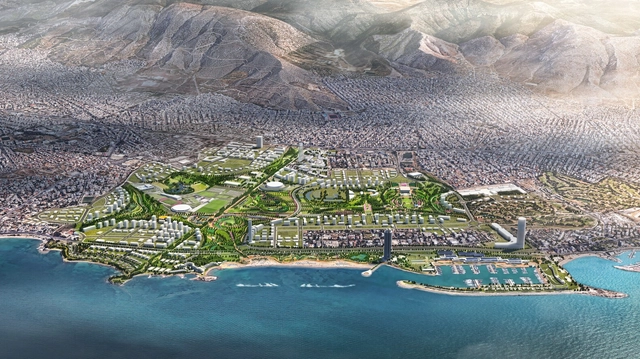
Abandoned Airport near Athens, Greece, Set to be Transformed into Europe’s Largest Coastal Park

The Athens International Airport was decommissioned in 2001, leading to two decades of work for the local government to establish funding and a governance mechanism to transform the 600 acres of unused space into Europe's largest coastal park. The site has a layered history, from prehistoric settlements to the construction of the airport in the 20th century and the site being used for as an Olympic venue in 2004. Architecture office Sasaki is leading the design to transform the site again and create the Ellinikon Metropolitan Park, a restorative landscape and climate-positive design that will serve as a park, playground, and cultural center for the city of Athens. Developers are planning to break ground early next year.

Abandoned Airport near Athens, Greece, Set to be Transformed into Europe’s Largest Coastal Park - Image 1 of 4Abandoned Airport near Athens, Greece, Set to be Transformed into Europe’s Largest Coastal Park - Image 2 of 4Abandoned Airport near Athens, Greece, Set to be Transformed into Europe’s Largest Coastal Park - Image 3 of 4Abandoned Airport near Athens, Greece, Set to be Transformed into Europe’s Largest Coastal Park - Image 4 of 4Abandoned Airport near Athens, Greece, Set to be Transformed into Europe’s Largest Coastal Park - More Images+ 22

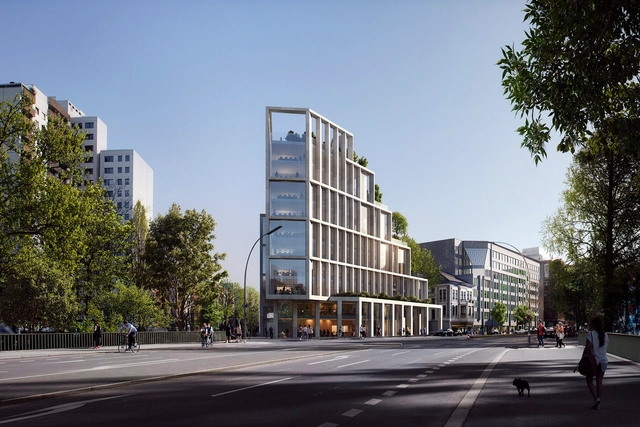
C.F. Møller Architects Wins International Competition to Design Headquarters for German Bank Berlin Hyp

C.F. Møller Architects was selected to design the new HQ of Berlin Hyp, one of Germany’s leading real estate financiers. With a strong focus on sustainability, the winning proposal of the invited international competition, supports the bank’s vision, “contributing to the transition and urban development of the surrounding area”.

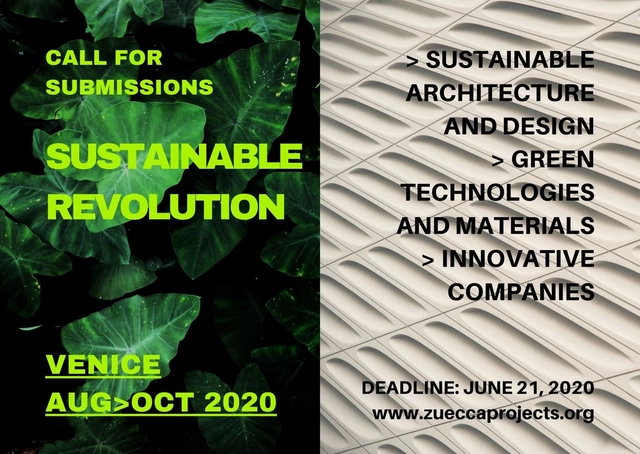
Call For Submissions: Sustainable Revolution

As a reaction to the unprecedented moment that we are all experiencing, Zuecca Projects has decided to launch its first-ever Open Call, on the theme of Sustainable Architecture and Design.

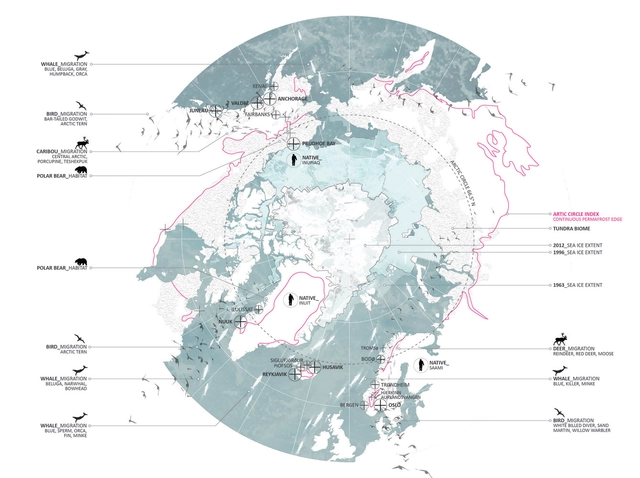
Architecture of the Arctic Circle – Amanda Aman

In this webinar, Amanda Aman, AIA, LEED AP BD+C will present her 2018 Stewardson Keefe LeBrun Travel Grant research, Fragile Fields of the Arctic Circle Periphery. The perpetual global climate shift materializes within the Arctic Circle as a reaction to the pressures of petrochemical industrial output and unsustainable human practice. Arctic environments are among the first to experience the manifestations of this shift as the Arctic is warming at twice the rate of the rest of the globe. As a result, natural systems, wildlife migrations, and patterns of habitation will be severely altered, in addition to the dependence of indigenous people groups on these for cultural preservation and physical survival.

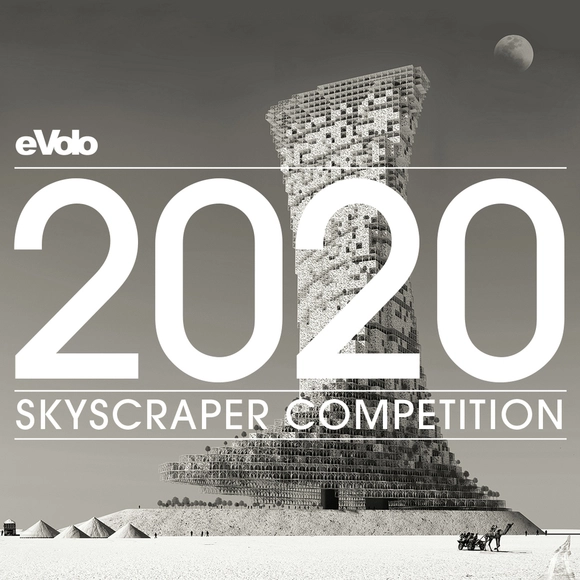
Call for Entries: 2020 Skyscraper Competition

eVolo Magazine is pleased to invite architects, students, engineers, designers, and artists from around the globe to take part in the 2020 Skyscraper Competition. Established in 2006, the annual Skyscraper Competition is one of the world’s most prestigious awards for high-rise architecture. It recognizes outstanding ideas that redefine skyscraper design through the implementation of novel technologies, materials, programs, aesthetics, and spatial organizations; along with studies on globalization, flexibility, adaptability, and the digital revolution. It is a forum that examines the relationship between the skyscraper and the natural world, the skyscraper and the community, and the skyscraper and the city.

Reframing Climate Change as a Local Problem of Global Proportion: 4 Ways Architects can Deliver Change

Subscriber Access | 
Reframing Climate Change as a Local Problem of Global Proportion: 4 Ways Architects can Deliver Change - Image 8 of 4
Bankside 123 in London creates new routes, public spaces and retail, with three simple rectilinear buildings set within a permeable public realm designed to reconnect the site with its surroundings. Image Courtesy of Allies & Morrison

The latest UN special report on climate change, released in October 2018, was bleak - perhaps unsurprisingly after a year of recording breaking temperatures, wildfires, floods, and storms. The report, released by the UN Intergovernmental Panel on Climate Change (IPCC), reiterated the magnitude of climate change’s global impact, but shed new light on the problem’s depth and urgency. Climate change is a catastrophe for the world as we know it and will transform it into something that we don’t. And we have just 12 years to prevent it.
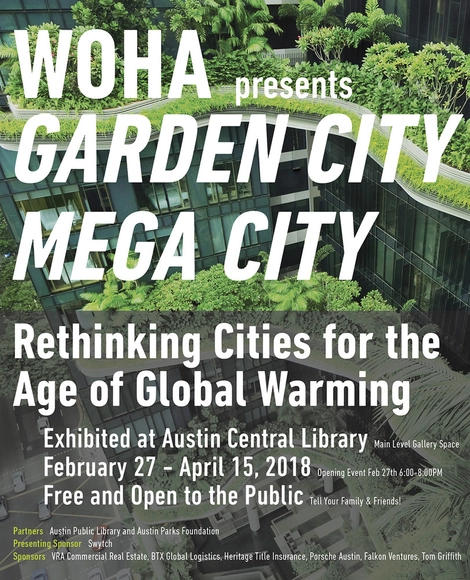
Garden City Mega City

In collaboration with Austin Central Library and Austin Parks Foundation, the Singaporean architecture firm WOHA is pleased to present “Garden City Mega City,” an exhibition highlighting sixteen built and unbuilt projects that put forward a sustainable vision for how cities should evolve in the 21st century.

Video: This Kinetic Green Wall Displays 'Pixel' Plant Art

Subscriber Access | 

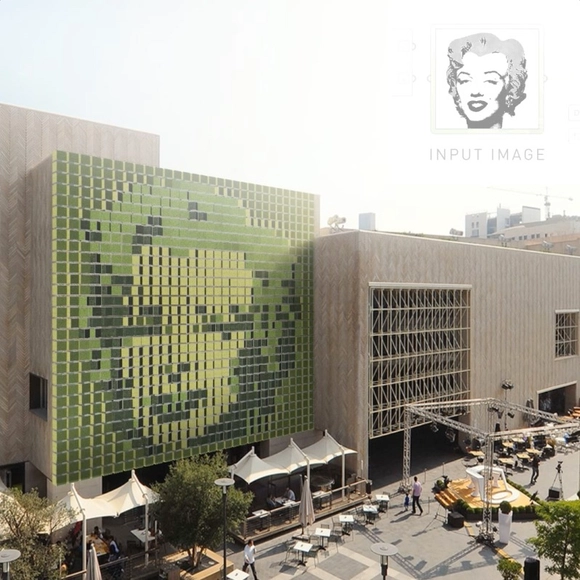
BAD. Built by Associative Data’s Associative Data Research has collaborated with Green Studios to create Kinetic Green Canvas, a prototype Green-Art Installation for building façades.

The Canvas consists of individual modules, each of which is a cube made from steel framework, back paneling, L-shaped jambs, secondary structure, waterproofing board, irrigation piping, Green Studios hydroponic skin, and plants. These layered components are assembled on four sides of the cube module, with a motor and water pipe attachment that circulates water throughout.
Nikken Sekkei Designs Master Plan to Revitalize a Former Railway Spanning the Entirety of Singapore

A design team led by Nikken Sekkei, in collaboration with Tierra Design and Arup Singapore, has won a competition to Master Plan a 24-kilometer long former railway corridor that spans the entirety of Singapore with their proposal entitled “Lines of Life.” The proposal, chosen by a panel from Singapore’s Urban Redevelopment Authority incorporates green areas, footpaths, bicycle paths, and surrounding developments that are flexibly implementable over many years, so that the former train line can be best integrated into its surroundings.
Move Over, Green Walls: Living Canopy Comes to West Vancouver

Move Over, Green Walls: Living Canopy Comes to West Vancouver - Featured Image
Courtesy of Matthew Soules Architecture

Imagine walking beneath an illuminated canopy of lush greenery, in the form of inverted pyramids sculpted to perfection. In early August 2014 visitors were welcomed by this succulent living roof to the Harmony Arts Festival in West Vancouver, British Columbia. Guests were guided through the fairgrounds beneath the 90-foot long canopy, creating an immersive sensory experience befitting the interdisciplinary creative arts festival. Designed by Matthew Soules Architecture and curated by the Museum of West Vancouver, Vermilion Sands was created as a temporary installation for the ten day festival.

Submerge yourself in Vermilion Sands with photos and more info after the break.