1. ArchDaily
  2. Frederick Law Olmsted

Frederick Law Olmsted: The Latest Architecture and News

The Rose Kennedy Greenway: How Boston Unpaved its Way to a Greener City Center

Subscriber Access | 

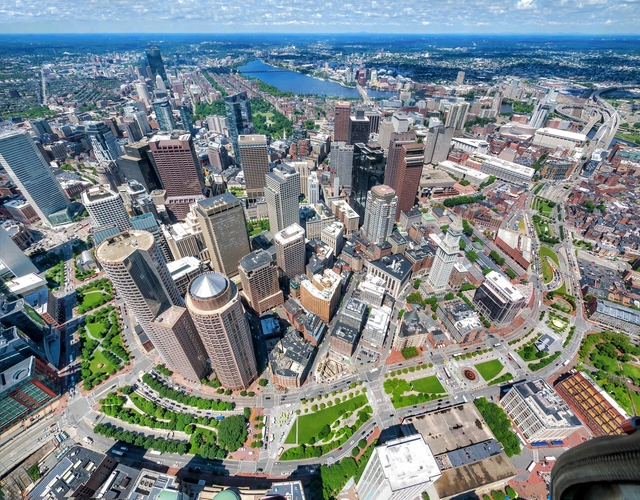
Greenways, as a typology of urban design, have become an essential element in the planning of modern cities. They emerge in response to the increasing fragmentation of urban landscapes by elements such as highways. They usually integrate natural and constructed spaces, providing much-needed connections across various parts of the city. At the same time, they promote pedestrian accessibility, recreation, and social interaction. The Rose Kennedy Greenway in downtown Boston, United States, exemplifies this human-centered approach to design. The project, which began construction in 1991, showcases the potential of greenways to reconnect urban environments and enhance community life. As a series of parks designed by various architecture firms, it aims to create physical links and meaningful spaces that foster social development and a sense of place.

The Rose Kennedy Greenway: How Boston Unpaved its Way to a Greener City Center - Image 1 of 4The Rose Kennedy Greenway: How Boston Unpaved its Way to a Greener City Center - Image 2 of 4The Rose Kennedy Greenway: How Boston Unpaved its Way to a Greener City Center - Image 3 of 4The Rose Kennedy Greenway: How Boston Unpaved its Way to a Greener City Center - Image 4 of 4The Rose Kennedy Greenway: How Boston Unpaved its Way to a Greener City Center - More Images+ 3

Why Landscape Architecture Matters Now More Than Ever

Subscriber Access | 
Why Landscape Architecture Matters Now More Than Ever - Image 4 of 4
Philadelphia Navy Yards / James Corner Field Operations. Image © Halkin Mason Photography

Landscape architecture is having a moment. The latest proof: last week, the US Department of Homeland Security decided to accredit the field with its prestigious STEM designation. As part of the science, technology, engineering, and mathematics (STEM) educational disciplines that fall under this category, landscape architecture students can now spend an additional 24 months seeking employment and training post-graduation in the United States after an initial period of a year granted to all graduates. The title also promises more prestige, higher entry salaries, and additional career flexibility. Torey Carter-Conneen, CEO of the American Society of Landscape Architects (ASLA), calls the development a significant advancement for 'landscape architecture education and practice, and that is great for America and the global community.'

The news corresponds to a growing emphasis on landscape architecture as a pivotal practice around the globe in recent years – one that is closely connected to notions of public health, environmental design, biophilia, sustainability, and re-wilding. It also underlines the intimate relationship between technology and the discipline. Landscape proposals increasingly rely on advanced science and technology to predict how ecological interventions might alter an existing terrain and determine what measures will yield the highest benefit for both humans and nature. The contemporary ideal of wild meadows and biodiverse forests may exist free from external influence, but the path to get there requires assistance.

Why Landscape Architecture Matters Now More Than Ever - Featured ImageWhy Landscape Architecture Matters Now More Than Ever - Image 1 of 4Why Landscape Architecture Matters Now More Than Ever - Image 2 of 4Why Landscape Architecture Matters Now More Than Ever - Image 3 of 4Why Landscape Architecture Matters Now More Than Ever - More Images+ 10

Revealing Seneca Village, the Black Community Displaced by Central Park

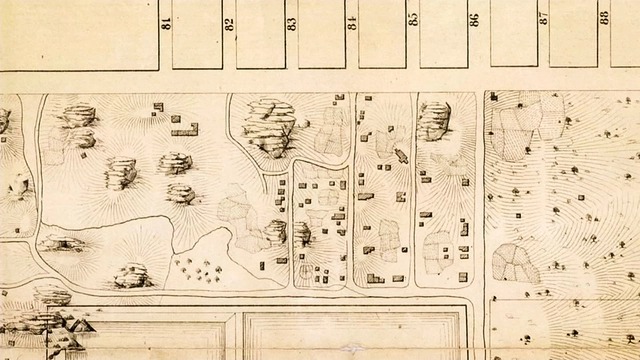
“Seneca Village was an important community. It was 40 acres, two-thirds African American, and had a church and school,” explained Sara Zewde, ASLA, founder of Studio Zewde and assistant professor at the Harvard Graduate School of Design, during a session at the ASLA 2022 Conference on Landscape Architecture in San Francisco.

The 225 residents of Seneca Village were displaced by the New York City government in the mid 1800s to make way for Central Park, which is considered one of the masterpieces of landscape architect Frederick Law Olmsted and architect Calvert Vaux.

Revealing Seneca Village, the Black Community Displaced by Central Park - Image 1 of 4Revealing Seneca Village, the Black Community Displaced by Central Park - Image 2 of 4Revealing Seneca Village, the Black Community Displaced by Central Park - Image 3 of 4Revealing Seneca Village, the Black Community Displaced by Central Park - Image 4 of 4Revealing Seneca Village, the Black Community Displaced by Central Park - More Images+ 2

New Digital Guide Honors Pioneer of Landscape Architecture Frederick Law Olmsted

Celebrating the bicentennial of the birth of Frederick Law Olmsted, Sr., known as "the father of landscape architecture", the Cultural Landscape Foundation has created an ever-growing digital guide of Olmsted’s most notable works. The illustrated guide features more than 300 landscapes throughout North America, including Canada and 30 U.S. States, along with stories by practitioners who worked for, with, or were otherwise associated with Olmsted, Sr. and his successor firms.

New Digital Guide Honors Pioneer of Landscape Architecture Frederick Law Olmsted - Image 1 of 4New Digital Guide Honors Pioneer of Landscape Architecture Frederick Law Olmsted - Image 2 of 4New Digital Guide Honors Pioneer of Landscape Architecture Frederick Law Olmsted - Image 3 of 4New Digital Guide Honors Pioneer of Landscape Architecture Frederick Law Olmsted - Image 4 of 4New Digital Guide Honors Pioneer of Landscape Architecture Frederick Law Olmsted - More Images+ 5

AD Classics: World's Columbian Exposition / Daniel Burnham and Frederick Law Olmsted

The United States had made an admirable showing for itself at the very first World’s Fair, the Crystal Palace Exhibition, held in the United Kingdom in 1851. British newspapers were unreserved in their praise, declaring America’s displayed inventions to be more ingenious and useful than any others at the Fair; the Liverpool Times asserted “no longer to be ridiculed, much less despised.” Unlike various European governments, which spent lavishly on their national displays in the exhibitions that followed, the US Congress was hesitant to contribute funds, forcing exhibitors to rely on individuals for support. Interest in international exhibitions fell during the nation’s bloody Civil War; things recovered quickly enough in the wake of the conflict, however, that the country could host the Philadelphia Centennial Exhibition in 1876. Celebrating both American patriotism and technological progress, the Centennial Exhibition was a resounding success which set the stage for another great American fair: the World’s Columbian Exposition of 1893.[1]

AD Classics: World's Columbian Exposition / Daniel Burnham and Frederick Law Olmsted - Temporary Installations, ArchAD Classics: World's Columbian Exposition / Daniel Burnham and Frederick Law Olmsted - Temporary Installations, FacadeAD Classics: World's Columbian Exposition / Daniel Burnham and Frederick Law Olmsted - Temporary InstallationsAD Classics: World's Columbian Exposition / Daniel Burnham and Frederick Law Olmsted - Temporary InstallationsAD Classics: World's Columbian Exposition / Daniel Burnham and Frederick Law Olmsted - More Images+ 11

Yoko Ono and Project 120 Collaborate to Reimagine Chicago’s Jackson Park

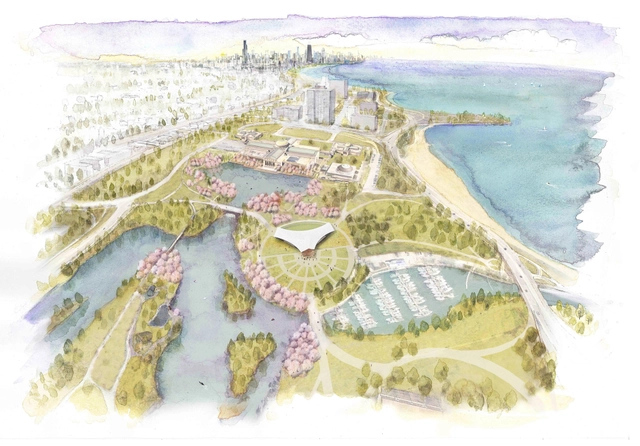
Chicago’s Jackson Park is expected to see some big changes in the coming years. Nonprofit organization Project 120 is working to revitalize the park, restoring many of the design aspects implemented by its landscape architect, the famous Frederick Law Olmsted. Alongside this restoration, the park will also receive a new Phoenix Pavilion, homage to Japan’s gift to the US for the 1893 Columbian Exposition. An outdoor performance space will be added to the park, as will an installation funded by musician and activist Yoko Ono. See the details, after the break.