1. ArchDaily
  2. Equador

Equador: The Latest Architecture and News

The Kitchen as a Social Space: Everyday Rituals and the Making of Place

Can architecture be built from food? Between the fire that warms, the smells that spread, and the bodies that gather around the table, the apparent banality of cooking and eating reveals itself as a choreographed dance of spatial appropriation and belonging. These gestures organize routines, produce bonds, and transform the built environment into lived place. The kitchen—domestic, communal, or urban—thus ceases to be merely a functional space and affirms itself as a territory of encounter.

The Kitchen as a Social Space: Everyday Rituals and the Making of Place - Image 1 of 4The Kitchen as a Social Space: Everyday Rituals and the Making of Place - Image 2 of 4The Kitchen as a Social Space: Everyday Rituals and the Making of Place - Image 3 of 4The Kitchen as a Social Space: Everyday Rituals and the Making of Place - Image 4 of 4The Kitchen as a Social Space: Everyday Rituals and the Making of Place - More Images+ 8

7 Latin American Architecture Firms that Achieve More with Less

Young Latin American architecture firms are changing paradigms in the field by promoting a new approach to the profession's role in society. Their innovative explorations, driven by risk-taking, emerge from a deep emotional connection and thorough understanding of their context. They draw inspiration from local elements like geography, materials and available resources. With their unique identities, these firms move away from the still-prevalent modernist legacy, presenting authentic and innovative solutions to tackle contemporary challenges.

7 Latin American Architecture Firms that Achieve More with Less - Image 1 of 47 Latin American Architecture Firms that Achieve More with Less - Image 2 of 47 Latin American Architecture Firms that Achieve More with Less - Image 3 of 47 Latin American Architecture Firms that Achieve More with Less - Image 4 of 47 Latin American Architecture Firms that Achieve More with Less - More Images+ 5

Rural Lab: Latin America's Countryside as a Space for Experimentation

What if the future of architecture lies not in the cities, but beyond them? For decades, urbanization has dominated both discourse and statistics. We are constantly bombarded with data confirming the prevalence of urban life, but we rarely ask the opposite question: what did those who moved to the cities leave behind? What remains alive and evolving far from urban centers?

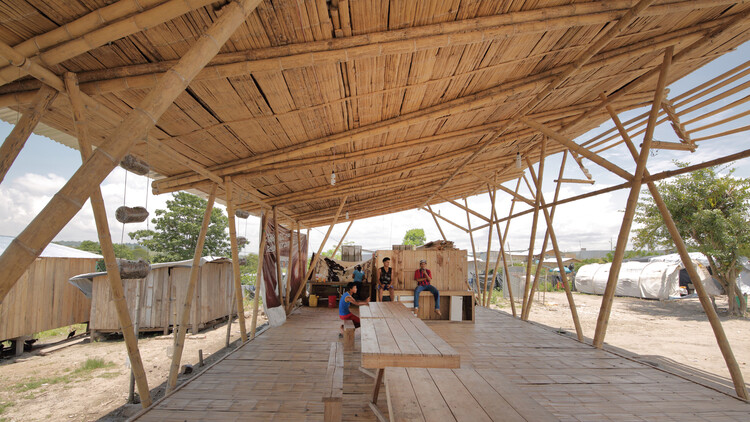
The countryside—long underestimated—is now emerging as fertile ground for possibility. More than a “marginalized space,” rural Latin America today asserts itself as a true laboratory for architectural, social, and ecological experimentation. From agroecological communities to low-impact technologies, from relationships between humans, machines, and other living beings to locally grounded solutions for global challenges—such as the climate crisis, food security, and migration—the rural world is actively and inventively reshaping its own future.

Rural Lab: Latin America's Countryside as a Space for Experimentation - Image 7 of 4Rural Lab: Latin America's Countryside as a Space for Experimentation - Image 1 of 4Rural Lab: Latin America's Countryside as a Space for Experimentation - Image 8 of 4Rural Lab: Latin America's Countryside as a Space for Experimentation - Image 10 of 4Rural Lab: Latin America's Countryside as a Space for Experimentation - More Images+ 9

From Extraction to Regeneration: Architecture's Role in Rural Developments in Latin America

Rural areas have long played a foundational role in the social and economic development of nations. Until the 18th century, they were the primary sites of production and social organization. However, the Industrial Revolution brought profound structural shifts that reshaped this landscape. Industry took center stage, anchoring itself in urban environments and establishing a hierarchical, binary view of rural versus urban, agriculture versus industry. Within this new paradigm, two opposing narratives gained prominence: one predicted the decline of rural life in the face of urbanization and economic progress; the other envisioned its persistence and eventual renewal. Today, it is clear which of these predictions has come to pass.

From Extraction to Regeneration: Architecture's Role in Rural Developments in Latin America - Image 1 of 4From Extraction to Regeneration: Architecture's Role in Rural Developments in Latin America - Image 2 of 4From Extraction to Regeneration: Architecture's Role in Rural Developments in Latin America - Image 3 of 4From Extraction to Regeneration: Architecture's Role in Rural Developments in Latin America - Image 4 of 4From Extraction to Regeneration: Architecture's Role in Rural Developments in Latin America - More Images+ 9

Architecture for Contemplating the Landscape: 4 Scenic Viewpoints in Latin America

Subscriber Access | 

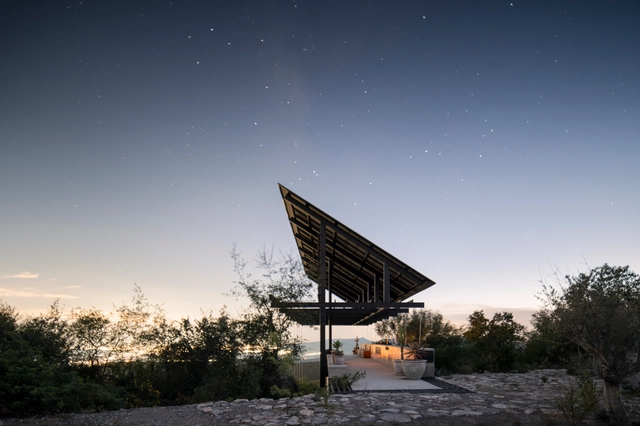
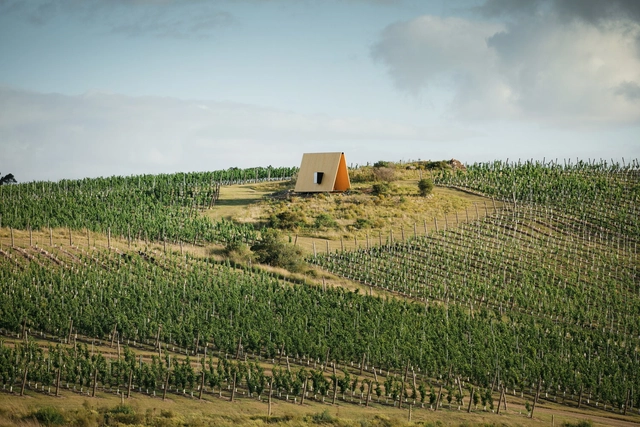
When designing spaces for viewing, architecture enters into a dialogue with the territory in an effort to understand the landscape and the enjoyment of reality, whether natural or built. Through an invitation to contemplate our surroundings, several architecture professionals in Latin America embark on the challenge of constructing structures that interact with nature, reinterpret certain building typologies, or become part of the learning and teaching of architecture for future generations. The wide variety of landscapes and cultures present in the Latin American context reflects the endless opportunities where architecture holds the potential to foster dialogue between the observer and the observed while drawing from the region’s deep connection with local flora, fauna, and other species.

Architecture for Contemplating the Landscape: 4 Scenic Viewpoints in Latin America - Image 1 of 4Architecture for Contemplating the Landscape: 4 Scenic Viewpoints in Latin America - Image 2 of 4Architecture for Contemplating the Landscape: 4 Scenic Viewpoints in Latin America - Image 3 of 4Architecture for Contemplating the Landscape: 4 Scenic Viewpoints in Latin America - Image 4 of 4Architecture for Contemplating the Landscape: 4 Scenic Viewpoints in Latin America - More Images+ 6

Open-Air Chapels: Integrating Nature and Landscape into Religious Architecture in Latin America

At a global level, contemporary architecture continues to explore tools and design methodologies to integrate nature into habitable spaces, given its proven benefits and contributions to improving people's quality of life. While there are diverse religious beliefs around the world, religious architecture generally expands beyond its uses and functions to connect with the sacred. Senses, memories, and emotions are transmitted in these spaces through the use of certain materials, spatial organizations, and even sounds and aromas that enhance experiences in atmospheres of spirituality, divinity, and reflection. In Mexico, Chile, Ecuador, Brazil, and Uruguay, projects for places of worship open to the outdoors reflect an architecture that adapts to different natural environments while maintaining the premise that each religion is tied to a social identity and requires a particular connection with its community and surrounding landscape.

Open-Air Chapels: Integrating Nature and Landscape into Religious Architecture in Latin America - Image 1 of 4Open-Air Chapels: Integrating Nature and Landscape into Religious Architecture in Latin America - Image 2 of 4Open-Air Chapels: Integrating Nature and Landscape into Religious Architecture in Latin America - Image 3 of 4Open-Air Chapels: Integrating Nature and Landscape into Religious Architecture in Latin America - Image 4 of 4Open-Air Chapels: Integrating Nature and Landscape into Religious Architecture in Latin America - More Images+ 20

Residential Architecture in Ecuador: 8 Contemporary House Projects That Respect Their Natural Surroundings

Subscriber Access | 

Ecuador, though a relatively small country in terms of land area, boasts a vast and diverse range of ecosystems and natural landscapes, including the Andes mountains, the Pacific coastline, and the Amazon rainforest. This makes the natural environment a key player, shaping its relationship with the built environment and demanding that architecture seamlessly integrate with and respect its context.

Over the years, Ecuadorian architecture has developed its own identity, successfully adapting to these diverse settings. Various construction techniques have been implemented, relying on locally sourced materials to create spaces and shelters in complete harmony with the landscape. Amid the growing trend of seeking a closer connection with nature, architecture in different regions of Ecuador has had to adjust to these conditions.

Residential Architecture in Ecuador: 8 Contemporary House Projects That Respect Their Natural Surroundings - Image 1 of 4Residential Architecture in Ecuador: 8 Contemporary House Projects That Respect Their Natural Surroundings - Image 2 of 4Residential Architecture in Ecuador: 8 Contemporary House Projects That Respect Their Natural Surroundings - Image 3 of 4Residential Architecture in Ecuador: 8 Contemporary House Projects That Respect Their Natural Surroundings - Image 4 of 4Residential Architecture in Ecuador: 8 Contemporary House Projects That Respect Their Natural Surroundings - More Images+ 23

Cabins in Latin America: 12 Floor Plan Projects Under 50 m2

Subscriber Access | 

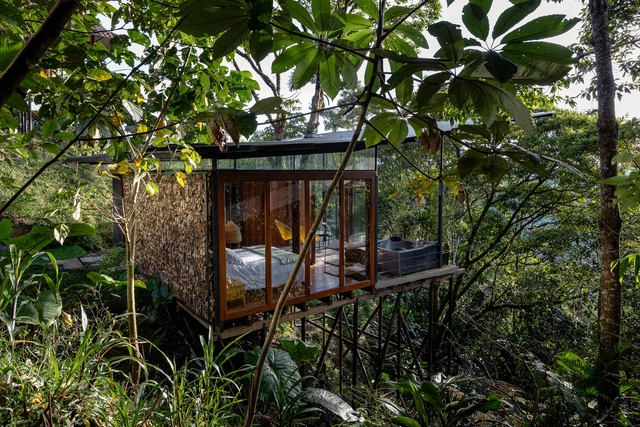
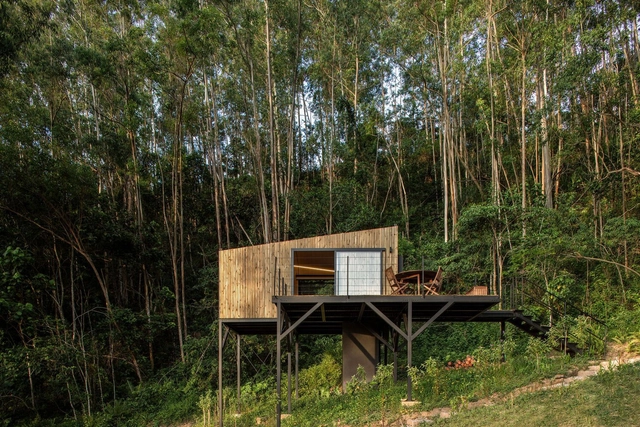
The Latin American territory encompasses a vast diversity of climates, atmospheres, and temperatures across its entire expanse. Amid forested landscapes, jungles, or coastal settings, many architects choose to design cabins immersed in natural surroundings, seeking to foster a deeper connection with nature by distancing themselves from the city. While experimenting with different materials and local techniques enhances a stronger bond with the site's traditions and creates a distinct architectural identity for each region, the integration of technological innovations and new construction materials can offer greater resilience to climate change, improve short- and long-term maintenance, optimize construction timelines, and address other key considerations.

Cabins in Latin America: 12 Floor Plan Projects Under 50 m2 - Image 1 of 4Cabins in Latin America: 12 Floor Plan Projects Under 50 m2 - Image 2 of 4Cabins in Latin America: 12 Floor Plan Projects Under 50 m2 - Image 3 of 4Cabins in Latin America: 12 Floor Plan Projects Under 50 m2 - Image 4 of 4Cabins in Latin America: 12 Floor Plan Projects Under 50 m2 - More Images+ 20

The 50 Best Latin American Houses of 2024

Annually, ArchDaily's curatorial team undertakes a rigorous selection process to identify exemplary projects in Latin American residential architecture. The goal is to share these works of architecture with our audience and highlight and promote good practices within contemporary architecture. This meticulous effort focuses on identifying projects that stand out for their design and their positive impact on the environment, innovative use of materials and techniques, and ability to address current needs.

The 50 Best Latin American Houses of 2024 - Image 5 of 4The 50 Best Latin American Houses of 2024 - Image 9 of 4The 50 Best Latin American Houses of 2024 - Image 10 of 4The 50 Best Latin American Houses of 2024 - Image 8 of 4The 50 Best Latin American Houses of 2024 - More Images+ 54

The Standardized Planning of Latin American Cities: Tracing the Blueprint of the Laws of the Indies

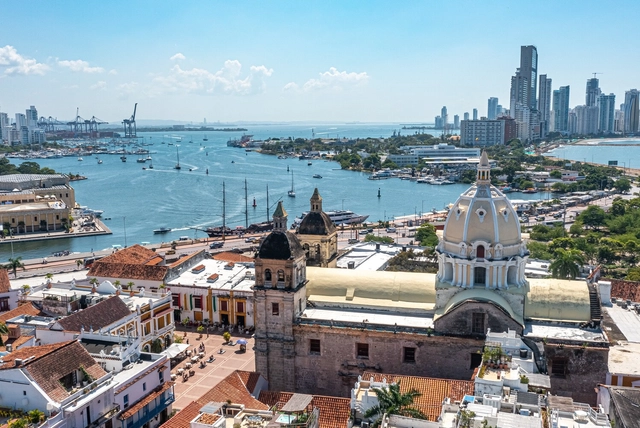
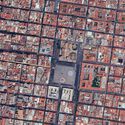
A look at most of the cities within Latin America reveals striking commonalities across countries, from Mexico down to Argentina: most cities have a well-defined area known as "El Centro" (The Center), anchored by a main plaza (Plaza Mayor), flanked by a church on one side and key buildings like the city hall on another. This is no coincidence, as it can be traced back to an urban planning system established during the Spanish colonization of the Americas in the 17th and 18th centuries. It gave standardized guidelines for city design across its viceroyalties. Unlike French and English colonies, Spanish settlements adhered to regulations that contributed to the emergence of a shared urban identity, with cities displaying similar spatial logic and architectural cohesion despite differing scales and contexts.

The Standardized Planning of Latin American Cities: Tracing the Blueprint of the Laws of the Indies - Image 1 of 4The Standardized Planning of Latin American Cities: Tracing the Blueprint of the Laws of the Indies - Image 2 of 4The Standardized Planning of Latin American Cities: Tracing the Blueprint of the Laws of the Indies - Image 3 of 4The Standardized Planning of Latin American Cities: Tracing the Blueprint of the Laws of the Indies - Image 4 of 4The Standardized Planning of Latin American Cities: Tracing the Blueprint of the Laws of the Indies - More Images+ 9

Socialization and Resilience: 10 Community Centers in the Outskirts of Latin American Cities

Subscriber Access | 

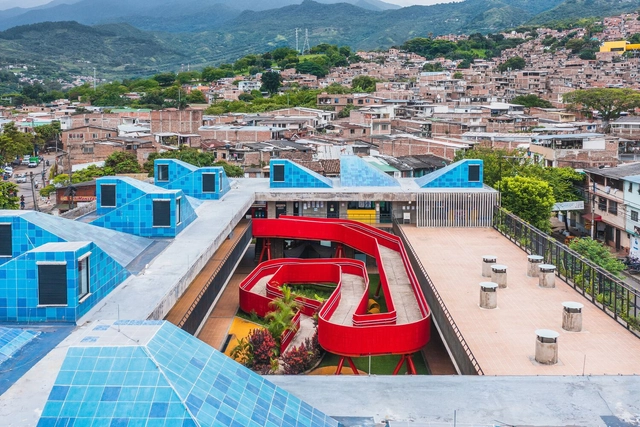
From November 20 to 23, São Paulo hosted the IV International Seminar on Favela Urbanization, bringing together discussions that bridged theory and practice to address interventions in these territories. Centered on Brazil’s realities, the seminar shed light on the political challenges and the struggle to recognize the potential of peripheral spaces. It also highlighted a shared issue across Latin America: the need for adequate funding to support transformative actions and the legitimization of these territories. Within this framework, the article underscores the critical role of high-quality public facilities in favelas and peripheral neighborhoods. These spaces not only provide access to opportunities but also foster community bonds, serving as essential hubs for social organization and collective efforts toward building a more inclusive future.

Socialization and Resilience: 10 Community Centers in the Outskirts of Latin American Cities - Image 1 of 4Socialization and Resilience: 10 Community Centers in the Outskirts of Latin American Cities - Image 2 of 4Socialization and Resilience: 10 Community Centers in the Outskirts of Latin American Cities - Image 3 of 4Socialization and Resilience: 10 Community Centers in the Outskirts of Latin American Cities - Image 4 of 4Socialization and Resilience: 10 Community Centers in the Outskirts of Latin American Cities - More Images+ 10

Winning Projects of the 2024 Rogelio Salmona Latin American Architecture Award Announced

On October 24, 2024, the Rogelio Salmona Latin American Architecture Prize award ceremony took place, honoring works that have significantly created meaningful, open, and collective spaces for the public in the region. During the event, held at the Virgilio Barco Public Library auditorium in Bogotá, Colombia, the winners of this prestigious award were announced. This year marked the fourth cycle, titled "Open Spaces/Collective Spaces," with participation from 47 projects.

The jury, composed of international figures such as Sol Camacho (Brazil-Mexico), Nicolás Campodonico (Argentina), Carlos Campuzano (Colombia), and Mauricio Rocha (Mexico), first shortlisted 26 selected works, from which two were awarded the first prize in the Latin America and Colombia categories.

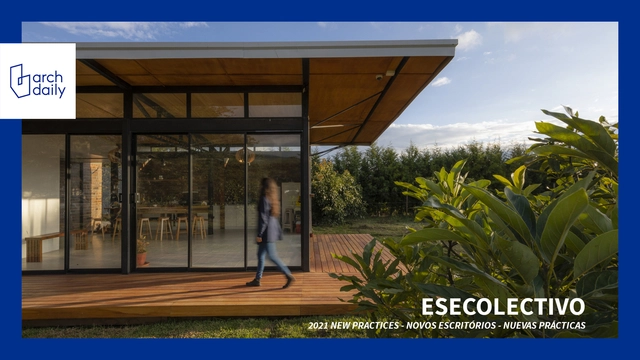
EseColectivo: “The Search for Efficiency Makes our Work in Ecuador Coherent”

EseColectivo is an architecture studio formed by Belén Argudo, José de la Torre, Santiago Granda and Pablo Silva based in Quito, Ecuador. Their interests are focused on experimentation with alternative building materials, with an emphasis on technologies and logic. In their design process, they seek to reconcile low-impact sustainable strategies with the specific needs and constraints of each project, so that their results are heterogeneous and differ in the type of methodological and technical approach.

The experience of this team has not only been built from their works such as The Endemic House and House in a Corridor, but also through collaborative practices with architecture studios, cultural managers and related projects at local and international level, leading to the development of initiatives closer to architectural documentation, research and dissemination. Consequently, they created "La Parleta" - the first architecture podcast in Ecuador.