1. ArchDaily
  2. digital media

digital media: The Latest Architecture and News

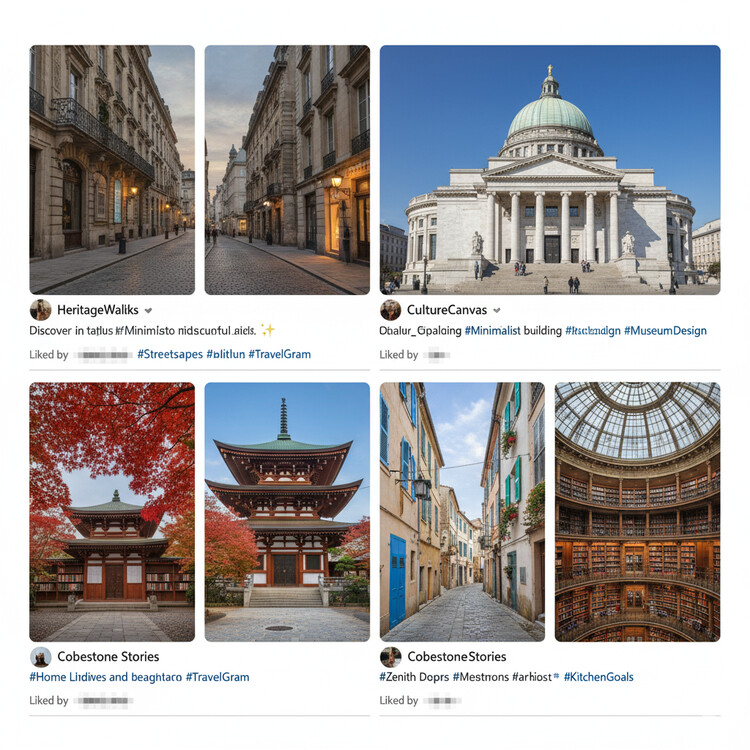
Scroll & Stroll: How Social Media Is Rewriting Architectural Cultural Tourism

Historically—like other cultural forms—architecture has been documented, shared, and promoted primarily through print. Books, journals, and magazines carried the discipline's arguments and images, and because architectural practice relies so heavily on visual communication, printed journals created a bridge between academic publications and commercial magazines. Through the postwar decades, beautifully produced volumes curated a collective point of view, signaling what the field broadly considered discussion-worthy or exemplary.

Across major cultural centers, a handful of publications shaped this discourse: Their perspectives were typically sophisticated, professional, and carefully edited—distilling an unruly global output into a small constellation of remarkable projects. The system arguably privileged certain practices and geographies, but it also amplified architecture for wider audiences. Buildings began to lodge in public imagination; cultural travel—journeys taken expressly to experience architecture—moved from rarity toward ritual.

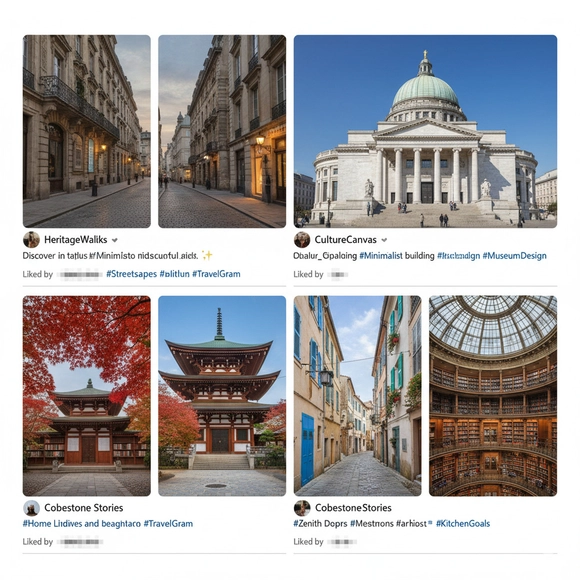
Scroll & Stroll: How Social Media Is Rewriting Architectural Cultural Tourism - Image 1 of 4Scroll & Stroll: How Social Media Is Rewriting Architectural Cultural Tourism - Image 2 of 4Scroll & Stroll: How Social Media Is Rewriting Architectural Cultural Tourism - Image 3 of 4Scroll & Stroll: How Social Media Is Rewriting Architectural Cultural Tourism - Image 4 of 4Scroll & Stroll: How Social Media Is Rewriting Architectural Cultural Tourism - More Images+ 4

Architecture Now: Designing Future-Ready Spaces for Work, Culture, and Public Life

Subscriber Access | 

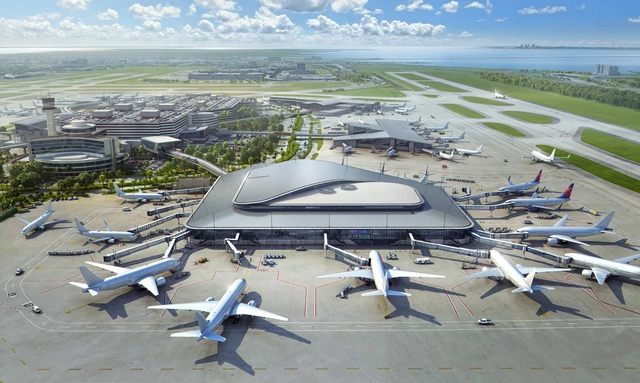
From Bangkok to Billund, a new wave of architectural project announcements is reshaping how spaces for work, culture, mobility, and public life are conceived. Across Norway, Thailand, the United States, Denmark, Australia, and Thailand, these projects reflect an increasing emphasis on technological integration, sustainable construction, and flexible, future-ready environments. Whether designing production hubs for digital creators, adaptable media campuses, or civic landscapes layered with history and ecological intent, each scheme offers insight into how architecture is evolving to support emerging industries, cultural programming, and new forms of public engagement. This edition of Architecture Now brings together a selection of recently announced projects that highlight the intersection of design, technology, and innovation in a global context.

Architecture Now: Designing Future-Ready Spaces for Work, Culture, and Public Life - Image 1 of 4Architecture Now: Designing Future-Ready Spaces for Work, Culture, and Public Life - Image 2 of 4Architecture Now: Designing Future-Ready Spaces for Work, Culture, and Public Life - Image 3 of 4Architecture Now: Designing Future-Ready Spaces for Work, Culture, and Public Life - Image 4 of 4Architecture Now: Designing Future-Ready Spaces for Work, Culture, and Public Life - More Images+ 10

Kunsthaus Graz: A Friendly Alien Among Historic Landmarks

Subscriber Access | 

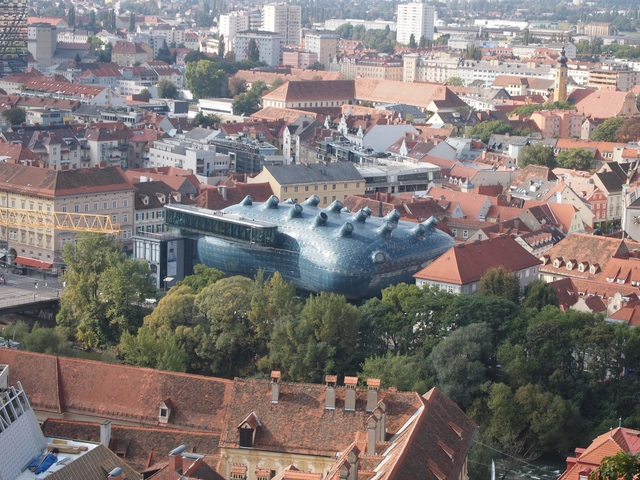
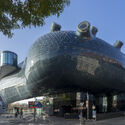
The Kunsthaus Graz, designed by Peter Cook and Colin Fournier, boldly redefines contemporary architecture in a historic city. Completed in 2003 as a centerpiece of Graz's European Capital of Culture celebrations, its biomorphic form, nicknamed the "Friendly Alien", captured global attention. Amidst Baroque and Medieval surroundings, it bridges past and future, standing as a testament to the city's cultural ambitions.

Situated along the River Mur in the Lend district, the Kunsthaus challenges traditional architectural norms with its organic, free-flowing design. Rejecting orthogonal geometry, the museum seamlessly merges art, architecture, and public interaction, redefining the concept of a cultural institution. Its impact extends beyond aesthetics, sparking urban revitalization in a once-overlooked neighborhood, and bringing cultural vibrancy and economic activity.

Kunsthaus Graz: A Friendly Alien Among Historic Landmarks - Image 1 of 4Kunsthaus Graz: A Friendly Alien Among Historic Landmarks - Image 2 of 4Kunsthaus Graz: A Friendly Alien Among Historic Landmarks - Image 3 of 4Kunsthaus Graz: A Friendly Alien Among Historic Landmarks - Image 4 of 4Kunsthaus Graz: A Friendly Alien Among Historic Landmarks - More Images+ 34

Russian Contribution to the Venice Biennale Explores Digital Environments and the Future of Cultural Institutions

The Russian Federation Pavilion for the 2021 Venice Biennale explores the role of cultural institutions across physical and digital spaces. Titled Open, the program investigates the subject on multiple fronts, from the renovation of its physical architecture to the research into the social role of virtual environments and a collection of perspectives on the new ways of thinking in the institutional realm. The contribution builds on the Open? project, which debuted in May 2020 and continued throughout the year as a virtual platform for creatives and thinkers.

Russian Contribution to the Venice Biennale Explores Digital Environments and the Future of Cultural Institutions - Image 1 of 4Russian Contribution to the Venice Biennale Explores Digital Environments and the Future of Cultural Institutions - Image 2 of 4Russian Contribution to the Venice Biennale Explores Digital Environments and the Future of Cultural Institutions - Image 3 of 4Russian Contribution to the Venice Biennale Explores Digital Environments and the Future of Cultural Institutions - Image 4 of 4Russian Contribution to the Venice Biennale Explores Digital Environments and the Future of Cultural Institutions - More Images+ 11

"TikTok-itecture": Is This the New Digital Media for Architecture and Design?

Subscriber Access | 

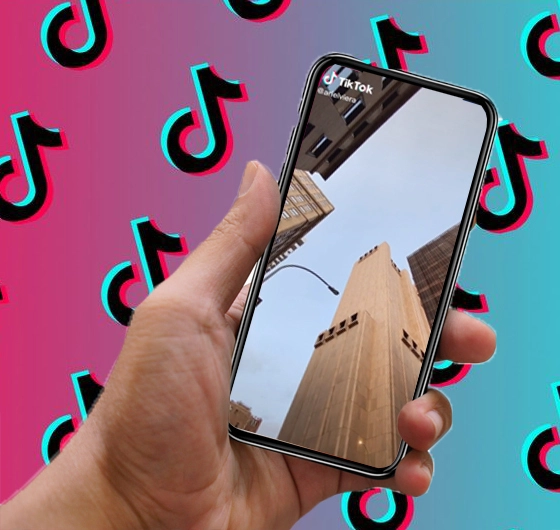
In a world that was once so obsessed with architecture that was “for the ‘gram”, the rise of TikTok is creating a shift in how we experience and consume architecture. It's no small trend either, nearly 950 million TiKTok videos utilize the hashtag #architecture, frequently to describe buildings in various cities or a specific architectural style that the video creator is familiar with. Does this mean that the era of the "instagrammable building" over, and is TikTok the new way to connect across generations and locations to explore the possibilities of architecture?

How to Use Downloadable Plan Sets to Attract New Clients (Without the "Cookie Cutter" Stigma)

Subscriber Access | 

There has been a recent trend to monetize design businesses online. Outside the world of architecture, digital marketing is growing exponentially, and every day more and more companies are taking advantage of the benefits that come from curating an online presence.

The traditional architectural business model is largely dominated by the fees associated with design and construction. The actual structure of the billing is perhaps another argument to have all on its own, but relying on this type of income has been (and likely will continue to be) an efficient and successful model for the majority in the design industry. But what if there was another market to leverage to supply your design business with passive, additional income?

There has long been an understandable stigma associated with spec-house plan sets. Most spec plans lack any response to site, personalization, and even quality design. There is a relatively saturated market for these spec-type plan sets, but the untapped potential lies in this model's intersection with architectural practice.

Here are three ways you can begin to reverse the stigma associated with selling plan sets online while providing your design business with an additional revenue stream.

Monetizing Your Architecture Practice Online: 4 Ways to Generate New Revenue Streams

Subscriber Access | 

Architecture's reliance on digital tools is rapidly advancing. Building Information Modeling (BIM) and augmented and virtual reality are quickly becoming the industry standard, along with more and more design businesses putting more effort and money into creating a stronger online presence. Because of this recent shift in focus, many firms have also begun experimenting with digital marketing strategies.

Content creation is at the heart of any successful online business, so what does that look like in the field of architecture? These 4 examples of content could help you begin to monetize your designs and/or practice online. By no means are these 4 examples the only means to grow a design business, but all 4 take advantage of the present trajectory of architectural practice, leveraging the possibilities of an increasingly digital world.

This Unique New Technology Hopes to Turn Your City’s Streets Into Your News Homepage

Subscriber Access | 

The people of Manchester, UK, recently gained access to an entirely new way to access local news and engage with their city: OtherWorld, a pilot news experiment from startup studio Like No Other and Google’s Digital News Initiative. OtherWorld uses Bluetooth and cutting-edge beacon technology to deliver geo-located news directly to your smartphone for free, without installing an app. Referred to on the OtherWorld website as “living media,” as users walk around the city and pass by story locations, a silent notification will pop up on their phones, disappearing again as they walk out of range. Because the news you see on OtherWorld is directly related to the space you’re currently occupying, the system ensures that the news you’ll see is relevant to you. This unobtrusive method allows users to choose whether and how they will engage as well as adding an evanescent, elusive quality to the stories; you could walk right by and miss one if you aren’t paying attention.

In this way, OtherWorld illustrates the layers of our cities that are often invisible to us, bringing them into focus and allowing a deeper level of exploration into even a familiar city neighborhood. Focusing on stories that involve a real-world experience, users could become aware of an event nearby, a volunteer opportunity, a public meeting, or any number of other possibilities—thereby involving themselves in the public space and public realm in a way they would not have otherwise been able to.