1. ArchDaily
  2. COOKFOX Architects

COOKFOX Architects: The Latest Architecture and News

An Experimental School in Switzerland and a Wood Art Center in Poland: 8 Unbuilt Cultural and Educational Projects by Established Firms

Subscriber Access | 

Educational and cultural centers serve as pivotal spaces where communities engage with knowledge, creativity, and shared experiences. As architectural programs, they offer unique opportunities to explore how physical environments can foster learning, cultural expression, and social interaction. The significance of these projects lies not just in their function but in how they reflect the values and aspirations of society. When established architecture firms take on these projects, their design choices become a lens through which we can examine contemporary approaches to space, place, and community, offering a glimpse into the evolving role of architecture in shaping educational and cultural landscapes.

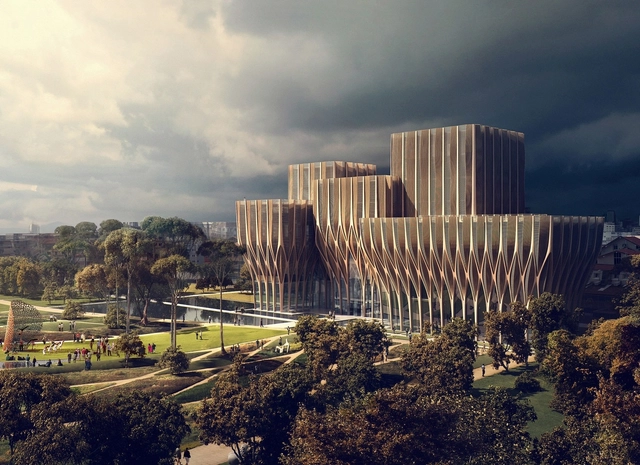
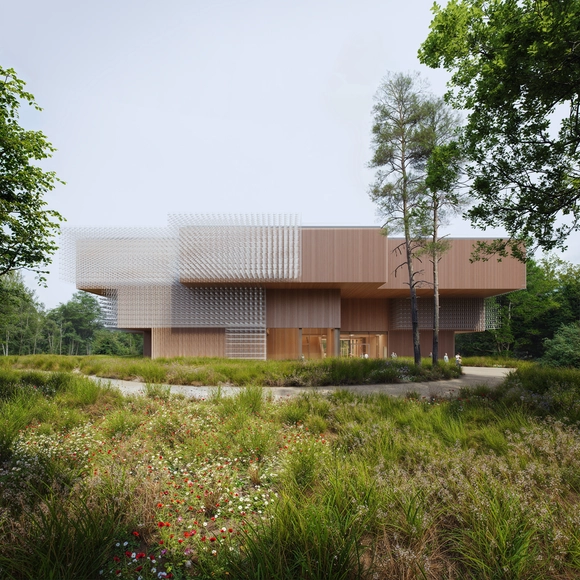
Among this week's curated list of unbuilt projects submitted by established architecture practices, fala atelier’s project for a school in Broc, Switzerland, stands out with its sensitive integration of Alpine architectural elements; WXCA’s Xylopolis Centre in Poland reflects a deep contemplation on humanity’s relationship with nature, while KPF’s life sciences building in London and Jones Studio’s Water Education Center in Arizona further exemplify how architecture can address contemporary societal needs, from fostering innovation ecosystems to educating the public on critical environmental issues.

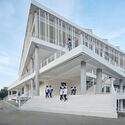
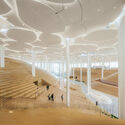
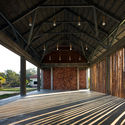
An Experimental School in Switzerland and a Wood Art Center in Poland: 8 Unbuilt Cultural and Educational Projects by Established Firms - Image 20 of 4An Experimental School in Switzerland and a Wood Art Center in Poland: 8 Unbuilt Cultural and Educational Projects by Established Firms - Image 34 of 4An Experimental School in Switzerland and a Wood Art Center in Poland: 8 Unbuilt Cultural and Educational Projects by Established Firms - Image 33 of 4An Experimental School in Switzerland and a Wood Art Center in Poland: 8 Unbuilt Cultural and Educational Projects by Established Firms - Image 7 of 4An Experimental School in Switzerland and a Wood Art Center in Poland: 8 Unbuilt Cultural and Educational Projects by Established Firms - More Images+ 32

Reimagining Work Culture: Google Unveils New York Headquarters at Renovated St. John’s Terminal

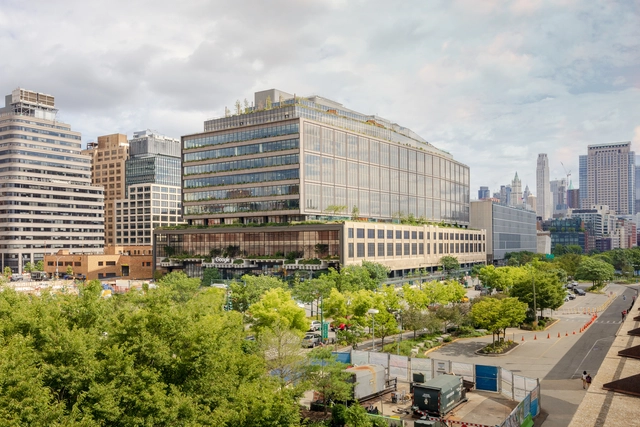
Google’s newest headquarters in New York, situated within the St. John’s Terminal, will open its doors on February 26th, marking a milestone for the company’s presence in the city. Designed by COOKFOX Architects, in collaboration with Gensler, the headquarters is constructed atop the original 1930s rail terminal and adapted to become a vibrant hub for over 14,000 Googlers. The terminal, formerly the endpoint of the iconic High Light, now serves as a testament to the company’s innovative approach, rapid growth, and lifelong commitment to New York.

Reimagining Work Culture: Google Unveils New York Headquarters at Renovated St. John’s Terminal - Image 1 of 4Reimagining Work Culture: Google Unveils New York Headquarters at Renovated St. John’s Terminal - Image 2 of 4Reimagining Work Culture: Google Unveils New York Headquarters at Renovated St. John’s Terminal - Image 3 of 4Reimagining Work Culture: Google Unveils New York Headquarters at Renovated St. John’s Terminal - Image 4 of 4Reimagining Work Culture: Google Unveils New York Headquarters at Renovated St. John’s Terminal - More Images+ 4

A Reimagined Brutalist Icon in the United States and a Maldivian Floating Villa: 12 Unbuilt Projects By Established Firms

Subscriber Access | 

Exploring architectural projects, competition entries and unbuilt works by renowned architects is an important step in fostering innovation and encouraging cross-cultural exchange and the development of diverse design approaches. Analyzing these unrealized concepts can offer insights into the evolution of architectural thinking, exploring a wider spectrum of approaches and design perspectives. This week’s curated selection of Best Unbuilt Architecture highlights designs submitted by established architecture practices.
Featuring internationally recognized offices like Brooks + Scarpa, Penoyre & Prasad, Aedas, Pininfarina, and Opposite Office, this selection exemplifies the wide range of projects and interventions designed by architects at various scales and programs. From creative reimaginings of well-known architectural icons to art museums, urban insertions, and conceptual activist proposals, these projects demonstrate the variety of approaches architects take when designing within a specific context and in response to local constraints, challenges and opportunities.

A Reimagined Brutalist Icon in the United States and a Maldivian Floating Villa: 12 Unbuilt Projects By Established Firms - Image 5 of 4A Reimagined Brutalist Icon in the United States and a Maldivian Floating Villa: 12 Unbuilt Projects By Established Firms - Image 14 of 4A Reimagined Brutalist Icon in the United States and a Maldivian Floating Villa: 12 Unbuilt Projects By Established Firms - Image 25 of 4A Reimagined Brutalist Icon in the United States and a Maldivian Floating Villa: 12 Unbuilt Projects By Established Firms - Image 47 of 4A Reimagined Brutalist Icon in the United States and a Maldivian Floating Villa: 12 Unbuilt Projects By Established Firms - More Images+ 66

An Integrated Mixed-Use Development in Belfast and a Research Station in Antarctica: 10 Unbuilt Projects Submitted by Established Firms

Subscriber Access | 

For this end of the year special roundup, ArchDaily has compiled a selection of Best Unbuilt Architecture, submitted by established and well-known firms. Including conceptual, in progress and, even in some cases, under-construction projects, this curated list covers a wide spectrum of programs and approaches.

From KPF, Sasaki, COOKFOX, and FCBStudios to name a very few, this week’s article highlights worldwide interventions. It actually encompasses a terminal transformation in Manhattan, an integrated mixed-use development in Central Belfast, regeneration of an entire district in Shanghai, and the modernization of the infrastructure at Davis research station in Antarctica.

An Integrated Mixed-Use Development in Belfast and a Research Station in Antarctica: 10 Unbuilt Projects Submitted by Established Firms - Image 12 of 4An Integrated Mixed-Use Development in Belfast and a Research Station in Antarctica: 10 Unbuilt Projects Submitted by Established Firms - Image 22 of 4An Integrated Mixed-Use Development in Belfast and a Research Station in Antarctica: 10 Unbuilt Projects Submitted by Established Firms - Image 38 of 4An Integrated Mixed-Use Development in Belfast and a Research Station in Antarctica: 10 Unbuilt Projects Submitted by Established Firms - Image 47 of 4An Integrated Mixed-Use Development in Belfast and a Research Station in Antarctica: 10 Unbuilt Projects Submitted by Established Firms - More Images+ 49

The 5 Points of Modern Architecture in Contemporary Projects

In 1926, Le Corbusier developed the five points that would become the foundations for modern architecture. Once materialized in 1929 in the iconic Villa Savoye project, Le Corbusier's principles - pilotis, free design of the ground plan, free design of the facade, horizontal window, and roof garden - have been extensively explored in modern architecture and continue to influence the most diverse contemporary architectural projects to this day.

The five points became a kind of guideline for the New Architecture, as Corbusier used to call it. Even after decades, new technologies, materials, and demands of society have continued to update those architectural solutions, announced almost a century ago as the basis for a new architecture.

The 5 Points of Modern Architecture in Contemporary Projects - Image 1 of 4The 5 Points of Modern Architecture in Contemporary Projects - Image 6 of 4The 5 Points of Modern Architecture in Contemporary Projects - Image 21 of 4The 5 Points of Modern Architecture in Contemporary Projects - Image 24 of 4The 5 Points of Modern Architecture in Contemporary Projects - More Images+ 26

Beyond Angkor Wat: Cambodia's New Cultural Architecture

The Kingdom of Cambodia has a rich history of Khmer architecture. Built from the latter half of the 8th century to the first half of the 15th century, these structures are embodied by the iconic Angkor Wat temple complex. But new architecture is being built throughout Cambodia, projects that reinterpret culture and tradition to create modern spaces for contemporary life.

Beyond Angkor Wat: Cambodia's New Cultural Architecture - Image 1 of 4Beyond Angkor Wat: Cambodia's New Cultural Architecture - Image 2 of 4Beyond Angkor Wat: Cambodia's New Cultural Architecture - Image 3 of 4Beyond Angkor Wat: Cambodia's New Cultural Architecture - Image 4 of 4Beyond Angkor Wat: Cambodia's New Cultural Architecture - More Images+ 8

COOKFOX Reimagines Former High Line Freight Terminal as Workplace of the Future

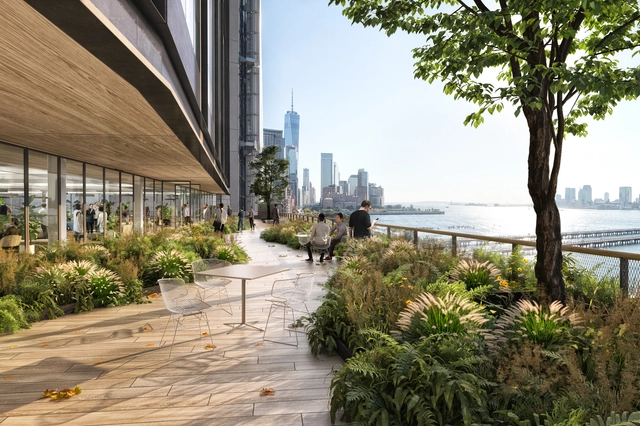
COOKFOX Architects and Oxford Properties have reimagined New York's St. John’s Terminal as a workplace of the future. The 1.3 million square foot proposal aims to connect the Hudson Square neighborhood to the waterfront at the end of The High Line. Combining outdoor space and greenery with 100,000 square-foot floor plates, the project reinterprets the industrial past of the former freight terminal. The project was created to shape how businesses innovate and create between Lower Manhattan and the waterfront.

COOKFOX Reimagines Former High Line Freight Terminal as Workplace of the Future - Image 1 of 4COOKFOX Reimagines Former High Line Freight Terminal as Workplace of the Future - Image 2 of 4COOKFOX Reimagines Former High Line Freight Terminal as Workplace of the Future - Featured ImageCOOKFOX Reimagines Former High Line Freight Terminal as Workplace of the Future - Image 3 of 4COOKFOX Reimagines Former High Line Freight Terminal as Workplace of the Future - More Images

Olson Kundig, CookFox, Morris Adjmi Among Top Firms to Design Buildings for Revitalization of Downtown Tampa

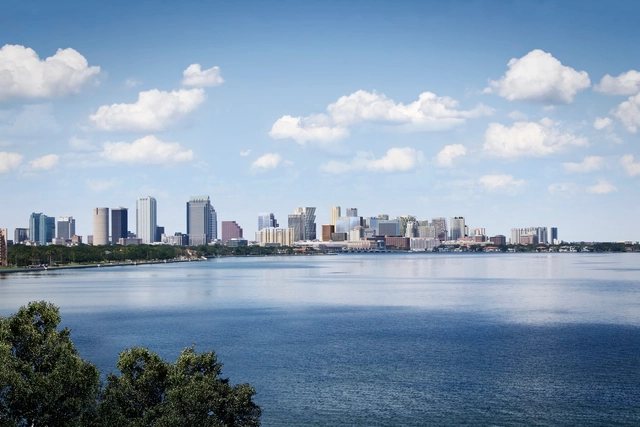
Developer Strategic Property Partners has announced plans for a new $3 billion 50-acre mixed-use neighborhood in Tampa, Florida. To be known as Water Street Tampa, the multi-phase project will create 9 million square feet of commercial, residential, educational, cultural and entertainment space on a site currently underused and occupied by highways and surface parking.

Olson Kundig, CookFox, Morris Adjmi Among Top Firms to Design Buildings for Revitalization of Downtown Tampa - Featured ImageOlson Kundig, CookFox, Morris Adjmi Among Top Firms to Design Buildings for Revitalization of Downtown Tampa - Image 1 of 4Olson Kundig, CookFox, Morris Adjmi Among Top Firms to Design Buildings for Revitalization of Downtown Tampa - Image 2 of 4Olson Kundig, CookFox, Morris Adjmi Among Top Firms to Design Buildings for Revitalization of Downtown Tampa - Image 3 of 4Olson Kundig, CookFox, Morris Adjmi Among Top Firms to Design Buildings for Revitalization of Downtown Tampa - More Images

COOKFOX Wins Preservation Approval for Manhattan Condominium

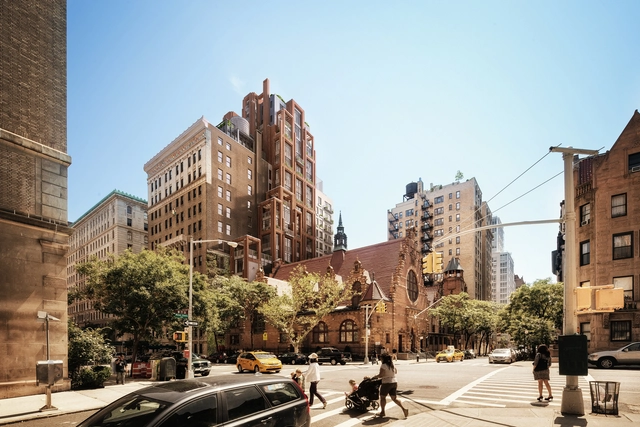
The New York City Landmarks Preservation Commission has approved COOKFOX Architect's plans for a mid-rise, 66-unit condominium building in Manhattan. Planned for two parcels of land in the West End Collegiate Historic District, next to one of the Churches' five ministries, the project aims to "fit harmoniously with the distinct streetscape" while "interweaving the rich historic details of the Upper West Side with subtle contemporary and sustainable design."

COOKFOX Architects' 550 Vanderbilt Condo Opens for Sale

COOKFOX Architects’ new project, 550 Vanderbilt Avenue has opened for sale. The 17-storey building will be the first of four condominiums in the 22-acre Pacific Park Brooklyn development in Prospect Heights. The project aims to create a new neighbourhood of 14 buildings, all connected to 8-acres of public green space designed by landscape architecture firm Thomas Balsley Associates. Read more about this project after the break.

COOKFOX Begins Construction on the Neeson Cripps Academy in Cambodia

COOKFOX Architects has recently begun construction on The Neeson Cripps Academy, a high-tech and sustainable school to be built in Phnom Penh, Cambodia, as a gift from Velcro Companies to the Cambodian Children’s Fund.

The school, named for Cambodian Children’s Fund founder Scott Neeson and former Velcro Companies Chairman Robert Cripps, will employ multiple sustainable building practices, including water and energy efficiency via natural lighting, integrated solar shading, low energy lighting, and low flow water fixtures. An energy recovery system will further work to improve air quality inside classrooms by filtering outdoor air into the interior of the building, and on-site photovoltaic cells will provide a portion of the school’s energy needs.