1. ArchDaily
  2. Classicism

Classicism: The Latest Architecture and News

A Narrative of Cultural Resilience: The Evolution of the Estonian Academy of Sciences

Subscriber Access | 

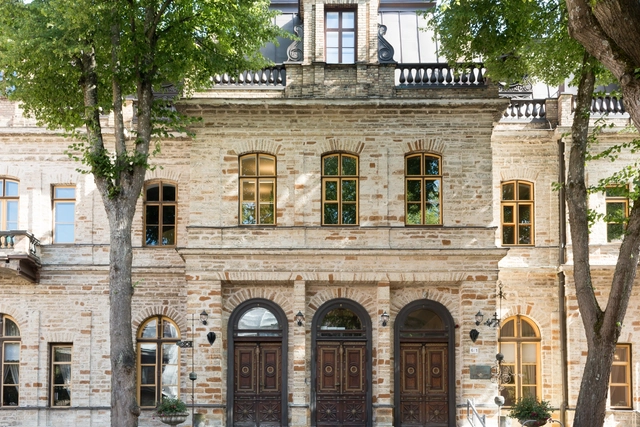
In the heart of Tallinn, where history weaves through cobblestone streets and ancient towers, stands the Ungern-Sternberg Palace — a monument that bridges the opulent past of Estonia's aristocracy with the vibrant world of contemporary academia. Now home to the Estonian Academy of Sciences, this historic building embodies Estonia's enduring dedication to knowledge and cultural preservation. Through Open House Tallinn, which highlights the city's architectural heritage, the palace's significant history, and remarkable architectural details are brought to a wider audience, offering unique insight into Estonia's cultural resilience.

Constructed in the 19th century as a symbol of aristocratic power, the palace has transformed from a private residence into a national hub of intellectual life. Its grand halls, once the scene of lavish gatherings, now foster scientific and academic pursuits, illustrating how heritage architecture can evolve alongside societal change.

A Narrative of Cultural Resilience: The Evolution of the Estonian Academy of Sciences - Image 1 of 4A Narrative of Cultural Resilience: The Evolution of the Estonian Academy of Sciences - Image 2 of 4A Narrative of Cultural Resilience: The Evolution of the Estonian Academy of Sciences - Image 3 of 4A Narrative of Cultural Resilience: The Evolution of the Estonian Academy of Sciences - Image 4 of 4A Narrative of Cultural Resilience: The Evolution of the Estonian Academy of Sciences - More Images+ 17

AD Classics: Republic Square / Edvard Ravnikar

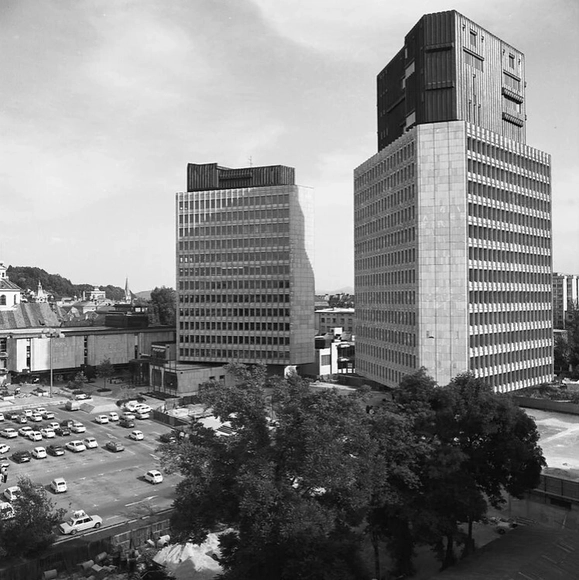
Republic Square in Ljubljana holds immense historical and symbolic significance for Slovenia. It is located in the historic center of the city and features a blend of buildings with different designs, scales, and dimensions, together with interconnected open spaces, passages, and underpasses. These elements form a multifunctional complex whose construction lasted more than 20 years and underwent several volumetric and programmatic reconfigurations. Visible from a distance and standing out above the Ursuline Church’s bell tower, two prominent office towers rise as part of this work designed by Edvard Ravnikar, the most prominent Slovenian architect of the second half of the 20th century.

A 2021 Moment In Architecture That May Define The Future

Some years end up being cultural pivot points. 2021 was one such year, with COVID-19 as the first existential threat to our culture since World War II. Architecture will change as a result, and may evolve in public perception to value motivations as a criteria for understanding it, versus valuing outcomes as the validation of any particular aesthetic.

A 2021 Moment In Architecture That May Define The Future - Image 1 of 4A 2021 Moment In Architecture That May Define The Future - Image 2 of 4A 2021 Moment In Architecture That May Define The Future - Image 3 of 4A 2021 Moment In Architecture That May Define The Future - Image 4 of 4A 2021 Moment In Architecture That May Define The Future - More Images+ 1

The Guardian's Rowan Moore Names 10 Best Concrete Buildings

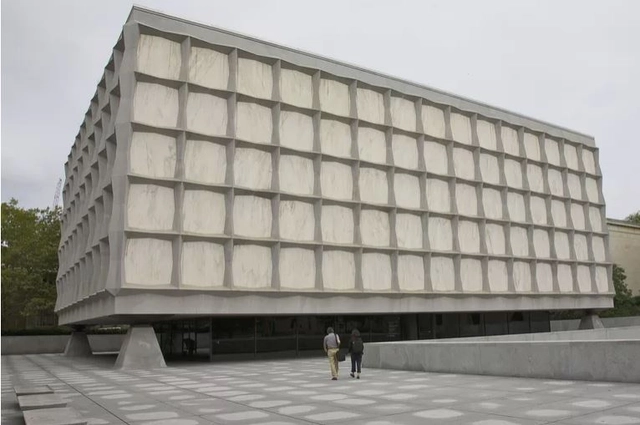
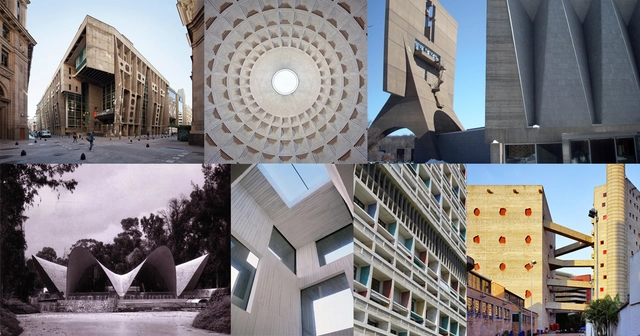
“Concrete has the ability to be primitive and technological, massive and levitating, to combine the properties of steel with those of mud,” says Rowan Moore in his list of The 10 best concrete buildings created for The Guardian. Through examples spanning three continents, Moore unites old standbys with unexpected wonders, all of which show the varied possibilities inherent in mixing water, aggregate, and cement. In a list that incorporates examples from Classical times to the present, Moore establishes concrete’s unique ability to adapt to different times, styles, applications, and treatments.

Examples by Le Corbusier, Álvaro Siza, Lina Bo Bardi, and Marcel Breuer demonstrate that concrete is anything but workaday or utilitarian. Moore’s list affirms that a material simultaneously strong and light, durable, sustainable, and fire-resistant, can scarcely be considered anything short of miraculous. Of course, ten buildings can only provide an abridged version of concrete’s possibilities, and Moore cheekily apologizes for some of the obvious omissions. Check out the full list here.

6 Classical Buildings That Are Younger Than You Think

Subscriber Access | 

For the best part of a century, architectural discussion has been dominated by modernism and other related forms of futurism and functionalism. For some, this constant invocation of the radically new has begun to look quite tired. In the 1980s looking backwards for inspiration famously brought us the adaptive and populist postmodernists, but also emerging at this time was New Classical architecture, which completely rejected any continuity with modernism and returned instead to traditional rules. In the years since, New Classical architecture has evolved into a resurgence of pre-modern forms, with the term also incorporating designs that would never have been considered "classical" in the first place - including Gothic and non-western historicist styles. We've rounded up some of the most surprising, interesting - even high-tech - examples of New Classical architecture after the break.

6 Classical Buildings That Are Younger Than You Think - Image 1 of 46 Classical Buildings That Are Younger Than You Think - Image 2 of 46 Classical Buildings That Are Younger Than You Think - Image 3 of 46 Classical Buildings That Are Younger Than You Think - Image 4 of 46 Classical Buildings That Are Younger Than You Think - More Images+ 9