1. ArchDaily
  2. Square

Square: The Latest Architecture and News

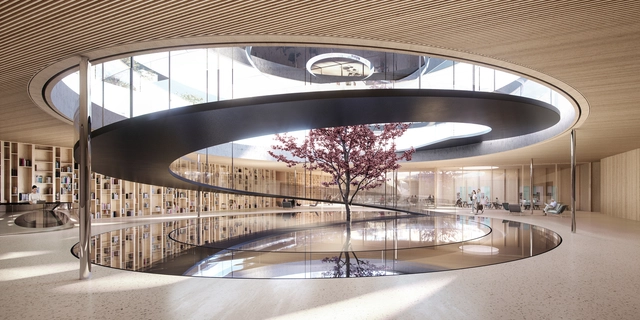
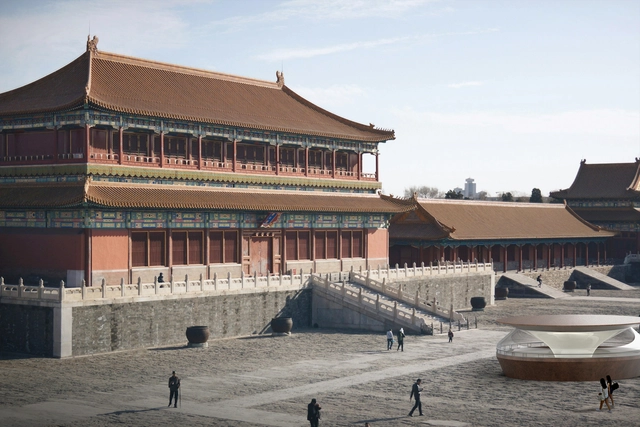
From Historical Squares to Quaint Booths in the Forbidden City, Explore 8 Captivating Public Space Concepts from the ArchDaily Community

Subscriber Access | 

In celebration of Urban October, a month dedicated to recognizing the significance of innovative urban spaces, this curated selection presents 8 conceptual projects that demonstrate the transformative potential of public spaces. These projects, submitted by the ArchDaily community, showcase the myriad ways public spaces can enhance cultural identity, community interaction, and environmental quality. Conceptual projects and competition entries serve as a platform for architectural experimentation, challenging the norms and sparking discussions about the future of urban landscapes. From rural settings to layered historical squares or small-scale urban interventions, the designs engage with their contexts, aiming to improve the experience of residents and visitors, highlight the histories of the space, and ensure accessibility for all.

Each month, ArchDaily's editors select a collection of conceptual projects centered around a theme or program, submitted to ArchDaily. These projects are developed by small and large-scale architecture offices from around the world and submitted openly to the ArchDaily platform, thus forming a worldwide community of practitioners sharing their work, be it purely conceptual, a competition entry, or an early-stage design phase. Submissions are open to everybody. If you wish to contribute, send in your work by following the instructions here.

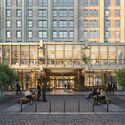
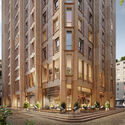
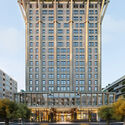
From Historical Squares to Quaint Booths in the Forbidden City, Explore 8 Captivating Public Space Concepts from the ArchDaily Community - Image 9 of 4From Historical Squares to Quaint Booths in the Forbidden City, Explore 8 Captivating Public Space Concepts from the ArchDaily Community - Image 29 of 4From Historical Squares to Quaint Booths in the Forbidden City, Explore 8 Captivating Public Space Concepts from the ArchDaily Community - Image 16 of 4From Historical Squares to Quaint Booths in the Forbidden City, Explore 8 Captivating Public Space Concepts from the ArchDaily Community - Image 7 of 4From Historical Squares to Quaint Booths in the Forbidden City, Explore 8 Captivating Public Space Concepts from the ArchDaily Community - More Images+ 51

Urban Spaces for an Overheated Planet: 12 Projects that tackle this Global Challenge

Subscriber Access | 

Due to climate change, heat waves are becoming increasingly frequent and intense, and they present a critical challenge for the design of urban spaces. Elevated temperatures exacerbate public health issues, increase energy consumption, and diminish cities' overall quality of life. Urban design must adopt strategies that promote resilience to mitigate these effects rather than merely replicating traditional formats that do not address the thermal stress experienced by many.

For quite some time, we have recognized the positive effects of urban green spaces, interaction with nature, water, and soil, and the associated health and well-being benefits for residents living next to parks. The significance of this matter has been further underscored, particularly in the aftermath of the panic induced by the Covid-19 pandemic. However, the present moment once again highlights the influence of our urban models on modern life, now grappling with unprecedented extreme temperatures.

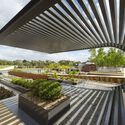
Urban Spaces for an Overheated Planet: 12 Projects that tackle this Global Challenge - Image 1 of 4Urban Spaces for an Overheated Planet: 12 Projects that tackle this Global Challenge - Image 2 of 4Urban Spaces for an Overheated Planet: 12 Projects that tackle this Global Challenge - Image 3 of 4Urban Spaces for an Overheated Planet: 12 Projects that tackle this Global Challenge - Image 4 of 4Urban Spaces for an Overheated Planet: 12 Projects that tackle this Global Challenge - More Images+ 14

AD Classics: Republic Square / Edvard Ravnikar

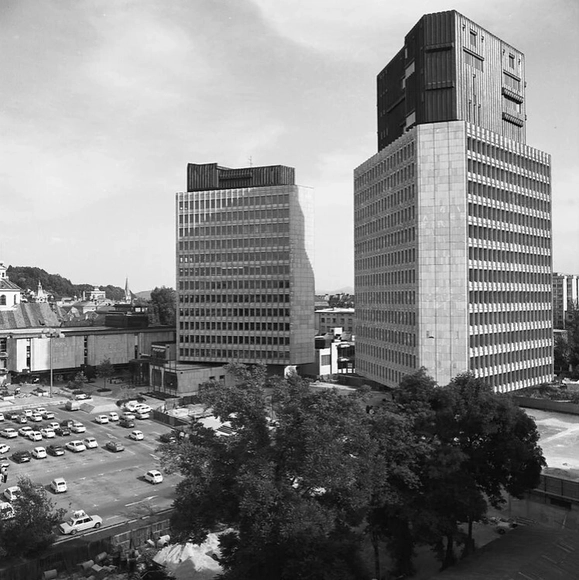
Republic Square in Ljubljana holds immense historical and symbolic significance for Slovenia. It is located in the historic center of the city and features a blend of buildings with different designs, scales, and dimensions, together with interconnected open spaces, passages, and underpasses. These elements form a multifunctional complex whose construction lasted more than 20 years and underwent several volumetric and programmatic reconfigurations. Visible from a distance and standing out above the Ursuline Church’s bell tower, two prominent office towers rise as part of this work designed by Edvard Ravnikar, the most prominent Slovenian architect of the second half of the 20th century.

The Barcelona Model: Public Space as a Synonym for Urban Adaptation

CityMakers, The Global Community of Architects Who Learn from Exemplary Cities and Their Makers, is working with Archdaily to publish a series of articles about Barcelona, Medellin, and Rotterdam. The authors are the architects, urban planners, and/or strategists behind the projects that have transformed these three cities and are studied in the "Schools of Cities" and "Documentary Courses" made by CityMakers. On this occasion, Jaume Barnada, coordinator of the award-winning Climate Shelters project in Barcelona schools and speaker at the "Schools of Cities", presents his article "Barcelona, the public place as a synonym for the adaptation of the built city."

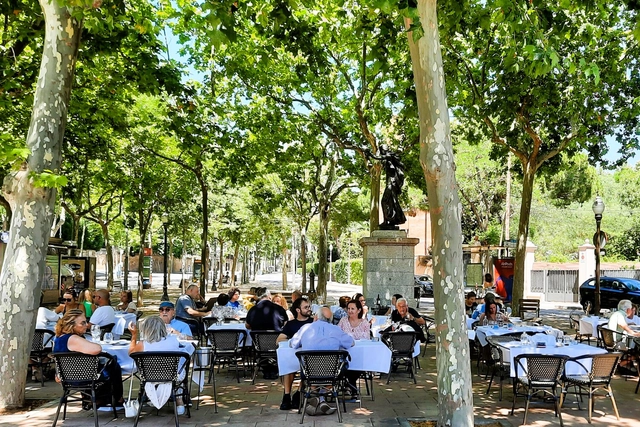
Cities are dense, built spaces in which pavements have been efficiently imposed on the natural soil. Cities like Barcelona have almost 75% of the land paved and waterproof. Without a doubt, it is an excess to reverse at a time of climate emergency, where we must reconnect with nature. Oriol Bohigas [1] told us that good urbanization had paved the squares of Mediterranean cities and that no one wanted to live in a mudhole. I'm sure he was right. Also, he taught us that the green and, consequently, the natural soil had to have dimension and especially an urban position. Squares are squares and parks are parks, and each space has a type of project. Today, concepts are too frequently confused when urbanizing public places and consequently, we find projects that blur the model.

The Barcelona Model: Public Space as a Synonym for Urban Adaptation - Image 1 of 4The Barcelona Model: Public Space as a Synonym for Urban Adaptation - Image 2 of 4The Barcelona Model: Public Space as a Synonym for Urban Adaptation - Image 3 of 4The Barcelona Model: Public Space as a Synonym for Urban Adaptation - Image 4 of 4The Barcelona Model: Public Space as a Synonym for Urban Adaptation - More Images+ 3

Athens Plans to Grow Its Metro Infrastructure by a Third to Reduce Automobile Traffic

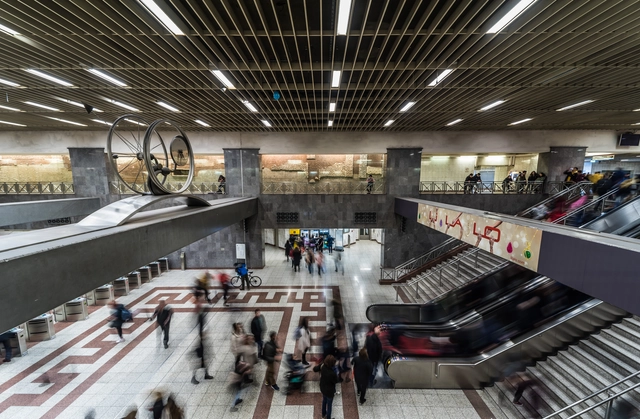
The project for implementing a fourth metro line in the Greek capital began in 2021, with the purpose of reducing the need for automobiles in the crowded city. As the 15-station new line is estimated to transport 340,000 passengers a day, up to 53,000 cars could be taken off the roads each day. While the opening of the line may be five years away, work has now begun to refurbish seven urban squares which will become stations. Despite public support for the initiative, the project has also led to some controversy, with residents fearing gentrification.

A Central Square in Greece and a Giant Clock in Germany: 8 Unbuilt Public Spaces Submitted by the ArchDaily Community

Subscriber Access | 

Public spaces are the beating heart of our cities. They act as the hubs of social and cultural activity where people congregate, interact, and escape the clamor of the city. These areas are crucial in determining a city's identity, character, and citizens' well-being and standard of living. Public spaces can define our communities and significantly impact how we live, work, and interact with one another through their architectural designs, facilities, and activities. Furthermore, they provide leisure, exercise, and recreation opportunities, allowing individuals to escape the confines of their daily routines and connect with nature.

This week's curated selection of Best Unbuilt Architecture highlights projects submitted by the ArchDaily community showcasing different proposals made to enhance public space. Ranging from reimagining central squares to placing massive land art in the urban epicenter, these public spaces enhance the quality of life for the city's locals. In Germany, the redesign of the entire Memorium Nürnberger Trials reimagines this as a place to come together, grounded in its history, while in Havana, the new Cuban Square reimagines the metaphor of unity in the city center. The design and accessibility of public spaces significantly impact our well-being and quality of life. Thoughtfully planned and inclusive spaces with seating, greenery, and pedestrian-friendly infrastructure can promote physical activity, mental health, and community engagement in a city.

A Central Square in Greece and a Giant Clock in Germany: 8 Unbuilt Public Spaces Submitted by the ArchDaily Community - Image 6 of 4A Central Square in Greece and a Giant Clock in Germany: 8 Unbuilt Public Spaces Submitted by the ArchDaily Community - Image 42 of 4A Central Square in Greece and a Giant Clock in Germany: 8 Unbuilt Public Spaces Submitted by the ArchDaily Community - Image 43 of 4A Central Square in Greece and a Giant Clock in Germany: 8 Unbuilt Public Spaces Submitted by the ArchDaily Community - Image 44 of 4A Central Square in Greece and a Giant Clock in Germany: 8 Unbuilt Public Spaces Submitted by the ArchDaily Community - More Images+ 40

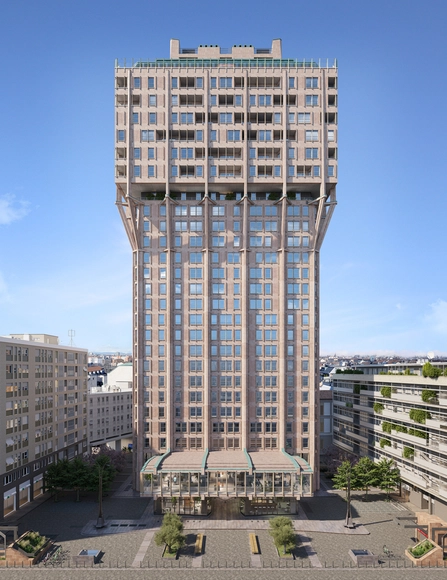
Asti Architetti Unveils the Redesign of the Square Surrounding Torre Velasca in Milan, Italy

Torre Velasca, the renowned 1950s skyscraper by BBPR in Milan, Italy, is currently undergoing an extensive renovation process led by Asti Architetti and developed by Hines. After completing the work on the facades and with the extensive restoration of the interiors under way, the office has made public the project for the redesign of the Piazza Velasca, the square surrounding the tower. By turning it into a meeting and social gathering place, the architects hope to restore the status of the complex as a symbol of Milan’s architectural heritage. Pedestrian access to the building, and the renovation of previously disused adjacent spaces will open up the area for public access and will restore the original meaning of “piazza,” or square. The project is scheduled for completion by early 2024.

Asti Architetti Unveils the Redesign of the Square Surrounding Torre Velasca in Milan, Italy - Image 1 of 4Asti Architetti Unveils the Redesign of the Square Surrounding Torre Velasca in Milan, Italy - Image 2 of 4Asti Architetti Unveils the Redesign of the Square Surrounding Torre Velasca in Milan, Italy - Image 3 of 4Asti Architetti Unveils the Redesign of the Square Surrounding Torre Velasca in Milan, Italy - Image 4 of 4Asti Architetti Unveils the Redesign of the Square Surrounding Torre Velasca in Milan, Italy - More Images+ 8