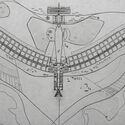
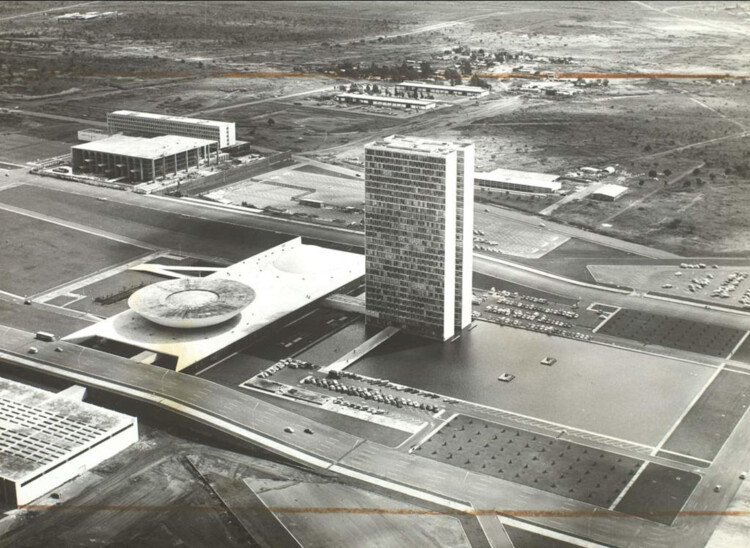
Palacio do congreso Nacional Brasilia. Image via Wikimedia Commons (Public Domain)
A different social order is easier to imagine when it sits far from the one that already exists. In Latin America, that distance has often been territorial. Parts of the region have repeatedly been treated as places where another world could begin. These places were never empty.
For architects, this idea has a familiar starting point: the plan. Seen from above, a territory can look like a clean sheet, ready for an axis or a grid. At eye level, the same ground is already full of people and the paths they use.
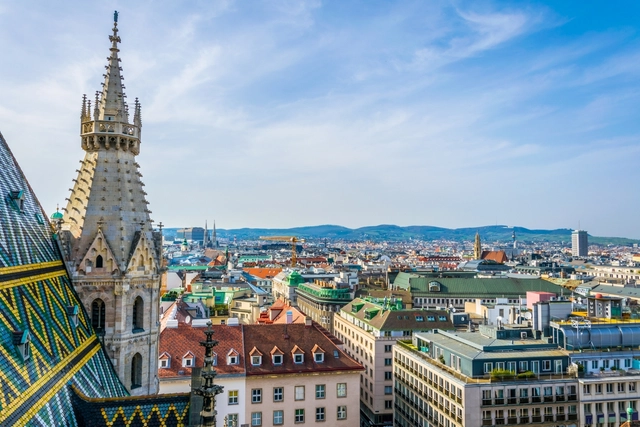
The pursuit of an ideal city has long been a topic of debate among architects and urban planners. In addition to aesthetic identity and cultural heritage, the quality of life in every city represents perhaps the most important marker in this pursuit. This year, the Economist Intelligence Unit (EIU), a sister company of The Economist, has released its Global Liveability Index 2024, highlighting the cities that excel in this ongoing quest. For the third consecutive year, Vienna ranked as the most liveable city in the world. European cities Copenhagen, Zurich, and Geneva also rank high, attributed to their smaller populations, which contribute to lower crime rates and less congestion. In comparison with the 2023 ranking, the numbers for North American and Australian cities have been dragged down by the ongoing housing crisis.
The assessment ranks 173 cities from around the world. Each city is scored based on 30 qualitative and quantitative factors evaluating 5 categories: stability, healthcare, culture and environment, education, and infrastructure. The scores are based on external data points, in-house analysts, and in-city contributors. The category of stability has registered the biggest decline, as protests and armed conflicts increased in incidence. At the bottom of the cist, the city of Damascus, Syria, continues to be ranked as the least liveable city in the survey, followed by Tripoli, Libya, reflecting severe instability.
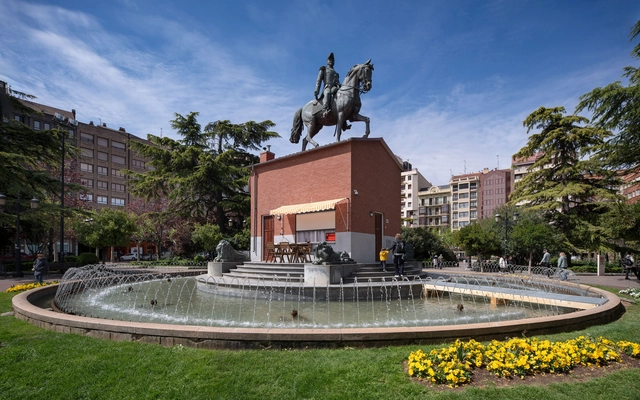
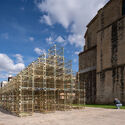
From April 25 to May 1, 2024, Logroño hosts the tenth edition of Concéntrico, a celebration of urban innovation and transformation. This year, the festival explores the future of cities, incorporating new formats, engaging diverse audiences, and tackling urban challenges through the lens of time as a catalyst for change in design. Featuring 20 interventions and activities involving over 100 professionals from 17 countries, the program encompasses processes such as renaturalizing public spaces, reimagining urban structures, and integrating recycled materials from previous editions.
Additionally, collaborations with educational centers ensure a lasting impact beyond the festival, fostering new collective practices in public spaces. Special projects such as "The street in 10 years" or initiatives involving students and pupils from local schools and educational centers further enrich the festival's engagement with communities across Spain.
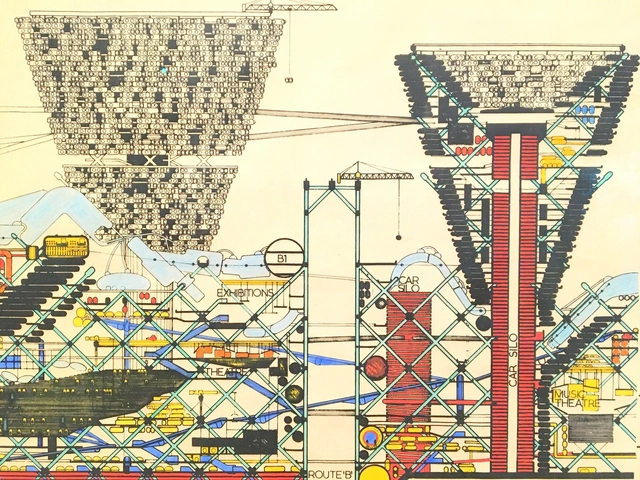
The concept of a city can be viewed as a constantly evolving system where both architects and users contribute to its design and redesign. While its framework may start with planners or designers, the character of the urban fabric is ultimately shaped by the societies and generations that inhabit it. The question of "city authorship" often arises in the context of masterplan design. Can architects and urban planners determine the extent to which a city will evolve through its initial design? The answer is no. User authorship then acknowledges that city planning should not be approached like building design, where designers attempt to predict every aspect of shape, pattern, behavior, and culture. Instead, it recognizes the role that people play in shaping the urban fabric through their personal taste in architecture, the development of neighborhood personality, and ongoing redesign that contributes to the story and spirit of a place. These factors should be considered in the initial design by engaging ideas related to future expansion, adaptable infrastructure, and empowering citizens to contribute to the city's architecture, thus making the city design democratic. This article explores conceptual radical cities where designers embrace the ideas of user authorship and the constant evolution of ephemeral architecture.
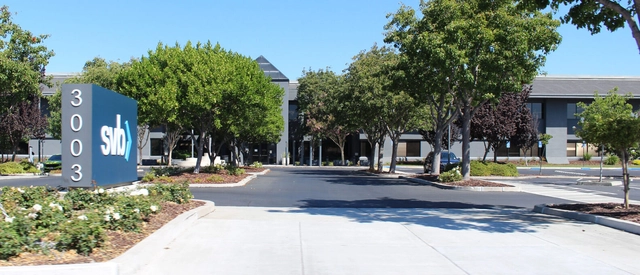
One of the principles of comedy is that you “punch up.” If you have to make fun of someone or something, make sure it’s more prominent than you, and deserving. You can’t get much higher than Santa Clara, California, and you can’t get much more deserving. Santa Clara is, arguably, the city at the heart of Silicon Valley, a globally famous urban region that is so ill-defined as to deny its own existence. Those ranch houses and corporate headquarters represent a distinctly 21st-century brand of power. And a distinctly 20th-century brand of urbanism.
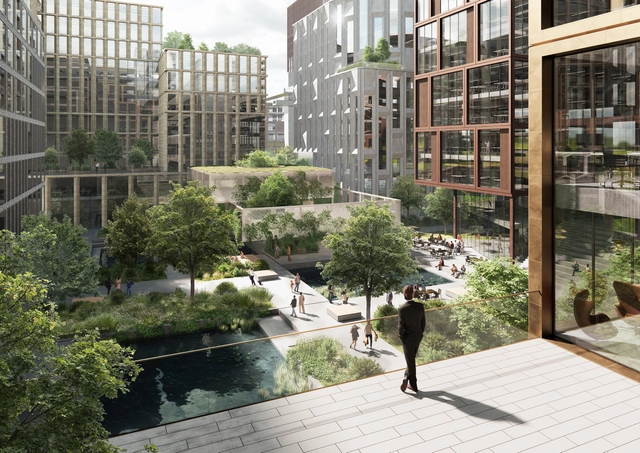
Danish design studio CEBRA won the planning competition to develop the business district at Hannemanns Allé, in Ørestad Syd, Copenhagen, Denmark. With a project emphasizing urban quality, urban life, and area identity, the 150,000 square meters plan will define the framework for future design and completion of the area between the Royal Arena and the Øresund motorway. Expected for completion in 2024, the project is commissioned by Copenhagen Municipality and By&Havn, an organization tasked with developing Ørestad and the city's port.
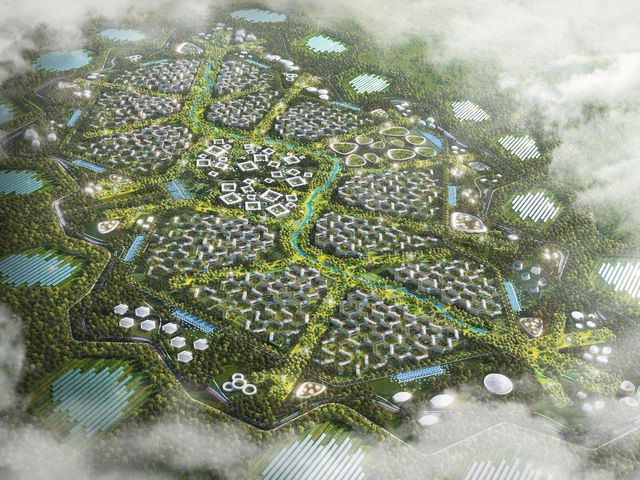
URB has unveiled plans to develop Africa's most sustainable city, a development that can host 150,000 residents. Known as The Parks, the city plans to produce 100% of its energy, water & food on-site through biodomes, solar-powered air-to-water generators, and biogas production. The 1,700-hectare project will feature residential, medical, ecotourism, and educational hubs to become one of the significant contributors to the growing green and tech economy in South Africa.
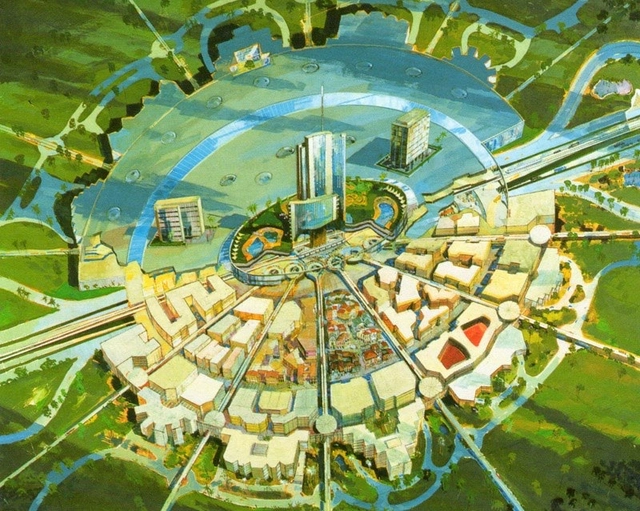
Beneath the Spaceship Earth geodesic sphere and the display of world cultures that symbolize Disney World’s EPCOT lies the buried vision for a utopian city. The original EPCOT - a community built around innovation - was one of Walt Disney’s last visionary projects. Bothered by haphazard urban sprawl, Disney had bold ideas for an urban fabric that would drive progress in the USA. The “Experimental Prototype Community of Tomorrow” was Walt Disney’s antidote to the decay of American cities.
There are few more powerful questions than “Where are you from?” People feel intensely connected to cities as places and to other people who feel that same kind of connection. In other words, we tend to understand and experience places in a very personal way.
Yet to understand place—indeed, to understand human settlements in general—it’s important to recognize that places are not created by accident. They are created on purpose to further a political or economic agenda. Better cities emerge when the people who shape them think more broadly and consciously about the places they are creating.
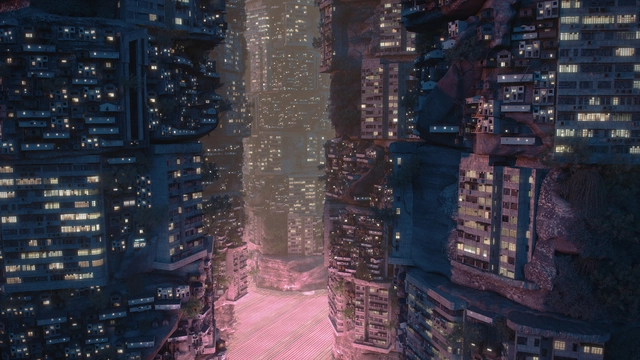
Liam Young is a speculative architect, product designer, and director who operates in the spaces between design, fiction, and futures. Young specializes in designing environments for the film and television industry, harboring the belief that creating imaginary worlds grants us the ability to connect emotionally to the ideas and challenges of our future.
Following the centuries of colonization, globalization, and never-ending economic extraction and expansionism, humans have remade the world from the scale of the cell to the tectonic plate. Young suggests in a TED Talk, “What if we radically reversed this planetary sprawl? What if we, as humans, reached a global consensus to retreat from our vast network of cities and entangled supply chains into one hyper-dense metropolis housing the entirety of the earth’s population?"
In the 1960s and 1970s, a series of critiques of the modern city appeared. Jane Jacobs’s attack on those intent on redeveloping New York City was the most immediately impactful, loosening the grip of Robert Moses and his followers, but others had a broader influence on practicing architects and planners. As an observer of San Francisco Bay Region’s cities, I wondered if their books from this period would shed light on current issues of adding density in urban contexts.
https://www.archdaily.com/985024/how-do-the-critics-of-yesteryear-think-about-urban-densityJohn J. Parman
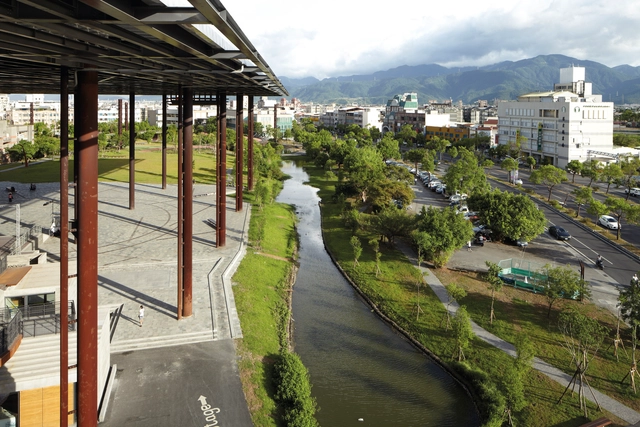
Taiwan proposes that architecture can transform a place, and to represent this idea, the work of Sheng-Yuan Huang and his practice, Fieldoffice, were chosen for the Taiwan Exhibition at La Biennale di Venezia in 2018, entitled Living with Sky, Water, and Mountain: Making Places in Yilan. Sheng-Yuan and Fieldoffice demonstrated that the notion of making places is more than building a physical space, but is equally about establishing a linkage between people, as well as people and their environment.
Alessandro Martinelli explores Sheng-Yuan and his colleagues at Fieldoffice as the avant-garde of a new architectural movement in his book, The City Beyond Architecture, which seeks to produce a new form of collective living through the lens of design and culture, touching on what the design culture of the majority of future urbanization could become. In the following, we will discuss Shen-Yuang's impact on Taiwanese architecture as he spearheaded the call to integrate and imagine public spaces that inhabited the capacity to structure a particular landscape to provide both social spaces and a sense of identity to its occupants.
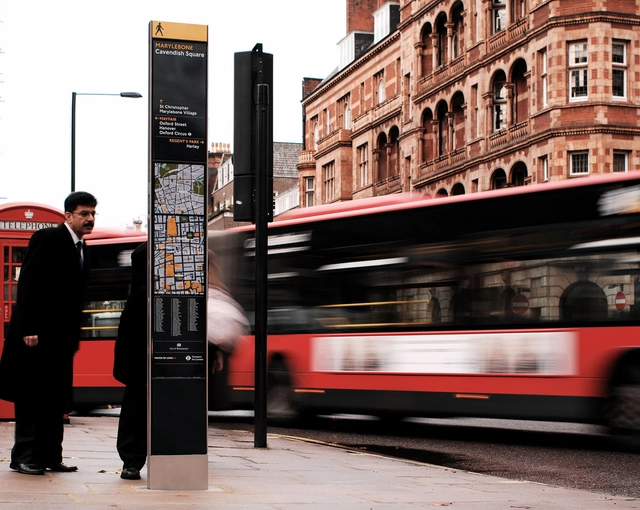
If you have ever walked around the center of London you will have seen those yellow and dark blue panels featuring maps, local attractions, and walking times dotted along the streets and near bus and tube stops. Credited with redefining city wayfinding, Legible London, as the system is called, is now seen as the benchmark for making cities accessible and legible to residents, commuters, and visitors alike. And now Seattle has launched its own version of the London system, and Madrid will do so next year. Giovanna Dunmall asks Tim Fendley, the founder and CEO of Applied, the spatial experience design practice behind all these projects, why analog is often still so superior to digital, and what makes for good wayfinding.
Cities are universes in themselves; furiously spawning, spewing, hissing through time and space. They are cudgeled, raked, plastered, worshipped, fought over, set on fire; they are slippery wombs that cradle wars, victories, blood and brilliant storms. The built environment has always been indicative of its inhabitants’ fears, desires, and ideals. As such, it is one of the earliest, most powerful forms of human expression. For World Cities Day 2017, the new BBC Designed section of the BBC Culture website commissioned motion graphics designer Al Boardman to create The Perfect City, an animated video covering a brief history of humankind’s quest for the "ideal" and the "perfect" in urban design. With a voiceover and script by renowned architecture critic and writer Jonathan Glancey, the video is a remarkable 2-minute overview of some prominent examples in city planning, both old and new, successful and unsuccessful.
https://www.archdaily.com/882688/playful-animation-tells-the-story-of-humankinds-quest-for-a-perfect-cityZoya Gul Hasan