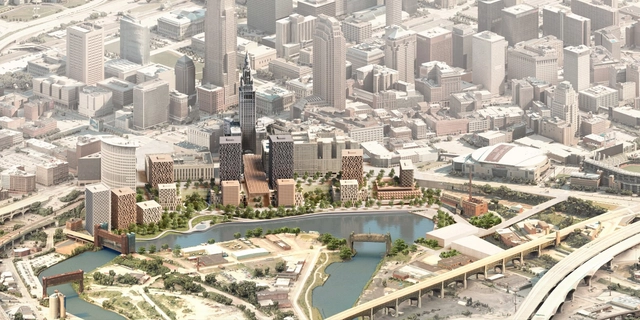
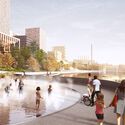
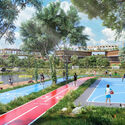
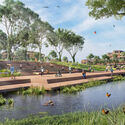
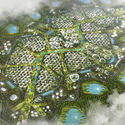
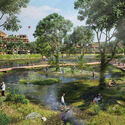
David Adjaye, in partnership with Bedrock and the city of Cleveland, unveiled the masterplan for the Cuyahoga Riverfront, a 15-to-20-year vision that will transform 35 acres of the riverfront to improve accessibility, equity, sustainability, and resilience of the downtown area. The design embraces the city’s rich history and connection to nature and creates a sustainable infrastructure that prioritizes pedestrian movement and activates open public spaces. David Adjaye, a British-Ghanian architect, has been awarded Britain’s Order of Merit, making him the fifth architect to be appointed the honor.
Authenticity seems impossible today, with places and the buildings in them assembled with products from the Industrial Development Complex that could be assembled almost anywhere else on Earth in a debauchery of placelessness, disharmony with nature, and meaninglessness that doesn’t age well. So how is authenticity in the built environment achieved?
Fundamental for the development of large metropolises as we know them today, cement is a material used historically, whose technological advances have revolutionized construction technique and technology of civil construction, enabling the verticalization of construction and the densification of urban centers. Cement, both added to water and sand to make mortar and combined with steel and aggregate to form concrete, performs different functions in a work, from structure to finish.
As of today, over 50% of the world’s population lives in urban areas, and by 2050, this urban population will almost double in size, and 7 of 10 people in the world will live in cities. As cities have continued to grow and expand throughout history, a new vocabulary has also emerged, often to better communicate the scale of urban living in a relatively contemporary context. One such example is the term megalopolis – typically defined as a network of large cities that have been interconnected with surrounding metropolitan areas by infrastructure or transportation. In effect, it’s a region perceived as an encompassing urban area, within which there is a constant flow of commerce and migration.
Blair Kamin stepped down as architecture critic for the Chicago Tribune in January 2021, after a nearly 30-year run in the post. He won a Pulitzer Prize in 1999 for a body of work highlighted by a series on Chicago’s lakefront, including a story that documented the race- and class-based disparity between the city’s north and south lakefronts. He has previously published two collections of his work: Why Architecture Matters (2001) and Terror and Wonder (2010), both from the University of Chicago Press. His third collection, Who is the City For? Architecture, Equity, and the Public Realm in Chicago, was released last week. Recently I talked to Kamin about the new book, the state of post-pandemic Chicago, and the need for more mainstream architecture criticism. I will post the second of our conversations tomorrow, in which the critic pushes the need for a redefinition of the phrase “design equity.”
Envision your ideal neighborhood. Maybe it’s on a cul-de-sac in the suburbs, where every neighbor has a well-manicured lawn, a two-car garage, and everyone gives each other a friendly wave on their way to work. Or maybe you live in a high-rise building in a dense urban center, where you take public transit to the office five days a week and say hello to your doorman on your way out. Whatever your neighborhood might look like, there’s always a sense of wanting to know the people who live around your- or at least an unspoken reliance on one another to ensure that your surroundings are safe. What happens when technology brings you and your neighbors together to report on local happenings? Is it a good thing, or does it create a vigilante situation gone awry?
The queer crowd has always been present, finding ways to exist, gather, and celebrate. Although their visibility hasn't always been highlighted throughout history due to the consciousness of having to submit to heteronormative and strict mass normality in the past, doesn't mean they previously didn't have their own spaces to call their own. Queer spaces, past and present, have been categorized as strong, vibrant, vigorous, and worthy of occupying their own place in history, filling in as safe places for identifying individuals, places of social gathering, entertainment, and even offering community housing; therefore, there will always be a need for queer spaces.
Everyone’s experience of a city is unique. Whether one is visiting a place for the first time or has lived there all their life, their experiences are shaped by their personal interactions with the built environment. Buildings, landscapes, and streets come together to offer an opportunity for sensory stimulation, however, most of them are unable to provide inspiration. While a city’s infrastructure accounts for livability, equal importance isn’t given to enjoyability. Play and games embedded in the city’s fabric can help improve user engagement with urban spaces.
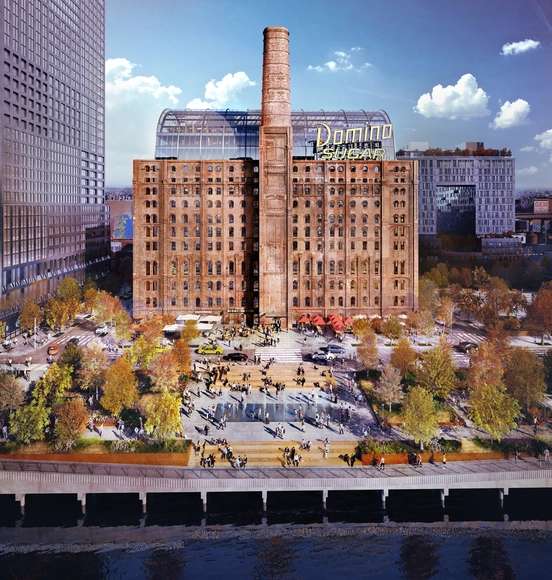
Domino Refinery. Image Courtesy of Practice for Architecture and Urbanism (PAU)
Adaam James Levin-Areddy and Vanessa M. Quirk, the hosts and producers of the Uncertain Things podcast, interview people from diverse backgrounds and a wide range of expertise to ask the question: “now what? What is happening and how did we get here?”. In this episode, they talk with urbanist, architect, and professor Vishaan Chakrabarti, founder of Practice for Architecture and Urbanism, to seek to understand how the cities got so expensive. Together they delve into the affordability crisis, the detrimental effect of progress, and what we need to do to have better cities.
A few days ago, the world gathered at Sharm El Sheik, Egypt, for its annual climate change summit: COP27. Like the rest of Africa, Nigeria is represented by its retinue of bureaucrats, climate advocates, and other interest groups. Since the last meeting in Scotland (COP26), Nigeria signed the Climate Change Act into law, setting a target of attaining net-zero greenhouse gas emissions between 2050 and 2070. In the interim, Nigeria has developed an ambitious energy plan that would see it transition from fossil fuels to renewable energy, using its vast reserve of natural gas as a hedge. The country is at the forefront of the African Carbon Markets Initiative and plans to raise at least $500 million from carbon crediting trading to offset emitted carbon.
https://www.archdaily.com/992422/nigerias-ambitious-climate-agenda-and-its-misplaced-fixation-on-carbon-footprintMathias Agbo, Jr.
According to the World Population Clock, the human population reached 8 billion on November 15th. According to the UN, this milestone represents a celebration of human longevity due to improvements in public health and medicine, but it also comes with warnings about inequality, limited access to food and resources, and environmental damage. Despite the impressive number, the annual World Population Prospect report shows that the global population is growing at the slowest rate since 1950, and it predicts a continued deceleration in the second half of this century.
As more than half of the worldpopulation lives in cities, an estimated 55.7%, according to UN-Habitat’s latest reports, the urban challenges are growing exponentially. The UN expects this number to increase to 68% by 2050, with close to 90% of this increase taking place in Asia and Africa. Accelerated urbanization can pose significant risks, such as increasing inequality, poverty, sectorized development, social exclusion, and pollution. In this context, a well-balanced urban agenda becomes crucially important in achieving inclusive, safe, and sustainable cities.
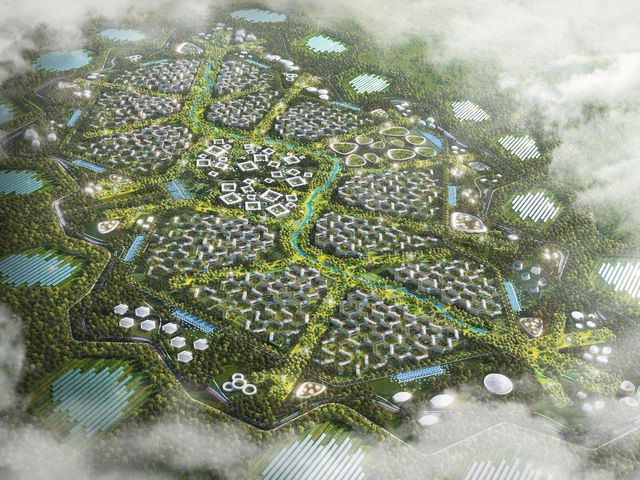
URB has unveiled plans to develop Africa's most sustainable city, a development that can host 150,000 residents. Known as The Parks, the city plans to produce 100% of its energy, water & food on-site through biodomes, solar-powered air-to-water generators, and biogas production. The 1,700-hectare project will feature residential, medical, ecotourism, and educational hubs to become one of the significant contributors to the growing green and tech economy in South Africa.
The 1970’s were a dark time for New York City. While the economy was down, crime rates were at an all-time high. The negative public image also kept tourists away, driving the city into a financial crisis. To change perceptions about The Big Apple, the New York State Department for Economic Development approached advertising firm Wells Rich Greene to create an inviting marketing operation. After 45 years, the resulting I Love NY campaign remains fresh in the minds of locals and tourists, successfully revamping New York City’s brand. Cities across the world like Paris, Amsterdam and Jerusalem have similarly invested heavily in constructing magnetic brands for themselves.
In an effort to expand the debate around the issues and opportunities facing urban environments worldwide, UN-Habitat has designated October 31 as “World Cities Day”, an event celebrated annually since 2014. This year the events are centered around the theme “Act Local to Go Global”, with the aim to share experiences and approaches to local actions, the initiatives that were successful and those that were not, and to seek to understand ways in which local and regional governments can help create greener, more equitable and sustainable cities.
The theme was chosen based on the understanding that local actions are of critical importance in achieving the sustainable development goals set for 2030. The 2030 Agenda sets out the UN ambition to contribute to creating cities and human settlements more inclusive, safe, resilient, and sustainable. The world’s largest cities are often the most unequal. This year’s theme suggests that there is a path forward through incremental changes and localized actions. By adapting to site-specific conditions, these actions can better respond to the individual needs of the communities, and the natural conditions of climate and topography and can help strengthen the cultural identity of urban environments.
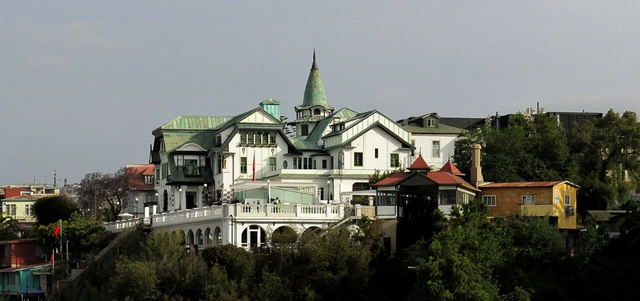
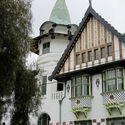
We often walk through the city without knowing the value of the buildings around us. In Chile, there is an architectural multiculturalism that has molded the cities with buildings that, to this day, are awarded a heritage title and are not recognized as such by the inhabitants and visitors.
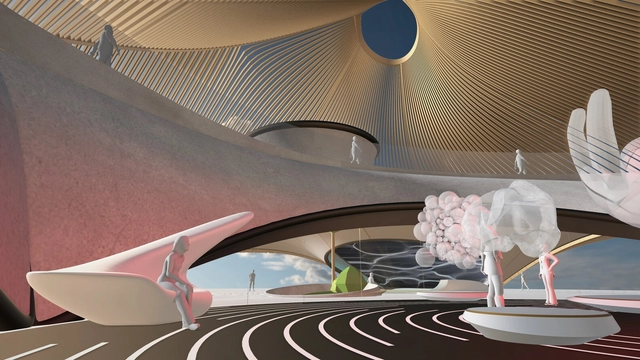
We live in a world where the experienced, remembered, and imagined, as well as different moments in space and time concerning the past, present, and future are inseparably blended. As of recent, we are being offered various mediums to gain access to other planes of existence, utilizing immersive technologies like virtual and augmented reality (VR and AR), creating a pathway to the metaverse in which we are transported to spaces that are capable of feeling more ‘real’ than anything we presently experience.
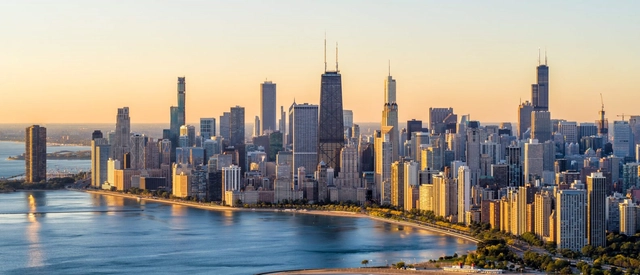
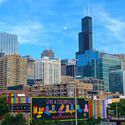
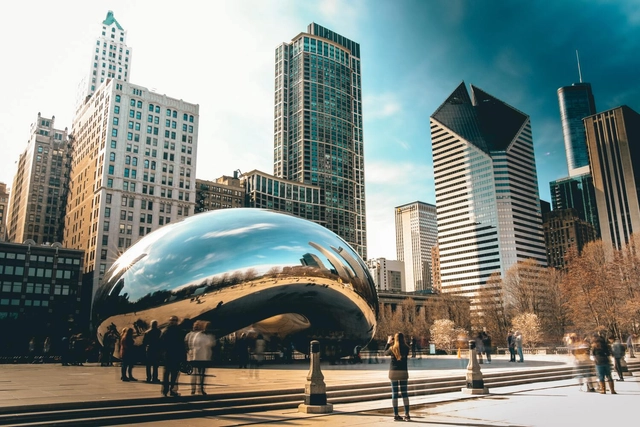
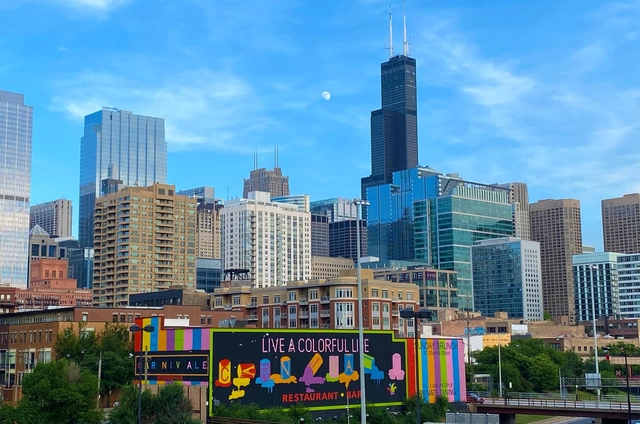
Chicago, The Windy City, Chi-Town, or The Second City. It’s a place that is known by many names, but to architects and urban planners alike, it’s famous for its history which has given us some of the best-known buildings and important advancements that have helped to shape other cities across the United States. From its inception, Chicago has long served as an architectural hub for innovation.
“Art aims to represent not the outward appearance of things, but their inward significance”, Greek polymath Aristotle remarked. Public art in cities worldwide seeks to pursue this aim by offering a sense of meaning and identification to its residents. Taking the form of murals, installations, sculptures, and statues, public art engages with audiences outside of museums and in the public realm. This art presents a democratic manner of collectively redefining concepts like community, identity, and social engagement.