1. ArchDaily
  2. UN

UN: The Latest Architecture and News

What COP27 Meant for Architecture and the Construction Industry

The 2022 United Nations Conference of the Parties, more commonly referred to as COP27, was held between November 6 and November 18, 2022, in Sharm El Sheikh, Egypt. The conference included more than 90 heads of state and an estimated 35,000 representatives, or delegates, from 190 countries. Aimed at encouraging and guiding countries to take effective action against climate change, the next edition of these conferences, COP28, is already scheduled from 30 November to 12 December 2023, in the United Arab Emirates. The CEO of the Abu Dhabi National Oil Co, an oil company chief who also oversees renewable energy efforts in the Emirates, was appointed to preside over the negotiations and talks, which led to a wave of criticism from environmental activists.

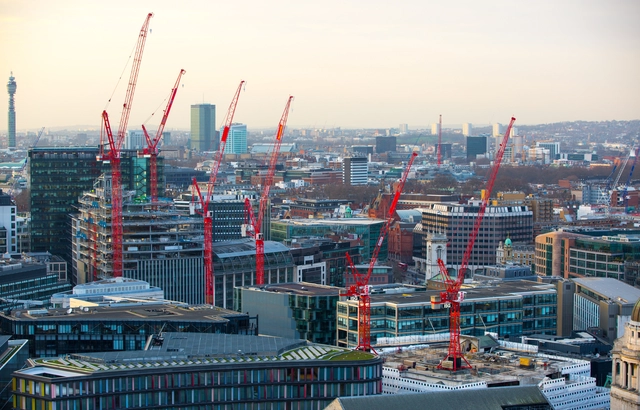
What COP27 Meant for Architecture and the Construction Industry - Image 1 of 4What COP27 Meant for Architecture and the Construction Industry - Image 2 of 4What COP27 Meant for Architecture and the Construction Industry - Image 3 of 4What COP27 Meant for Architecture and the Construction Industry - Image 4 of 4What COP27 Meant for Architecture and the Construction Industry - More Images+ 1

World’s Cities Day 2022: Act Local to Go Global

In an effort to expand the debate around the issues and opportunities facing urban environments worldwide, UN-Habitat has designated October 31 as “World Cities Day”, an event celebrated annually since 2014. This year the events are centered around the theme “Act Local to Go Global”, with the aim to share experiences and approaches to local actions, the initiatives that were successful and those that were not, and to seek to understand ways in which local and regional governments can help create greener, more equitable and sustainable cities.

The theme was chosen based on the understanding that local actions are of critical importance in achieving the sustainable development goals set for 2030. The 2030 Agenda sets out the UN ambition to contribute to creating cities and human settlements more inclusive, safe, resilient, and sustainable. The world’s largest cities are often the most unequal. This year’s theme suggests that there is a path forward through incremental changes and localized actions. By adapting to site-specific conditions, these actions can better respond to the individual needs of the communities, and the natural conditions of climate and topography and can help strengthen the cultural identity of urban environments.

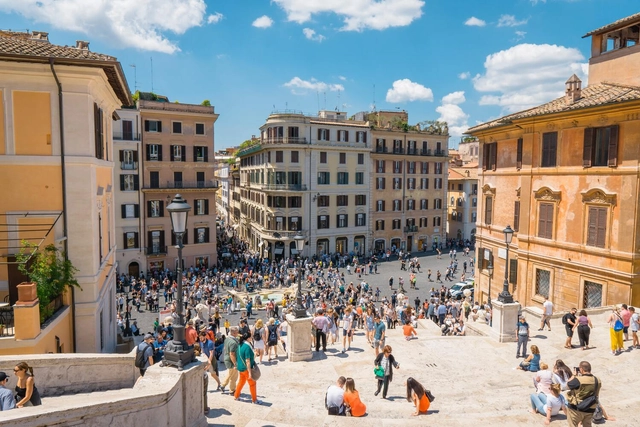
World’s Cities Day 2022: Act Local to Go Global - Image 1 of 4World’s Cities Day 2022: Act Local to Go Global - Image 2 of 4World’s Cities Day 2022: Act Local to Go Global - Image 3 of 4World’s Cities Day 2022: Act Local to Go Global - Image 4 of 4World’s Cities Day 2022: Act Local to Go Global - More Images+ 11

Naomi Hoogervorst on Democratization of Design: "Equal Cities Need Equal Voices"

Many of us agree that design is still not considered for everyone. That is why we must ask ourselves what is truly democratic in the matters of design - in order to define our vision toward a more just society. From the perspective of architecture and urbanism, we can look at this democratization from different angles, including citizens in participatory processes, in order to find answers to our constant search to improve habitability and accessibility.

WUF11: The World Urban Forum 2022 Will Take Place in Katowice, Poland

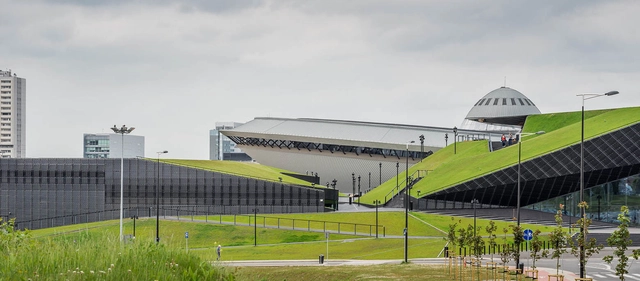
"Transforming our cities for a better urban future", is the main theme of the next World Urban Forum (WUF) which will take place, for the first time in Eastern Europe, in the city of Katowice, Poland, from the 26th to the 30th of June 2022. This global event on sustainable urbanisation is convened every two years by the United Nations Human Settlement Programme (UN-Habitat), and this time, it is co-organised by the Polish Ministry of Development Funds and Regional Policy and the Katowice City Office.

At COP26 Architects Plan on Urging Decision Makers to Establish Tangible Action Against Climate Change

At COP26 Architects Plan on Urging Decision Makers to Establish Tangible Action Against Climate Change - Featured Image
Photo by Danist Soh on Unsplash

The 26th UN Climate Change Conference of the Parties (COP 26) debuted yesterday in Glasgow, bringing together more than 190 world leaders, with the aim of accelerating action to reach the goals of the Paris Agreement and UN's Convention on Climate Change. Leading architecture organizations and figures are attending the two-week summit to show the AEC's industry's commitment to reduce carbon emissions and urge decision-makers to implement clear targets to achieve global climate goals.

At COP26 Architects Plan on Urging Decision Makers to Establish Tangible Action Against Climate Change - Image 1 of 4At COP26 Architects Plan on Urging Decision Makers to Establish Tangible Action Against Climate Change - Image 2 of 4At COP26 Architects Plan on Urging Decision Makers to Establish Tangible Action Against Climate Change - Image 3 of 4At COP26 Architects Plan on Urging Decision Makers to Establish Tangible Action Against Climate Change - Image 4 of 4At COP26 Architects Plan on Urging Decision Makers to Establish Tangible Action Against Climate Change - More Images

Cities and Conflict: Exploring Urban Adaptive Reuse

COP26, The United Nations Climate Change Conference, is scheduled to be held in Scotland soon, in the last week of October 2021. Against the backdrop of this conference is a heightened global awareness of climate change, as discussions take place on how a sustainable, more equal future can be achieved. The present and future state of architecture is a key component of this conversation, as criticism is levelled at architecture firms that “greenwash” and questions are raised on if the term “sustainability” is increasingly merely being used as today’s buzzword.

Cities and Conflict: Exploring Urban Adaptive Reuse - Image 1 of 4Cities and Conflict: Exploring Urban Adaptive Reuse - Image 2 of 4Cities and Conflict: Exploring Urban Adaptive Reuse - Image 3 of 4Cities and Conflict: Exploring Urban Adaptive Reuse - Image 4 of 4Cities and Conflict: Exploring Urban Adaptive Reuse - More Images+ 9

BIG and UN Collaborate on Floating, Modular Eco-City

As part of UN-Habitat’s New Urban Agenda, Bjarke Ingels Group has proposed a vision for the world’s first resilient and sustainable floating community, designed to accommodate 10,000 people. “Oceanix City” is a response to the prediction that by 2050, 90% of the world’s largest cities will be exposed to rising seas, resulting in mass displacement, and the destruction of homes and infrastructure. The scheme is anchored in the UN Sustainable Development Goals, enacting circular flows of food, energy, water, and waste.

BIG and UN Collaborate on Floating, Modular Eco-City  - Image 1 of 4BIG and UN Collaborate on Floating, Modular Eco-City  - Image 2 of 4BIG and UN Collaborate on Floating, Modular Eco-City  - Image 3 of 4BIG and UN Collaborate on Floating, Modular Eco-City  - Image 4 of 4BIG and UN Collaborate on Floating, Modular Eco-City  - More Images+ 10

Shigeru Ban to Design Up to 20,000 New Homes for Refugees in Kenya

Pritzker Prize winning architect Shigeru Ban has signed an agreement with UN-Habitat, the United Nations agency tasked with guiding sustainable development, to design up to 20,000 new homes for refugees in Kenya’s Kalobeyei Refugee Settlement. Currently home to more than 37,000 refugees, the settlement is quickly outgrowing its original capacity of 45,000 – over 17,000 have arrived this year alone, with numbers expected to continue to increase.

“The key thing will be to design and construct shelter where no or little technical supervision is required, and use materials that are locally available and eco-friendly. It’s important that the houses can be easily maintained by inhabitants.”

Mecanoo Unveils Design for Experimental Garden and Palace Restoration in The Netherlands

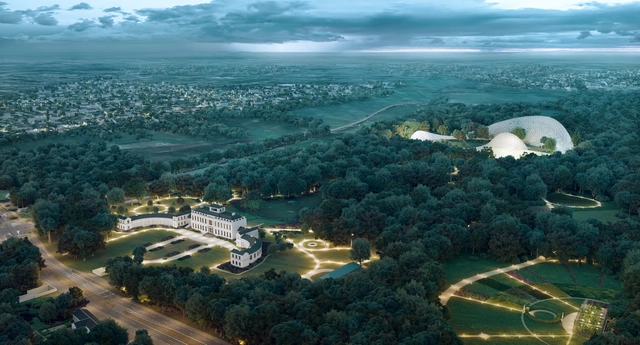
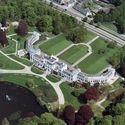
Mecanoo has unveiled its design to transform The Soestdijk Estate into Eden Soestdijk, “an experimental garden for a sustainable society and a paradise destination for all” in The Netherlands. In an effort to become an educational tool for environmental awareness, the project aims to make a significant contribution to meeting the UN’s Sustainable Development Goals.

“The world is facing pressure from increasingly larger and more complex problems when it comes to water, food, climate and energy,” said Anton Valk, chairman of the Eden Soestdijk foundation. “Eden Soestdijk wants to tackle these problems and contribute to a more sustainable society by stimulating and inspiring visitors to change their behaviour in a positive way.”

An architectural greenhouse behind the palace gardens will be the centerpiece of the project, and will house an interactive exhibition focusing on topics like circularity, ecological balance, and social aspects of sustainability.

Mecanoo Unveils Design for Experimental Garden and Palace Restoration in The Netherlands - Image 1 of 4Mecanoo Unveils Design for Experimental Garden and Palace Restoration in The Netherlands - Image 2 of 4Mecanoo Unveils Design for Experimental Garden and Palace Restoration in The Netherlands - Image 3 of 4Mecanoo Unveils Design for Experimental Garden and Palace Restoration in The Netherlands - Image 4 of 4Mecanoo Unveils Design for Experimental Garden and Palace Restoration in The Netherlands - More Images+ 4

Video: IKEA Foundation Design a Shelter for Refugees

Subscriber Access | 

To mark the occasion of World Refugee Day on June 20th, the IKEA Foundation announced an important new collaboration with the UN Refugee Agency (UNHCR) and the Refugee Housing Unit to design a new type of shelter which will replace the outdated tents currently in use in refugee camps worldwide.

As you'd expect from IKEA, the result is a flat-packed, modular design (ideal for cheaply transporting to refugee camps) that can be assembled in 4 hours. Though it is expected to cost about twice as much, it will last much longer than the tents, which must be replaced roughly every six months - a particularly important improvement, as the average family stays in a refugee camp for 12 years.

The design also carries a number of other advantages, such as increased space and privacy, better temperature control and enough solar energy to power a light in the evening. The design is currently being tested in Ethiopia before being deployed worldwide, however, this is not the end of IKEA's collaboration with UNHCR. These shelters are just the first part of a long-term collaboration which will hopefully provide healthcare and education - and ultimately a better quality of life for the world's refugees.

More coverage of architecture's involvement in refugee aid, after the break.