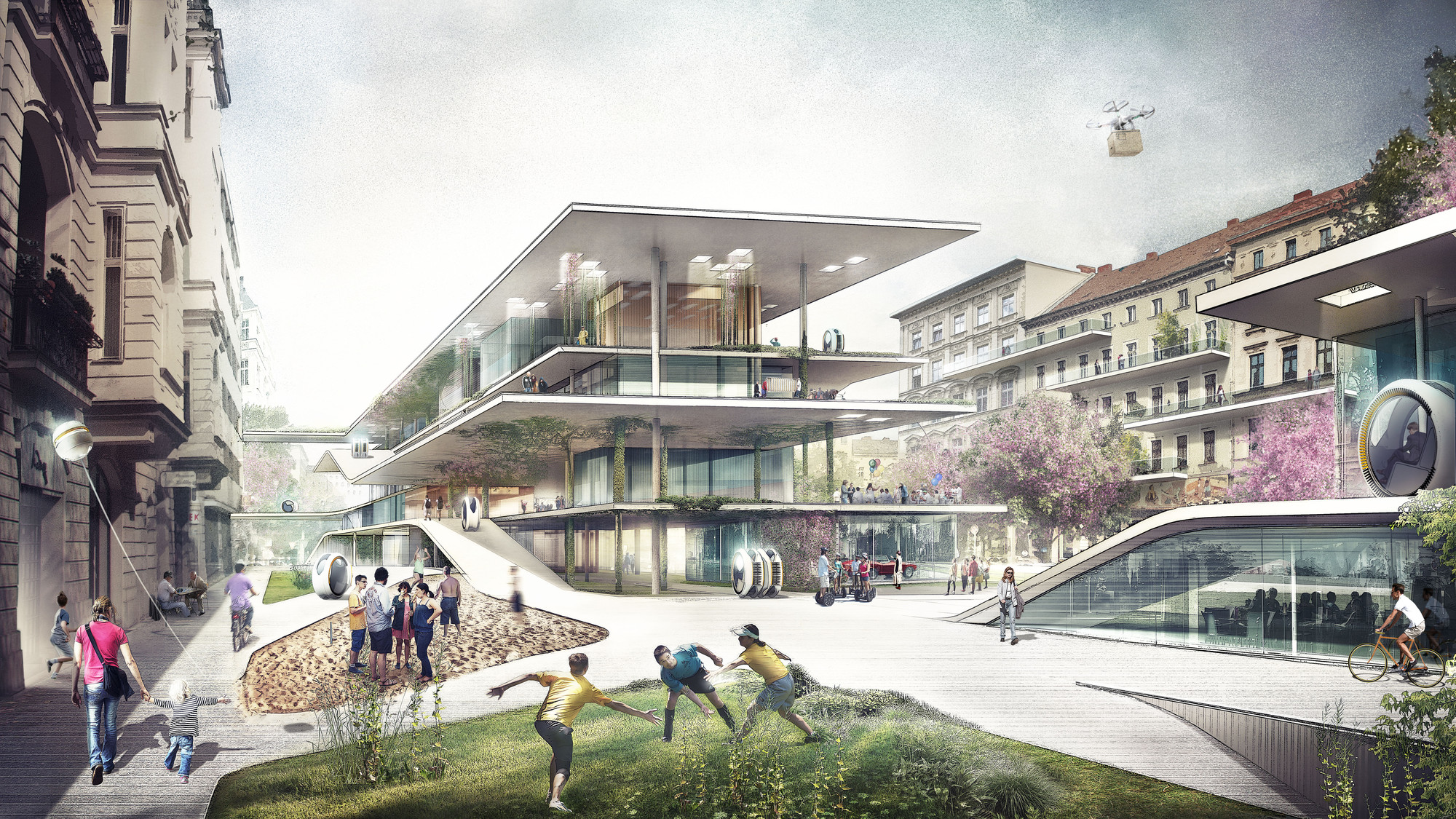
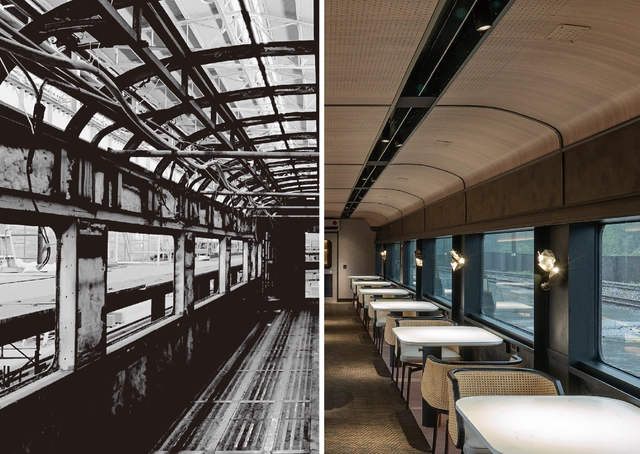
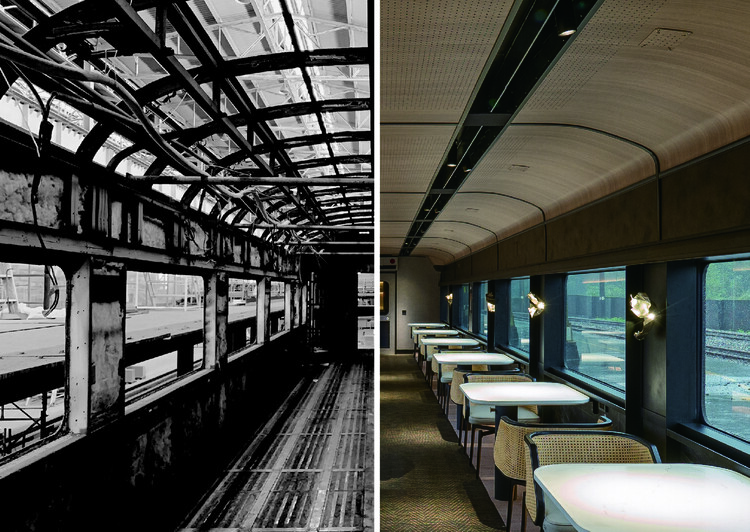
Faced with the combined forces of population growth, economic prosperity, and urban expansion, cities are witnessing a significant rise in the movement of people and goods—mirroring the evolution of diverse mobility systems within urban environments. As technologies advance and modes of transport evolve, the adaptive reuse of train carriages, airplane cabins, and other service infrastructures reveals opportunities to explore their creative potential. Materials, technologies, and design tools converge around a shared goal: refurbishing and repurposing disused structures to give them new life.
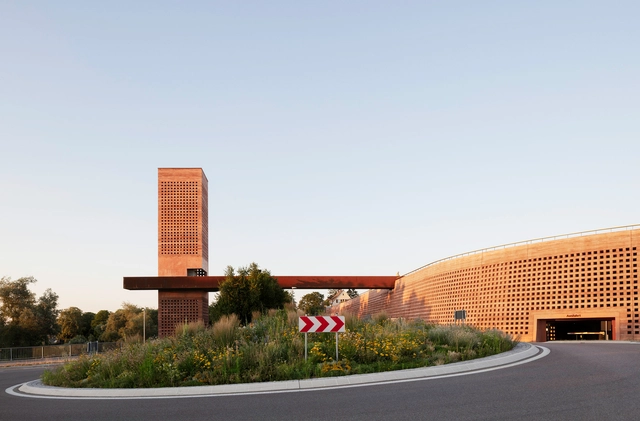
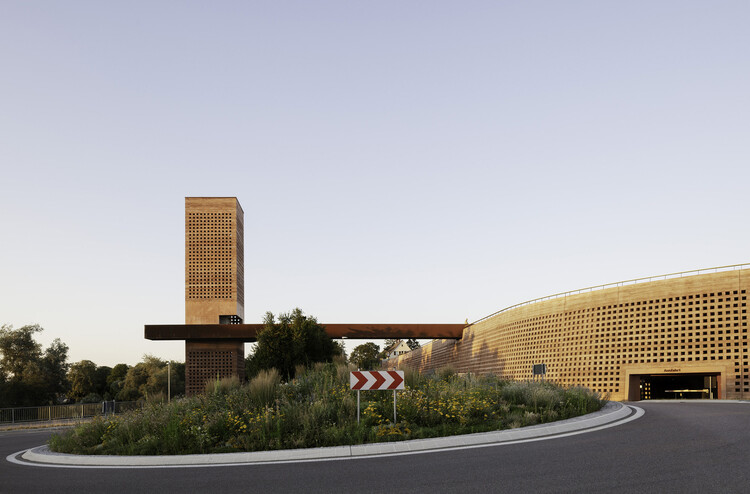
Areal am Kronenrain / MONO Architekten. Image Courtesy of Gregor Schmidt
Marginalized in architectural discourse and often dismissed as purely functional, parking garages remain among the most ubiquitous structures in the urban landscape. Designed to accommodate the needs of private vehicles, they occupy central locations, shape skylines, and consume considerable resources, yet rarely receive the same attention — or architectural care — as cultural institutions, schools, or housing. Despite their prevalence, these buildings tend to fade into the background of daily life, treated as infrastructural necessities rather than as design opportunities.
This is beginning to change. As urban mobility undergoes profound transformations — from the decline of car ownership to the rise of electric vehicles and shared transport systems — the role of parking infrastructure is being redefined. Architects and planners are reimagining garages as adaptable frameworks that integrate public space, ecological functions, and mixed-use programs. These new approaches challenge the perception of parking as a residual typology and instead position it as a civic structure with the potential to support more inclusive, flexible, and sustainable urban models.
Boise, United States. Image via Wikipedia user: Fæ. License under CC0 1.0. Image Author: Alden Skeie
From greenhouse gas emissions and air pollution to deforestation, one of the leading contributors to global warming today is emissions from the transportation sector. Exploring its origins and evolution, as well as the major challenges it faces, the development of electric mobility in urban environments represents a global transition that requires a coordinated mix of policies and actions to achieve cleaner and more sustainable transportation systems. Designing safe and comfortable infrastructure for walking and cycling, promoting public transit and shared mobility, and designing more efficient streets that include electric vehicles, among other actions, are part of a growing worldwide effort to reduce carbon emissions.
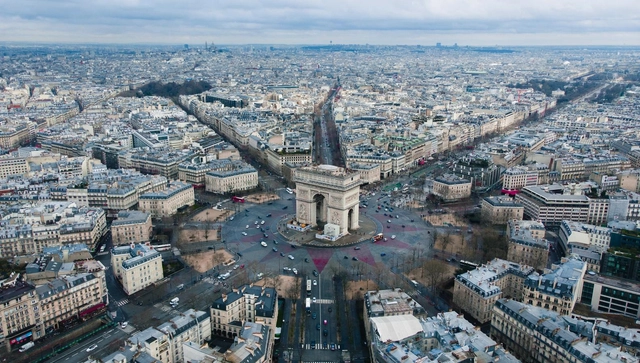
Paris has been making headlines for years with its aggressive steps to anti-car, pro-pedestrian urban improvements. Faced with increasing issues around air pollution and an attempt to reclaim streets for alternate modes of transit, as outlined in their proposed plan for a 15-minute city, the French capital is seen as a leader in future-forward urbanist strategies. Recently, their department of transportation set a deadline for their lofty goals of eliminating traffic from its roads. In just two years from now, in time for the French capital to host the Olympics, Paris plans to ban non-essential traffic from its city center, effectively eliminating around 50% of vehicular mobility. What does this plan look like? And how might other cities use this strategy to eliminate their own urban issues?
Cities face much criticism with how they handle their car population, but have you ever thought about how much land use is dedicated to surface parking lots? In fact, it may be one of the most prominent features of the postwar city in the United States. Housing, community facilities, highway infrastructure, often garner much attention, but the amount of land dedicated just to park cars is astounding.
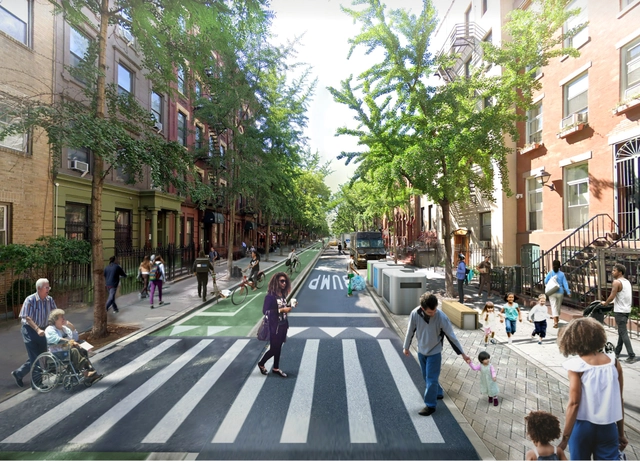
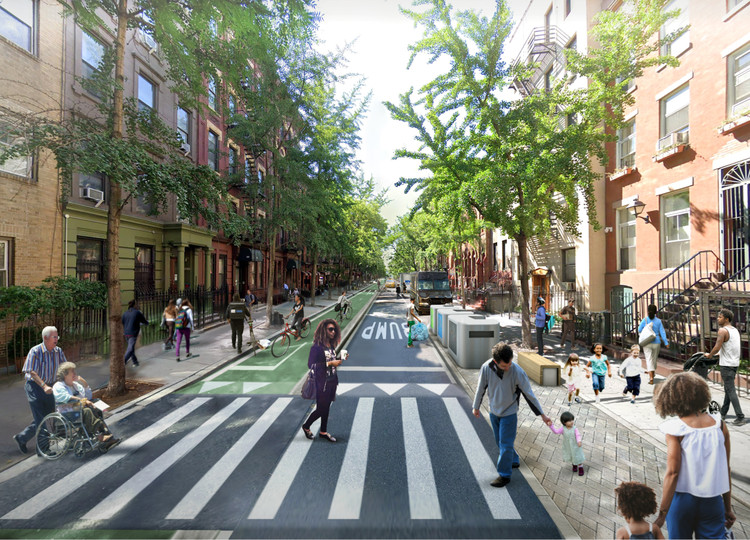
Courtesy of Practice for Architecture and Urbanism
PAU or Practice for Architecture and Urbanism revealed images for a proposal that imagines New York City without cars. The visionary N.Y.C. (“Not Your Car”) project unlocks the potential of the city’s streets, reopens the public space to people and bans private vehicles.
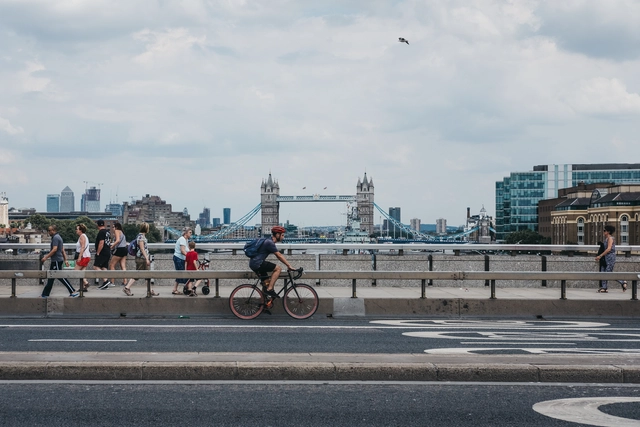
Cyclist and pedestrians on London Bridge, London, UK, River Thames and Tower Bridge on the background. Image via Shutterstock/ By Alena Veasey
After Milan and Paris, London has announced its plans to transform large areas in the city, converting streets to car-free zones, as the coronavirus lockdown loosens up. Repurposing the city for people, London aims to emerge differently from the pandemic, supporting a low-carbon and sustainable recovery. Works have already started and are expected to be completed within six weeks.
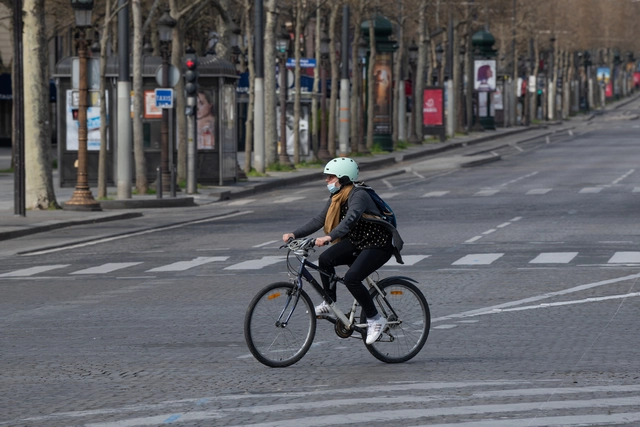
PARIS, FRANCE March 22th 2020 : The Cyclist with medical mask on Champs Elysées empty during the period of containment measures due to the Covid-19 Coronavirus. Image via Shutterstock/ By Frederic Legrand - COMEO
Paris, just like Milan, is planning on keeping its streets car-free after the coronavirus lockdown. Mayor Anne Hidalgo announced plans to maintain the anti-pollution and anti-congestion measures introduced during the confinement period, as the city reopens.
It is only a matter of time until algorithms take the wheel. While the first autopilot system for vehicles was developed 3000 years ago by sailors attaching weather vanes to tillers, the last 10 years have seen unprecedented growth in interest and effort towards AV (autonomous vehicles). Today, autonomous vehicle tests are underway in 36 US states, while it is estimated that the technology could replace 90% of vehicles in cities such as Lisbon, Portugal and Austin, Texas.
https://www.archdaily.com/931640/how-will-autonomous-vehicles-impact-citiesNiall Patrick Walsh
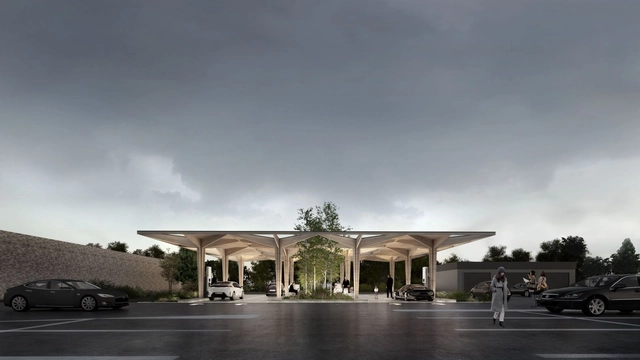
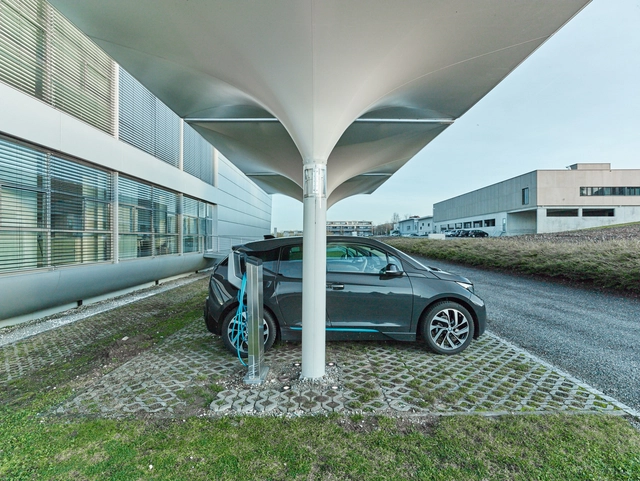
In recent years, solar energy has become a very popular method to power electric vehicles. This emerging technology has motivated the development of new architectural typologies. An evident evolution of traditional gas stations, it could be foreseen that solar-powered charging stations will begin to significantly grow in numbers in our cities in both public and private spaces.
https://www.archdaily.com/897606/energy-harvesting-charge-a-car-in-3-hours-at-this-solar-powered-electric-stationAD Editorial Team
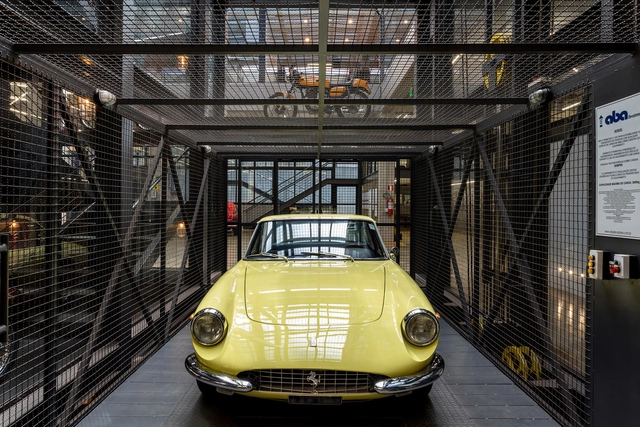
The parking garage: a loveless structure as necessary as it is unpopular. It can be easy for the architecture to reflect the unfancied nature, but sometimes, amidst all the mediocrity, beautiful design shines through.
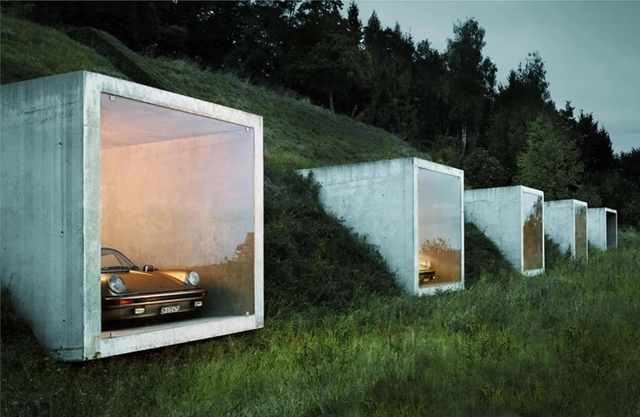
Airport parking site Looking4.com has relaunched their award for the World’s Coolest Car Park, first published in 2013, that showcases some of the most innovative parking structures from around the world. Below is the 10 building shortlist—which one do you think deserves to take home the award?
In our modern day society where every minute counts, Danish architecture firm COBE, in collaboration with Danish automotive technology company, CLEVER, has designed a new modular ultra-fast charging station for electric vehicles. These stations will not only aim to reduce the typical 45-minute charging time but also serve as a place where drivers can relax.
Earlier this year, Dutch company TomTom(TOM2) released a detailed report that uncovered the cities around the world *that have the most traffic congestion, based on the results of the TomTomTraffic Index 2017. According to the latest analysis, Mexico City will retain its crown as the "most traffic congested city" in the world. Drivers in the Mexican capital are expected to spend an average of 66% extra travel time stuck in traffic any time of the day, and up to 101% in the evening rush hours adding a whopping 227 hours of extra travel time per year.
Next in the global rankings are Bangkok (61%), Jakarta (58%), Chongqing (52%) and Bucharest (50%), making up the top five most congested cities in the world. You can find out more about TomTom's Traffic Index and discover where your home city ranks at after the break.
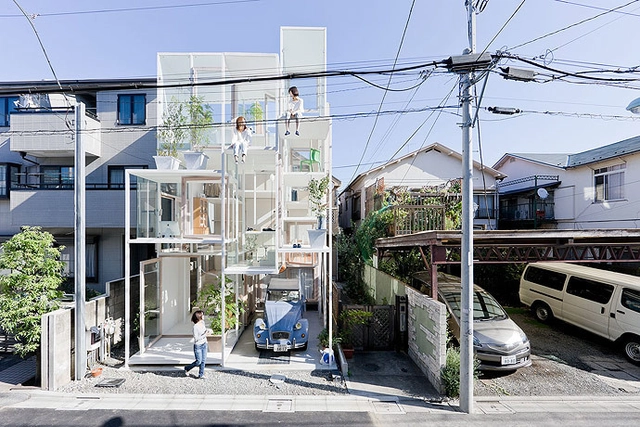
Most residential projects must include parking spaces, but only few cases are notably innovative. Your vehicle's resting place can be more than just a required space; it may even become the backbone of the design itself.
The integration of parking, interior spaces and facades can deliver extremely intriguing and unique results.
Here we present 8 cases in which the humble parking space has assumed a main role in the design, while integrating new functions such as exhibition spaces, or structural features and versatile technology.
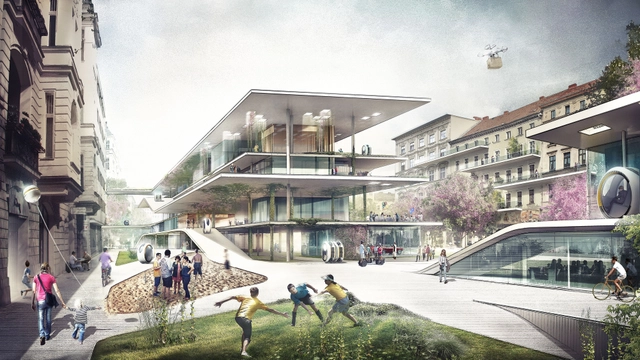
One of three runners-up in the 2014 Audi Urban Future Award, the Berlin Team of Max Schwitalla, Paul Friedli and Arndt Pechstein proposed a futuristic and innovative concept for an entirely new type of personal transport. Drawing inspiration from sources as diverse as elevator technology and biomimicry, their designs offer a thought-provoking alternative to our existing transportation systems that could revolutionize the city as we know it.
Though their proposal ultimately lost out to Jose Castillo's Team Mexico City, the work of the Berlin team correlates closely with the aims of Audi's Urban Future Initiative, offering a compromise between the convenience and status of personal transport and the civic benefits of public transport. Read on to find out how this was achieved.
With the rising success of electric cars and the highly anticipated introduction of self-driving cars, it is beginning to look like the 'end of the automobile age' which many predicted just a few years ago may never come. This was the sentiment presented by Audi CEO Rupert Stadler at the presentation of the Audi Urban Future Award last night: "The car has to be seen once again as a desirable object of progress," he demanded. "To achieve this, we have to tear down the walls between infrastructure, public transportation and individual traffic." Audi's New Urban Agenda therefore sets its sights on "solutions in which individual transportation makes a positive contribution in an overall system of different forms of mobility."
The following six "miracle" materials could be headed straight into your home, office, car and more. Dina Spector at Business Insider recently rounded up the six most promising materials. As of now, their potential applications have just scratched the surface, but the possibilities are endless. Presented by AD Materials.
Scientists are constantly on the look out for lighter, stronger, and more energy-efficient materials. Here's a glance at some materials that will change the way we build things in the future.
https://www.archdaily.com/508576/six-miracle-materials-that-will-change-their-industriesDina Spector, Business Insider



















.jpg?1578620072&format=webp&width=640&height=580)



_Jean_Yves_Raffort_(1).jpg?1529242420 "© jean yves raffort")

.jpg?1529242378 "Courtesy of looking4.com")