1. ArchDaily
  2. 15-minute city

15-minute city: The Latest Architecture and News

Reimagining the Complete Neighborhood through Urban Renaturing

Subscriber Access | 

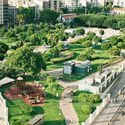
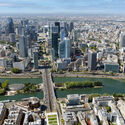
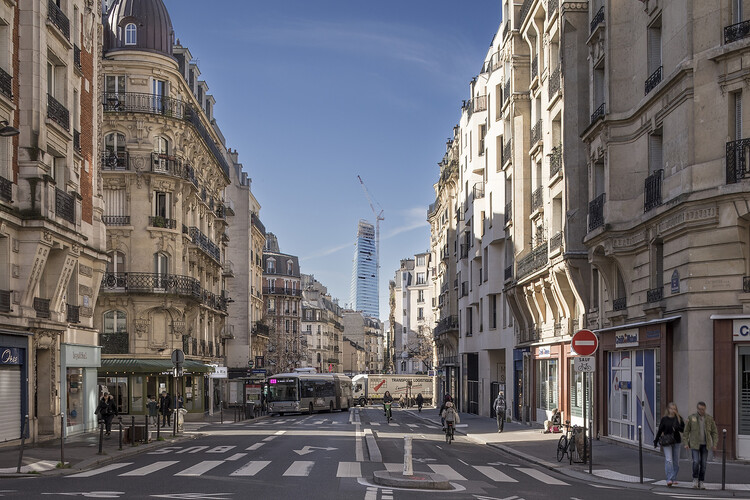
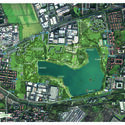
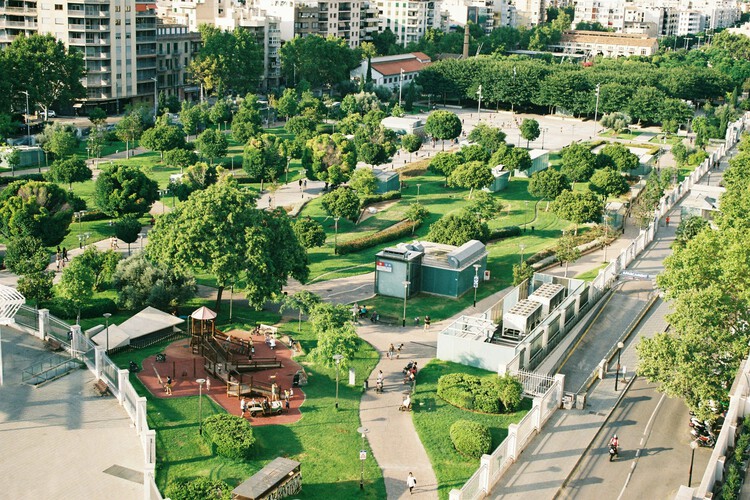
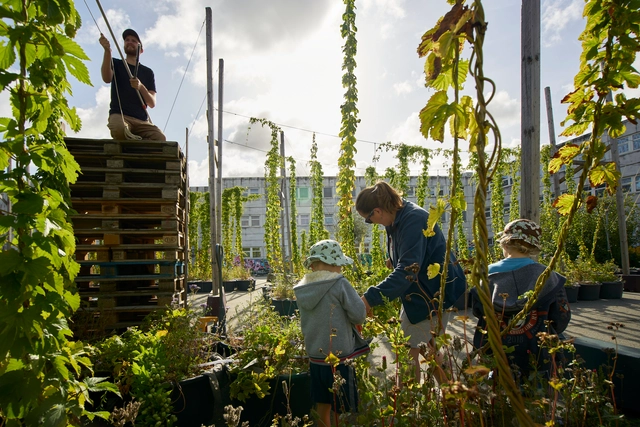
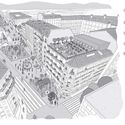
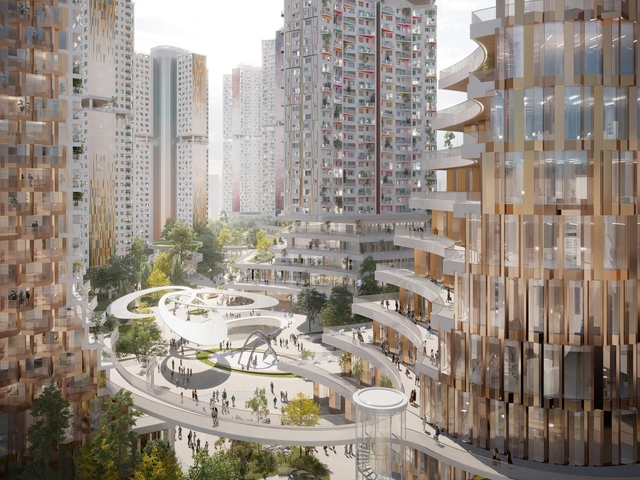
The ReGreeneration project, a Horizon Europe project led by Inetum and supported by C40 Cities, ARUP, Placemaking Europe, and several others, operates as an active collaboration with local governments, private companies, academia, and civil society organizations at the intersection of urban regeneration, green public spaces, and neighborhood-scale design. Its premise addresses how European cities are built and maintained and how they experience a changing climate, arguing that cities must fundamentally change to remain livable under accelerating climate pressures.

Reimagining the Complete Neighborhood through Urban Renaturing - Image 1 of 4Reimagining the Complete Neighborhood through Urban Renaturing - Image 2 of 4Reimagining the Complete Neighborhood through Urban Renaturing - Image 3 of 4Reimagining the Complete Neighborhood through Urban Renaturing - Image 4 of 4Reimagining the Complete Neighborhood through Urban Renaturing - More Images+ 12

The Line at a Crossroads: Revisiting NEOM's Vision for a Utopian City

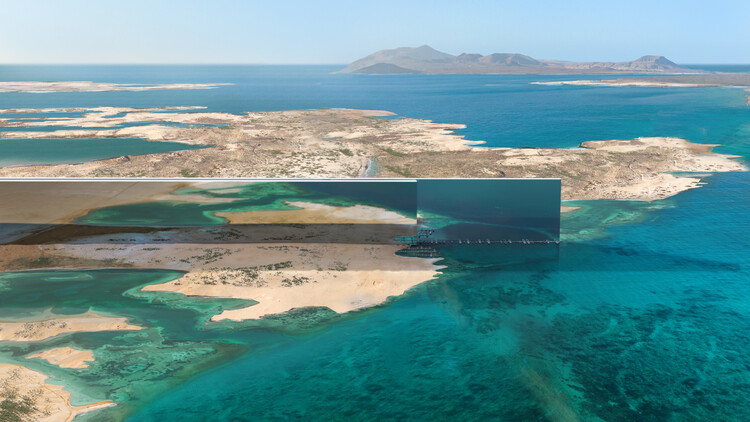
In 2023, ArchDaily's editor-in-chief sat down with Tarek Qaddumi, Executive Director of the Line Design at NEOM, at the closing of the Line Exhibition in Riyadh. Qaddumi described a layered, three-dimensional city organized around the idea of a "five-minute sphere" of access: walkable communities stacked vertically, connected by high-speed rail, freed from cars and conventional street infrastructure, and designed to coexist symbiotically with the surrounding natural landscape. It was a compelling vision, and in the context of the moment, it was simultaneously credible and appealing. For architects and urban thinkers grappling with the failures of twentieth-century city-building, the ideas articulated were worth engaging and planning.

The Line at a Crossroads: Revisiting NEOM's Vision for a Utopian City - Image 1 of 4The Line at a Crossroads: Revisiting NEOM's Vision for a Utopian City - Image 2 of 4The Line at a Crossroads: Revisiting NEOM's Vision for a Utopian City - Image 3 of 4The Line at a Crossroads: Revisiting NEOM's Vision for a Utopian City - Image 4 of 4The Line at a Crossroads: Revisiting NEOM's Vision for a Utopian City - More Images+ 5

How Automated Parking Systems Reclaim Urban Space

 | Sponsored Content

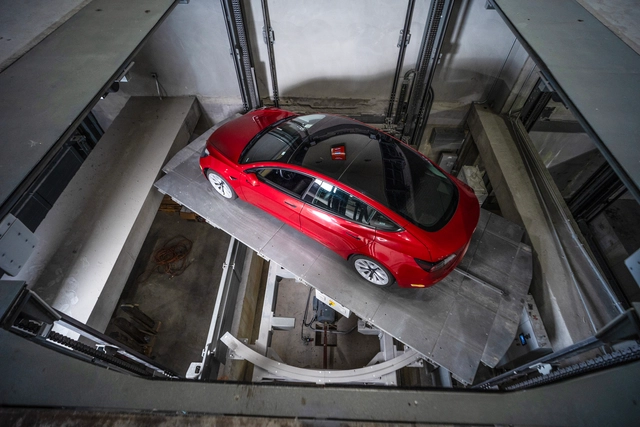
Cities are slowly reshaping themselves. Walkable streets, bike-friendly networks, and mixed-use neighborhoods are becoming planning priorities as climate goals, changing lifestyles, and remote work reshape daily patterns. Yet even as these people-centered ideas gain momentum, most cities still rely heavily on private cars, creating a tension between the urban futures we're designing for and the mobility habits that persist today.

This tension has pushed architects and developers to rethink one of the hardest pieces of the urban puzzle: parking. Mixed-use buildings are multiplying, stacking homes, workplaces, and services into tighter footprints, and every square foot has to work harder. The challenge is no longer simply where to put the cars, but how to integrate parking in ways that support density, livability, and long-term adaptability—allowing cities to evolve without letting vehicles dominate their form.

“It Takes a Lifetime to Build a City”: In Conversation With Mads Birgens From Cobe Architects

Subscriber Access | 

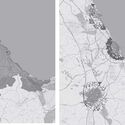
Founded in 2006 in Copenhagen, Cobe Architects has become known for its focus on public life, urban transformation, and strategic master planning. From cultural buildings and public spaces to large-scale urban developments, the office has played a central role in shaping Copenhagen's contemporary identity, particularly through its work on harbor regeneration. Among these, the Nordhavn master plan stands out as one of Europe's most ambitious waterfront redevelopments. During the Copenhagen Architecture Biennial, ArchDaily's Editor-in-Chief, Christele Harrouk, met with Mads Birgens, Head of Urbanism at Cobe, at the firm's office in Nordhavn. In the conversation, Birgens reflected on the evolution of the project since the office first won the open international competition in 2008, and on the broader lessons of designing cities for proximity, diversity, and long-term adaptability.

“It Takes a Lifetime to Build a City”: In Conversation With Mads Birgens From Cobe Architects - Image 1 of 4“It Takes a Lifetime to Build a City”: In Conversation With Mads Birgens From Cobe Architects - Image 2 of 4“It Takes a Lifetime to Build a City”: In Conversation With Mads Birgens From Cobe Architects - Image 3 of 4“It Takes a Lifetime to Build a City”: In Conversation With Mads Birgens From Cobe Architects - Image 4 of 4“It Takes a Lifetime to Build a City”: In Conversation With Mads Birgens From Cobe Architects - More Images+ 6

How Tech Parks Are Replacing Central Business Districts in India

Subscriber Access | 

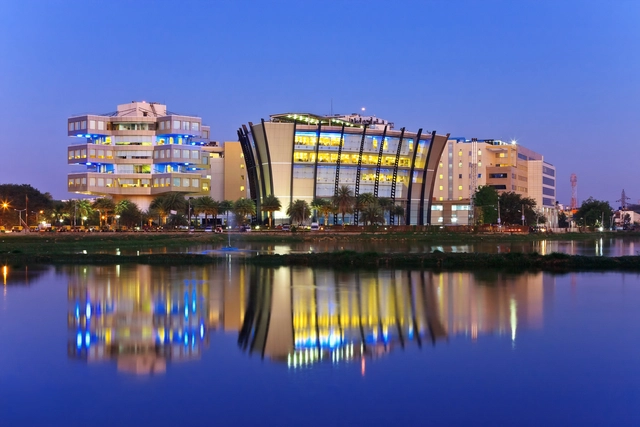
India is often recognized for its thriving technology industry, with a reputation for producing a substantial number of skilled tech professionals each year. This has attracted a dynamic technology ecosystem that increasingly draws global companies to establish operations in the country. The rise of tech parks has become a key strategy for harnessing this talent and resources, cultivating an environment conducive to innovation. What impact do these tech parks have on the urban landscape of Indian cities?

How Tech Parks Are Replacing Central Business Districts in India - Image 1 of 4How Tech Parks Are Replacing Central Business Districts in India - Image 2 of 4How Tech Parks Are Replacing Central Business Districts in India - Image 3 of 4How Tech Parks Are Replacing Central Business Districts in India - Image 4 of 4How Tech Parks Are Replacing Central Business Districts in India - More Images+ 3

Pioneering Change: The Obel Award Recognizes Transformative Innovations Since 2019

The Obel Award is an international prize seeking to highlight unconventional and original initiatives within the architectural profession. Supported by the Henrik Frode Obel Foundation, each annual award is centered around a specific theme. By exploring a different challenge of the built environment each year, the award remains open to a wide range of solutions and architectural innovations, honoring those contributions that have a positive impact on both people and the planet.

"Architectures WITH," the recently announced theme of the 2024 edition, explores participatory design, co-creation, and interdisciplinary collaboration, challenging traditional roles in architecture to foster inclusive, adaptable environments. It aims to empower all stakeholders and enhance collective intelligence in architecture.

Pioneering Change: The Obel Award Recognizes Transformative Innovations Since 2019 - Image 1 of 4Pioneering Change: The Obel Award Recognizes Transformative Innovations Since 2019 - Image 2 of 4Pioneering Change: The Obel Award Recognizes Transformative Innovations Since 2019 - Image 3 of 4Pioneering Change: The Obel Award Recognizes Transformative Innovations Since 2019 - Image 4 of 4Pioneering Change: The Obel Award Recognizes Transformative Innovations Since 2019 - More Images+ 2

The Ideal City According to Five Urban Concepts

Subscriber Access | 

Cities, like people, are dynamic and constantly evolving to keep pace with and adapt to the social, economic, and environmental changes of their time. Similarly, the vision of how the ideal city should be planned has been influenced by each era’s realities and prevailing thoughts.

Industrialization, the increasing migration of people from rural to urban areas, population growth, the development of new materials and construction technologies, the dominance of automobiles as a means of transportation, and, more recently, the search for alternative ways of occupying and moving through cities have all impacted urban planning theories throughout history. These influences have shaped the structure of modern cities—with their successes and challenges.

The Ideal City According to Five Urban Concepts - Image 1 of 4The Ideal City According to Five Urban Concepts - Image 2 of 4The Ideal City According to Five Urban Concepts - Image 3 of 4The Ideal City According to Five Urban Concepts - Image 4 of 4The Ideal City According to Five Urban Concepts - More Images+ 1

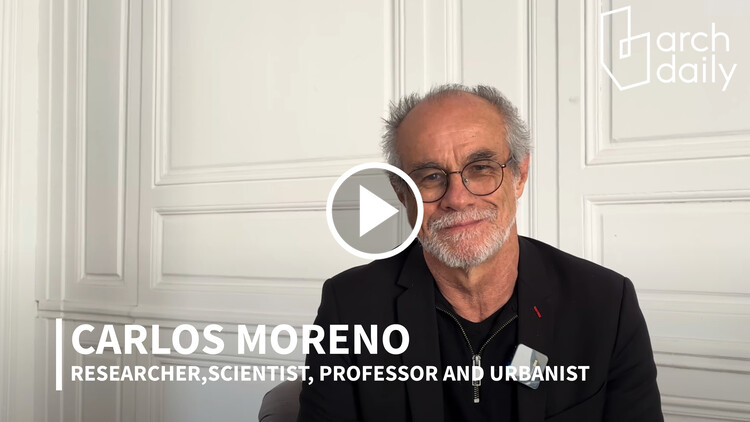
“A Framework for Developing Happy Proximities:” In Conversation with Carlos Moreno, the Pioneer of the 15-Minute City

The 15-minute city has become an internationally recognized concept advocating for a people-centric urban model where residents should be able to meet most of their daily needs within a 15-minute walk or bike ride from their homes. The concept was introduced by Professor Carlos Moreno in 2015 following the COP21 conference in Paris, which concluded with the signing of the Paris Agreement. The idea proposes a practical and adaptable framework for introducing low-carbon mobility and creating a vibrant local economy to support more social interaction and more sustainable urban environments. Since then, the concept has been recognized with the 2021 Obel Award and has gained a notable recommendation in UN-Habitat's World Cities Report. Now, Professor Moreno is publishing the book titled “The 15-Minute City: A Solution to Saving Our Time and Our Planet” to showcase concrete examples and strategies for achieving better cities. ArchDaily had a chance to sit down with Professor Carlos Moreno to discuss these ideas, offering insight into Moreno’s urban thinking and the impact of this model.

“A Framework for Developing Happy Proximities:” In Conversation with Carlos Moreno, the Pioneer of the 15-Minute City - Image 1 of 4“A Framework for Developing Happy Proximities:” In Conversation with Carlos Moreno, the Pioneer of the 15-Minute City - Image 2 of 4“A Framework for Developing Happy Proximities:” In Conversation with Carlos Moreno, the Pioneer of the 15-Minute City - Image 3 of 4“A Framework for Developing Happy Proximities:” In Conversation with Carlos Moreno, the Pioneer of the 15-Minute City - Image 4 of 4“A Framework for Developing Happy Proximities:” In Conversation with Carlos Moreno, the Pioneer of the 15-Minute City - More Images+ 3

Consider the 15 mph City

This article was originally published on Common Edge.

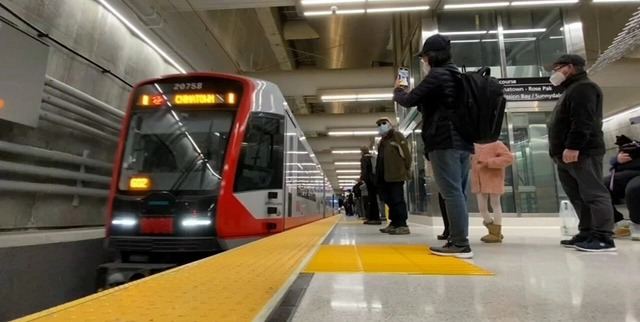
When San Francisco’s MUNI spent big money on a “central subway” to Chinatown, I was doubtful. One recent Saturday, though, I revived the gallery-hopping I did before the pandemic, taking the train from Berkeley into the city, walking to one gallery near Embarcadero Station, then taking a tram past the ballpark to the CalTrain Station, where I switched to another tram to head south to Minnesota Street’s Dogpatch cluster of galleries and artists’ studios.

The 15-Minute City, Deconstructed

This article was originally published on Common Edge.

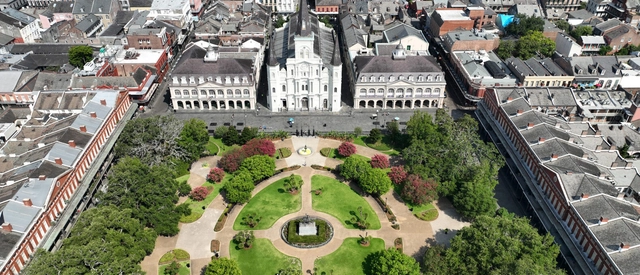
What is the 15-Minute City? It’s every city ever built by humans on this planet until a century ago, but with a catchy new name. If a city’s old parts haven’t been destroyed in the past century, it’s the areas that attract the most tourists. And people will travel across continents and oceans to experience the best of them.

Forty years ago, a few pioneers decided to start building 15-Minute Cities again. Actually, they built 5-minute cities because they didn’t think people would walk for 15 minutes—and, in the early 1980s, they were right, because people were so conditioned to driving everywhere back then. Seaside, Florida, is where it all began. Time magazine called it “the little town that changed the world.” For the first time in the modern history of sprawl, people could toss their car keys in a drawer or hang them on the wall and leave them there for days. When people returned from Seaside vacations, they came back asking, “Why can’t we build this way at home?” And soon, the New Urbanism was born.

The 15-Minute City, Deconstructed - Image 1 of 4The 15-Minute City, Deconstructed - Image 2 of 4The 15-Minute City, Deconstructed - Image 3 of 4The 15-Minute City, Deconstructed - Image 4 of 4The 15-Minute City, Deconstructed - More Images+ 8

Seratech, a Solution for Carbon-Neutral Concrete Wins the 2022 Obel Award

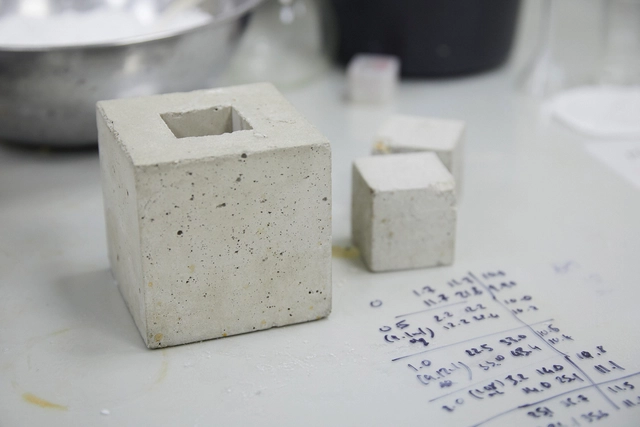
Material researchers and Ph.D. students at Imperial College London, Sam Draper and Barney Shanks have won the 2022 OBEL AWARD for Seratech, a solution for carbon-neutral concrete. With a special focus this year on “embodied emissions”, the OBEL AWARD jury selected scientists to obtain the architecture award to “encourage innovative cross-disciplinary solutions to the challenges of climate change”.

Succeeding to the 2021 laureate, the 15-minute city concept by Professor Carlos Moreno, to 2020’s Anandaloy, a community building made from mud in Bangladesh by Anna Heringer, and Junya Ishigami’s Water Garden in Japan, winner of the 2019 edition, Seratech is the fourth winner of this new international prize for architectural achievement.

Seratech, a Solution for Carbon-Neutral Concrete Wins the 2022 Obel Award - Image 1 of 4Seratech, a Solution for Carbon-Neutral Concrete Wins the 2022 Obel Award - Image 2 of 4Seratech, a Solution for Carbon-Neutral Concrete Wins the 2022 Obel Award - Image 3 of 4Seratech, a Solution for Carbon-Neutral Concrete Wins the 2022 Obel Award - Image 4 of 4Seratech, a Solution for Carbon-Neutral Concrete Wins the 2022 Obel Award - More Images+ 3

Rising from the Desert: A 15-Minute City is Coming to Utah

Subscriber Access | 

15-minute cities are a trending urban planning topic that has long been discussed academically and is now slowly being implemented across existing cities in Europe. But now, the first 15-minute city is being designed and built from scratch in Utah. Dubbed “The Point”, the new 600-acre city will be located just outside Salt Lake City, and will be a redeveloped former state prison site where new jobs, housing, public spaces, amenities, and transportation will serve almost 15,000 people in an attempt to explore a prototype for how innovative urban planning concepts can improve the public health and wellness.

When Paris Eliminates Cars, Will Other Cities Follow Suit?

Subscriber Access | 

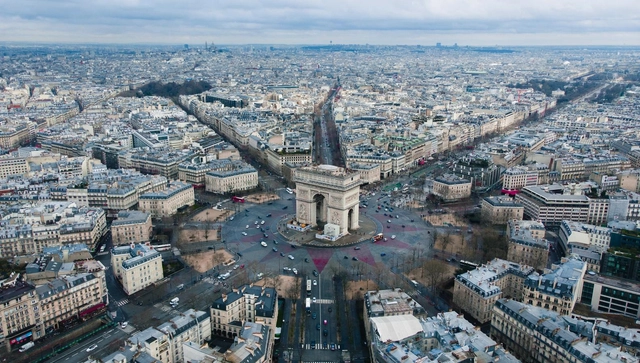
Paris has been making headlines for years with its aggressive steps to anti-car, pro-pedestrian urban improvements. Faced with increasing issues around air pollution and an attempt to reclaim streets for alternate modes of transit, as outlined in their proposed plan for a 15-minute city, the French capital is seen as a leader in future-forward urbanist strategies. Recently, their department of transportation set a deadline for their lofty goals of eliminating traffic from its roads. In just two years from now, in time for the French capital to host the Olympics, Paris plans to ban non-essential traffic from its city center, effectively eliminating around 50% of vehicular mobility. What does this plan look like? And how might other cities use this strategy to eliminate their own urban issues?

Rules of the Road for Becoming a More Bike-Dependent City

Subscriber Access | 
Rules of the Road for Becoming a More Bike-Dependent City - Featured Image
Proposal for Car-Free Times Square in New York City. Image via 3deluxe

Over the last century, cars have been the dominant element when designing cities and towns. Driving lanes, lane expansions, parking garages, and surface lots have been utilized as we continue our heavy reliance on cars, leaving urban planners to devise creative ways to make city streets safe for pedestrians and cyclists alike. But many cities, especially a handful in Europe, have become blueprints for forward-thinking ideologies on how to design new spaces to become car-free and rethink streets to make them pedestrian-friendly. Are we experiencing the slow death of cars in urban cores around the world in favor of those who prefer to walk or ride bikes? And if so, how can it be done on a larger scale?

KCAP Architects Unveils First 15-Minute City in Moscow

KCAP Architects and Planners have unveiled the ZIL-South masterplan, a new residential district in Moscow built on the basis of a 15-minute city. The masterplan will be built on the largest brownfield area of the former ZIL industrial zone, and will feature more than 100 hectares of commercial and residential landmarks, public spaces, parks, landscapes, and interconnect routes alongside the Moskva River, all inspired by the area's pre-industrial past.

KCAP Architects Unveils First 15-Minute City in Moscow - Image 1 of 4KCAP Architects Unveils First 15-Minute City in Moscow - Image 2 of 4KCAP Architects Unveils First 15-Minute City in Moscow - Image 3 of 4KCAP Architects Unveils First 15-Minute City in Moscow - Image 4 of 4KCAP Architects Unveils First 15-Minute City in Moscow - More Images+ 5

World’s Cities Day 2021: Resilience, Climate Crisis and Sustainable Urbanization

Subscriber Access | 

As cities grow in scale, dimensions, and amplitude, taking in 60% of the world population, the United Nations has designated the 31st of October as “World Cities Day”, an opportunity to talk furthermore about global urbanization, addressing challenges, encouraging opportunities across borders and highlighting responses. Focusing this edition on the theme of “Adapting Cities for Climate Resilience”, this day, part of Urban October, seeks to raise awareness about the climate crisis and its repercussions on the built environment.

Cities, at the center of the global challenges, are hubs for institutions, society, economy, commerce, and transportation. Understanding the importance of “Thinking the City”, we have compiled in this roundup, articles published by ArchDaily’s editors that offer planning tools and guidelines, tackle the different components of the urban realm and highlight worldwide as well as contextual questions and responses.

UN Studio Reveals Design of 10-Minute Neighbourhood for Seoul

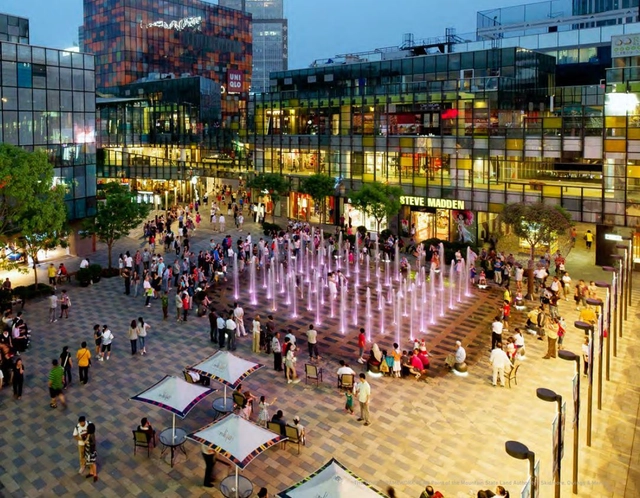
UNStudio has revealed the design for Project H1, a tech-assisted masterplan for a 10-minute neighbourhood in Seoul that would cater to the digital economy. The project transforms an industrial site and railyard into a dense mixed-use urban environment containing all the amenities of contemporary living within a 10-minute walk. This pedestrian-friendly, diverse neighbourhood is complemented by a digital infrastructure developed by UNSense, providing a framework for managing energy production and consumption, local food production, and the shared use of communal spaces.

UN Studio Reveals Design of 10-Minute Neighbourhood for Seoul - Image 1 of 4UN Studio Reveals Design of 10-Minute Neighbourhood for Seoul - Image 2 of 4UN Studio Reveals Design of 10-Minute Neighbourhood for Seoul - Image 3 of 4UN Studio Reveals Design of 10-Minute Neighbourhood for Seoul - Image 4 of 4UN Studio Reveals Design of 10-Minute Neighbourhood for Seoul - More Images+ 16

The Concept of 15-Minute City Wins 2021 Obel Award

The 15-minute city urban theory receives the 2021 Obel Prize in recognition of the concept's value for creating sustainable and people-centric urban environments. First coined in 2016 by Sorbonne professor Carlos Moreno, the term defines a highly flexible urban model that ensures all citizens can access daily needs within a 15-minute distance, thus breaking the hegemony of the car and reintroducing the qualities of historic cities within contemporary urban planning.

The Concept of 15-Minute City Wins 2021 Obel Award - Image 1 of 4The Concept of 15-Minute City Wins 2021 Obel Award - Image 2 of 4The Concept of 15-Minute City Wins 2021 Obel Award - Image 3 of 4The Concept of 15-Minute City Wins 2021 Obel Award - Image 4 of 4The Concept of 15-Minute City Wins 2021 Obel Award - More Images+ 5