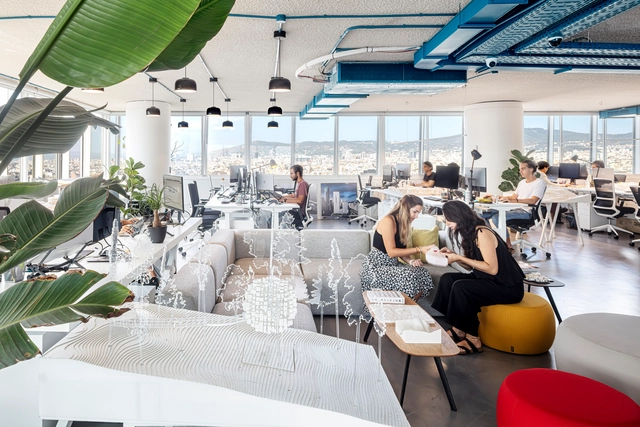
Keen to shape buildings and cities in Southern Europe, BIG has opened its latest office in Barcelona, Spain. Led by partner, João Albuquerque, the studio is seeking to create positive change and integrate into the city and the Spanish community. With a couple of projects spanning from the west to the east of the Mediterranean region, most notably Farfetch, and Fuse Valley campus in Portugal, the Joint Research Center in Sevilla for the European Commission, and the Gastronomy Open Ecosystem for Basque Culinary Center, BIG Barcelona is in constant evolution.
ArchDaily had the chance to talk to BIG Barcelona Partner João Albuquerque about the inception of the Barcelona office, his journey at BIG, and the firm's upcoming projects and involvement within the Spanish and Southern European markets.
As the new year begins, we look forward to the most exciting projects planned to open in 2023. The world's second-tallest tower is currently under construction in Malaysia; Egypt is almost ready to open its largest archeological museum, while MVRDV is currently renovating a large-scale brutalist landmark in Albania. Featuring internationally renown architectural offices such as Snøhetta, OMA, Studio Gang, Zaha Hadid Architects, BIG, along with the latest winner of the Pritzker Prize, Francis Kéré, the following selection presents projects from all around the world. They also range in scale and program, from international airports to sculptural arts galleries or museum expansions.
Several projects presented here have also featured in the previous year's compilation. Resource availability and labor issues generated by the pandemic have also continued to influence opening schedules, but with a diminishing impact. Following the predicted trends for 2023, more and more projects involve the adaptive reuse of existing structures. An underlying theme is visible in the increased interest in expanding artistic and cultural venues and integrating historical heritage into the expression of contemporary architecture.
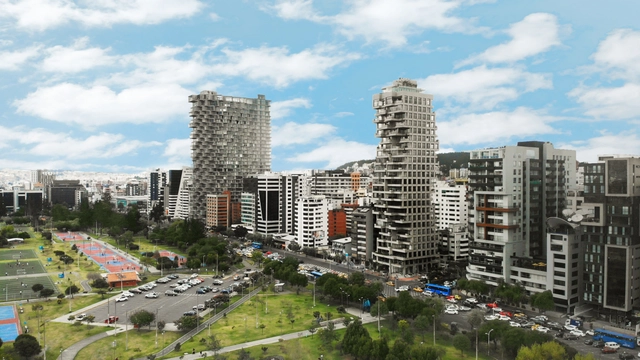
Quito-based developer Uribe Schwartzkopf unveiled two residential projects in the capital of Ecuador: IQON designed by Bjarke Ingels Group, and QORNER, by Safdie Architects. IQON represents BIG’s first project in South America and the tallest building in Quito. QORNER proposes a mix of residences of varying dimensions, complete with amenities such as private terraces, gyms, spas, and pools. To create an engaging interface with the city fabric, a mix of shops, restaurants, and commercial spaces are proposed at the street level.
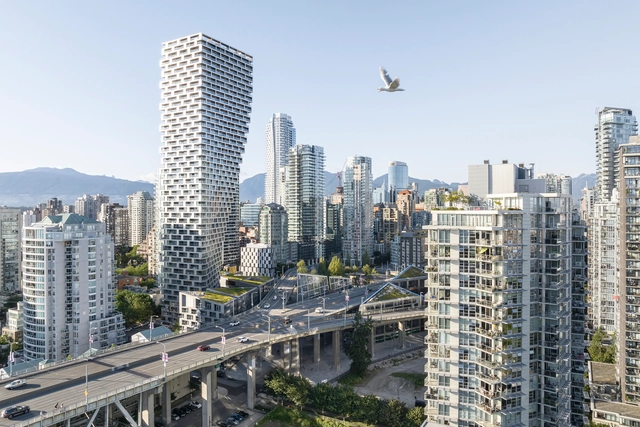
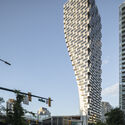
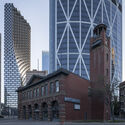
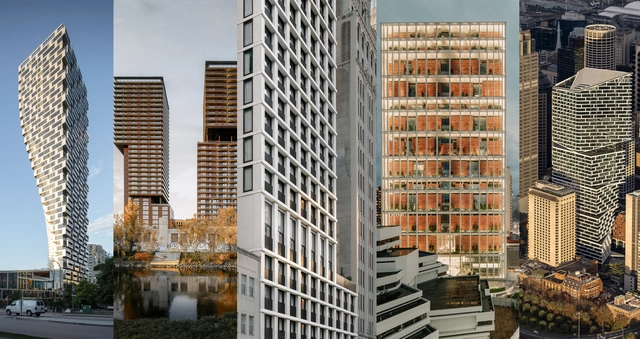
BIG – Bjarke Ingels Group has released a photo series of the Vancouver House and the Telus Sky towers, captured for the first time since their opening in 2020 during the pandemic. In a sort of "yin and yang," both skyscrapers are shaped by a curvilinear silhouette that involves the surrounding like a giant curtain revealing the building to the skyline.
The 220-meter-tall Telus Sky tower, and the 149 meters high Vancouver House, accommodate mixed-use offices and residential spaces, with connections to cycling and pedestrian pathways in their platforms. Moreover, both hold the highest level of Energy and Environmental Design. Vancouver House is the city's first LEED Platinum building, and TELUS in Calgary now occupies the largest LEED Platinum footprint in North America, with 70,725 square meters.
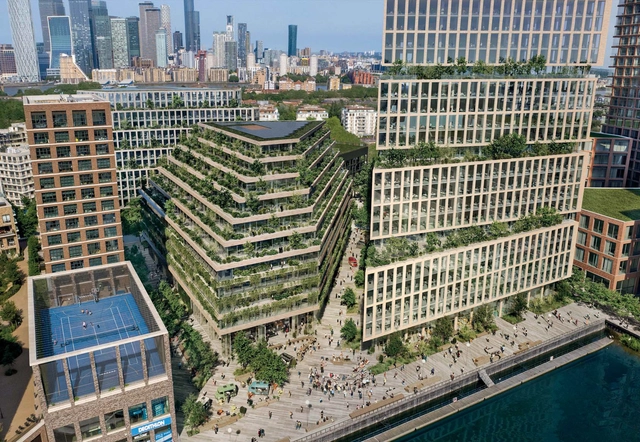
New York-based firm HWKN will create 18,200 square meters of urban development in the commercial quarter of the new Canada Water regeneration plan. In collaboration with the scheme's master planner, BIG – Bjarke Ingels Group, the developer Art-Invest Real Estate UK, and the local community, HWKN makes its UK architectural debut by designing one of the three buildings at the Dockside, London. The building will blend innovative workspaces, commerce, and communal amenities.
The Canada Water Masterplan will transform a total of 215,000 square meters and is expected to deliver up to 3,000 new homes, 280,000 square meters of workspace, and community space in central-south London. The first new town center in London in 50 years would become the UK's most sustainable new urban hub after completion, expected in 2035.
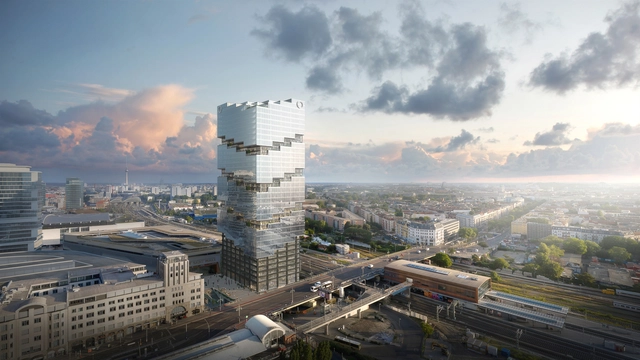
The third tallest building in Berlin, a 142 meters high-rise by Bjarke Ingels Group (BIG), is expected to be completed by 2023. Located close to the Warschauer station and the Mercedes-Benz Arena, The EDGE East Side will be a vertical hub of 65,000 square meters that connects two of Berlin's most vibrant and artistic suburbs: Friedrichshain and Kreuzberg.
Blending contemporary urban requirements and natural elements, the structure will feature 360 views of East Berlin and 36 floors of shared and dedicated workplaces. Some building sections will serve organizations or individuals focusing primarily on sustainability, education, or social issues. The tower will also host Amazon's offices, with room for up to 3400 employees.
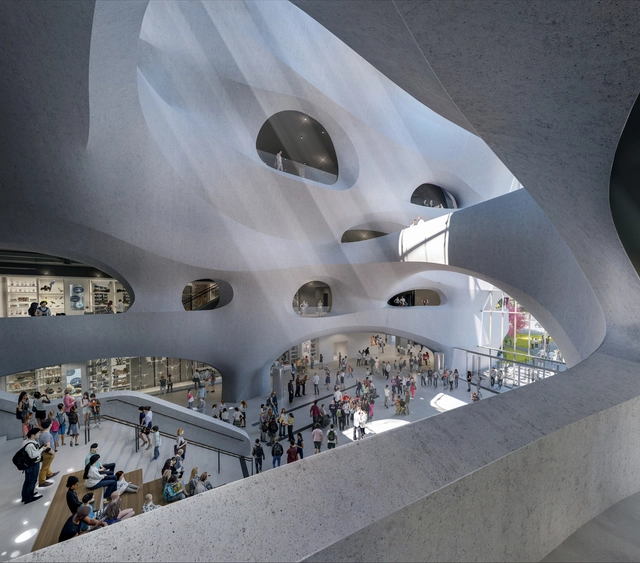
Designed by Bjarke Ingels Group, The Robert Day Sciences Center at CMC in California breaks ground and is expected to be completed in 2024. Featuring an open auditorium, labs, research spaces, and multifunctional roofs with 360-degree views of Mt. Baldy, the building will serve a community of 1,400 students. By literally stacking disciplines together in a Jenga-like composition, the framing of a column-free bar will serve as a multilevel gathering hub of collaboration and a crossroads for scientific thought and also stimulate the rest of the liberal arts students to take a deeper interest in the sciences and vice versa.
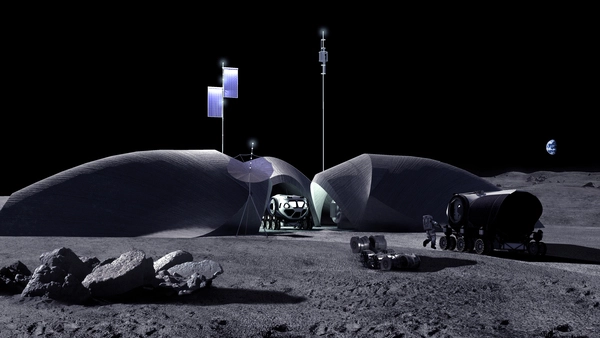
NASA and AI Space Factory developed LINA (Lunar Infrastructure Asset), an in-situ 3D-printed outpost to protect astronauts and critical missions on the Moon. The project is part of the Relevant Environment Additive Construction Technology (REACT), a multi-year collaboration to develop technologies for lunar surface constructions within the timeframe of the Artemis Mission: humankind’s return to the Moon. LINA is a step in the effort to expand civilization to Earth’s natural satellite and explore it in a sustainable way that minimizes human disturbance.
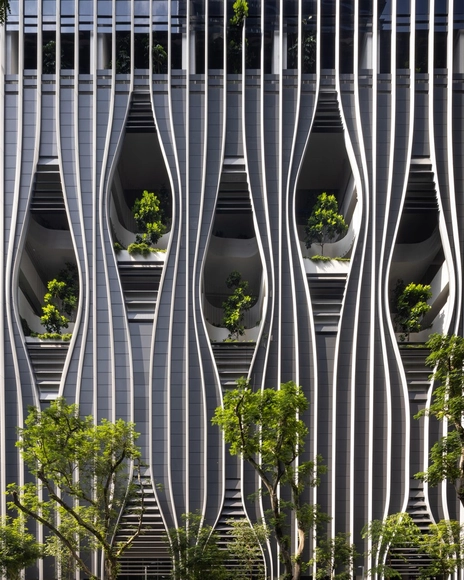
Designed by BIG-Bjarke Ingels Group and CRA-Carlo Ratti Associati, CapitaSpring is Singapore’s latest addition to its skyline. Recently completed after four years of construction, the 280-meter-tall high-rise oasis, considered among the city’s tallest structures, is a mixed-use high-rise with abundant sky gardens and rooftop park, office space, a serviced residence, a hawker center, restaurants, and public spaces.
The biophilic skyscraper, aligned with “the city’s pioneering vertical urbanism” and Singapore’s reputation as a garden city, is located at the heart of the financial district on the site of a former public car park and a hawker center. Comprising 80,000 plants, translating to a total landscaped area of more than 140% of its site area, the tower puts in place a “new green breathing space in the high-density CBD for the neighboring tenants and passersby”.
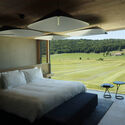
In a recent photo series, Paul Clemence turns his lens toward Bjarke Ingels Group's (BIG) Hôtel des Horlogers, located in the Swiss Village of Le Brassus in Switzerland. Previously known as Hôtel de France, which opened in 1857, Audemars Piguet reimagined the project. BIG, an international studio known for avant-garde architecture and experimentation, continues to see this claim to its end through the design of a compact structure made up of five floors, with its rooms connected in a single zig-zag path. Designed in collaboration with the Swiss design firm, CCHE, a futuristic structural form featuring layers of long ramps was assembled for Audemars Piguet's vision of a luxury hotel.
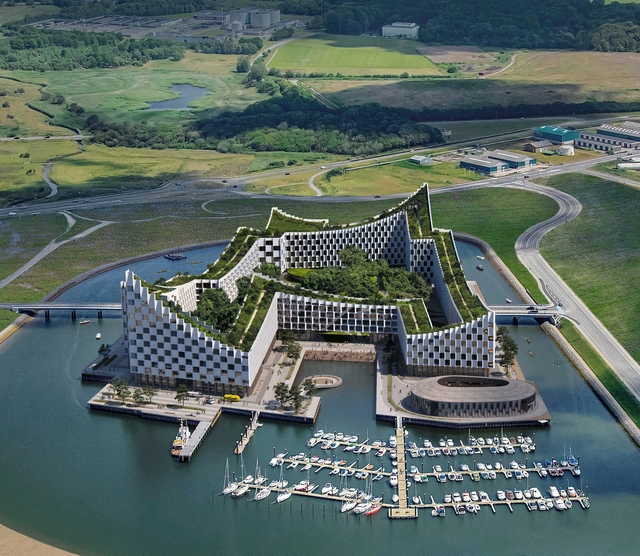
Bjarke Ingels Group has unveiled the vision for the Masterplan Esbjerg Strand, which will form the framework for a campus environment that aims to bring a new approach to education. The Education Esbjerg project will accommodate an innovative educational platform that rethinks the traditional education system in the country. BIG’s concept is to recreate an entire city in one building. Education and development will create a frame of life for the new communities, while the island will welcome a varied array of functions to create a sustainable, human-centered ecosystem.
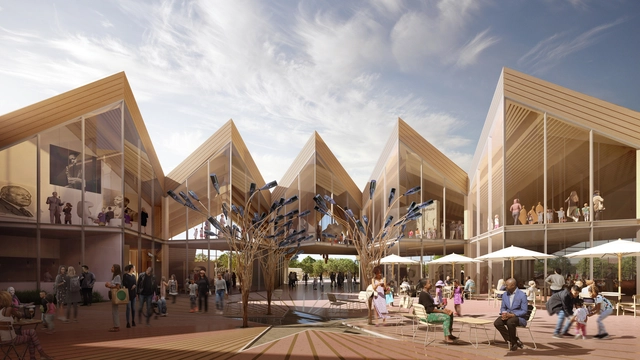
BIG-Bjarke Ingels Group alongside the architect-of-record, African American-owned design firm, KAI Enterprises, have unveiled their design of a new Texas-based museum dedicated to preserving the history of Juneteenth and the legacy of freedom. Located in the historic southside of Fort Worth, Texas, one of the area's most underserved communities, the National Juneteenth Museum will serve as a focal point for education, preservation, and celebration of Juneteenth nationally and globally, hosting exhibitions and events about the significance of African American freedom. The new 50,00 sq.ft. building will include immersive galleries, a business incubator, food hall for local vendors, Black Box flex space, and a theater, and is expected to break ground in 2023.
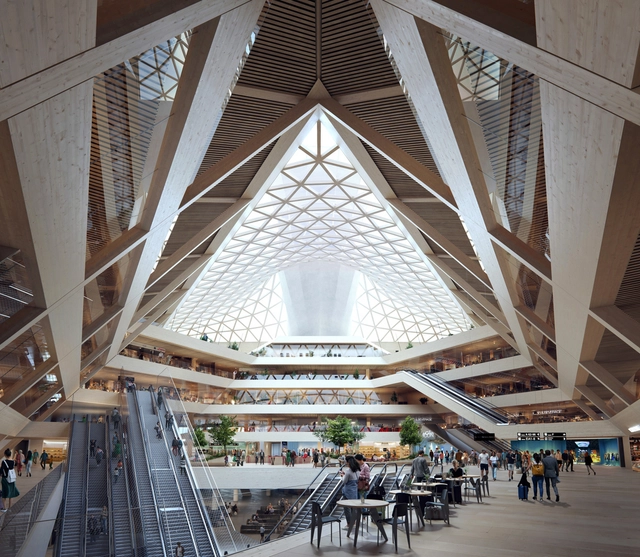
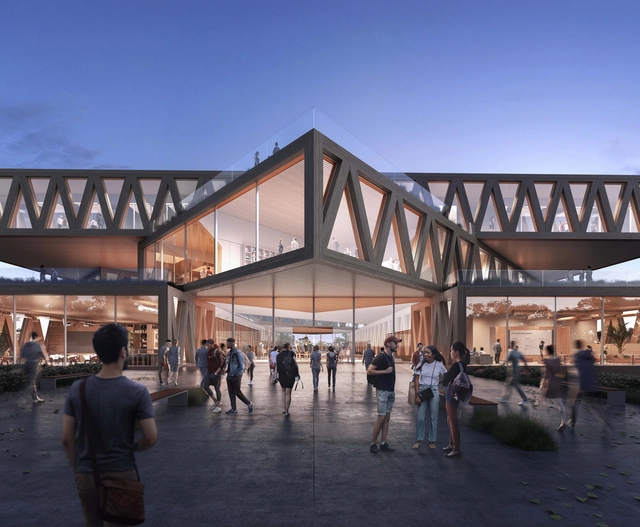
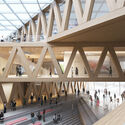
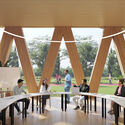
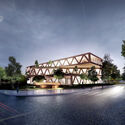
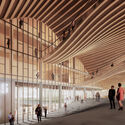
Dock A, the largest dock of the Zurich Airport, was the subject of international competition. BIG forms the winning team as design lead with HOK as aviation architect, 10:8 architects, engineer Buro Happold, timber experts Pirmin Jung, and aviation consultant NACO. Their design proposal centers on passenger experience and movement through the airport. A pared-back material palette reveals the loadbearing system of the building: V-shaped timber columns provide both a structural function and a distinctive identity true to its place and era, according to the jury.
As the design world prepares for one of the most anticipated events of the year, Designboom, Architonic, and ArchDaily which make up DAAily platforms have put together for the visitors of Milan Design Week 2022, a unique, storytelling-programmed space, designed by architects and designers for architects and designers. This year, DAAily platforms are taking the opportunity to take to the stage together from 7 to 10 June at the Swiss Corner at Piazza Cavour / Via Palestro 2, hosting curated talk series and gathering spots, along with immersive art installations.
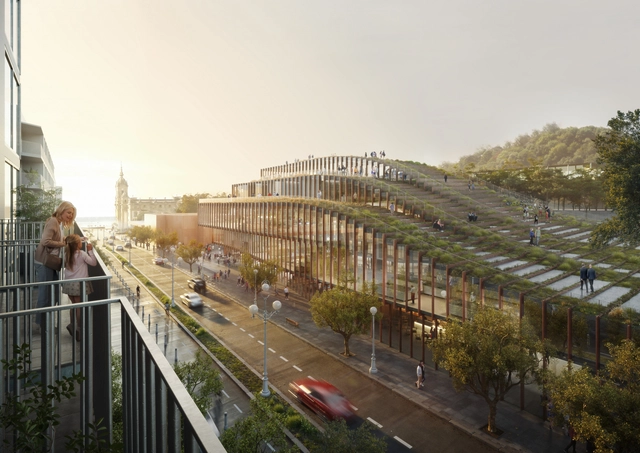
Selected among five invited architects including OMA, Snøhetta, 3XN, and Toyo Ito & Associates., the BIG-designed building for the Basque Culinary Center, is a new food tech hub located in San Sebastian, Spain. TheGastronomy Open Ecosystem (GOe) is in fact a 9,000 m2 project that seeks to push forward the art and science of gastronomic innovation, bringing together food start-ups, researchers, and chefs. Currently in progress, the building will focus on the development of alternative proteins, agricultural robotics, the prevention of food waste, and much more.
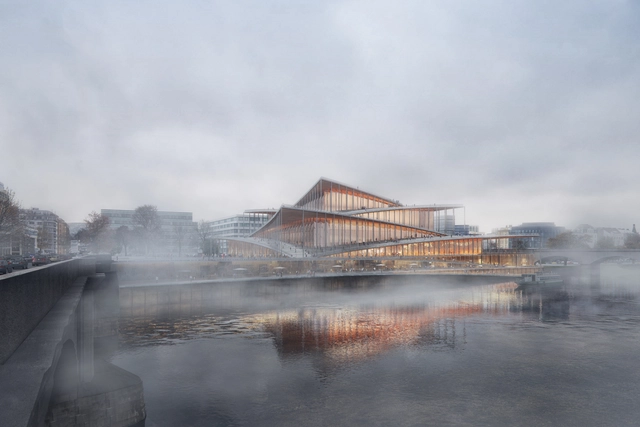
BIG (1st place) - Exterior view. Image Courtesy of Mozses
The City of Prague announced the international competition results for the design of the Vltava Philharmonic Hall. The winning project is designed by Danish studio Bjarke Ingels Group – BIG. The new concert hall aims to become a focal point for the city and reinforce Prague's reputation as a European cultural capital. The proposed volume of the new Philharmonic Hall presents a recognizable image while also being well integrated into the complex topography of the Vltava riverbank. Visitors are invited to follow the meandering series of plazas connected by sloping roofs that take them from the riverbank to the rooftop, promising views of the historic city center of Prague. Spanish architecture practice Barozzi Veiga collaborated with local office Atelier M1 and won second place. Bevk Perović Arhitekti and Petr Hájek Architekti won third and fourth place, respectively, while Snøhetta's proposal was declared the fifth winner.
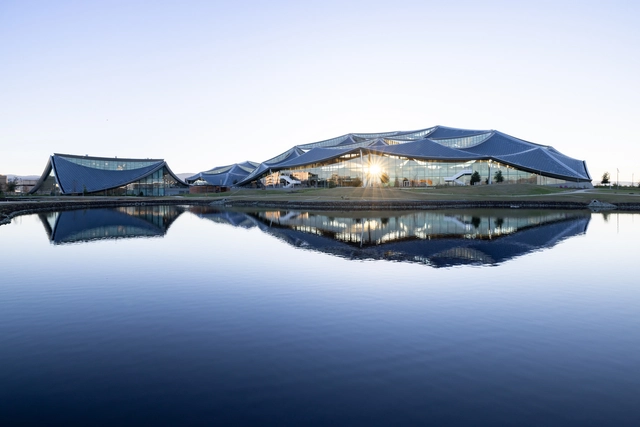
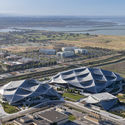
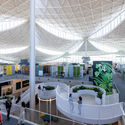
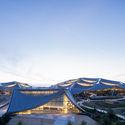
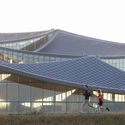
Google’s first ground-up campus, designed by BIG - Bjarke Ingels Group and Heatherwick Studios in collaboration with Google’s design and engineering teams, opened in Silicon Valley. The campus’ mission is to create a human-centric design for the future of Google’s workplace and set new global sustainability standards for construction and office design. The site aims to operate entirely on carbon-free energy by 2030; it integrates the most extensive geothermal pile system in North America and is net-water positive. The campus also includes 17 acres of high-value natural areas, including wet meadows, woodlands, and marsh.



























.jpg?1656053150 "Courtesy of BIG")