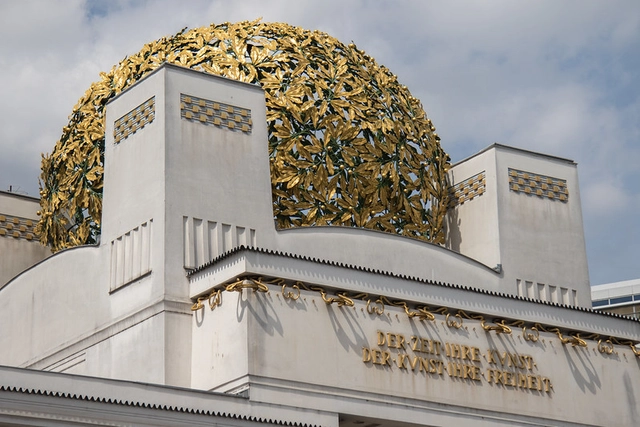
All architecture movements throughout history spur from shifts in society that demand a new style that better reflects the way that technology has advanced the practice and how people express their political, religious, and moral beliefs and practices. While some shifts occur over a period of several years, others are experienced as a sudden revolt. The Vienna Secession was undoubtedly the latter. At the end of the 19th century, a group of artists and architects aimed to explore what art should be as it pertained to filtering global influences in a way that could introduce new modernism.
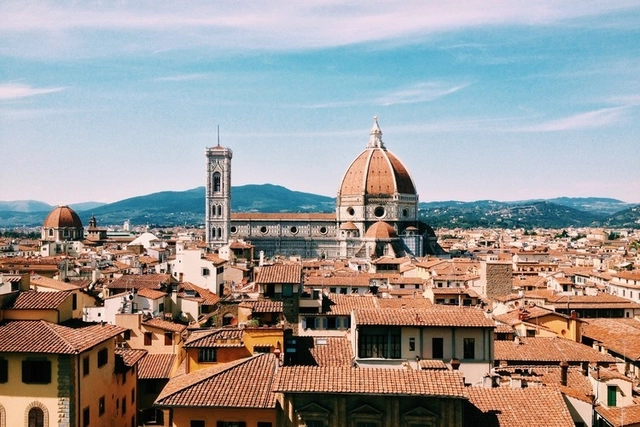
After a prolonged period known as the Middle-Ages, a growing desire to both study and mimic nature itself began to emerge, with an inclination to discover and explore the world. Between 1400-1600 A.D. Europe was to witness a significant revival of the fine arts, painting, sculpture, and Architecture. The ‘Renaissance’, meaning ‘rebirth’ in French typically refers to this period of European history, although most closely associated with Italy, countries including England and France went through many of the same cultural changes at varying timescales.
Prior to the dawn of the Renaissance, Europe was dominated by ornate and asymmetrical Gothic Architecture. Devoured by the plague, the continent lost approximately a third of its population, vastly changing society in terms of economic, social and religious effect. Contributing to Europe’s emergence into the Renaissance, the period ushered in a new era of architecture after a phase of Gothic art, with the rise of notions of ‘Humanism’. The idea of attaching much importance to the essence of individualism. The effect of Humanism included the emergence of the individual figure, greater realism and attention to detail, especially in depictions in art.
Once upon a time, long, long ago, I was lucky enough to get a summer job with Robert A.M. Stern while I was in graduate school. Stern’s new memoir, Between Memory and Invention: My Journey in Architecture (MonacelliPress, 2022), has prompted my own mini-memoir, with some relevant details not included in the book.
I arrived at the office in the early summer, not long after the dissolution of Stern & Hagmann and then Bob’s divorce. I found two young architects-to-be, a sweet but disorganized secretary-receptionist-bookkeeper, and Bob. The office grew during the summer and beyond—and today there are over 200 in the office, including 16 partners in Robert A.M. Stern Architects (aka RAMSA).
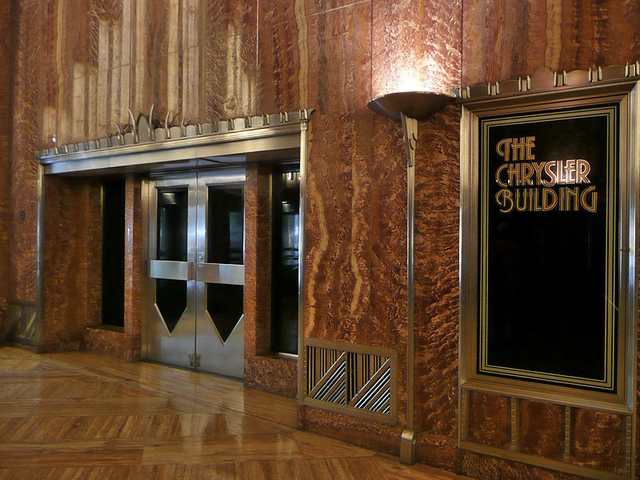
The Chrysler Building interior, Manhatten, New York . Image Courtesy of Dorff / Wikicommons CC BY-SA 3.0
Art Deco or Arts Décoratifs originated in the 1920's, following the Exposition Internationale des Arts Décoratifs et Industriels Modernes held in Paris (1925). However, it wasn’t until the 1930’s that the movement gained momentum across both Europe and the US, broadening Art Deco to cover all elements of decorative art including furniture, interior design, jewelry and architecture. Its popularity stems from its unique origins. Rather than a design movement driven by political or philosophical forces, it was created for the desire of glamorous and alluring change, a reflection of the golden age in Hollywood and a widespread economic boom.
Characterized by its decadence, rich application of color, and geometrical shapes, the movement is dramatically influenced by the discovery of the artifacts of ancient civilizations, and the introduction and admiration of the automobile. A movement heavily influenced by aspects in vogue it sought to create a form of luxury modernism, a step away from a more traditional architecture. It put an emphasis on handcrafted and individually designed elements, rarely to be mass produced.
There’s a famous quote—it’s usually attributed to Winston Churchill—that goes, “History is written by the victors.” This cynical and largely erroneous belief could only be true if history was fixed, settled, static. It never is, and that’s precisely why we have historians. It might be more accurately said that history’s first draft is written by the victors. But first drafts, as any writer will tell you, are famously unreliable. So it is with architectural history. Women have played significant roles in the field since the start of the profession, but that is not how history has recorded it. A new book, The Women Who Changed Architecture (Princeton Architectural Press), a collection of more than 100 mini-biographies of important women architects, covering more than a century, hopes to take a step toward correcting that oversight. Recently, I spoke to Jan Cigliano Hartman, the editor of the volume, about creating the book, important and overlooked figures, and why this isn’t a definitive list.
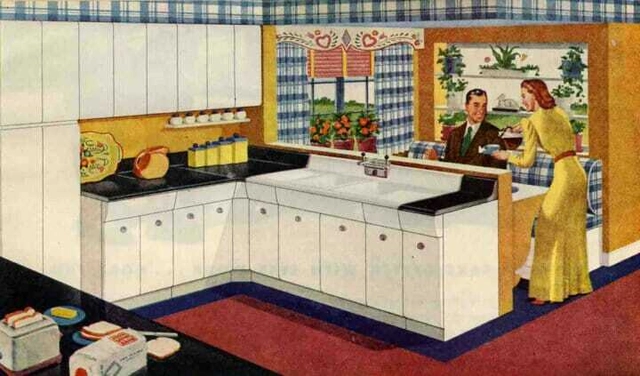
Cozinha Americana, 1946. Autor: Harris & Ewing, fotógrafo. N STREET, KITCHEN. [Entre 1905 e 1945] Fotografia. Recuperado da Biblioteca do Congresso dos EUA [www.loc.gov/item/2016861773/]. Imagem em Domínio Público [PD US Government]. Image via Wikimedia Commons
The discovery of fire was one of the great events that changed the social organization of human agglomerations, which gradually passed from nomadic to sedentary lifestyle. Fire, which in that context served to keep people warm and protect the group, was also being explored as a source for cooking food, which not only changed human eating habits, but also made it possible to conserve food, changing the social organization of communities. The preparation and meals were collective acts, which brought people together to feed, warm up and protect themselves. It is from this habit that we inherited the practice of large banquets and the appreciation of food and meal times. Food preparation, on the other hand, was gradually marginalized.
While the Egyptians, Assyrians, Phoenicians, Persians, Greeks and Romans shared the habit of holding large banquets, the preparation gained less and less prestige, losing its collective social dimension until it was physically segregated in a specific room: the kitchen.
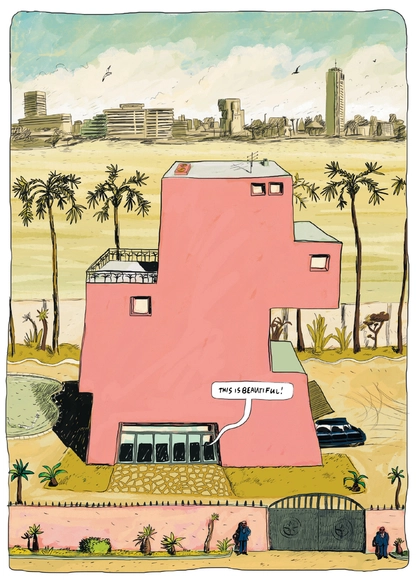
Modernist House - From Aya: Life in Yop City by Marguerite Abouet and Clément Oubrerie, translated by Helge Dasche. Image Courtesy of Drawn & Quarterly
The comic strip, la bande dessinée, the graphic novel. These are all part of a medium with an intrinsic connection to architectural storytelling. It’s a medium that has long been used to fantasise and speculate on possible architectural futures, or in a less spectacular context, used as a device to simply show the perspectival journey through an architectural project. When the comic strip meshes fiction with architectural imagination, however, it’s not only the speculation on future architectural scenarios that takes place. It’s also the recording and the critiquing of the urban conditions of either our contemporary cities or the cities of the past.
New Orleans was designed by its early settlers in 1721 as a Cartesian grid. You know it as the famous French Quarter or Vieux Carré. Such grids are named for the Cartesian coordinate system we learned to use in algebra or geometry class, perpendicular X and Y axes, used to measure units of distance on a plane. The invention of René Descartes (1596–1650), these grids reflect his rationalism, the view that reason, not embodied or empirical experience, is the only source and certain test of knowledge. William Penn used a similar grid in 1682 in selling Philadelphia as an urban paradise where industry would thrive in the newly settled wilderness. And just as the massive buildings of Italian Rationalist (i.e., Fascist) architecture express authoritarian control, so, too, Cartesian grids implicitly say: Someone is in charge here. We’ve got this. Trust us.
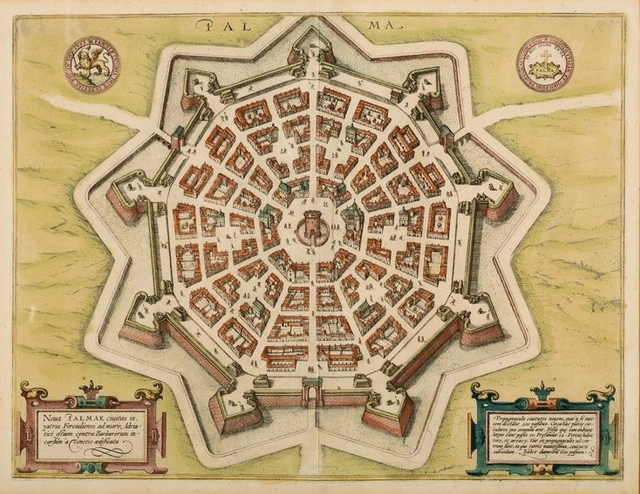
The concept of an “ideal city” is something that is often talked about today, as we look towards the future and think about what aspects of urban life we feel are most important for residents to thrive in a healthy community. However, ideal cities were conceived during the Italian Renaissance, as planners and architects prioritized rationale in their designs focusing on human values, urban capacities, and the recursive waves of cultural and artistic revolutions that influenced large-scale planning schemes.
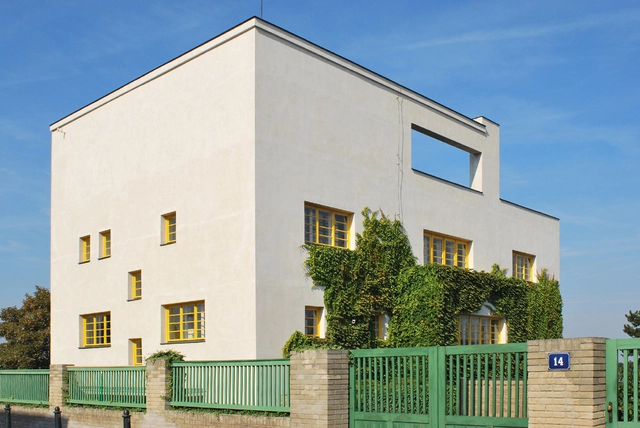
Throughout history, architectural styles, have experienced numerous movements throughout time, giving us various expressions of interior and exterior spaces. These movements are often created out of dissatisfaction with the status quo, shifts in religious ideologies, or the emergence of new building technology. Perhaps one of the most famous instances in history was the precedent set by Adolf Loos and his desire to break away from Viennese tradition with his strong dissent of ornament in architecture in favor of simplicity, and his literary discourse that lay the cornerstone for the modernist movement in architecture.
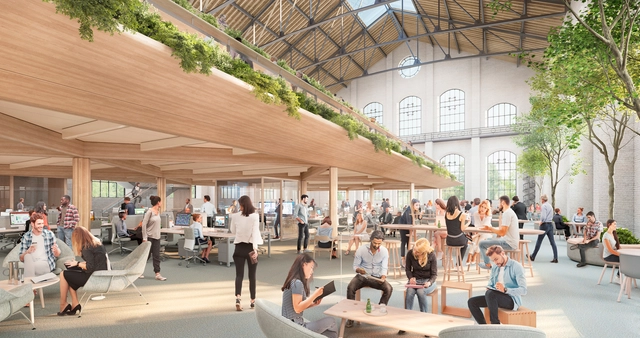
Office Building Conversion- Spain. Image via Foster + Partners
Cities around the globe have widely adopted the concept of adaptive reuse and the importance of investing in historic sites and bringing them into the present day. Instead of focusing on brand new, ground-up construction, many are seeing the value in repurposing structure for new programs. Old churches are becoming restaurants, factories are transformed into museums and apartments, and warehouses are designed to become iconic office spaces. But beyond individual buildings, some planners and preservationists are reimagining what it means to revitalize in a similar way, but at a city scale, and how we can determine the buildings that would benefit our neighborhoods if they are repurposed.
Design can sometimes be mundane- except when it’s novelty architecture. These buildings uniquely and identifiably break away from the abstract, metaphorical, and often monotonous buildings that have classified modern-day design. Instead of favoring the steel and glass skyscrapers that serve as landmarks in cities around the world, they aim to poke fun at architecture in a way that’s jovial, commercial, and perhaps slightly more functional and expressive. Unlike other buildings, they are the literal embodiment of a thing itself, putting its function widely on display instead of hiding it within four austere walls.
Courtesy of Harvard University Graduate School of Design, Studio Barnes
Germane Barnes has won the 2021 Wheelwright Prize from Harvard University Graduate School of Design. The $100,000 prize will fund two years of travel and research for Barnes’s proposal Anatomical Transformations in Classical Architecture, an examination of classical Roman and Italian architecture through the lens of non-white constructors. Barnes will study how spaces have been transformed through the material contributions of the African Diaspora while creating new possibilities within investigations of Blackness.
Corviale is one of Italy’s biggest postwar public housing projects and, arguably, one of the most controversial. Both revered and abhorred, the complex remains a pilgrimage site for architectural schools from around the world. Il Serpentone (The Big Snake), as it is affectionately called, stretches nearly a kilometer in a straight line, a monolithic, brutalist building that hovers over the countryside on the outskirts of Rome. But there is nothing sinuous about a construction made up of 750,000 square meters of reinforced concrete condensed into 60 hectares. This hulking horizontal skyscraper is formed by twin structures, each 30 meters high, connected through labyrinths of elongated hallways, external corridors, and inner courtyards. Divided into five housing units, each with its own entrance and staircase, it contains 1,200 apartments and houses up to 6,000 people.
https://www.archdaily.com/960563/chilometro-verde-five-women-architects-revitalizing-the-corviale-a-giant-public-housing-project-in-romeMarina Engel
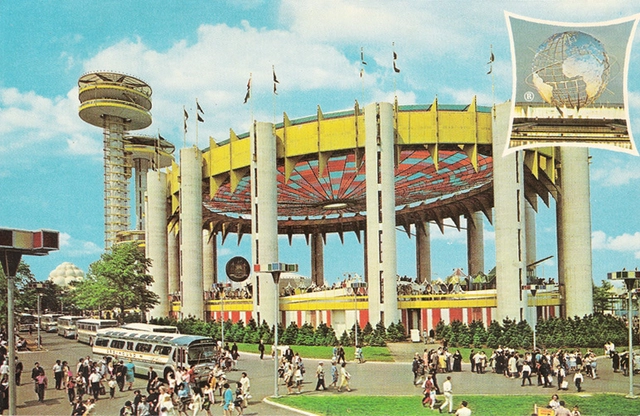
1964 World's Fair held in New York City. Image Courtesy of Abandoned NYC
World’s Fairs seem to be a memory of the distant past. These mega-scale events once brought us culinary staples, technological advancements, and introduced some of the most notable examples of architecture and landmarks that impact how we think about design and construction even in the present day. Throughout the numerous fairs and expos that were held, architectural discourse itself significantly advanced and the pomp and circumstance that surrounded these muscular flexes of international innovation reimagined what life would be like in the decades to come.
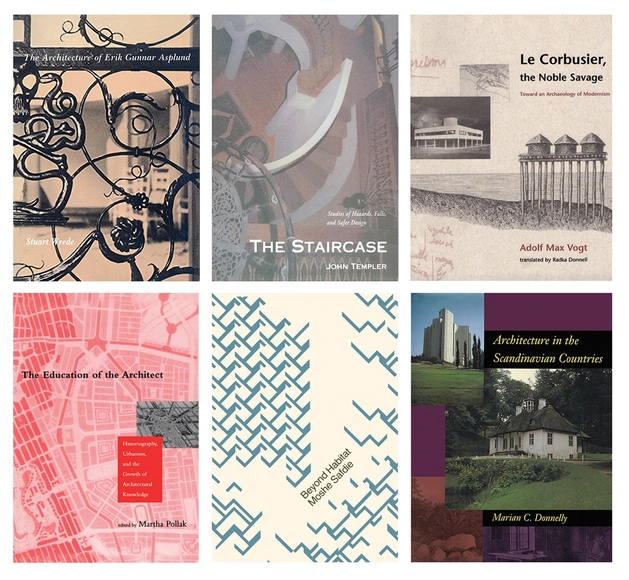
Funded by Andrew W. Mellon and the National Endowment for the Humanities foundations as part of the Open Book Program, a collection of classic books, published between 1964 and 1998 are now available online as open access e-books through the MIT Press Open Architecture and Urban Studies book collection.
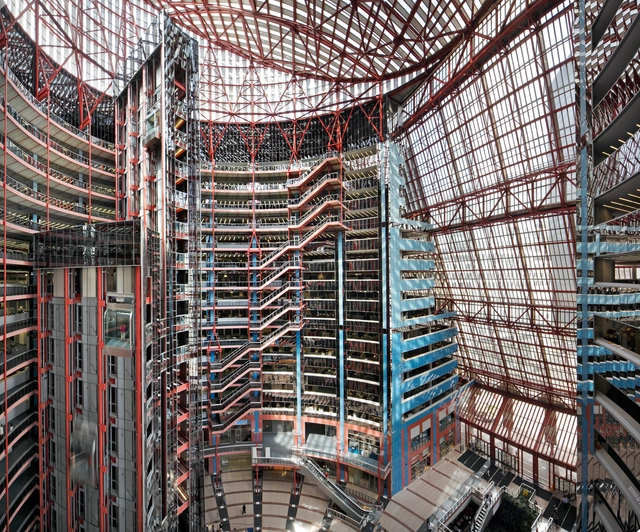
It would seem that the ongoing saga of the James R. Thompson Center, Chicago’s beloved but neglected governmental office building-slash-postmodernist mecca, might be reaching its final act.
Yesterday, Brendan Reilly, alderman of the city’s 42nd ward, announced a proposed rezoning ordinance that could kick the sale of the prized 3-acre site (12,140 m2) at 100 West Randolph Street into high-gear. The cash-strapped State of Illinois has been considering/trying to offload the property as early as 2003.
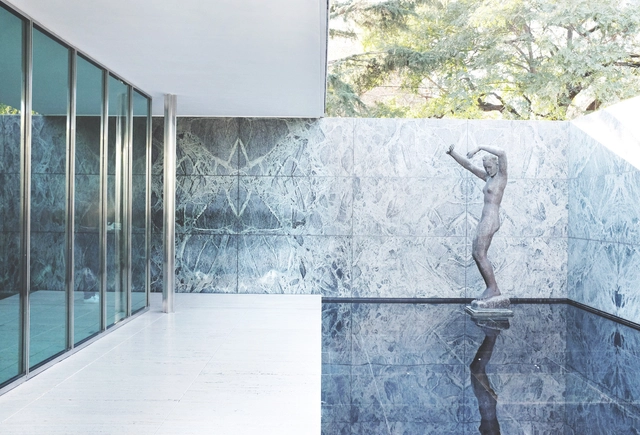
Ludwig Mies van der Rohe (27 March 1886 – 17 August 1969) is one of the most influential architects of the 20th century, known for his role in the development of the most enduring architectural style of the era: modernism. Born in Aachen, Germany, Mies' career began in the influential studio of Peter Behrens, where Mies worked alongside two other titans of modernism, Walter Gropius and Le Corbusier. For almost a century, Mies' minimalist style has proved very popular; his famous aphorism "less is more" is still widely used, even by those who are unaware of its origins.























.jpg?1619126725&format=webp&width=640&height=580)